
The 3-Line Summary
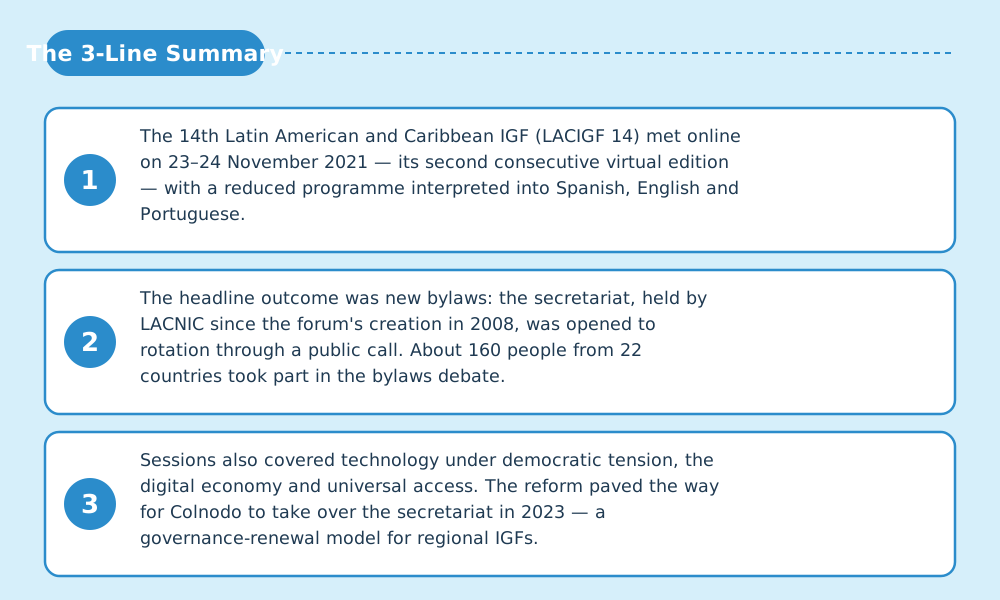
- The 14th Latin American and Caribbean IGF (LACIGF 14) met online on 23–24 November 2021 — its second consecutive virtual edition — with a reduced programme interpreted into Spanish, English and Portuguese.
- The headline outcome was new bylaws: the secretariat, held by LACNIC since the forum's creation in 2008, was opened to rotation through a public call. About 160 people from 22 countries took part in the bylaws debate.
- Sessions also covered technology under democratic tension, the digital economy and universal access. The reform paved the way for Colnodo to take over the secretariat in 2023 — a governance-renewal model for regional IGFs.
Welcome — this is the Japan IGF Support Organization. This in-depth report on LACIGF 2021 in Virtual draws on official outputs, session records and on-site reporting. In a hurry? The three lines above and the diagrams carry the gist.
📍 All LACIGF editions from 2020 through 2022 were held online; there was no host city in 2021
Conference at a Glance (from official records)
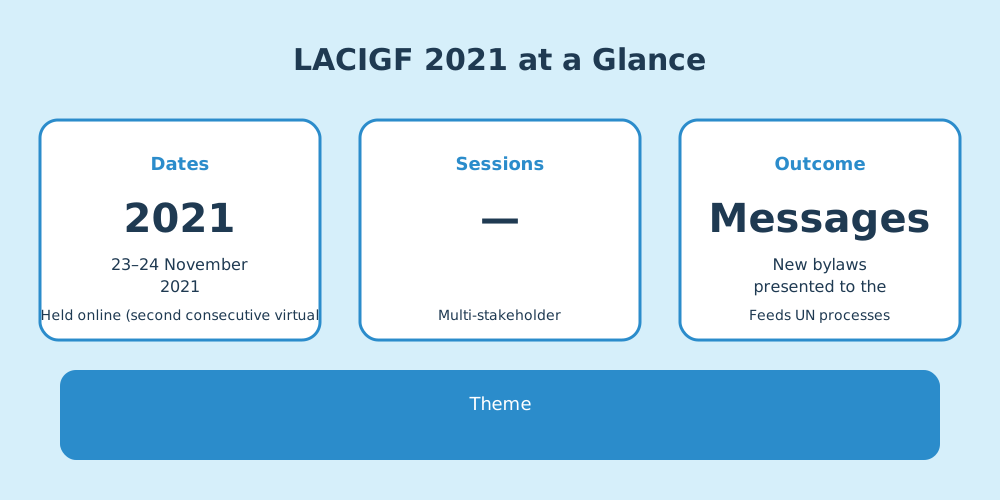
| Item | Detail |
|---|---|
| Edition | 14th edition (LACIGF 14) |
| Dates | 23–24 November 2021 |
| Venue | Held online (second consecutive virtual edition) |
| Theme | Regional governance themes |
| Languages | Simultaneous interpretation in Spanish, English and Portuguese |
| Host | LACIGF Secretariat (LACNIC) and the Program Committee |
| Outcome | New bylaws presented to the community, opening the secretariat to rotation via an open call; about 160 people from 22 countries took part in the bylaws debate and analysis process (per LACNIC) |
(See the source list at the end of this article.)
Discussion Digest — from the Session Records
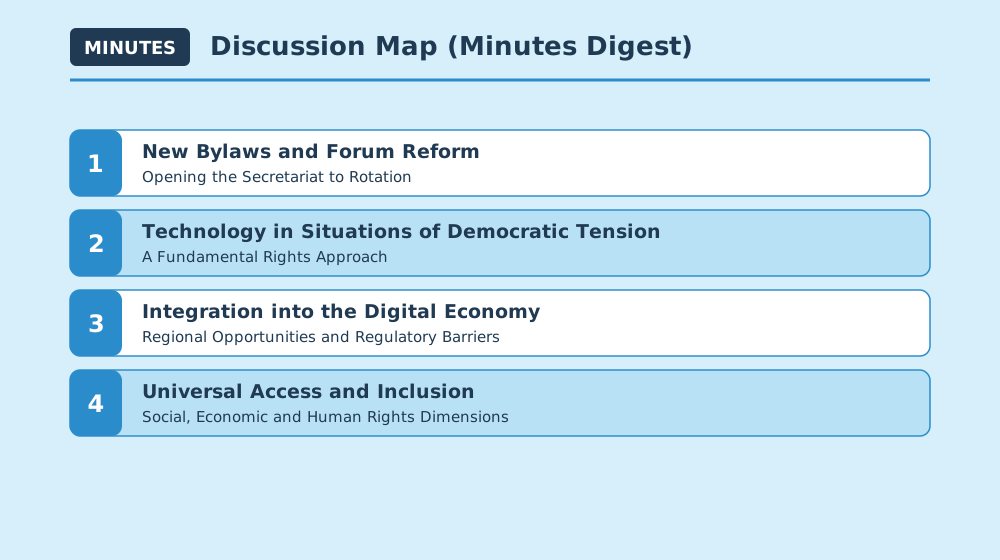
Key exchanges extracted from session records and transcripts.
1. New Bylaws and Forum Reform — Opening the Secretariat to Rotation
Sessions: "Future of LACIGF" session (24 November, 20:00–21:30 UTC)
- New bylaws drafted from community input codified LACIGF's scope, participation, processes and structures; about 160 people from 22 countries joined the debate and analysis process [2][4][5]
- The secretariat role, held by LACNIC since 2008, was opened to other organisations via a formal call, targeting implementation from the 15th edition (2022) with a one-year transition [2][4][5]
- The reform responded to a shared concern that the forum, though 'an extremely valuable mechanism', had lost relevance in recent years [2][4][5]
2. Technology in Situations of Democratic Tension — A Fundamental Rights Approach
Sessions: "The Role of Technology in Situations of Tension in Democratic Regimes" (23 November, 18:00–19:30 UTC), with speakers including LACNIC CEO Oscar Robles
- Panellists discussed how internet governance can help ensure technology is deployed with a fundamental-rights approach during political crises and social tension [1][2]
- The topic reflected regional realities — protests, internet disruptions and surveillance concerns across Latin America [1][2]
3. Integration into the Digital Economy — Regional Opportunities and Regulatory Barriers
Sessions: Digital economy session (23 November, 20:00–21:30 UTC), with speakers from Mexico's Ministry of Economy, CAF and ECLAC (CEPAL)
- The session weighed the region's opportunities in the digital economy against fragmented national regulation as the post-pandemic recovery began [1]
- Governments, development banks and UN bodies shared the stage, flagging harmonisation of cross-border data and digital trade rules as a challenge [1]
4. Universal Access and Inclusion — Social, Economic and Human Rights Dimensions
Sessions: "Universal Access and Inclusion at a Social, Economic, and Human Rights Level" (24 November, 18:00–19:30 UTC), with speakers including LACNIC CTO Carlos Martínez
- Connectivity was reframed not as mere infrastructure but across three dimensions: social participation, economic opportunity and human rights [1][2]
- Experiences from initiatives such as Internet para Todos were shared, with the region's persistent access gaps in the pandemic's second year in focus [1][2]
Three-Minute Short Talk — Your Questions Answered
Q. So what did the meeting actually decide?
A. Unusually for a dialogue forum, this edition reformed itself: new bylaws were presented, turning the secretariat — held by LACNIC since 2008 — into a role any organisation can win through an open call.
Q. What was the most contentious point?
A. The forum's own relevance. Driven by the worry that 'an extremely valuable mechanism' was losing influence, about 160 people from 22 countries debated the rules on the secretariat and participation.
Q. Why should I care?
A. Every national and regional IGF wrestles with sustainability and who runs the secretariat. LACIGF's answer — rotation by open call — actually worked: Colnodo took over in 2023.
What Is LACIGF? (for first-time readers)
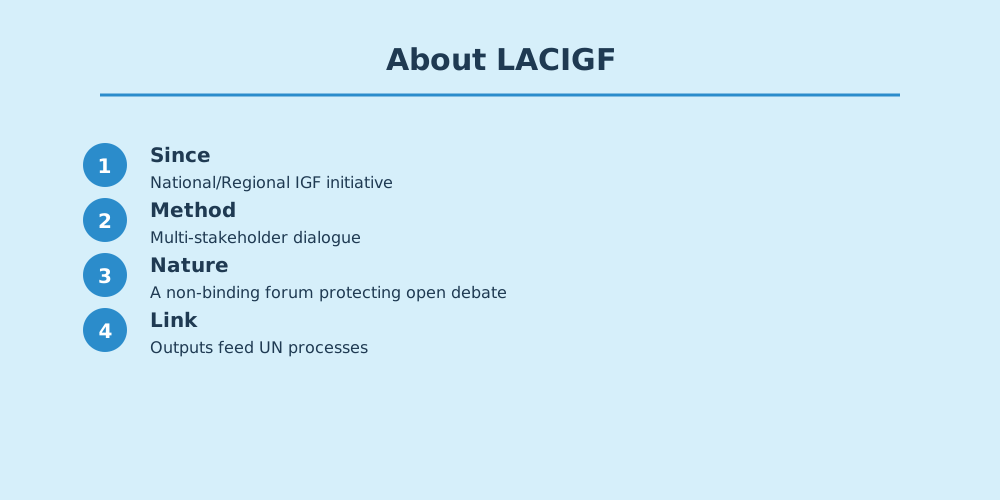
LACIGF is a National or Regional IGF Initiative (NRI), aligning local internet governance discussion with global IGF principles.
Why It Matters to You
What was discussed here becomes the baseline for national digital policy, platform rules and AI regulation worldwide within a few years. The principles confirmed at the 2021 meeting are the foundation of the "next rules" for the phones, social platforms and AI services you use every day.
Sources & References
- LACIGF 14(公式イベントページ) — LACIGF (accessed 2026-07-10)
- LACIGF 14 and New Bylaws — LACNIC Blog (accessed 2026-07-10)
- Foros anteriores(歴代フォーラム一覧) — LACIGF (accessed 2026-07-10)
- LACIGF Secretariat(事務局の役割と規約上の位置づけ) — LACIGF (accessed 2026-07-10)
- Nosotros(LACIGFの歴史・組織、2021年規約とColnodoへの移行) — LACIGF (accessed 2026-07-10)
Quotes are translated or condensed from the records listed above. Bracketed numbers [n] refer to the source list.
Related links
- IGF official (NRI list): https://www.intgovforum.org/en/content/national-and-regional-igf-initiatives
- Japan IGF: https://japanigf.jp/
- Yuki Nakazawa's blog: https://nkzw.jp/category/igf/
Revision History
Rev. 1 — published 26 July 2021, 14:00 (Article published)
Rev. 2 — updated 10 July 2026, 23:16 (Fully revised into the in-depth edition: added the 3-line summary, minutes digest, short talk, source list and diagrams (all quotes verified against the listed sources))
— 中澤祐樹