


The 3-Line Summary
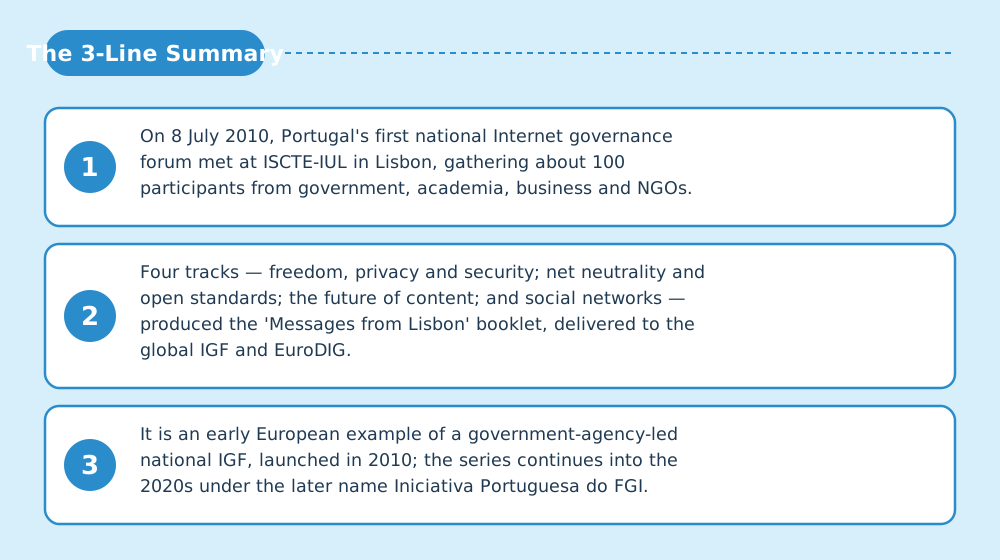
- On 8 July 2010, Portugal's first national Internet governance forum met at ISCTE-IUL in Lisbon, gathering about 100 participants from government, academia, business and NGOs.
- Four tracks — freedom, privacy and security; net neutrality and open standards; the future of content; and social networks — produced the 'Messages from Lisbon' booklet, delivered to the global IGF and EuroDIG.
- It is an early European example of a government-agency-led national IGF, launched in 2010; the series continues into the 2020s under the later name Iniciativa Portuguesa do FGI.
Welcome — this is the Japan IGF Support Organization. This in-depth report on Fórum para a Sociedade da Informação – Governação da Internet (2010) draws on official outputs, session records and on-site reporting. In a hurry? The three lines above and the diagrams carry the gist.
Conference at a Glance (from official records)
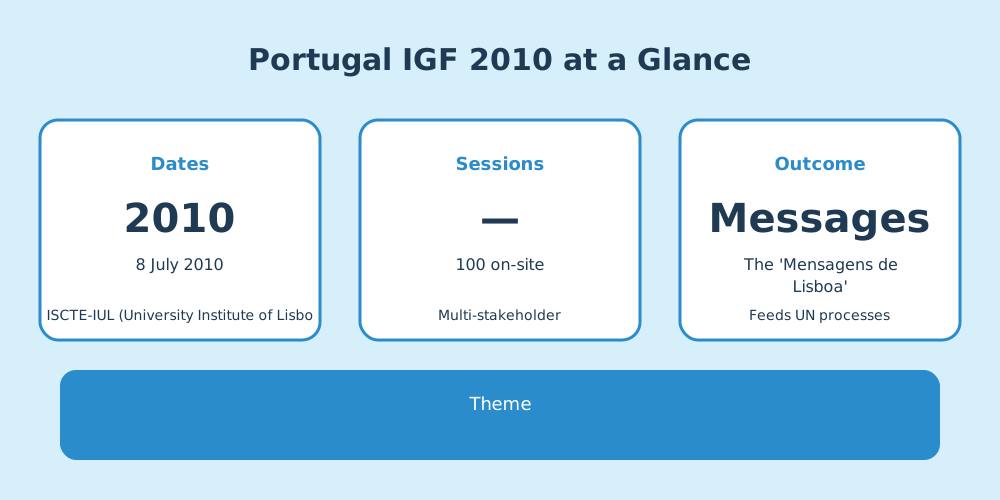
| Item | Detail |
|---|---|
| Official name | Fórum para a Sociedade da Informação – Governação da Internet (2010) |
| Dates | 8 July 2010 |
| Venue | ISCTE-IUL (University Institute of Lisbon), Lisbon |
| Theme | Regional governance themes |
| Participants | 100 (About 100 attendees from public administration, universities, research institutions, companies and NGOs (per the official messages booklet)) |
| Host | UMIC (Knowledge Society Agency), FCCN and LINI (Lisbon Internet and Networks Institute) |
| Outcome | The 'Mensagens de Lisboa' (Messages from Lisbon) booklet, explicitly intended as input to the global IGF and EuroDIG |
(See the source list at the end of this article.)
Discussion Digest — from the Session Records
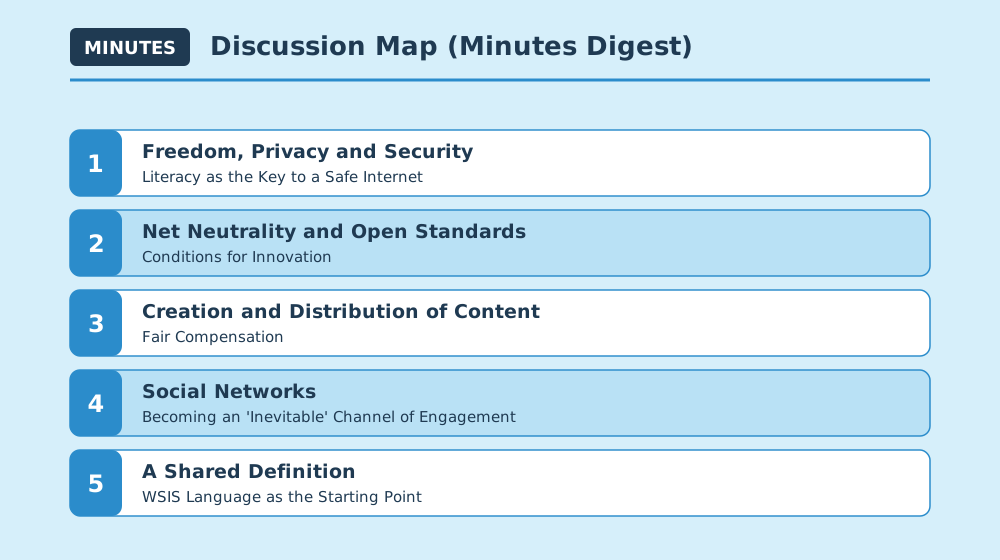
Key exchanges extracted from session records and transcripts.
1. Freedom, Privacy and Security — Literacy as the Key to a Safe Internet
Sessions: Session 'Liberdade, Privacidade e Segurança na Internet'
- 'Media literacy, strengthening people's knowledge of how to deal with the Internet and other media, is the most effective way' to be safely present in cyberspace (Messages from Lisbon, translated from Portuguese) [2]
- User education was ranked alongside data protection and DNS security as a first-order policy response [2]
2. Net Neutrality and Open Standards — Conditions for Innovation
Sessions: Session 'Neutralidade da Internet, Normas Abertas e inovação'
- Debated traffic management versus market competition, affirming open standards as a precondition for innovation [1][2]
- Making neutrality a pillar in 2010 preceded the EU Open Internet Regulation (2015) by five years [1][2]
3. Creation and Distribution of Content — Fair Compensation
Sessions: Session 'Futuro da Criação e Disponibilização de Conteúdos'
- Framed the challenge of adapting intellectual property to the digital era while ensuring fair pay for creators [2]
- Discussion looked beyond anti-piracy enforcement toward new distribution models [2]
4. Social Networks — Becoming an 'Inevitable' Channel of Engagement
Sessions: Session 'Redes Sociais – oportunidades e desafios'
- 'Social networks are becoming inevitable means to extend stakeholder involvement' (Messages from Lisbon, translated from Portuguese) [2]
- Privacy concerns were weighed against opportunities for business and government engagement — a notably early (2010) framing [2]
5. A Shared Definition — WSIS Language as the Starting Point
Sessions: Session 'Governação da Internet: passado, presente e futuro'
- Adopted the WSIS definition — governments, the private sector and civil society developing and applying shared principles, norms and rules in their respective roles — as the common baseline (translated from Portuguese) [1][2]
- Conclusions were compiled into the 'Messages from Lisbon' booklet, explicitly destined for the global IGF and EuroDIG [1][2]
Three-Minute Short Talk — Your Questions Answered
Q. What exactly was this?
A. Portugal's first national IGF. On 8 July 2010, the government agency UMIC and partners gathered about 100 people at ISCTE-IUL in Lisbon for a full day on Internet freedom, neutrality and content.
Q. Did it produce anything?
A. Yes — the 'Messages from Lisbon' booklet, sent to the UN IGF and EuroDIG. That 'national voices into the global debate' formula still defines the series today.
Q. Why does it matter now?
A. The timing. Putting net neutrality and media literacy at the centre of a national multistakeholder dialogue in 2010 predated much of the EU's rule-making, and the series has run ever since.
What Is Portugal IGF? (for first-time readers)
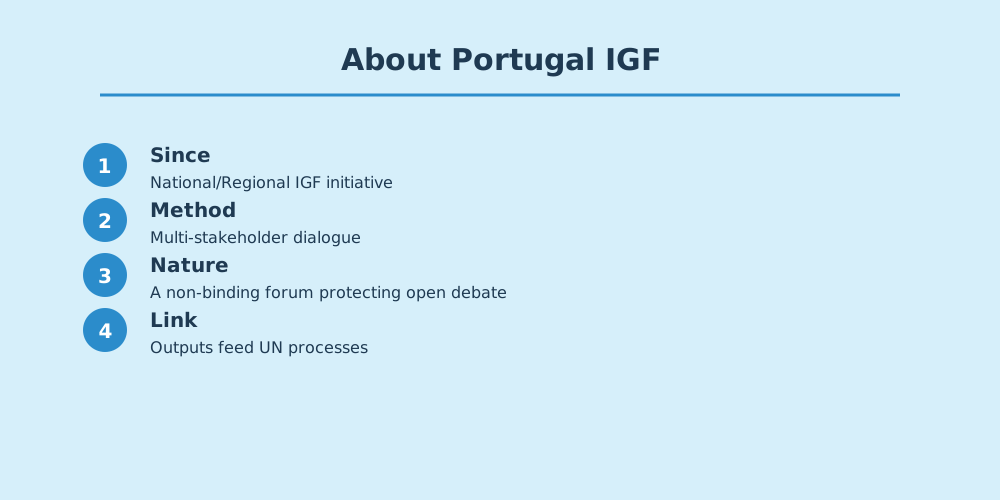
Portugal IGF is a National or Regional IGF Initiative (NRI), aligning local internet governance discussion with global IGF principles.
Why It Matters to You
What was discussed here becomes the baseline for national digital policy, platform rules and AI regulation worldwide within a few years. The principles confirmed at the 2010 meeting are the foundation of the "next rules" for the phones, social platforms and AI services you use every day.
Sources & References
- Evento 2010 – Fórum para a Sociedade da Informação – Governação da Internet — Iniciativa Portuguesa do FGI(公式サイト governacaointernet.pt) (accessed 2026-07-23)
- Fórum para a Sociedade da Informação – 2. Governação da Internet: Mensagens de Lisboa(2010年成果冊子, PDF) — UMIC / FCCN / LINI (accessed 2026-07-23)
- Iniciativa Portuguesa do FGI — トップページ(系列史・歴代メッセージ集一覧) — governacaointernet.pt (accessed 2026-07-23)
- Portugal IGF(NRI公式登録ページ) — UN IGF Secretariat (accessed 2026-07-23)
Quotes are translated or condensed from the records listed above. Bracketed numbers [n] refer to the source list.
Related links
- IGF official (NRI list): https://www.intgovforum.org/en/content/national-and-regional-igf-initiatives
- Japan IGF: https://japanigf.jp/
- Yuki Nakazawa's blog: https://nkzw.jp/category/igf/
更新履歴
第1稿投稿 2026年8月2日 8時08分(記事コンテンツアップ)
— 中澤祐樹

