


The 3-Line Summary
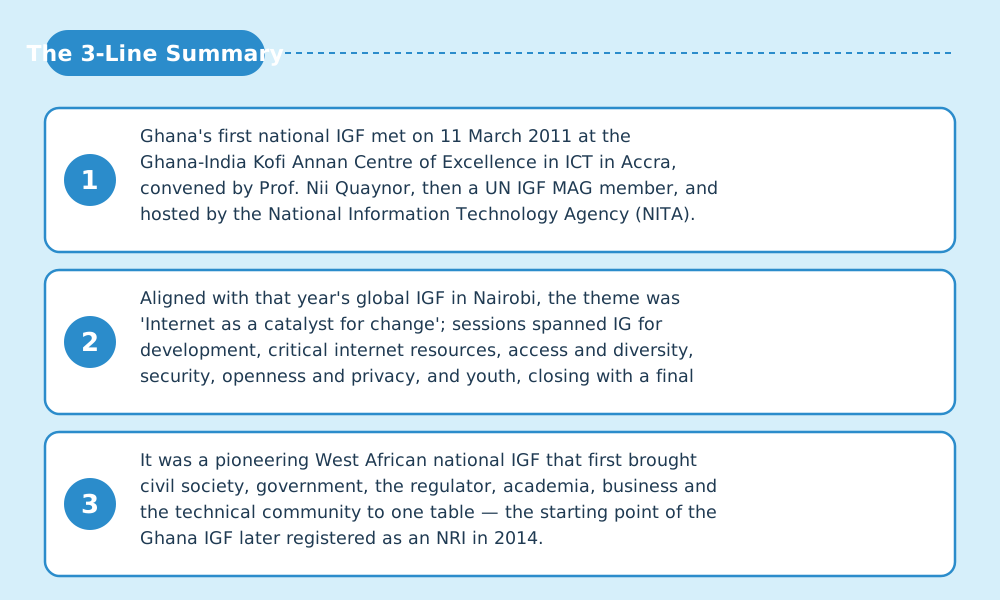
- Ghana's first national IGF met on 11 March 2011 at the Ghana-India Kofi Annan Centre of Excellence in ICT in Accra, convened by Prof. Nii Quaynor, then a UN IGF MAG member, and hosted by the National Information Technology Agency (NITA).
- Aligned with that year's global IGF in Nairobi, the theme was 'Internet as a catalyst for change'; sessions spanned IG for development, critical internet resources, access and diversity, security, openness and privacy, and youth, closing with a final communiqué.
- It was a pioneering West African national IGF that first brought civil society, government, the regulator, academia, business and the technical community to one table — the starting point of the Ghana IGF later registered as an NRI in 2014.
Welcome — this is the Japan IGF Support Organization. This in-depth report on The First Ghana Internet Governance Forum (2011) draws on official outputs, session records and on-site reporting. In a hurry? The three lines above and the diagrams carry the gist.
Conference at a Glance (from official records)
| Item | Detail |
|---|---|
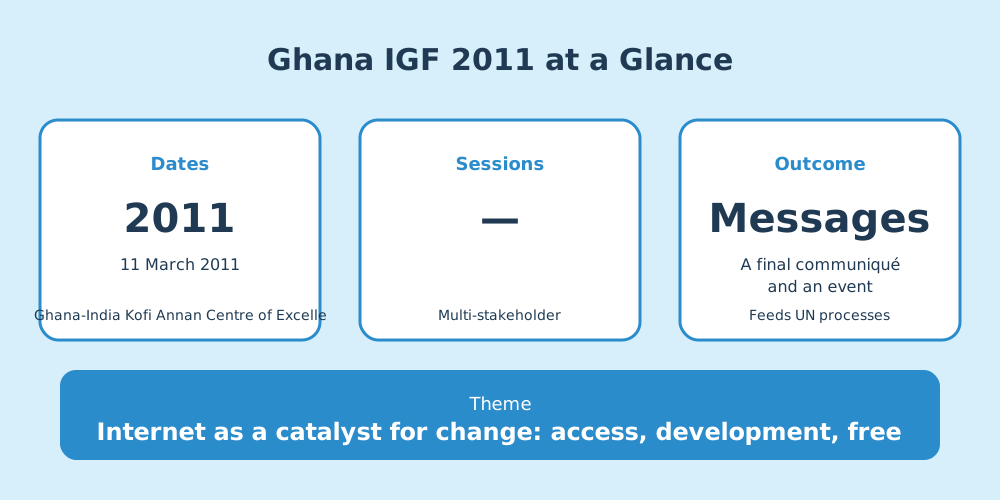
| Official name | The First Ghana Internet Governance Forum (2011) |
| Edition | 1st edition — the first Ghana Internet Governance Forum |
| Dates | 11 March 2011 |
| Venue | Ghana-India Kofi Annan Centre of Excellence in ICT, Accra |
| Theme | Internet as a catalyst for change: access, development, freedoms and innovation |
| Host | Hosted by the National Information Technology Agency (NITA); a collaboration of the West African IGF Consortium, the Kofi Annan Centre of Excellence in ICT, the Internet Society Ghana Chapter, GhNOG, GISPA and GARNET, funded by the Open Society Initiative for West Africa (OSIWA) and supported by the National Communications Authority and the Ministry of Communications |
| Outcome | A final communiqué and an event report (plus a presentation-format report) were published |
(See the source list at the end of this article.)
Discussion Digest — from the Session Records
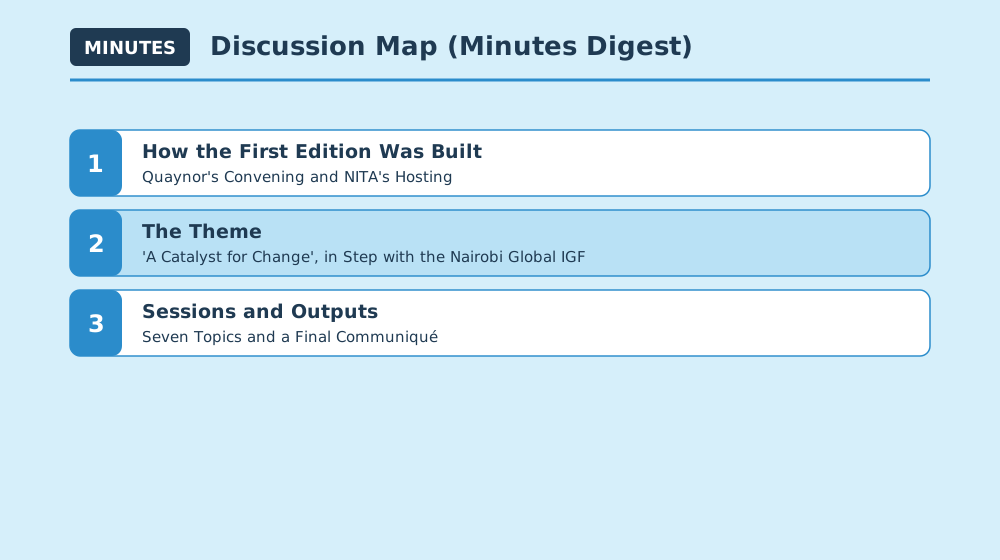
Key exchanges extracted from session records and transcripts.
1. How the First Edition Was Built — Quaynor's Convening and NITA's Hosting
Sessions: The forum as a whole, 11 March 2011
- Prof. Nii Quaynor, then a member of the UN IGF's Multistakeholder Advisory Group, convened the meeting, hosted by the National Information Technology Agency (NITA), bringing together civil society, government, the ICT regulator, academia, business and the technical community [1]
- It was a collaboration of the West African IGF Consortium, the Kofi Annan Centre of Excellence in ICT, the Internet Society Ghana Chapter, GhNOG, GISPA and GARNET, funded by OSIWA and supported by the National Communications Authority and the Ministry of Communications [1]
2. The Theme — 'A Catalyst for Change', in Step with the Nairobi Global IGF
Sessions: Overall thematic framing
- The theme, 'Internet as a catalyst for change: access, development, freedoms and innovation', was set in line with the upcoming global IGF in Kenya (Nairobi) that year [1]
- The forum was designed as part of a bottom-up process feeding national debate into the global IGF via the West African regional IGF (WAIGF) [1]
3. Sessions and Outputs — Seven Topics and a Final Communiqué
Sessions: Individual sessions and closing
- Sessions covered Internet Governance for Development (IG4D), critical internet resources, emerging issues, access and diversity, security, openness and privacy, the multistakeholder approach, and youth and internet governance [1]
- A final communiqué and an event report (in standard and presentation formats) were published on the official WAIGF site [1]
Three-Minute Short Talk — Your Questions Answered
Q. What kind of meeting was this?
A. Ghana's first national IGF — the first time government, the regulator, business, academia, civil society and the technical community sat at one table to discuss internet policy, convened by Prof. Nii Quaynor, a pioneer of Africa's early internet.
Q. What was discussed?
A. Seven topics including access and diversity, critical internet resources, security and privacy, and youth participation. The conclusions went into a final communiqué, laying groundwork for the global IGF in Kenya later that year.
Q. Why should I care?
A. It is a blueprint for a national IGF's first step: a theme aligned with the global agenda, co-organising between the technical community and government, and a published outcome document — the same template national IGFs everywhere still follow.
What Is Ghana IGF? (for first-time readers)
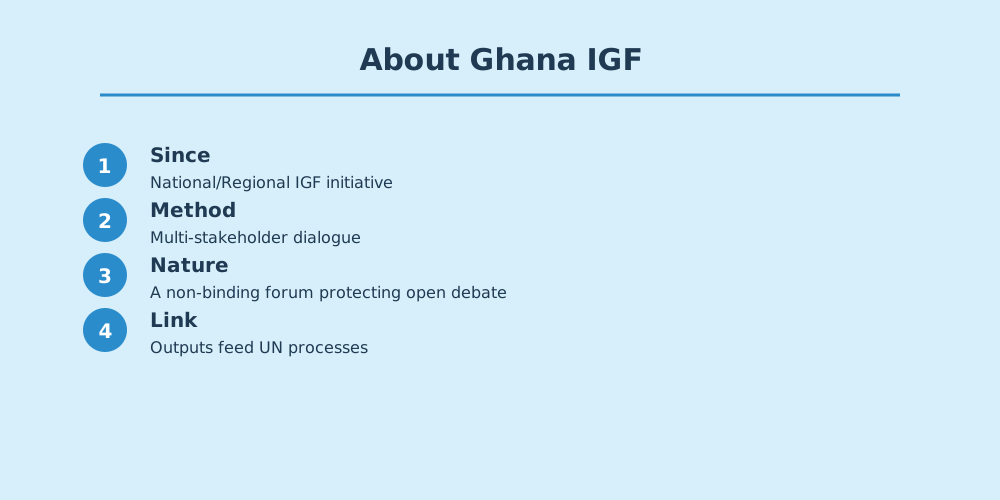
Ghana IGF is a National or Regional IGF Initiative (NRI), aligning local internet governance discussion with global IGF principles.
Why It Matters to You
What was discussed here becomes the baseline for national digital policy, platform rules and AI regulation worldwide within a few years. The principles confirmed at the 2011 meeting are the foundation of the "next rules" for the phones, social platforms and AI services you use every day.
Sources & References
- Ghana IGF report and final communiqué(2011-07-30付大会報告記事、2011-11-20時点のWayback Machine保存) — 西アフリカIGF(WAIGF、Internet Archive経由) (accessed 2026-07-23)
- Ghana IGF(NRI記録: "established in 2014"・コーディネーター Wisdom Donkor・年次報告書2016/2019/2020/2021掲載) — 国連IGF事務局 (accessed 2026-07-23)
Quotes are translated or condensed from the records listed above. Bracketed numbers [n] refer to the source list.
Related links
- IGF official (NRI list): https://www.intgovforum.org/en/content/national-and-regional-igf-initiatives
- Japan IGF: https://japanigf.jp/
- Yuki Nakazawa's blog: https://nkzw.jp/category/igf/
更新履歴
第1稿投稿 2026年8月18日 9時52分(記事コンテンツアップ)
— 中澤祐樹

