


The 3-Line Summary
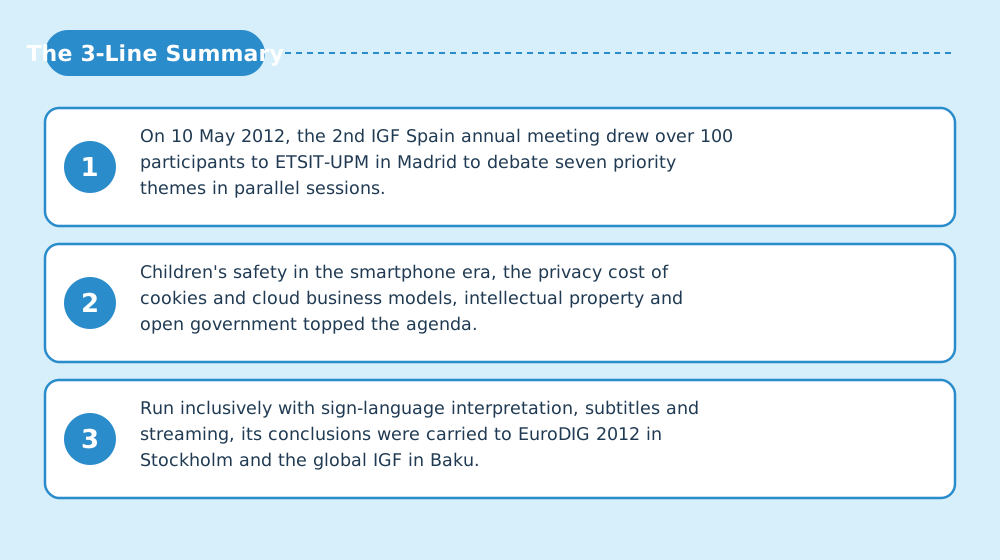
- On 10 May 2012, the 2nd IGF Spain annual meeting drew over 100 participants to ETSIT-UPM in Madrid to debate seven priority themes in parallel sessions.
- Children's safety in the smartphone era, the privacy cost of cookies and cloud business models, intellectual property and open government topped the agenda.
- Run inclusively with sign-language interpretation, subtitles and streaming, its conclusions were carried to EuroDIG 2012 in Stockholm and the global IGF in Baku.
Welcome — this is the Japan IGF Support Organization. This in-depth report on 2nd Annual Meeting of the Internet Governance Forum Spain (IGF Spain 2012) draws on official outputs, session records and on-site reporting. In a hurry? The three lines above and the diagrams carry the gist.
Conference at a Glance (from official records)
| Item | Detail |
|---|---|
| Official name | 2nd Annual Meeting of the Internet Governance Forum Spain (IGF Spain 2012) |
| Edition | 2nd Annual Meeting |
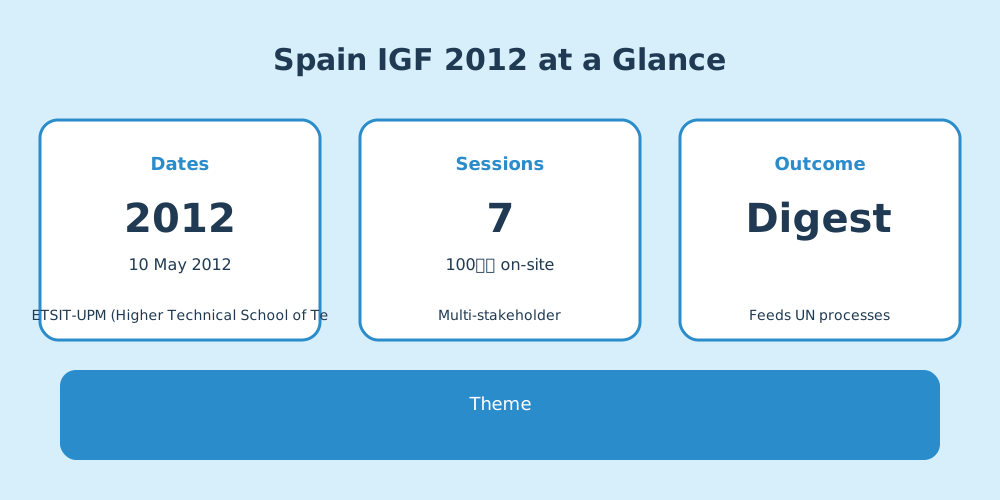
| Dates | 10 May 2012 |
| Venue | ETSIT-UPM (Higher Technical School of Telecommunications Engineering, Universidad Politécnica de Madrid), Madrid |
| Theme | Regional governance themes |
| Participants | Over 100 participants |
| Sessions | 7 (Seven priority themes in parallel sessions (the archive page counts eight roundtables), with simultaneous sign-language interpretation, subtitling and live streaming) |
| Host | Coordinated by GTic and Club de Innovación; sponsored by the Telefónica and Vodafone foundations, Google, Orange and ETSIT |
(See the source list at the end of this article.)
Discussion Digest — from the Session Records
Key exchanges extracted from session records and transcripts.
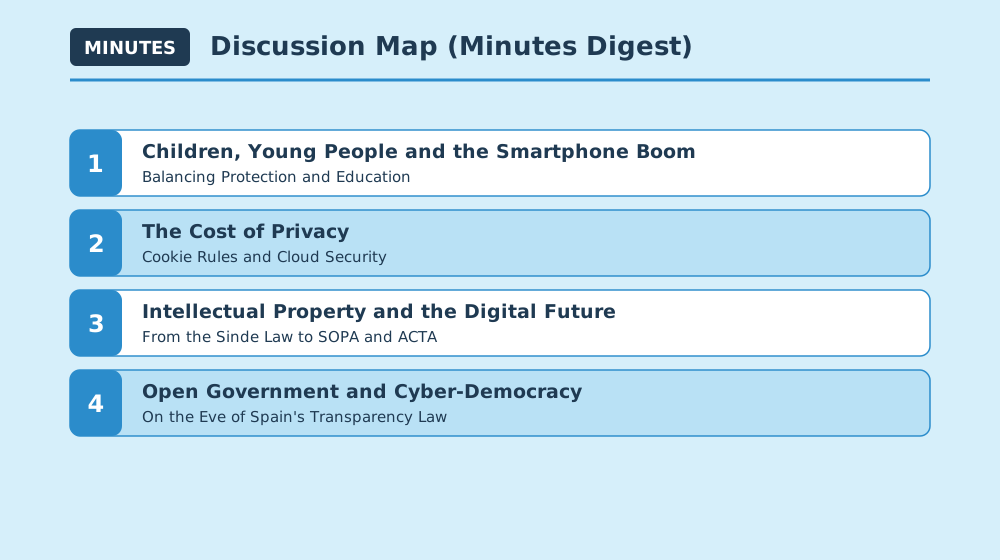
1. Children, Young People and the Smartphone Boom — Balancing Protection and Education
Sessions: Session 'Children and youth: the rise of smartphones' (Sala de Juntas)
- The session examined how the rapid spread of smartphones and tablets affects minors' privacy and safety, calling for parental-control tools and digital education [1][2]
- Researchers, child-protection NGOs and industry shared the table: Maialen Garmendia (EU Kids Online), Guillermo Cánovas (Protégeles) and Sebastián Muriel of social network Tuenti [1][2]
2. The Cost of Privacy — Cookie Rules and Cloud Security
Sessions: Session 'The cost of privacy in Internet business models: cookies and cloud'
- Panellists analysed the sustainability of ad-funded business models against the EU's revised cookie rules and public unease over behavioural advertising [1][2]
- The security-privacy balance in cloud services was debated in terms of responsibility, applicable law and globalisation, with data-protection scholar José Luis Piñar among the speakers [1][2]
3. Intellectual Property and the Digital Future — From the Sinde Law to SOPA and ACTA
Sessions: Session 'Intellectual property and other measures for the digital future'
- The panel surveyed the copyright battles of the day — Spain's Sinde Law, the US SOPA/PIPA bills and the ACTA treaty — and debated redesigning law, business models and skills [1][2]
- The balance between creators' rights and access to information was already framed here, a thread running through to the EU copyright directive a decade later [1][2]
4. Open Government and Cyber-Democracy — On the Eve of Spain's Transparency Law
Sessions: Session 'Open government, participation and cyber-democracy' (Aula Magna)
- Speakers clarified open data, transparency and participation concepts while debating Spain's forthcoming Transparency Law and the Open Government Partnership action plan presented in Brasilia [1][2]
- Practitioners from both government and civil society took part, including Nagore de los Ríos (Basque Government), Mar Cabra (Fundación Civio) and Miguel Ángel Gonzalo (Congress of Deputies) [1][2]
Three-Minute Short Talk — Your Questions Answered
Q. What did the meeting decide?
A. Nothing binding — it was a dialogue. Conclusions on seven themes were documented as 'messages' and carried to EuroDIG in Stockholm and the UN IGF in Baku.
Q. What was the most contentious topic?
A. Copyright. In the year of worldwide protests against SOPA, PIPA and ACTA — plus Spain's own Sinde Law — the clash between protecting creators and keeping the Internet open was debated head-on.
Q. Why does it matter?
A. Children's smartphone use and cookie rules became global regulatory battlegrounds soon after, and the meeting's sign-language-interpreted, streamed format was an early model of inclusive governance debate.
What Is Spain IGF? (for first-time readers)
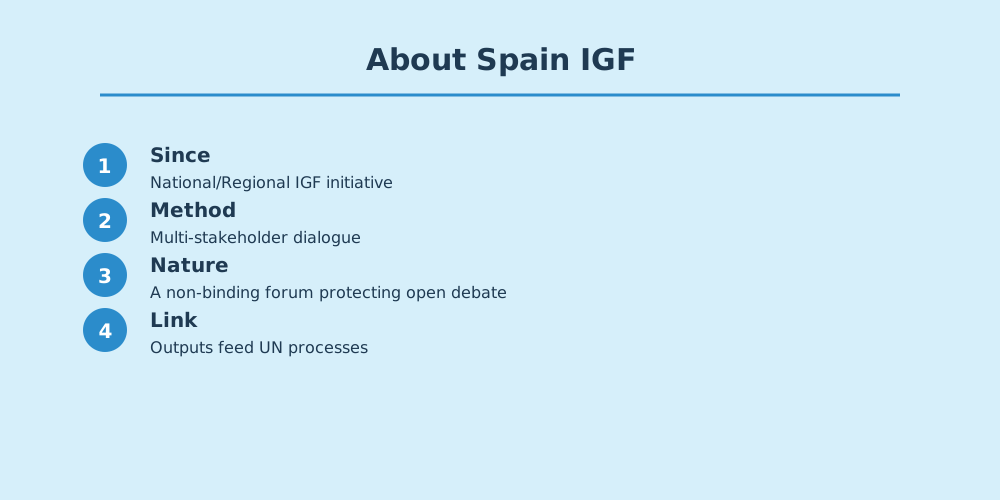
Spain IGF is a National or Regional IGF Initiative (NRI), aligning local internet governance discussion with global IGF principles.
Why It Matters to You
What was discussed here becomes the baseline for national digital policy, platform rules and AI regulation worldwide within a few years. The principles confirmed at the 2012 meeting are the foundation of the "next rules" for the phones, social platforms and AI services you use every day.
Sources & References
- IGF Spain 2012 – II Jornada anual — igfspain.org (accessed 2026-07-22)
- II Jornadas Anuales IGF Spain 2012(当時の詳細報告・登壇者一覧) — igfspain.org (accessed 2026-07-22)
- II Jornada Anual IGF Spain – Mensajes(成果文書PDF) — igfspain.org (accessed 2026-07-22)
- Historia de los 10 años del Foro de Gobernanza de Internet Spain — IGF Spain(10周年史, jornadasigfspain.es) (accessed 2026-07-22)
Quotes are translated or condensed from the records listed above. Bracketed numbers [n] refer to the source list.
Related links
- IGF official (NRI list): https://www.intgovforum.org/en/content/national-and-regional-igf-initiatives
- Japan IGF: https://japanigf.jp/
- Yuki Nakazawa's blog: https://nkzw.jp/category/igf/
更新履歴
第1稿投稿 2026年7月15日 19時17分(記事コンテンツアップ)
— 中澤祐樹

