


The 3-Line Summary
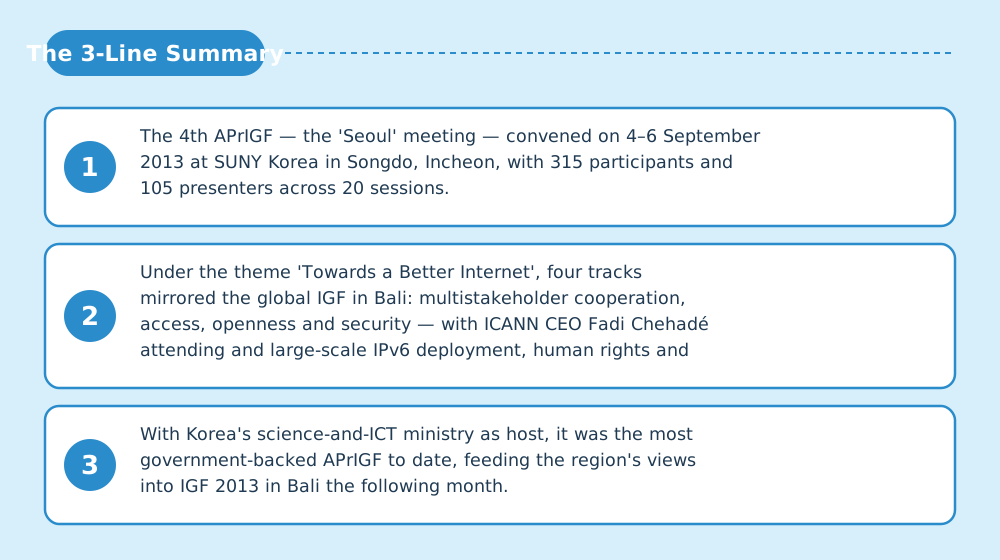
- The 4th APrIGF — the 'Seoul' meeting — convened on 4–6 September 2013 at SUNY Korea in Songdo, Incheon, with 315 participants and 105 presenters across 20 sessions.
- Under the theme 'Towards a Better Internet', four tracks mirrored the global IGF in Bali: multistakeholder cooperation, access, openness and security — with ICANN CEO Fadi Chehadé attending and large-scale IPv6 deployment, human rights and privacy topping the agenda.
- With Korea's science-and-ICT ministry as host, it was the most government-backed APrIGF to date, feeding the region's views into IGF 2013 in Bali the following month.
Welcome — this is the Japan IGF Support Organization. This in-depth report on AprIGF 2013 in Seoul draws on official outputs, session records and on-site reporting. In a hurry? The three lines above and the diagrams carry the gist.
📍 Officially the '2013 APrIGF Seoul'; the venue, SUNY Korea, is in Songdo International City, Incheon — not in Seoul itself
Conference at a Glance (from official records)
| Item | Detail |
|---|---|
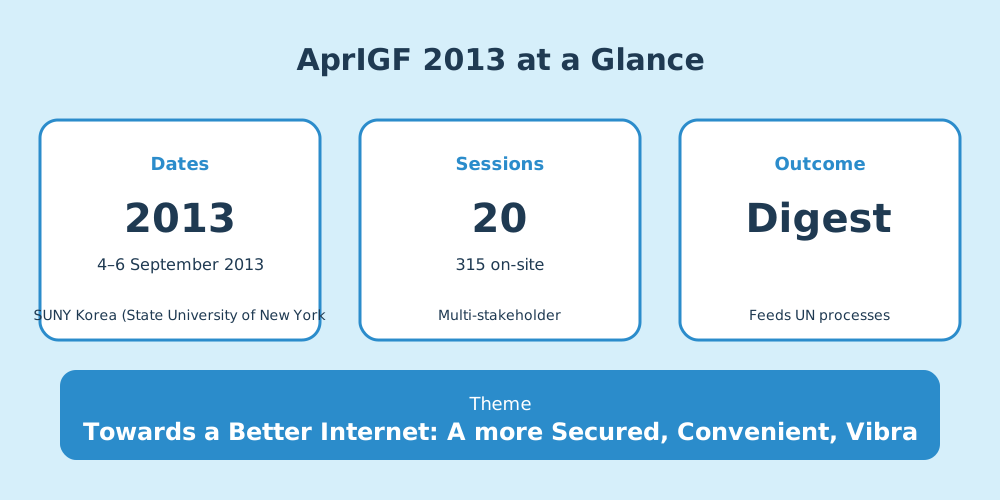
| Edition | 4th APrIGF |
| Dates | 4–6 September 2013 |
| Venue | SUNY Korea (State University of New York, Korea), Songdo International City, Incheon |
| Theme | Towards a Better Internet: A more Secured, Convenient, Vibrant, Equivalent, and Desirable Internet |
| Participants | 315 |
| Sessions | 20 |
| Participation detail | 315 participants (77 overseas, 238 domestic); government representatives from 8 countries |
| Presenters | 105 |
| Tracks | Four tracks aligned with IGF 2013 Bali: Multistakeholder & Enhanced Cooperation; Access; Openness; Security |
| Host | Hosted by Korea's Ministry of Science, ICT and Future Planning (MSIP) and the Korea Internet Governance Alliance (KIGA); local secretariat: KISA; APrIGF secretariat: DotAsia |
(See the source list at the end of this article.)
Discussion Digest — from the Session Records
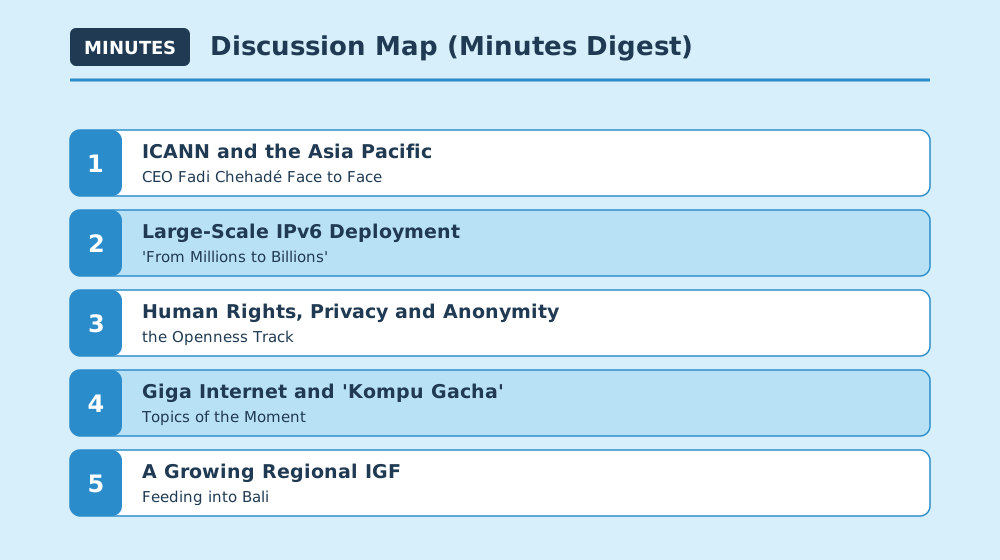
Key exchanges extracted from session records and transcripts.
1. ICANN and the Asia Pacific — CEO Fadi Chehadé Face to Face
Sessions: 'ICANN Engagement with the Asia Pacific Community' (4 September, 16:30) and the opening ceremony
- ICANN President & CEO Fadi Chehadé spoke at the opening ceremony and joined a dedicated session with ICANN board members and regional vice-presidents on how ICANN should engage the Asia Pacific community [1]
- Regional engagement and fostering a better environment for IDN TLDs were core questions of the multistakeholder track's seven workshops [1]
2. Large-Scale IPv6 Deployment — 'From Millions to Billions'
Sessions: Extended session 'Large-Scale IPv6 Technology Deployment – From Millions to Billions' and 'IPv6 Deployment Plan of Government in Asia Pacific Region Countries' (5 September)
- With IPv4 unable to sustain the Internet's rapid growth, a double-length session dug into the key technical challenges of deploying IPv6 at scale [1]
- A companion session had governments across the Asia Pacific share their national IPv6 deployment plans [1]
3. Human Rights, Privacy and Anonymity — the Openness Track
Sessions: Openness track: human rights and democracy; APEC privacy principles; user identity and anonymity; network neutrality (4–5 September)
- Civil-society voices from across Asia — including Korea's Jinbonet — tackled Internet governance for human rights and democracy [1]
- Panels weighed privacy protection built on the APEC Privacy Principles and the balance between user identity and anonymity online, with Korean and Japanese scholars and industry at the table [1]
- Japan's Izumi Aizu moderated the network neutrality session, with Prof. Toshiya Jitsuzumi of Kyushu University among the panellists [1]
4. Giga Internet and 'Kompu Gacha' — Topics of the Moment
Sessions: 'Broader World of Network – Giga Internet' double session (6 September) and 'Trade Issues Arising from the 2012 Kompu Gacha Ban' (5 September)
- A double session on 'Giga Internet' examined national plans for ultra-high-bandwidth networks — fitting for broadband powerhouse Korea [1]
- The 'Kompu Gacha' session used Japan's 2012 ban on gacha-style monetisation of virtual goods to explore its cross-border trade and consumer implications [1]
5. A Growing Regional IGF — Feeding into Bali
Sessions: Track summary sessions and closing plenary (6 September)
"The latest APrIGF demonstrated continuous growth and improvement in terms of both content and participation, reflecting the increasing importance of Internet Governance issues in our region"
— Paul Wilson (Director General of APNIC; Chair, APrIGF Program Committee — Letter from the Chair in the conference report) [1]
- Track summaries fed the region's discussions into the matching tracks of IGF 2013 in Bali the following month [1]
- The security track included a joint session with Youth IGF participants, who presented the outcomes of a multistakeholder role-play exercise [1]
Three-Minute Short Talk — Your Questions Answered
Q. So what did it decide?
A. Nothing binding — it's the region's annual multistakeholder forum. Its four tracks were summarised and carried into the global IGF in Bali the following month.
Q. Was the 'Seoul' meeting really not in Seoul?
A. Correct — the venue, SUNY Korea, is in Songdo International City, Incheon. Conferences often carry the big-city name while meeting nearby.
Q. Why does it still matter?
A. The questions it framed — IPv6 at scale, identity versus anonymity, privacy rules across borders — are exactly the ones regulators are still working through today.
What Is AprIGF? (for first-time readers)
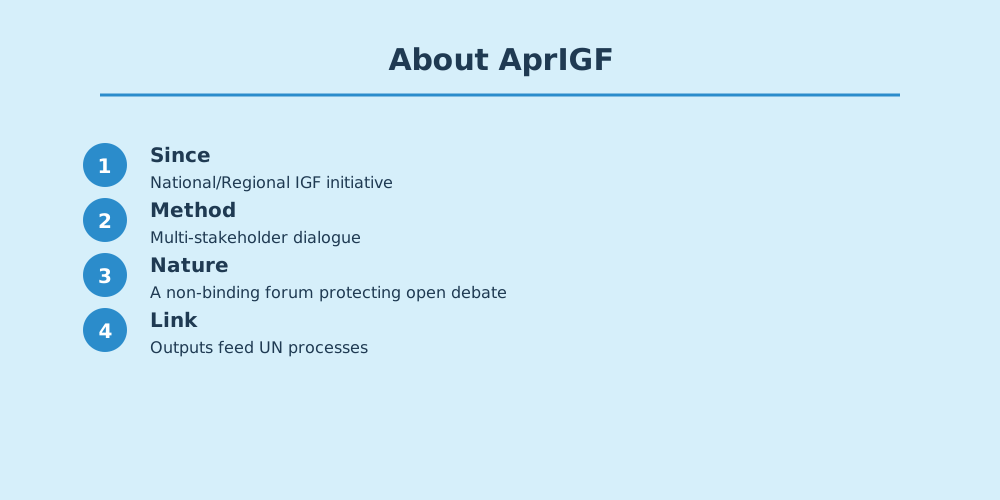
AprIGF is a National or Regional IGF Initiative (NRI), aligning local internet governance discussion with global IGF principles.
Why It Matters to You
What was discussed here becomes the baseline for national digital policy, platform rules and AI regulation worldwide within a few years. The principles confirmed at the 2013 meeting are the foundation of the "next rules" for the phones, social platforms and AI services you use every day.
Sources & References
- Report of 2013 APrIGF Seoul(大会報告書) — 2013 APrIGFソウル開催委員会事務局(IGF Seoul・韓国インターネット振興院=KISA) (accessed 2026-07-10)
- 2013 APrIGF Seoul 公式サイト — APrIGF (accessed 2026-07-10)
- Venue (SUNY) | 2013 APrIGF Seoul(会場案内: 仁川・松島の住所を記載) — APrIGF (accessed 2026-07-10)
- APrIGF 公式サイト(過去大会アーカイブ) — APrIGF (accessed 2026-07-10)
Quotes are translated or condensed from the records listed above. Bracketed numbers [n] refer to the source list.
Related links
- IGF official (NRI list): https://www.intgovforum.org/en/content/national-and-regional-igf-initiatives
- Japan IGF: https://japanigf.jp/
- Yuki Nakazawa's blog: https://nkzw.jp/category/igf/
Revision History
Rev. 1 — published 4 September 2013, 09:00 (Article published)
Rev. 2 — updated 10 July 2026, 23:16 (Fully revised into the in-depth edition: added the 3-line summary, minutes digest, short talk, source list and diagrams (all quotes verified against the listed sources))
— 中澤祐樹

