

The 3-Line Summary
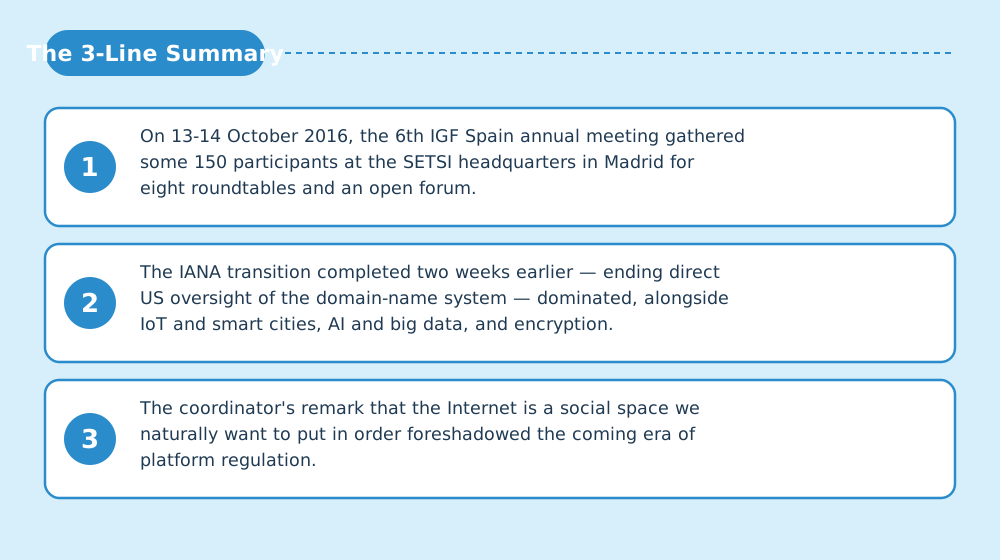
- On 13-14 October 2016, the 6th IGF Spain annual meeting gathered some 150 participants at the SETSI headquarters in Madrid for eight roundtables and an open forum.
- The IANA transition completed two weeks earlier — ending direct US oversight of the domain-name system — dominated, alongside IoT and smart cities, AI and big data, and encryption.
- The coordinator's remark that the Internet is a social space we naturally want to put in order foreshadowed the coming era of platform regulation.
Welcome — this is the Japan IGF Support Organization. This in-depth report on 6th Annual Meeting of the Internet Governance Forum Spain (IGF Spain 2016) draws on official outputs, session records and on-site reporting. In a hurry? The three lines above and the diagrams carry the gist.
📍 The official page lists the venue as the SETSI headquarters; from this edition the meeting moved from May to autumn
Conference at a Glance (from official records)
| Item | Detail |
|---|---|
| Official name | 6th Annual Meeting of the Internet Governance Forum Spain (IGF Spain 2016) |
| Edition | 6th Annual Meeting |
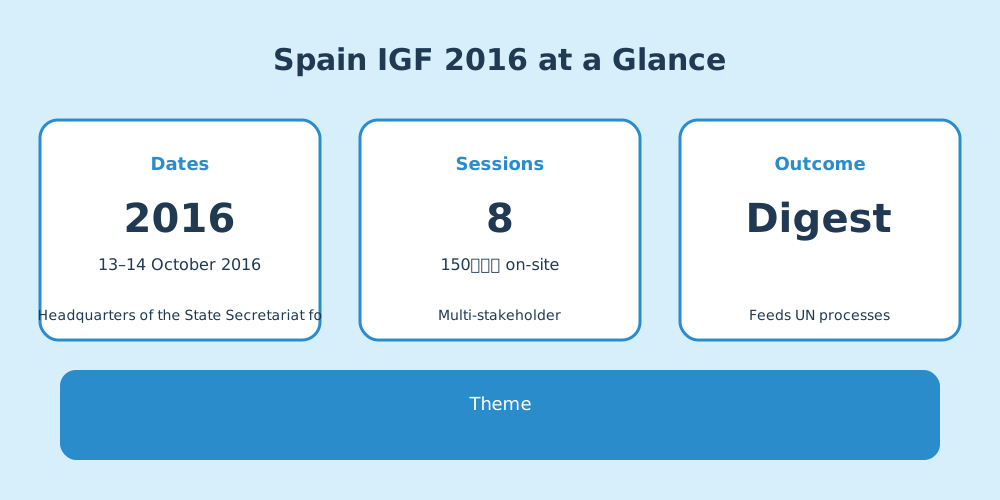
| Dates | 13–14 October 2016 |
| Venue | Headquarters of the State Secretariat for Telecommunications and the Information Society (SETSI), Madrid |
| Theme | Regional governance themes |
| Participants | Around 150 participants |
| Sessions | 8 (Eight roundtables and expert presentations over two days, plus an open forum on the IANA transition) |
| Host | Directed by Jorge Pérez; supported by UPM, Telefónica, Vodafone, Google, Orange and red.es |
(See the source list at the end of this article.)
Discussion Digest — from the Session Records
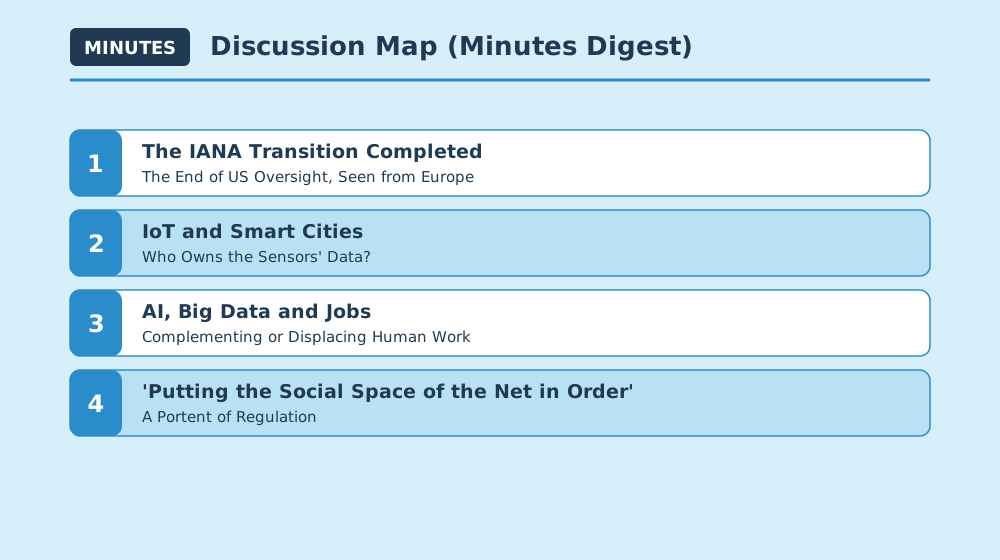
Key exchanges extracted from session records and transcripts.
1. The IANA Transition Completed — The End of US Oversight, Seen from Europe
Sessions: Keynote 'The European vision of Internet governance' by Jesús Villasante (European Commission) and the open forum
"The Internet belongs to everyone and is for everyone — that is why we all have something to say, and that is how Europe wants it"
— Jesús Villasante (European Commission) [1][2][3]
- A European Commission expert explained the historic weight of 30 September 2016, when the NTIA's IANA contract expired and ultimate authority over the DNS left US government hands [1][2][3]
- The open forum examined post-transition global governance, its political impact and Spain's role [1][2][3]
- The EU's Next Generation Internet initiative towards 2030 was also presented [1][2][3]
2. IoT and Smart Cities — Who Owns the Sensors' Data?
Sessions: Roundtable 'The Internet of Things and smart cities: whose data do the sensors collect?' (13 October)
"We must distinguish between personal data, which belongs to the individual, and the non-personal data captured by sensors"
— José Luis Piñar (professor, CEU San Pablo University; former head of the Spanish DPA) [1][2][3]
- Panellists agreed a smart city is defined not by connections but by using data to improve residents' lives [1][2][3]
- Integrating transport, lighting, sanitation, health and security systems requires interoperability, common standards and clear governance [1][2][3]
3. AI, Big Data and Jobs — Complementing or Displacing Human Work
Sessions: Roundtable 'AI and big data in new personalised services: implications for the labour market' (14 October)
- The panel weighed how AI and big data complement human work as personalised services expand, and what that means for the labour market [1][3]
- The same day's roundtables tackled the difficulty of applying national laws to a global Internet and the need for secure encryption of communications [1][3]
4. 'Putting the Social Space of the Net in Order' — A Portent of Regulation
Sessions: Opening session (13 October)
"The Internet is a social space of human relations, and it is only logical that we concern ourselves with putting it in order"
— Jorge Pérez (Director, IGF Spain) [1][2]
- State Secretary Calvo-Sotelo stressed the Internet's importance as infrastructure essential to economic and social development [1][2]
- Other roundtables covered fintech and blockchain, social media and the robotisation and personalisation of news, and technology at school including cyberbullying [1][2]
Three-Minute Short Talk — Your Questions Answered
Q. What did the meeting decide?
A. Nothing binding — but coming two weeks after ultimate authority over the domain-name system left US government hands, it was where Spanish society digested that shift.
Q. What was the headline topic?
A. The IANA transition. US oversight dating from 1998 ended on 30 September 2016, completing the move to ICANN's multistakeholder model — and Europe's reading of that independence took centre stage.
Q. Why does it matter?
A. The IANA transition was a global process, and the question 'who owns sensor data?' debated here now sits at the heart of every country's data-economy policy.
What Is Spain IGF? (for first-time readers)
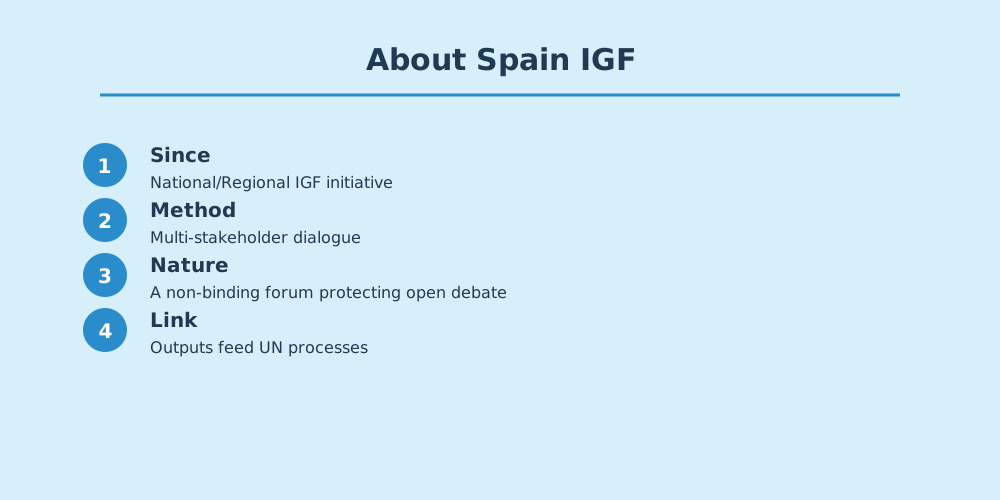
Spain IGF is a National or Regional IGF Initiative (NRI), aligning local internet governance discussion with global IGF principles.
Why It Matters to You
What was discussed here becomes the baseline for national digital policy, platform rules and AI regulation worldwide within a few years. The principles confirmed at the 2016 meeting are the foundation of the "next rules" for the phones, social platforms and AI services you use every day.
Sources & References
- IGF Spain 2016 – VI Jornada anual — igfspain.org (accessed 2026-07-22)
- VI Jornadas Anuales IGF Spain 2016(当時の詳細報告・発言記録) — igfspain.org (accessed 2026-07-22)
- Mensajes del 6º Foro de la Gobernanza de Internet en España(セッション別結論) — igfspain.org (accessed 2026-07-22)
- Historia de los 10 años del Foro de Gobernanza de Internet Spain — IGF Spain(10周年史, jornadasigfspain.es) (accessed 2026-07-22)
Quotes are translated or condensed from the records listed above. Bracketed numbers [n] refer to the source list.
Related links
- IGF official (NRI list): https://www.intgovforum.org/en/content/national-and-regional-igf-initiatives
- Japan IGF: https://japanigf.jp/
- Yuki Nakazawa's blog: https://nkzw.jp/category/igf/
更新履歴
第1稿投稿 2026年7月16日 12時38分(記事コンテンツアップ)
— 中澤祐樹

