


The 3-Line Summary
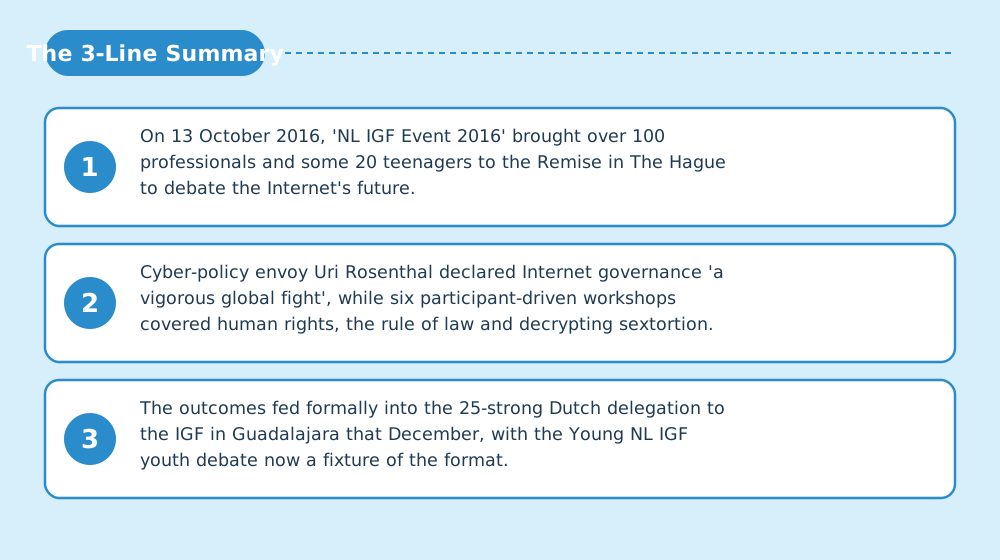
- On 13 October 2016, 'NL IGF Event 2016' brought over 100 professionals and some 20 teenagers to the Remise in The Hague to debate the Internet's future.
- Cyber-policy envoy Uri Rosenthal declared Internet governance 'a vigorous global fight', while six participant-driven workshops covered human rights, the rule of law and decrypting sextortion.
- The outcomes fed formally into the 25-strong Dutch delegation to the IGF in Guadalajara that December, with the Young NL IGF youth debate now a fixture of the format.
Welcome — this is the Japan IGF Support Organization. This in-depth report on NL IGF Event 2016 draws on official outputs, session records and on-site reporting. In a hurry? The three lines above and the diagrams carry the gist.
Conference at a Glance (from official records)
| Item | Detail |
|---|---|
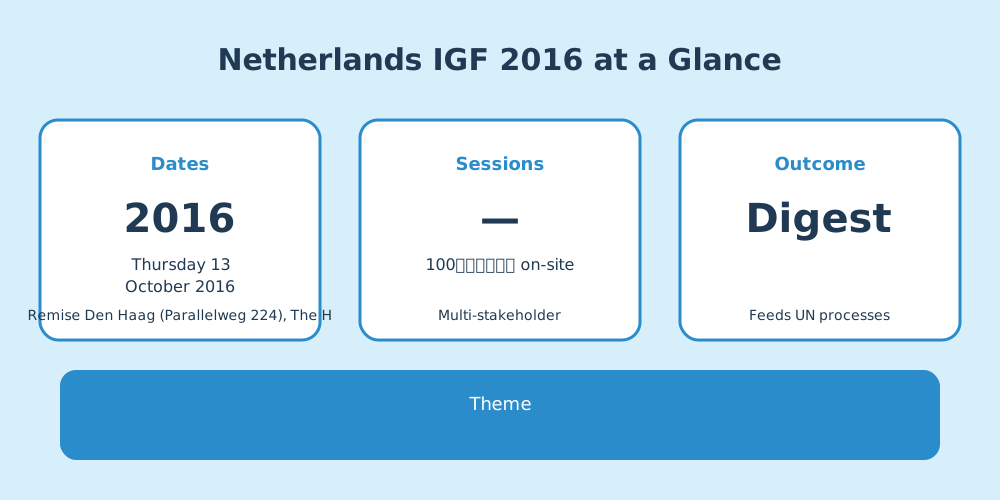
| Official name | NL IGF Event 2016 |
| Dates | Thursday 13 October 2016 (13:00–17:00) |
| Venue | Remise Den Haag (Parallelweg 224), The Hague |
| Theme | Regional governance themes |
| Participants | Over 100 professionals from government, business and civil society, plus around 20 teenagers in the Young NL IGF |
| Workshops | Six workshops with an agenda set by the participants themselves |
| Host | The Ministry of Economic Affairs, SIDN and ECP — the NL IGF consortium |
(See the source list at the end of this article.)
Discussion Digest — from the Session Records
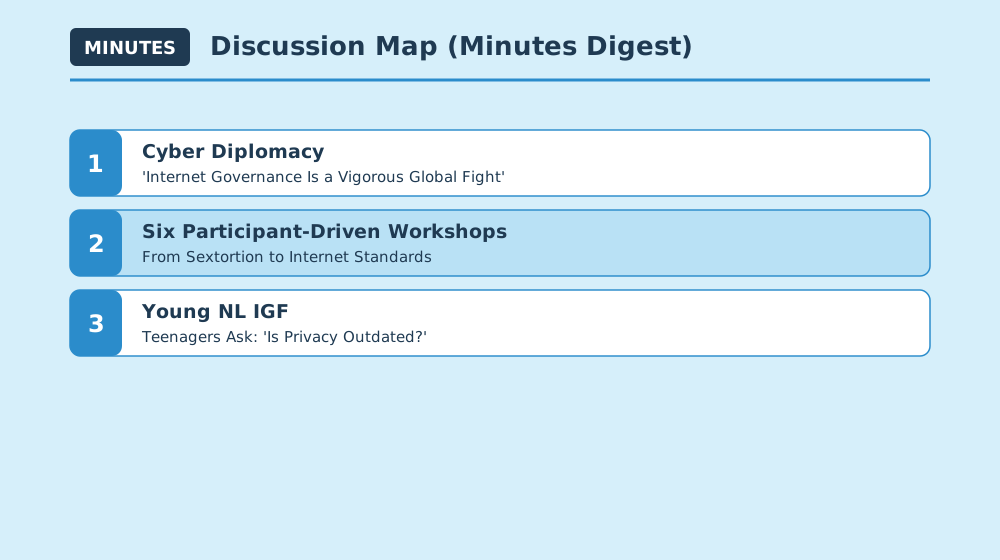
Key exchanges extracted from session records and transcripts.
1. Cyber Diplomacy — 'Internet Governance Is a Vigorous Global Fight'
Sessions: Address by Uri Rosenthal, the Dutch government's special envoy for international cyber policy
"Internet Governance is a vigorous global fight"
— Uri Rosenthal (Dutch special envoy for international cyber policy, former foreign minister) [1]
"We must focus on the 3 Ds: Development, Diplomacy and Defence in the field of cyberspace — and all this within the framework of a multi-stakeholder approach"
— Uri Rosenthal [1]
- Rosenthal framed a contest between countries that see the Internet as belonging to everyone and those that see it as the government's, making defence of the multistakeholder model a pillar of Dutch diplomacy [1]
- Calling IT the Netherlands' 'third main port', he pointed to hosting the GCCS in 2015, launching the GFCE and initiating the Freedom Online Coalition in 2011 [1]
2. Six Participant-Driven Workshops — From Sextortion to Internet Standards
Sessions: Six workshops including 'Internet freedom through Internet infrastructure?', 'Decrypting sextortion', 'Let's break down silos in cybersecurity and cybercrime!', 'Democracy by Design' and 'Building trust and confidence: implementing Internet standards'
- As at the global IGF, participants set the agenda: Internet freedom via infrastructure, better cooperation between enforcers and Internet firms, decrypting sextortion, democracy by design, and implementing Internet standards [1][2]
- Three of the six — sextortion, breaking down cyber silos, and standards — went on to run as Dutch-organised workshops at IGF Guadalajara that December [1][2]
3. Young NL IGF — Teenagers Ask: 'Is Privacy Outdated?'
Sessions: Young NL IGF debate moderated by Internet sociologist Chris van 't Hof
- Around 20 teenagers debated data protection, whether privacy is outdated, law-enforcement backdoors and cyberwar, with their conclusions feeding into the Dutch delegation's brief [1]
- Closing speaker Su Sonia Herring, a youth delegate from Turkey, described curtailed expression and blocked social media at home and argued that starting young — 'like in the Netherlands' — draws more people into global Internet debates [1]
Three-Minute Short Talk — Your Questions Answered
Q. What did the meeting decide?
A. Nothing binding — but its conclusions formed the official brief for the 25-member Dutch delegation to the UN IGF in Guadalajara, hard-wiring national debate into international negotiation.
Q. What was the most striking moment?
A. Envoy Uri Rosenthal calling Internet governance 'a vigorous global fight' — a frontline diplomat's account of the contest between an open Internet and state control.
Q. Why does it matter?
A. Carrying national workshops straight into the UN IGF, and treating a teenage debate as formal delegation input, are concrete models any country's IGF community can copy.
What Is Netherlands IGF? (for first-time readers)
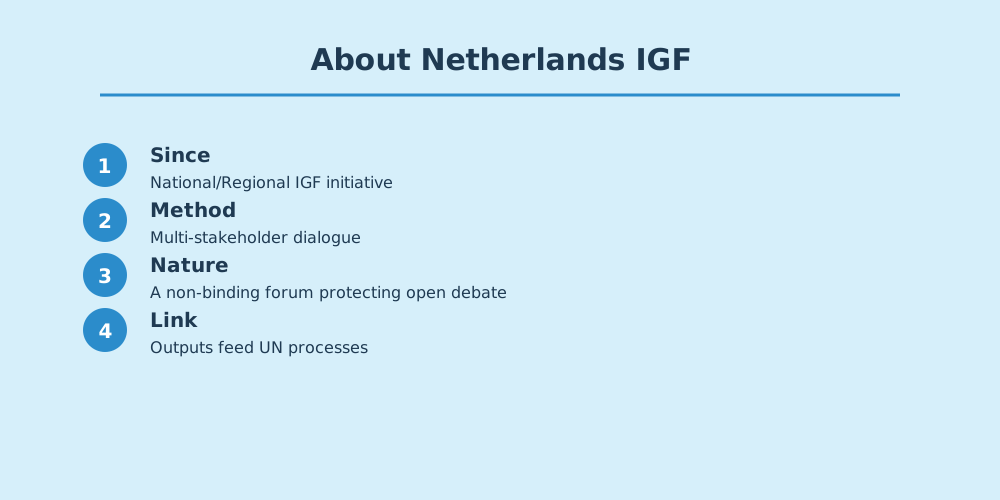
Netherlands IGF is a National or Regional IGF Initiative (NRI), aligning local internet governance discussion with global IGF principles.
Why It Matters to You
What was discussed here becomes the baseline for national digital policy, platform rules and AI regulation worldwide within a few years. The principles confirmed at the 2016 meeting are the foundation of the "next rules" for the phones, social platforms and AI services you use every day.
Sources & References
- NL IGF Annual report 2016(国連IGF提出の公式年次報告・事後記録) — NL IGF/国連IGF事務局(intgovforum.org, Wayback Machine) (accessed 2026-07-23)
- NL IGF Event 2016(公式agenda: 日時・会場Remise Den Haag・テーマ) — NL IGF(nligf.nl, Wayback Machine) (accessed 2026-07-23)
- National IGF initiatives – WEOG(Netherlands IGF: established in 2010) — 国連IGF事務局(intgovforum.org, Wayback Machine) (accessed 2026-07-23)
Quotes are translated or condensed from the records listed above. Bracketed numbers [n] refer to the source list.
Related links
- IGF official (NRI list): https://www.intgovforum.org/en/content/national-and-regional-igf-initiatives
- Japan IGF: https://japanigf.jp/
- Yuki Nakazawa's blog: https://nkzw.jp/category/igf/
更新履歴
第1稿投稿 2026年8月13日 21時13分(記事コンテンツアップ)
— 中澤祐樹

