


The 3-Line Summary
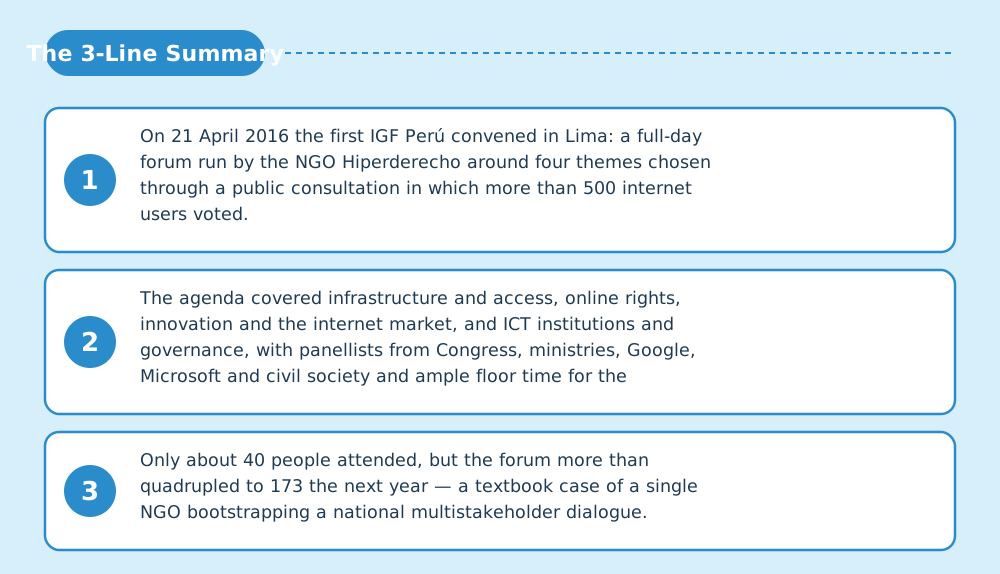
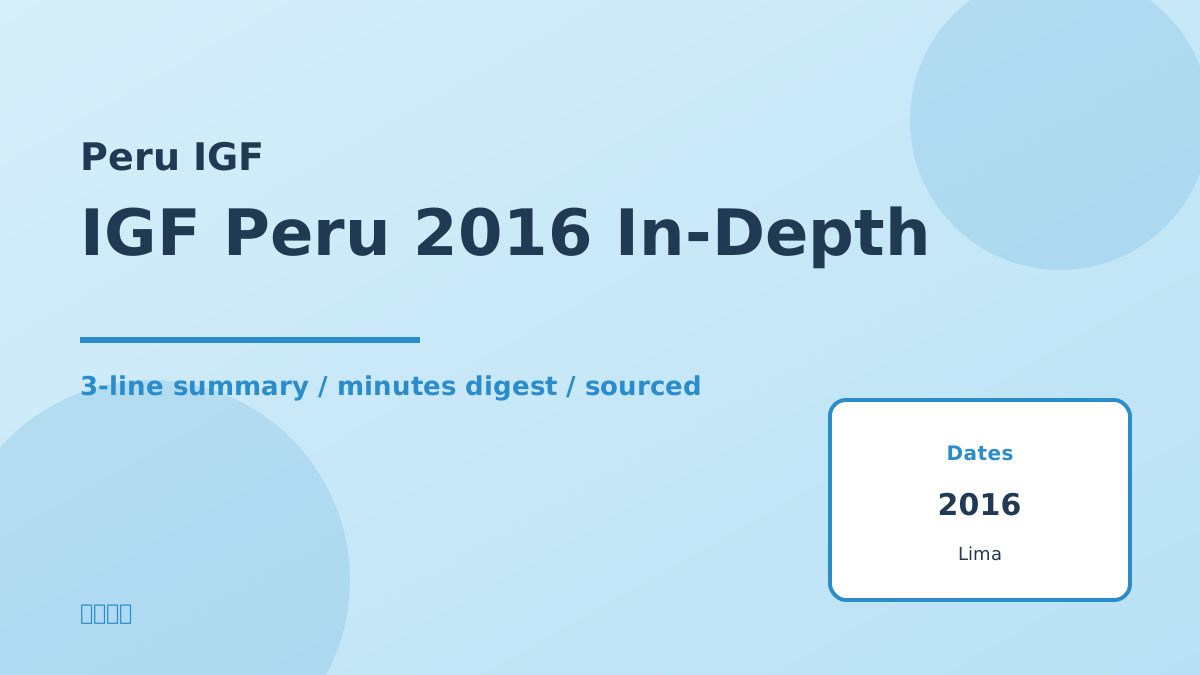
- On 21 April 2016 the first IGF Perú convened in Lima: a full-day forum run by the NGO Hiperderecho around four themes chosen through a public consultation in which more than 500 internet users voted.
- The agenda covered infrastructure and access, online rights, innovation and the internet market, and ICT institutions and governance, with panellists from Congress, ministries, Google, Microsoft and civil society and ample floor time for the audience.
- Only about 40 people attended, but the forum more than quadrupled to 173 the next year — a textbook case of a single NGO bootstrapping a national multistakeholder dialogue.
Welcome — this is the Japan IGF Support Organization. This in-depth report on IGF Perú 2016 (First National IGF of Peru / Foro de Gobernanza de Internet Perú) draws on official outputs, session records and on-site reporting. In a hurry? The three lines above and the diagrams carry the gist.
📍 A one-day meeting in Lima; the venue building is not named in contemporary records, but the Pontificia Universidad Católica del Perú (PUCP) provided the streaming platform and, with Google, supported the event
Conference at a Glance (from official records)
| Item | Detail |
|---|---|
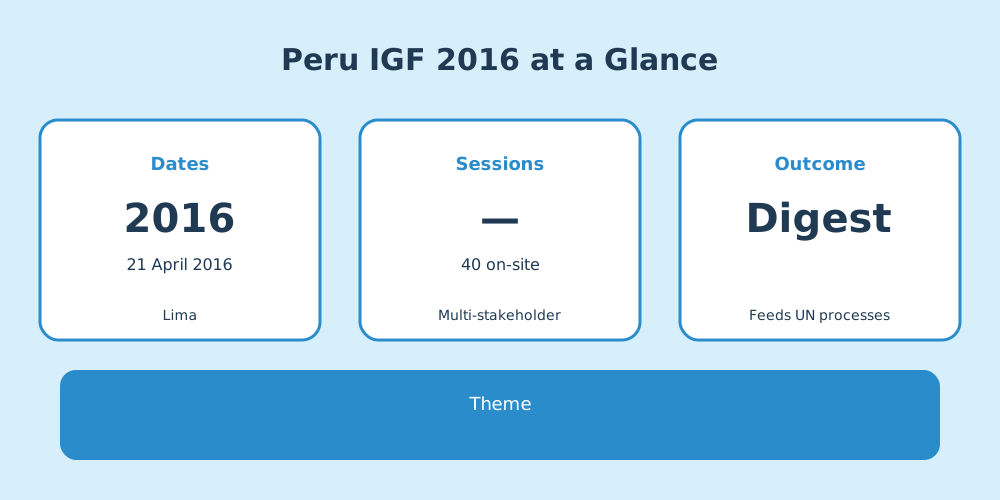
| Official name | IGF Perú 2016 (First National IGF of Peru / Foro de Gobernanza de Internet Perú) |
| Dates | 21 April 2016 |
| Venue | Lima, Peru |
| Theme | Regional governance themes |
| Participants | 40 (Hiperderecho's 2017 comparison table records 40 attendees (1 government, 21 civil society, 7 private sector, 1 technical, 10 unidentified); organiser Miguel Morachimo's retrospective says 'nearly one hundred people' took part over the full day plus more online, so cumulative participation was higher) |
| Host | The NGO Hiperderecho ran the logistics; a programme committee of representatives from Congress, the Foreign Ministry, PUCP, Entel, APESOFT and ONGAWA set the agenda |
(See the source list at the end of this article.)
Discussion Digest — from the Session Records
Key exchanges extracted from session records and transcripts.
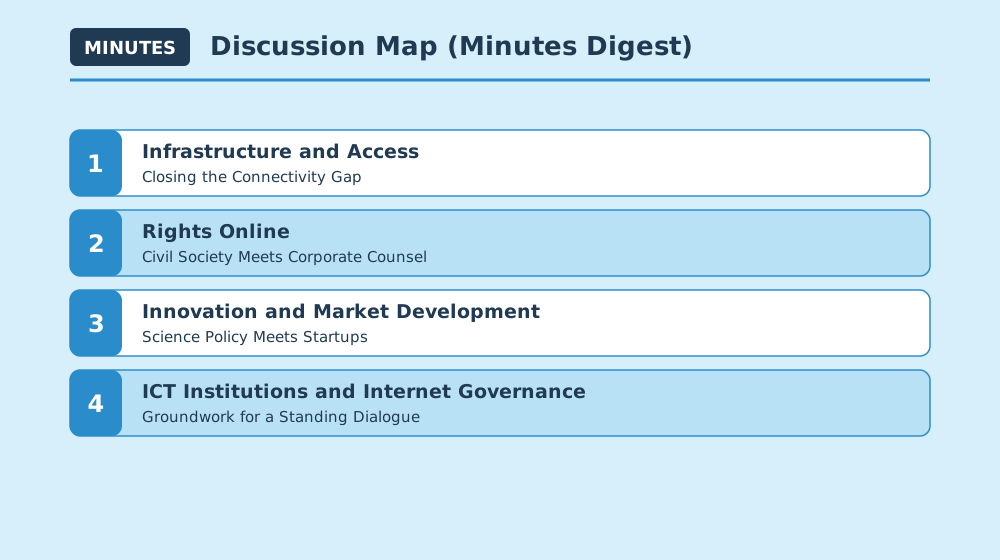
1. Infrastructure and Access — Closing the Connectivity Gap
Sessions: Block 1 'Infraestructura y Acceso a Internet' (10:00–11:30)
- Entel, Congressman Mesías Guevara, the Ministry of Transport and Communications, the infrastructure association AFIN and a consumer group debated Peru's connectivity problems at one table for the first time [1][2]
- Each block gave panellists only the first half hour, keeping a full hour open for interventions from the floor [1][2]
2. Rights Online — Civil Society Meets Corporate Counsel
Sessions: Block 2 'Derechos en Internet' (11:45–13:15)
- Elaine Ford (D&D Internacional) and Miguel Morachimo (Hiperderecho) — both long-serving organisers thereafter — discussed online rights alongside Microsoft's legal counsel and private practitioners [1][2]
- Treating rights issues as a standing theme on a par with access and technology set the template for later Peruvian IGFs [1][2]
3. Innovation and Market Development — Science Policy Meets Startups
Sessions: Block 3 'Innovación y Desarrollo del Mercado de Internet' (15:00–16:30)
- CONCYTEC (the national science council), Google, the software association APESOFT and the Information Society Institute discussed growing Peru's digital market and skills base [1][2]
- The agenda blocks were assembled from the public poll's results, so the innovation track directly reflected users' priorities [1][2]
4. ICT Institutions and Internet Governance — Groundwork for a Standing Dialogue
Sessions: Block 4 'Institucionalidad TIC y Gobernanza de Internet' (17:00–18:30)
- The Foreign Ministry, the Peruvian IT chamber, Hiperderecho and ISOC Peru's Erick Iriarte examined Peru's lack of a permanent internet-governance venue [1][2][3]
- All panel videos were later posted on the official site, and the report to the UN Secretariat confirmed adherence to the IGF principles of openness, transparency and non-commercial organisation [1][2][3]
Three-Minute Short Talk — Your Questions Answered
Q. What was this meeting?
A. Peru's first one-day forum where government, business, civil society and academia talked internet policy as equals. The NGO Hiperderecho spent a year preparing it, and the agenda was set by an online poll of more than 500 users.
Q. What did it decide?
A. Nothing binding — holding a neutral, decision-free dialogue was itself the point. Publishing all panel videos and reporting to the UN Secretariat formally plugged Peru into the recognised national-IGF network.
Q. Why should I care?
A. Watching a 40-person first edition grow to 173 the following year is a compact case study in how multistakeholder dialogue takes root.
What Is Peru IGF? (for first-time readers)
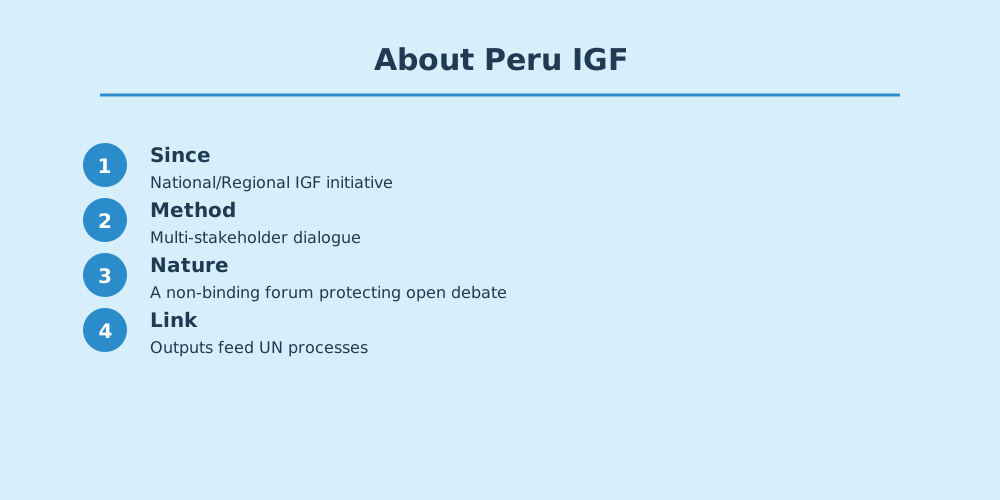
Peru IGF is a National or Regional IGF Initiative (NRI), aligning local internet governance discussion with global IGF principles.
Why It Matters to You
What was discussed here becomes the baseline for national digital policy, platform rules and AI regulation worldwide within a few years. The principles confirmed at the 2016 meeting are the foundation of the "next rules" for the phones, social platforms and AI services you use every day.
Sources & References
- 2016 National IGF of Peru(第1回報告書・UN提出) — intgovforum.org (accessed 2026-07-23)
- Edición 2016 – Foro de Gobernanza de Internet Perú(公式サイト過去大会ページ・Wayback) — IGF Perú(gobernanzadeinternet.pe) (accessed 2026-07-23)
- Foro Peruano de Gobernanza de Internet: presente y futuro(事務局長モラチモ氏による開催報告) — Hiperderecho (accessed 2026-07-23)
- Hacia la consolidación de la Gobernanza de Internet en Perú(2016年と2017年の比較統計を含む共同主催者ゲレロ氏の寄稿) — Servindi / Hiperderecho (accessed 2026-07-23)
- Peru IGF(NRI記録・年次報告書一覧) — intgovforum.org (accessed 2026-07-23)
Quotes are translated or condensed from the records listed above. Bracketed numbers [n] refer to the source list.
Related links
- IGF official (NRI list): https://www.intgovforum.org/en/content/national-and-regional-igf-initiatives
- Japan IGF: https://japanigf.jp/
- Yuki Nakazawa's blog: https://nkzw.jp/category/igf/
更新履歴
第1稿投稿 2026年8月6日 13時08分(記事コンテンツアップ)
— 中澤祐樹

