


The 3-Line Summary
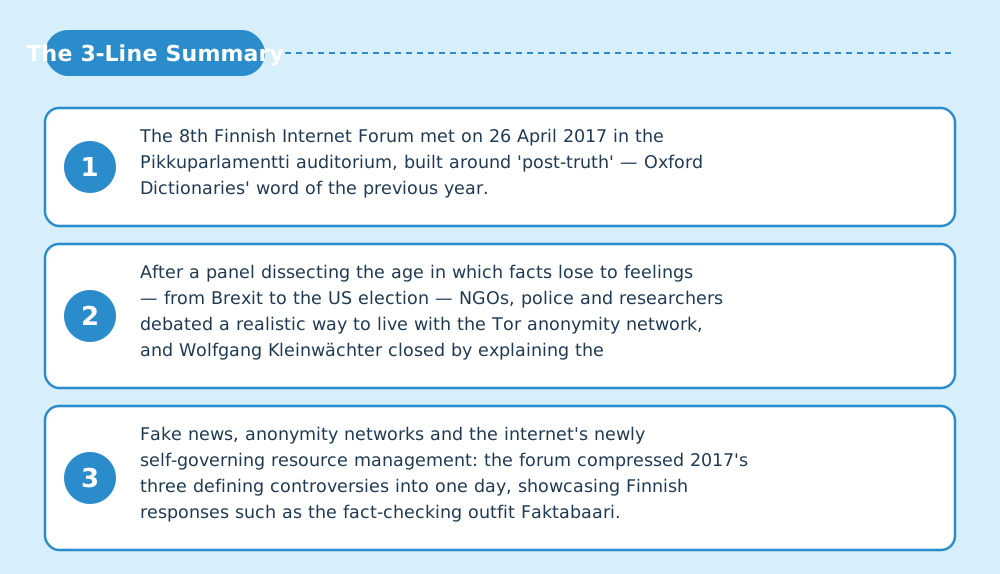
- The 8th Finnish Internet Forum met on 26 April 2017 in the Pikkuparlamentti auditorium, built around 'post-truth' — Oxford Dictionaries' word of the previous year.
- After a panel dissecting the age in which facts lose to feelings — from Brexit to the US election — NGOs, police and researchers debated a realistic way to live with the Tor anonymity network, and Wolfgang Kleinwächter closed by explaining the just-completed IANA stewardship transition.
- Fake news, anonymity networks and the internet's newly self-governing resource management: the forum compressed 2017's three defining controversies into one day, showcasing Finnish responses such as the fact-checking outfit Faktabaari.
Welcome — this is the Japan IGF Support Organization. This in-depth report on Finnish Internet Forum 2017 (8th edition) draws on official outputs, session records and on-site reporting. In a hurry? The three lines above and the diagrams carry the gist.
Conference at a Glance (from official records)
| Item | Detail |
|---|---|
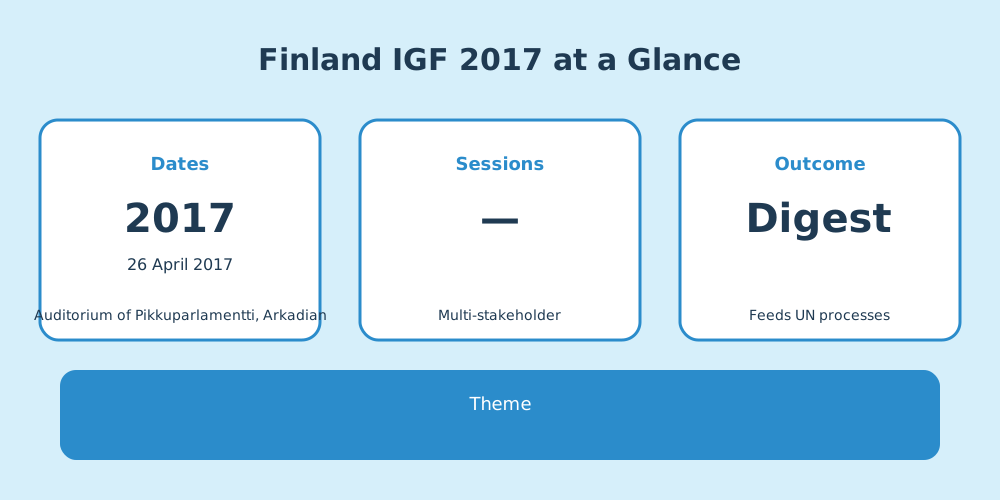
| Official name | Finnish Internet Forum 2017 (8th edition) |
| Dates | 26 April 2017 |
| Venue | Auditorium of Pikkuparlamentti, Arkadiankatu 3, Helsinki |
| Theme | Regional governance themes |
| Chair | Chaired by Jorma Mellin (SSH Communications Security, vice-chair of ISOC Finland); opened by Thomas Blomqvist MP, chair of the Committee for the Future |
(See the source list at the end of this article.)
Discussion Digest — from the Session Records
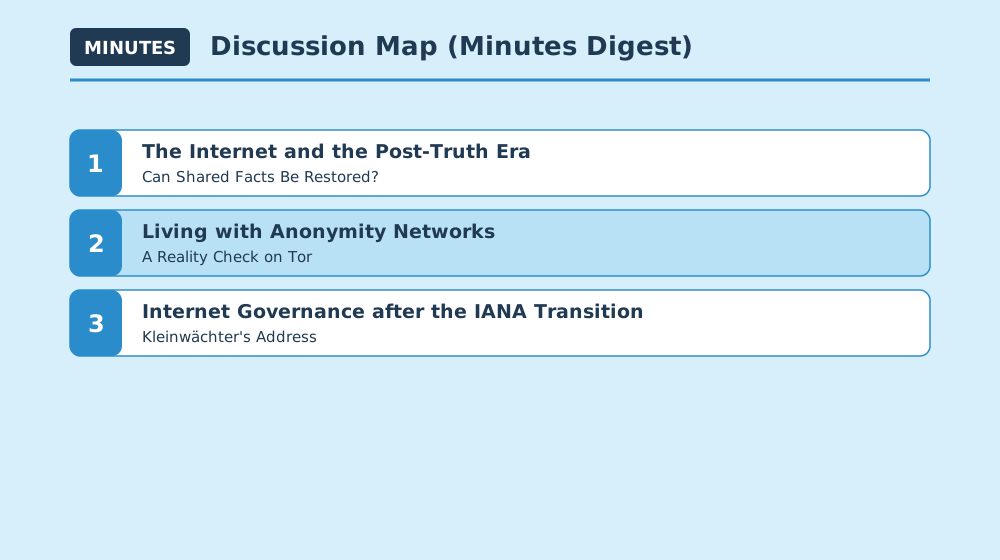
Key exchanges extracted from session records and transcripts.
1. The Internet and the Post-Truth Era — Can Shared Facts Be Restored?
Sessions: Panel 'The Internet and the Post-Truth Era' (9:30–11:00; moderated by Yrjö Länsipuro, ISOC Finland, with Tampere University's Katja Valaskivi, Faktabaari co-founder Mikko Salo, Ulkopolitiikka's Joonas Pörsti and the University of Helsinki's Salla-Maaria Laaksonen)
- Researchers and fact-checkers examined why the ancient truth-versus-falsehood struggle sharpened now, and what role the internet and social media played — from Brexit to the US election [1]
- The guiding questions: where does the crumbling of a shared factual basis lead, and what, if anything, can restore the standing of facts online [1]
- With a Faktabaari co-founder on stage, Finland's home-grown fact-checking response was presented at the national IGF [1]
2. Living with Anonymity Networks — A Reality Check on Tor
Sessions: 'Reality check: balancing the harms and benefits of anonymity networks' (11:45–13:15; Tor expert Juha Nurmi of Ahmia, Save the Children Finland's Antti Järventaus and Nina Vaaranen-Valkonen, Detective Chief Inspector Sari Sarani of the National Bureau of Investigation, and EFFI vice-chair Tapani Tarvainen)
- Tor serves nearly two million regular users — dissidents under repressive regimes and journalists handling sensitive material among them — while also hosting crypto-markets for drugs, weapons and child-abuse material; both faces were laid out with figures and casework [1]
- Since shutting Tor down is impossible, the session argued for dropping mythology and moral panic in favour of realistic harm minimisation — child-protection NGOs, police and digital-rights advocates sharing one stage [1]
3. Internet Governance after the IANA Transition — Kleinwächter's Address
Sessions: 'Changes in Internet Governance' (13:15–14:00, Prof. Wolfgang Kleinwächter, in English)
- A leading scholar assessed the historic 2016 handover of IANA oversight from the US government to the global multistakeholder community [1]
- Kleinwächter described the community's ongoing organisation and run-in for its new role, complementing the opening survey of counter-knowledge, the sharing economy and radical technologies to sketch governance's next decade [1]
Three-Minute Short Talk — Your Questions Answered
Q. What did this meeting decide?
A. Nothing binding — the eighth edition worked through 2017's three defining controversies: post-truth, anonymity networks and the IANA transition, inside the Parliament annex.
Q. What was the most contentious topic?
A. Tor. A lifeline for dissidents and journalists, a cover for crypto-markets and child abuse — and impossible to shut down. Child-protection NGOs, police and digital-rights advocates searched for a way to live with it.
Q. Why should I care?
A. The fake-news debate held here fed into Finland's media-literacy push, now cited worldwide as a model — and every country has since faced the same disinformation and anonymity dilemmas.
What Is Finland IGF? (for first-time readers)
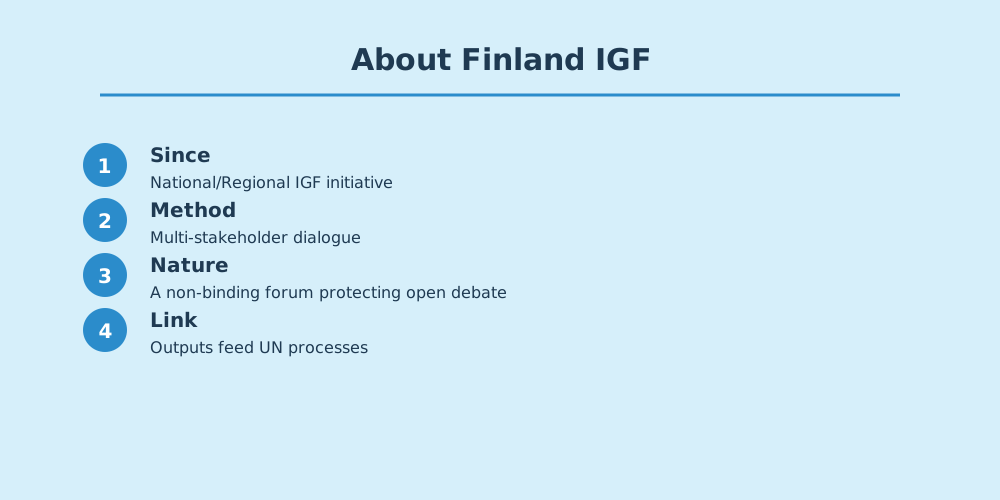
Finland IGF is a National or Regional IGF Initiative (NRI), aligning local internet governance discussion with global IGF principles.
Why It Matters to You
What was discussed here becomes the baseline for national digital policy, platform rules and AI regulation worldwide within a few years. The principles confirmed at the 2017 meeting are the foundation of the "next rules" for the phones, social platforms and AI services you use every day.
Sources & References
- Finnish Internet Forum 26.4.2017(公式アーカイブ・全プログラム) — Finnish Internet Forum(internetforum.fi) (accessed 2026-07-23)
- Aiemmat foorumit(公式過去大会一覧) — Finnish Internet Forum(internetforum.fi) (accessed 2026-07-23)
- Info – Finnish Internet Forum(公式概要・年次開催の記録) — Finnish Internet Forum(internetforum.fi) (accessed 2026-07-23)
- National IGF Initiatives – WEOGグループ詳細(フィンランドNRI記録) — 国連IGF事務局 (UN IGF Secretariat)(Wayback 2025-06-09) (accessed 2026-07-23)
Quotes are translated or condensed from the records listed above. Bracketed numbers [n] refer to the source list.
Related links
- IGF official (NRI list): https://www.intgovforum.org/en/content/national-and-regional-igf-initiatives
- Japan IGF: https://japanigf.jp/
- Yuki Nakazawa's blog: https://nkzw.jp/category/igf/
更新履歴
第1稿投稿 2026年8月7日 20時12分(記事コンテンツアップ)
— 中澤祐樹

