


The 3-Line Summary
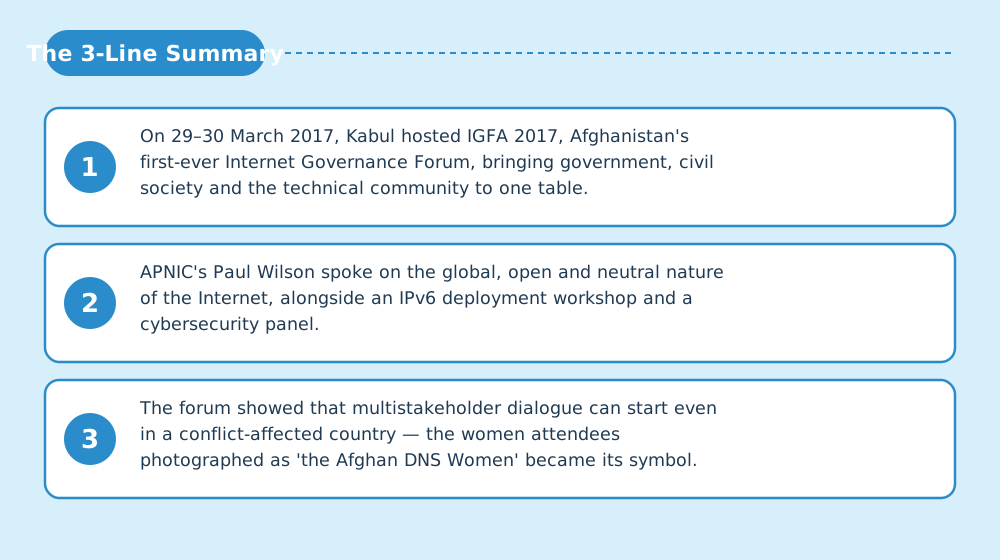
- On 29–30 March 2017, Kabul hosted IGFA 2017, Afghanistan's first-ever Internet Governance Forum, bringing government, civil society and the technical community to one table.
- APNIC's Paul Wilson spoke on the global, open and neutral nature of the Internet, alongside an IPv6 deployment workshop and a cybersecurity panel.
- The forum showed that multistakeholder dialogue can start even in a conflict-affected country — the women attendees photographed as 'the Afghan DNS Women' became its symbol.
Welcome — this is the Japan IGF Support Organization. This in-depth report on IGFA 2017 — the first Internet Governance Forum of Afghanistan draws on official outputs, session records and on-site reporting. In a hurry? The three lines above and the diagrams carry the gist.
Conference at a Glance (from official records)
| Item | Detail |
|---|---|
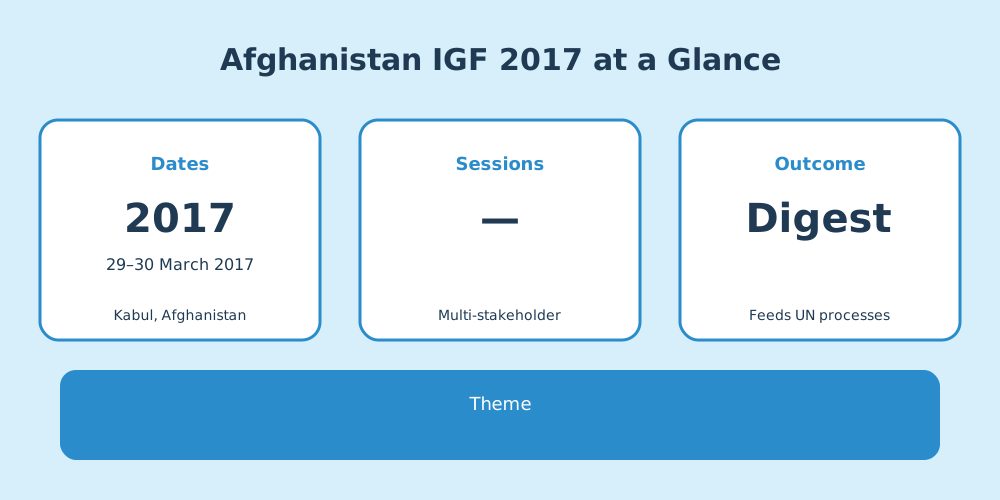
| Official name | IGFA 2017 — the first Internet Governance Forum of Afghanistan |
| Edition | First meeting of IGFA (matches the series' establishment year 2017 in the UN NRI record) |
| Dates | 29–30 March 2017 |
| Venue | Kabul, Afghanistan |
| Theme | Regional governance themes |
| Host | Afghanistan's Internet community (Internet Society Afghanistan circle), with APNIC speaker support and Internet Society webcasts of all sessions |
(See the source list at the end of this article.)
Discussion Digest — from the Session Records
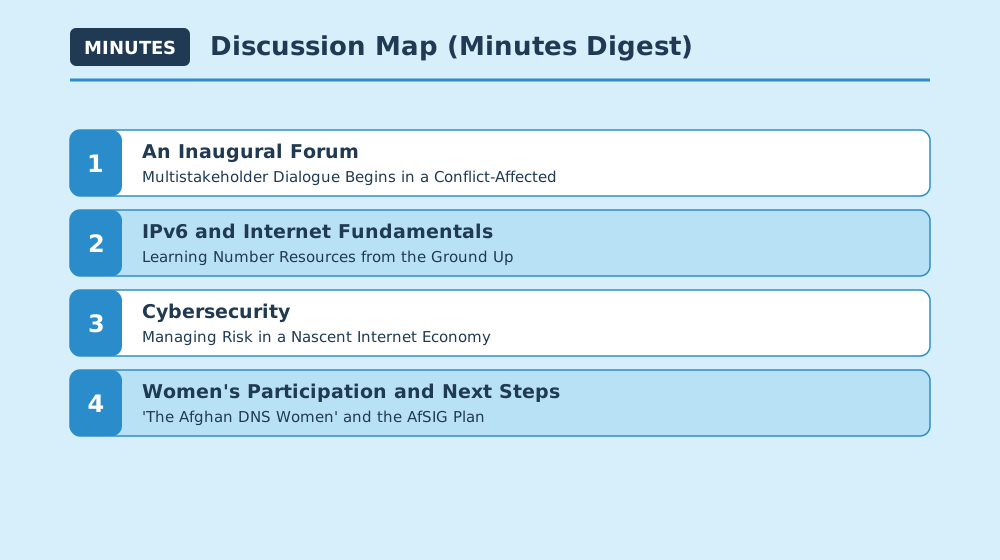
Key exchanges extracted from session records and transcripts.
1. An Inaugural Forum — Multistakeholder Dialogue Begins in a Conflict-Affected Country
Sessions: Opening session (29 March 2017)
- APNIC Director General Paul Wilson opened with remarks on the global, open and neutral nature of the Internet — international support was present from day one [1][2]
- All sessions were webcast live via the Internet Society, enabling remote participation from abroad [1][2]
- The UN IGF page records that 'the first IGF of Afghanistan' took place on 29–30 March 2017 in Kabul [1][2]
2. IPv6 and Internet Fundamentals — Learning Number Resources from the Ground Up
Sessions: IPv6 workshop and remote training on APNIC and the Regional Internet Registries
- An IPv6 workshop featuring Paul Wilson discussed transition strategies after IPv4 exhaustion [1]
- APNIC's Sunny Chendi delivered remote training introducing APNIC and the Regional Internet Registries, building up the local technical community [1]
3. Cybersecurity — Managing Risk in a Nascent Internet Economy
Sessions: Cybersecurity panel workshop
- APNIC's Adli Wahid presented a cybersecurity overview in a panel workshop [1]
- For a country whose online population was surging, security capacity and institutions were on the agenda from the very first meeting [1]
4. Women's Participation and Next Steps — 'The Afghan DNS Women' and the AfSIG Plan
Sessions: Multiple sessions
- APNIC's blog published a group photo captioned 'The Afghan DNS Women', explicitly documenting women's participation in the technical community [1]
- APNIC confirmed support for the Afghanistan School of Internet Governance (AfSIG) scheduled for 26–27 April 2017 in Kabul, committing to continued capacity building [1]
Three-Minute Short Talk — Your Questions Answered
Q. What exactly was this meeting?
A. The first Afghan edition of the UN-rooted Internet Governance Forum: government, business, civil society and technologists discussing the country's Internet issues as equals.
Q. How could it happen in a conflict-affected country?
A. International technical bodies — APNIC and the Internet Society — provided speakers, webcasts and training, while local Internet community members ran the event. Every session was streamed online.
Q. Why does it matter now?
A. IGFA 2017 started a series that survived even the 2021 change of power (later editions moved online). It is the baseline for understanding how Afghanistan's Internet community kept talking.
What Is Afghanistan IGF? (for first-time readers)
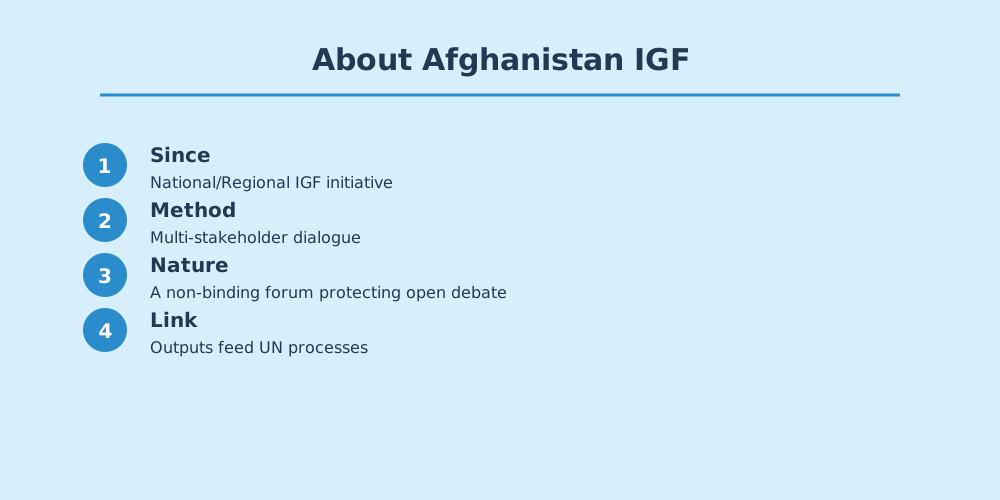
Afghanistan IGF is a National or Regional IGF Initiative (NRI), aligning local internet governance discussion with global IGF principles.
Why It Matters to You
What was discussed here becomes the baseline for national digital policy, platform rules and AI regulation worldwide within a few years. The principles confirmed at the 2017 meeting are the foundation of the "next rules" for the phones, social platforms and AI services you use every day.
Sources & References
- Event Wrap: IGFA 2017, Kabul, Afghanistan — APNIC Blog (accessed 2026-07-23)
- Afghanistan IGF(「The first IGF of Afghanistan is scheduled to take place between 29 and 30 March 2017 in Kabul」) — UN IGF Secretariat (accessed 2026-07-23)
- Successful Conclusion of the Third Internet Governance Forum Afghanistan(系列史の記述: 2019年に「第3回」と明記=2017年初開催の傍証) — TechAfghanistan(Wayback Machine 2021-08-15保存) (accessed 2026-07-23)
Quotes are translated or condensed from the records listed above. Bracketed numbers [n] refer to the source list.
Related links
- IGF official (NRI list): https://www.intgovforum.org/en/content/national-and-regional-igf-initiatives
- Japan IGF: https://japanigf.jp/
- Yuki Nakazawa's blog: https://nkzw.jp/category/igf/
更新履歴
第1稿投稿 2026年8月6日 16時25分(記事コンテンツアップ)
— 中澤祐樹

