


The 3-Line Summary
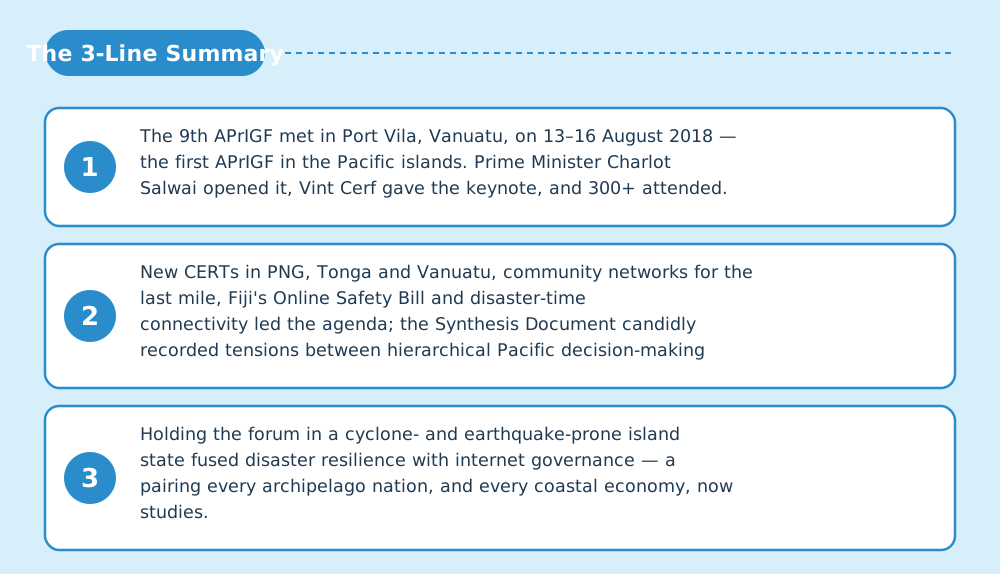
- The 9th APrIGF met in Port Vila, Vanuatu, on 13–16 August 2018 — the first APrIGF in the Pacific islands. Prime Minister Charlot Salwai opened it, Vint Cerf gave the keynote, and 300+ attended.
- New CERTs in PNG, Tonga and Vanuatu, community networks for the last mile, Fiji's Online Safety Bill and disaster-time connectivity led the agenda; the Synthesis Document candidly recorded tensions between hierarchical Pacific decision-making cultures and the multistakeholder model.
- Holding the forum in a cyclone- and earthquake-prone island state fused disaster resilience with internet governance — a pairing every archipelago nation, and every coastal economy, now studies.
Welcome — this is the Japan IGF Support Organization. This in-depth report on AprIGF 2018 in Port Vila draws on official outputs, session records and on-site reporting. In a hurry? The three lines above and the diagrams carry the gist.
Conference at a Glance (from official records)
| Item | Detail |
|---|---|
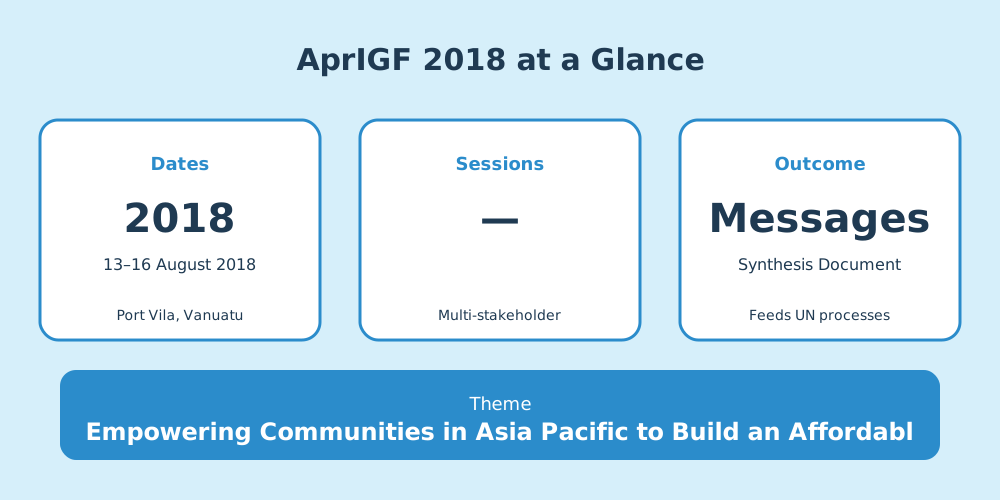
| Edition | Ninth APrIGF and the first ever hosted in the Pacific islands |
| Dates | 13–16 August 2018 (13 August was the capacity-building pre-event day; the main conference ran 14–16 August) |
| Venue | Port Vila, Vanuatu |
| Theme | Empowering Communities in Asia Pacific to Build an Affordable, Inclusive, Open and Secure Internet |
| Opening | Opened by Vanuatu's Prime Minister Charlot Salwai, with a keynote address by Vint Cerf |
| Host | The Office of the Government Chief Information Officer (OGCIO) and the Telecommunications and Radiocommunications Regulator (TRR) of Vanuatu |
| Outcome | Synthesis Document ('Key Issues in the Asia Pacific'), presented to the UN and the global IGF |
(See the source list at the end of this article.)
Discussion Digest — from the Session Records
Key exchanges extracted from session records and transcripts.
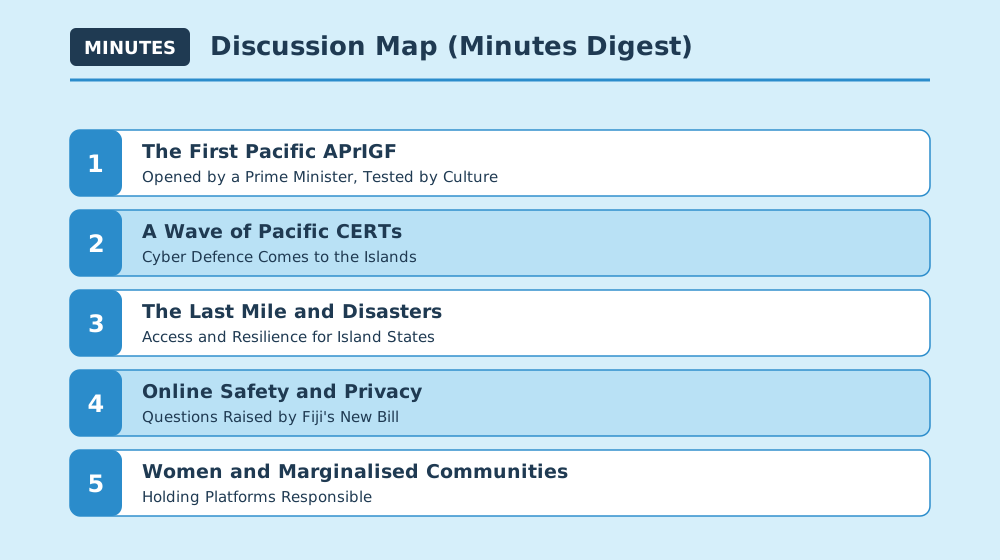
1. The First Pacific APrIGF — Opened by a Prime Minister, Tested by Culture
Sessions: Opening ceremony (14 August) and the Synthesis Document chapter on multistakeholder participation
- Prime Minister Salwai opened the forum and Vint Cerf delivered the keynote; Vanuatu's telecom regulator Dalsie Baniala had championed bringing the meeting to the Pacific [2][1][3]
- The Synthesis Document candidly noted that traditionally hierarchical Pacific approaches to discussion and decision-making can hinder the multistakeholder model, citing governments' reticence about citizens engaging online [2][1][3]
- Pacific youth at the Youth IGF proved to need basic internet education before governance debates — prompting a call to embed internet governance in school curricula [2][1][3]
2. A Wave of Pacific CERTs — Cyber Defence Comes to the Islands
Sessions: Merger 5 'Cybersecurity capacity for nations in the Asia-Pacific' and related security sessions
- New CERTs in Papua New Guinea, Tonga and Vanuatu were welcomed as the backbone of regional incident response and forensic capability [1]
- IoT-based DDoS attacks demanded collective action by manufacturers, providers, standards bodies and regulators, with risks flagged for healthcare and utilities [1]
- The technical community recorded a practical worry: even as privacy rules restrict public Whois, CERTs must keep access for incident response [1]
3. The Last Mile and Disasters — Access and Resilience for Island States
Sessions: Pacific ICT Plenary on small-island connectivity, WS.47 on community networks, WS.85 'Preparing for Natural Disasters' and others
- With the last mile the biggest barrier in landlocked and small-island states, low-cost community networks were endorsed as a way for communities to become operators of their own internet [1]
- The forum urged comprehensive disaster-management plans covering internet access before and after disasters — a matter of saving lives and faster emergency response [1]
- Governments were cast as enablers — policy environments, universal access, digital literacy — while internet shutdowns were declared harmful to expression and access rights [1]
4. Online Safety and Privacy — Questions Raised by Fiji's New Bill
Sessions: WS.91 'Privacy in the Digital Age & the Rule of Law', Merger 1 on cross-border data and content regulation, and others
- Fiji's Online Safety Bill — fines up to FJ$20k and up to five years' imprisonment for harmful online conduct — framed the debate between protecting women and children and chilling expression [1]
- Data protection was described as an evolving concept in the Pacific, requiring both legislation and user education on the value of protecting personal information [1]
- With cross-border data flows growing, the forum called for the highest level of privacy protection as the default safeguard, international minimum standards, privacy by design, and consent standards rooted in human rights [1]
5. Women and Marginalised Communities — Holding Platforms Responsible
Sessions: WS.30 'Responsibilities of Internet Platforms for Tackling Online Abuse Against Women & Other Marginalised Groups' (14 August) and others
"Freedom of expression on the internet is not just a privilege of a few"
— Chat Garcia Ramilo (Executive Director, APC) [4][1]
- The responsibility of social media platforms for tackling online violence against marginalised communities was put squarely on the table [4][1]
- APC noted the Synthesis Document process was chaired by an all-women panel, with youth participants pressing human-rights and shutdown concerns [4][1]
- Inclusion extended to language diversity (IDNs and Universal Acceptance) and disability accessibility, with voice assistants and character recognition proposed as enablers [4][1]
Three-Minute Short Talk — Your Questions Answered
Q. So what did the conference actually decide?
A. It's a dialogue forum, not a decision body — but the discussions were captured in the Synthesis Document 'Key Issues in the Asia Pacific' and presented to the UN and the global IGF.
Q. Did holding it in a Pacific island state matter?
A. Enormously. A Prime Minister opened it, Vint Cerf keynoted, and Pacific-specific issues — new CERTs, disaster-time connectivity, the fit between hierarchical cultures and the multistakeholder model — took centre stage for the first time.
Q. Why should I care?
A. Because the playbook drafted here — keeping the internet alive through cyclones and earthquakes, community networks for the last mile, platform responsibility for online abuse — applies far beyond the Pacific.
What Is AprIGF? (for first-time readers)
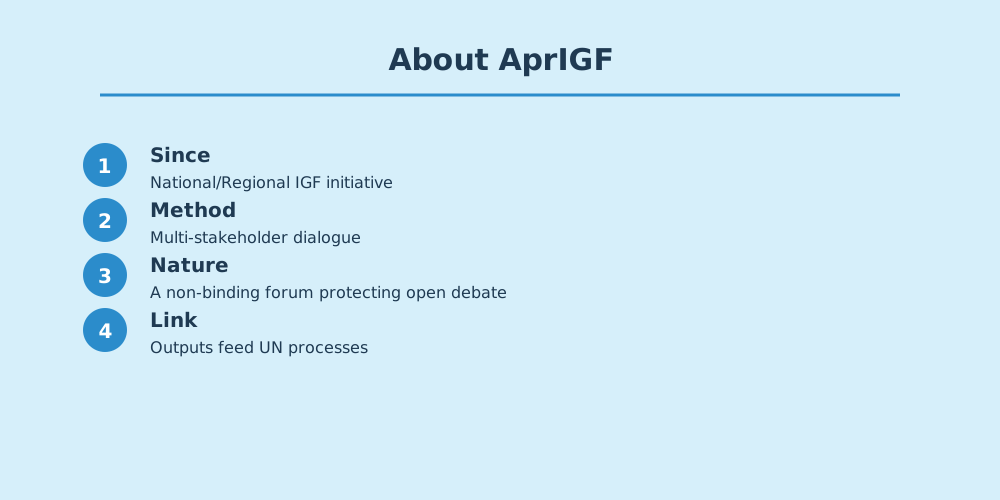
AprIGF is a National or Regional IGF Initiative (NRI), aligning local internet governance discussion with global IGF principles.
Why It Matters to You
What was discussed here becomes the baseline for national digital policy, platform rules and AI regulation worldwide within a few years. The principles confirmed at the 2018 meeting are the foundation of the "next rules" for the phones, social platforms and AI services you use every day.
Sources & References
- APrIGF 2018 Port Vila Synthesis Document (PDF) — APrIGF Secretariat (accessed 2026-07-10)
- First APrIGF in the Pacific a Resounding Success — ISOC (accessed 2026-07-10)
- APrIGF 2018 — DiploFoundation (accessed 2026-07-10)
- APrIGF 2018: Focusing on internet governance in the Asia Pacific region — APC (accessed 2026-07-10)
- APrIGF 2018 Port Vila, Vanuatu(公式サイトアーカイブ) — APrIGF 2018 公式サイト (accessed 2026-07-10)
Quotes are translated or condensed from the records listed above. Bracketed numbers [n] refer to the source list.
Related links
- IGF official (NRI list): https://www.intgovforum.org/en/content/national-and-regional-igf-initiatives
- Japan IGF: https://japanigf.jp/
- Yuki Nakazawa's blog: https://nkzw.jp/category/igf/
Revision History
Rev. 1 — published 13 August 2018, 09:00 (Article published)
Rev. 2 — updated 10 July 2026, 23:16 (Fully revised into the in-depth edition: added the 3-line summary, minutes digest, short talk, source list and diagrams (all quotes verified against the listed sources))
— 中澤祐樹

