


The 3-Line Summary
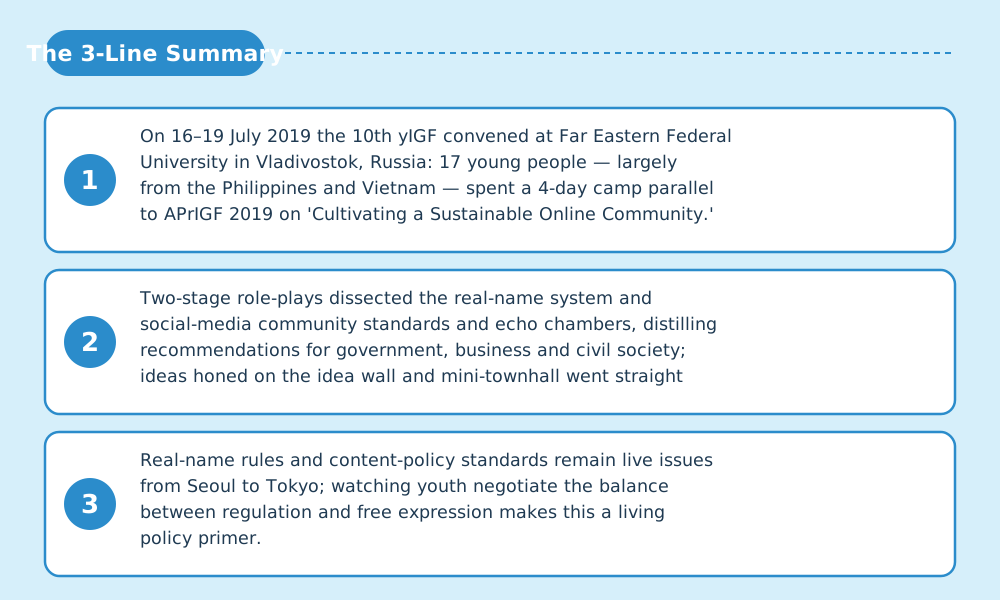
- On 16–19 July 2019 the 10th yIGF convened at Far Eastern Federal University in Vladivostok, Russia: 17 young people — largely from the Philippines and Vietnam — spent a 4-day camp parallel to APrIGF 2019 on 'Cultivating a Sustainable Online Community.'
- Two-stage role-plays dissected the real-name system and social-media community standards and echo chambers, distilling recommendations for government, business and civil society; ideas honed on the idea wall and mini-townhall went straight into the APrIGF synthesis-document townhall.
- Real-name rules and content-policy standards remain live issues from Seoul to Tokyo; watching youth negotiate the balance between regulation and free expression makes this a living policy primer.
Welcome — this is the Japan IGF Support Organization. This in-depth report on Asia Pacific Youth Internet Governance Forum 2019 (yIGF 2019), Vladivostok draws on official outputs, session records and on-site reporting. In a hurry? The three lines above and the diagrams carry the gist.
Conference at a Glance (from official records)
| Item | Detail |
|---|---|
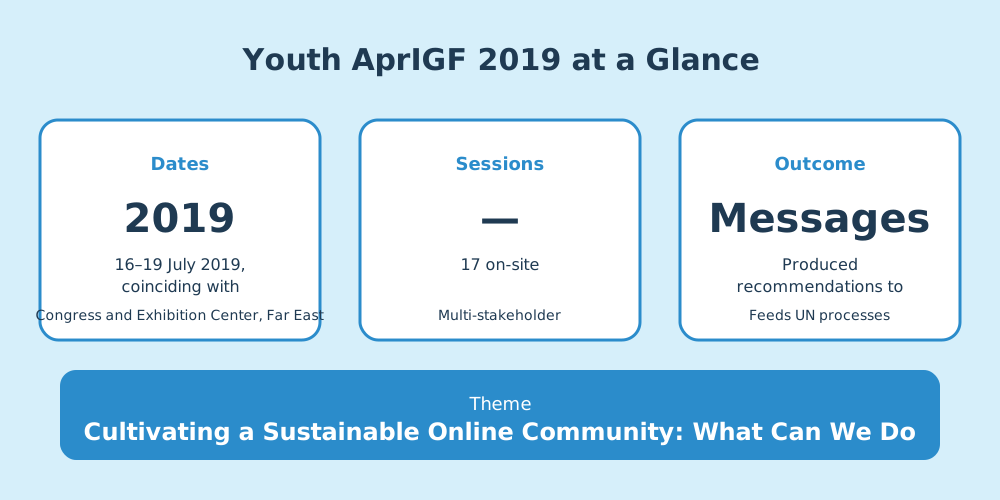
| Official name | Asia Pacific Youth Internet Governance Forum 2019 (yIGF 2019), Vladivostok |
| Edition | 10th edition of the series and its first in Russia (Northern Asia) |
| Dates | 16–19 July 2019, coinciding with the parent APrIGF 2019 Vladivostok |
| Venue | Congress and Exhibition Center, Far Eastern Federal University (FEFU), Russky Island, Vladivostok |
| Theme | Cultivating a Sustainable Online Community: What Can We Do |
| Participants | 17 (The official final report lists 17 youth participants (10 Philippines, 4 Vietnam, 1 Thailand, 1 Korea, 1 US) plus a 4-member organising committee (3 Hong Kong, 1 Taiwan); the official page highlights regional participation from the Philippines, Thailand and Vietnam) |
| Host | Organised by NetMission Ambassadors (NetMission.Asia) with advisory support from the APrIGF secretariat and Multistakeholder Steering Group |
| Outcome | Produced recommendations to government, business and civil society on the real-name system and social-media community standards, contributed to the APrIGF synthesis-document townhall; Vietnamese participants pledged to host their own yIGF the following year |
(See the source list at the end of this article.)
Discussion Digest — from the Session Records
Key exchanges extracted from session records and transcripts.
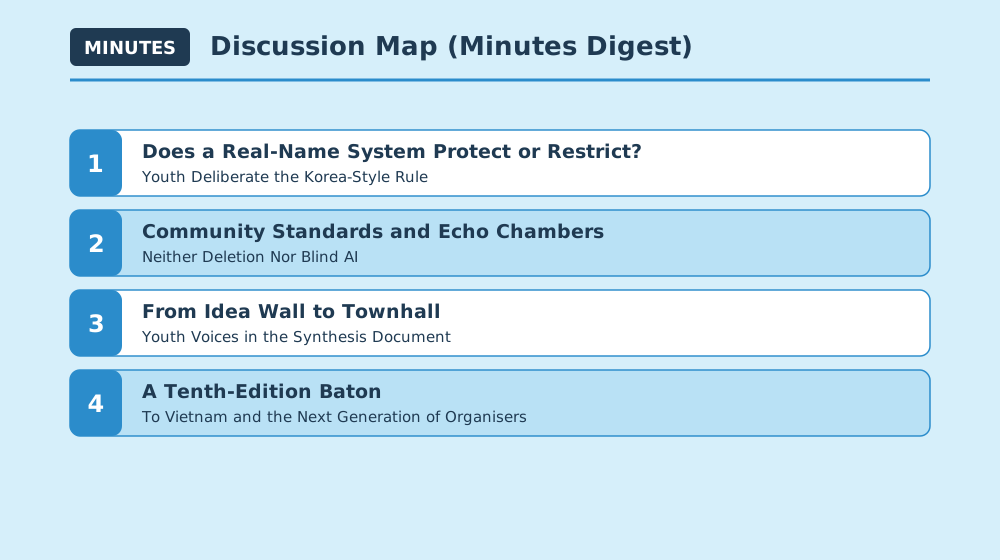
1. Does a Real-Name System Protect or Restrict? — Youth Deliberate the Korea-Style Rule
Sessions: Role-play stage 1, 'Implementation and Impact of Real-Name System: Are users being protected or restricted?' (17 July, 13:30–15:00)
- Government players argued that ending total anonymity strengthens user responsibility and aids law enforcement; cybercrime-victim players doubted its effectiveness, warning identity theft could grow rampant instead [2][1]
- Business players rejected the system as high-risk, low-return and flagged its chilling effect on speech, while opposition-party players demanded transparency against arbitrary enforcement [2][1]
- The final recommendations urged multistakeholder and public consultation before legislation, a check-and-balance system with a clear definition of 'cybercrime', and sustained public education [2][1]
2. Community Standards and Echo Chambers — Neither Deletion Nor Blind AI
Sessions: Role-play stage 2, 'Filtering What you see: Reviewing Content Policy and Way to Escape Echo Chamber Effect in Asia-Pacific' (18 July, 15:30–17:00)
- Diagnosing current fact-checking as ineffective amid rampant fake news and inaction, participants proposed a layered system of government, independent fact-checkers, platforms and AI — with resources for unbiased AI development [2]
- Their enforcement design built in free-expression safeguards: independent double-checking before takedowns, and account suspension rather than removal for serious violations [2]
- They insisted community standards exist for the people — so users, including marginalised groups, should help draft them [2]
3. From Idea Wall to Townhall — Youth Voices in the Synthesis Document
Sessions: Idea Wall x Mini-Townhall (Day 0) and the Synthesis Document Townhall sessions (17–18 July)
- Working through the six synthesis themes — from safer internet to digital economy — participants rehearsed for, then spoke at, the main forum's townhall [2][1]
- Filipino participants noted that despite mature global infrastructure, much of their population sees no benefit from IT; others cited arrests of human-rights activists in warning against abuse of national-security strategies [2][1]
- On the digital economy and fintech, calls emerged for privacy protection and for AI governance to monitor and regulate [2][1]
4. A Tenth-Edition Baton — To Vietnam and the Next Generation of Organisers
Sessions: Lightning Talk with Youth4IG (18 July) and participant presentations (19 July)
- Participants spoke directly with APrIGF MSG chair Rajesh Singh and contributed to the guidelines of Youth4IG's mentorship programme [2][1]
- Vietnamese participants pledged to bring the experience home and host their own yIGF the following year — feeding the wave of national youth IGFs [2][1]
- Feedback showed technically-trained participants especially came to value the multistakeholder approach, with lived issues like echo chambers driving engagement [2][1]
Three-Minute Short Talk — Your Questions Answered
Q. What was this event?
A. A 4-day youth camp at Far Eastern Federal University, parallel to APrIGF 2019 Vladivostok. Seventeen young people, largely from the Philippines and Vietnam, deliberated real-name rules and social-media content standards through role-play.
Q. Wasn't it just one session?
A. No — despite catalogue shorthand, the official report shows a full 4-day programme including Day 0, with participants also joining multiple main-forum sessions.
Q. Why should I care?
A. Real-name systems and takedown standards are live policy battles everywhere; the youth recommendations — suspend rather than delete, independent double-checking — still read as sensible guardrails.
What Is Youth AprIGF? (for first-time readers)
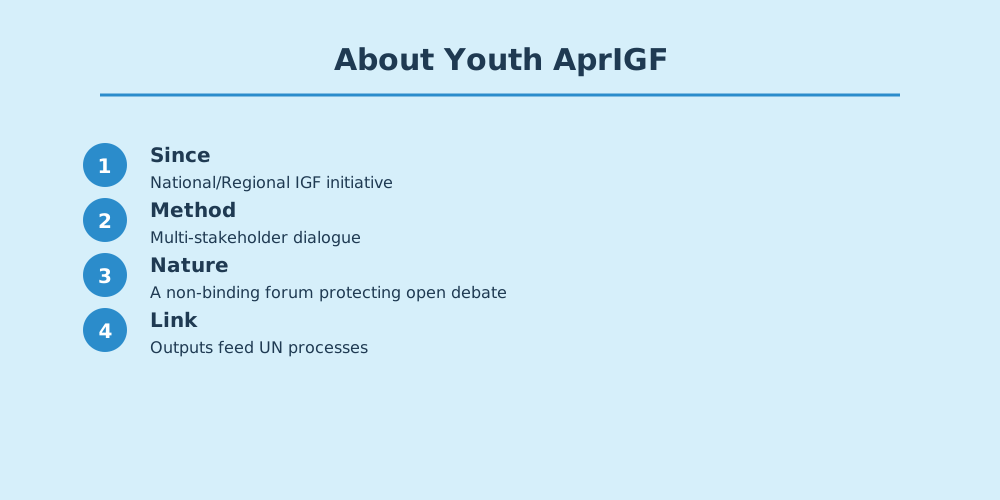
Youth AprIGF is a National or Regional IGF Initiative (NRI), aligning local internet governance discussion with global IGF principles.
Why It Matters to You
What was discussed here becomes the baseline for national digital policy, platform rules and AI regulation worldwide within a few years. The principles confirmed at the 2019 meeting are the foundation of the "next rules" for the phones, social platforms and AI services you use every day.
Sources & References
- yIGF 2019 Vladivostok(公式・歴代イベントページ) — Asia Pacific Youth IGF(yigf.asia) (accessed 2026-07-22)
- yIGF 2019 Vladivostok, Russia — Program Report(公式最終報告書。7/16-19・参加者名簿・全アジェンダ・2論点の討議記録と提言) — NetMission.Asia/APrIGF事務局(DotAsia) (accessed 2026-07-22)
- Reports and Charter(公式レポート一覧。Asia Pacific yIGF 2019, Vladivostok報告を収録) — Asia Pacific Youth IGF(yigf.asia) (accessed 2026-07-22)
- Youth Internet Governance Forum (yIGF)(主催団体による系列解説。歴代開催都市にウラジオストクを明記) — NetMission.Asia (accessed 2026-07-22)
Quotes are translated or condensed from the records listed above. Bracketed numbers [n] refer to the source list.
Related links
- IGF official (NRI list): https://www.intgovforum.org/en/content/national-and-regional-igf-initiatives
- Japan IGF: https://japanigf.jp/
- Yuki Nakazawa's blog: https://nkzw.jp/category/igf/
更新履歴
第1稿投稿 2026年7月9日 11時04分(記事コンテンツアップ)
— 中澤祐樹

