


The 3-Line Summary
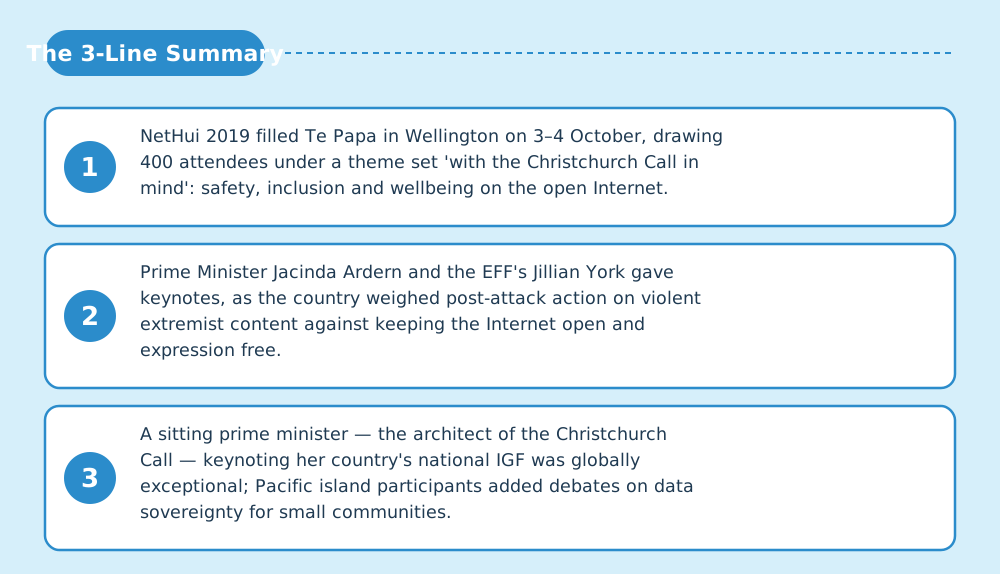
- NetHui 2019 filled Te Papa in Wellington on 3–4 October, drawing 400 attendees under a theme set 'with the Christchurch Call in mind': safety, inclusion and wellbeing on the open Internet.
- Prime Minister Jacinda Ardern and the EFF's Jillian York gave keynotes, as the country weighed post-attack action on violent extremist content against keeping the Internet open and expression free.
- A sitting prime minister — the architect of the Christchurch Call — keynoting her country's national IGF was globally exceptional; Pacific island participants added debates on data sovereignty for small communities.
Welcome — this is the Japan IGF Support Organization. This in-depth report on NetHui 2019 (New Zealand's Internet Governance Forum) draws on official outputs, session records and on-site reporting. In a hurry? The three lines above and the diagrams carry the gist.
Conference at a Glance (from official records)
| Item | Detail |
|---|---|
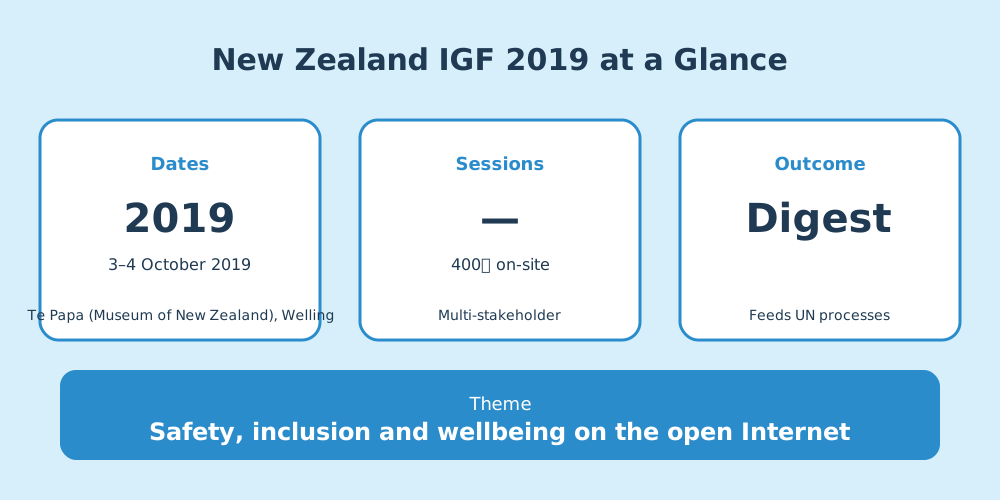
| Official name | NetHui 2019 (New Zealand's Internet Governance Forum) |
| Dates | 3–4 October 2019 |
| Venue | Te Papa (Museum of New Zealand), Wellington |
| Theme | Safety, inclusion and wellbeing on the open Internet |
| Participants | 400 attendees |
| Host | InternetNZ |
(See the source list at the end of this article.)
Discussion Digest — from the Session Records
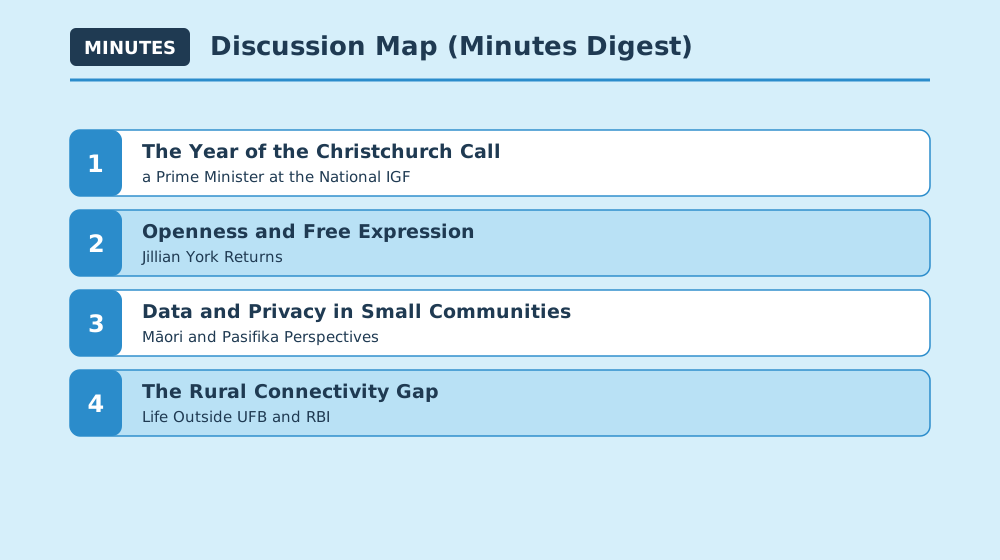
Key exchanges extracted from session records and transcripts.
1. The Year of the Christchurch Call — a Prime Minister at the National IGF
Sessions: Opening speech by InternetNZ CEO Jordan Carter; keynote by Prime Minister Jacinda Ardern
- InternetNZ explicitly framed the theme around the Christchurch Call, after the 15 March mosque attacks and the livestreamed footage that spread online [1]
- CEO Jordan Carter's opening speech invoked the Call and urged participants into 'hard but important conversations' to shape the Internet New Zealand needs [1]
- PM Ardern's keynote put the government leading the global framework on terrorist and violent extremist content face-to-face with its own Internet community [1]
2. Openness and Free Expression — Jillian York Returns
Sessions: Keynote by Jillian York of the EFF
- Returning after 2017, York challenged assumptions about what online openness really means, arguing openness is not incompatible with freedom of expression [1]
- Placing a civil-liberties keynote amid rising takedown pressure showed NetHui's determination to keep the safety debate balanced [1]
3. Data and Privacy in Small Communities — Māori and Pasifika Perspectives
Sessions: Breakouts on data & privacy in small communities and technology & Māori community wellbeing
- Sessions asked how data use can clash with small communities' cultures, traditions, ethics, beliefs and environment, exploring data aligned with mental health, child wellbeing and Māori and Pasifika aspirations [2]
- A disconnect between technological advance and community leadership was called out across health, education and transport [2]
- PICISOC board members attended from the Pacific, reporting the issues 'resonated with island experiences'; Vanuatu's IGF coordinator was also in the room [2]
4. The Rural Connectivity Gap — Life Outside UFB and RBI
Sessions: Breakout session on rural access
- Even with the government's UFB and RBI programmes, rural and remote areas remain under-served, participants reported [2][1]
- Wireless ISPs (WISPs) carry much of the rural load but face funding and licensing hurdles [2][1]
- For the first time, action-planning sessions closed both days, with each discussion group sharing the next actions it needed [2][1]
Three-Minute Short Talk — Your Questions Answered
Q. Is a prime minister at a national IGF normal?
A. Highly unusual. Months after leading the Christchurch Call against violent extremist content online, Jacinda Ardern faced her own Internet community directly at its national forum.
Q. What was the core tension?
A. Takedown pressure versus the open Internet. The EFF's Jillian York argued openness is not incompatible with free expression, deliberately balancing the safety-first mood.
Q. Why should I care?
A. Every Christchurch Call supporter nation faces the same balance, and the sessions on data sovereignty for small and indigenous communities remain a reference point for that debate anywhere.
What Is New Zealand IGF? (for first-time readers)
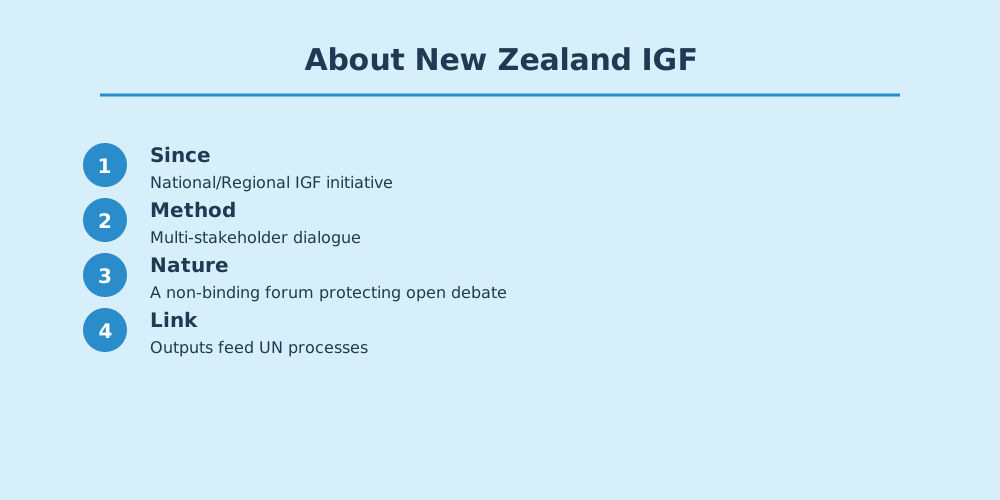
New Zealand IGF is a National or Regional IGF Initiative (NRI), aligning local internet governance discussion with global IGF principles.
Why It Matters to You
What was discussed here becomes the baseline for national digital policy, platform rules and AI regulation worldwide within a few years. The principles confirmed at the 2019 meeting are the foundation of the "next rules" for the phones, social platforms and AI services you use every day.
Sources & References
- Long live NetHui!(公式総括記事: 400人参加・首相基調講演・テーマ設定の経緯) — InternetNZ(Andrew Cushen執筆・Wayback Machine) (accessed 2026-07-22)
- NetHui 2019 Report — PICISOC(太平洋諸島インターネット協会・Emani Lui執筆) (accessed 2026-07-22)
- NetHui 2019 公式サイト(テーマ・会場・日程、2019年10月21日時点) — InternetNZ(Wayback Machine) (accessed 2026-07-22)
- NetHui — en (accessed 2026-07-22)
- New Zealand IGF(国別イニシアチブ登録ページ) — UN IGF Secretariat (accessed 2026-07-22)
Quotes are translated or condensed from the records listed above. Bracketed numbers [n] refer to the source list.
Related links
- IGF official (NRI list): https://www.intgovforum.org/en/content/national-and-regional-igf-initiatives
- Japan IGF: https://japanigf.jp/
- Yuki Nakazawa's blog: https://nkzw.jp/category/igf/
更新履歴
第1稿投稿 2026年7月20日 14時07分(記事コンテンツアップ)
— 中澤祐樹

