


The 3-Line Summary
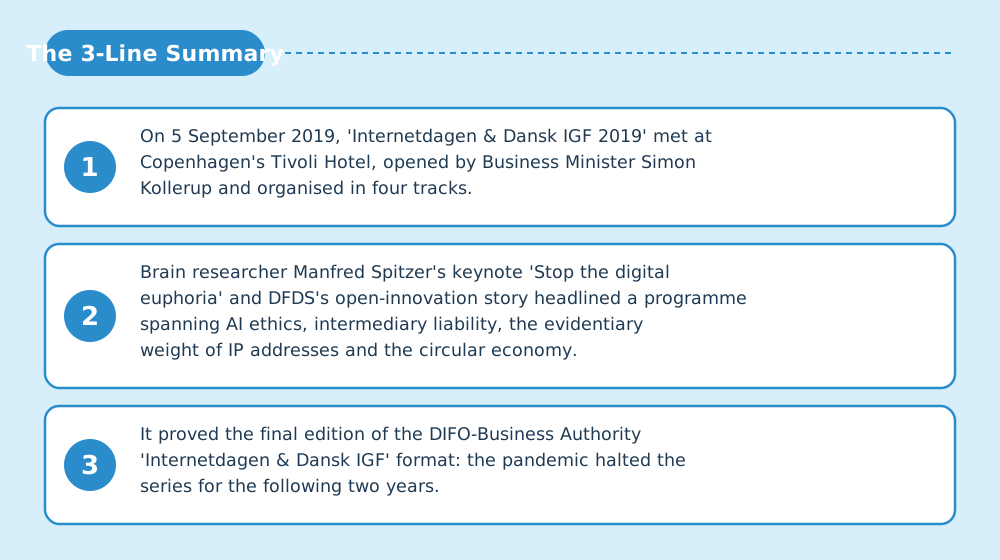
- On 5 September 2019, 'Internetdagen & Dansk IGF 2019' met at Copenhagen's Tivoli Hotel, opened by Business Minister Simon Kollerup and organised in four tracks.
- Brain researcher Manfred Spitzer's keynote 'Stop the digital euphoria' and DFDS's open-innovation story headlined a programme spanning AI ethics, intermediary liability, the evidentiary weight of IP addresses and the circular economy.
- It proved the final edition of the DIFO-Business Authority 'Internetdagen & Dansk IGF' format: the pandemic halted the series for the following two years.
Welcome — this is the Japan IGF Support Organization. This in-depth report on Internetdagen & Dansk IGF 2019 (Internet Day & Danish IGF 2019) draws on official outputs, session records and on-site reporting. In a hurry? The three lines above and the diagrams carry the gist.
Conference at a Glance (from official records)
| Item | Detail |
|---|---|
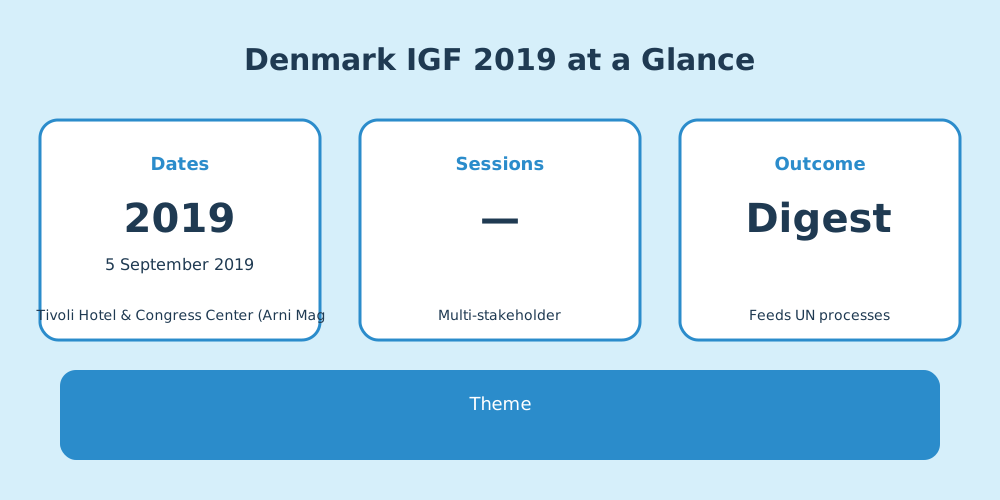
| Official name | Internetdagen & Dansk IGF 2019 (Internet Day & Danish IGF 2019) |
| Dates | 5 September 2019 |
| Venue | Tivoli Hotel & Congress Center (Arni Magnussons Gade 2), Copenhagen |
| Theme | Regional governance themes |
| Tracks | Four tracks (technology, business, law, Dansk IGF) with 20+ speakers |
| Opening | Opened by Minister for Industry, Business and Financial Affairs Simon Kollerup |
| Host | DIFO (Danish Internet Forum) and the Danish Business Authority |
(See the source list at the end of this article.)
Discussion Digest — from the Session Records
Key exchanges extracted from session records and transcripts.
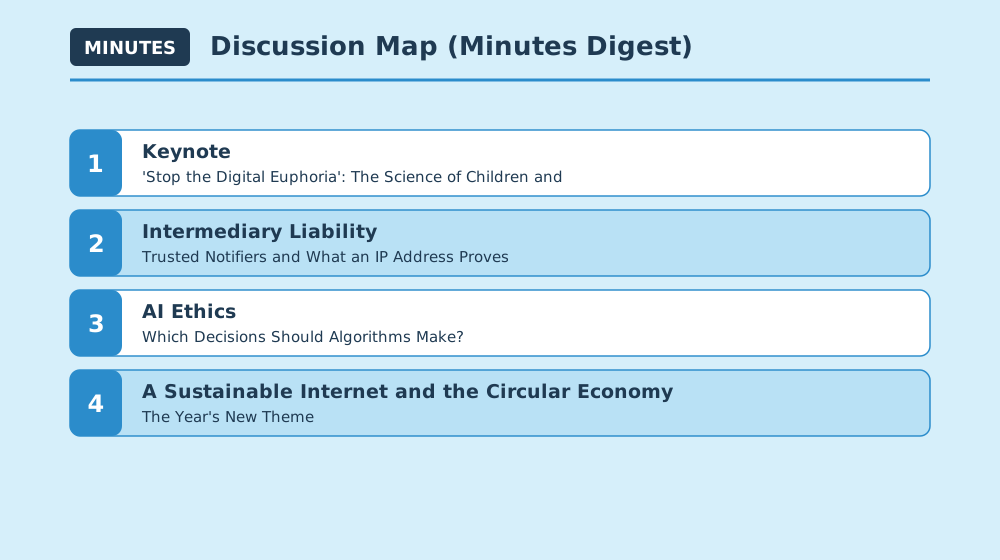
1. Keynote — 'Stop the Digital Euphoria': The Science of Children and Screens
Sessions: Keynote: Manfred Spitzer (psychiatrist and brain researcher, University Hospital Ulm)
- Spitzer presented research linking screen use to myopia and obesity and heavy social-media use to impaired empathy development, urging that the warning lights around children's digital use be taken seriously even as digitalisation proceeds (per the official report) [1]
- The theme resonated with the Dansk IGF track session on strengthening young people online and with the AI-ethics debate, making children and digital life a thread through the day [1]
2. Intermediary Liability — Trusted Notifiers and What an IP Address Proves
Sessions: 'Are trusted notifiers a good idea?' (Sebastian Schwemer, DIFO/CIIR); 'Help! Someone misused my IP address' (Tyktech, Nordic Law Group, Teleindustrien)
- Schwemer questioned the 'trusted notifiers' construct as the EU and national authorities push domain registries and other intermediaries into policing illegal content [1]
- Lawyers, technologists and telecom industry reviewed copyright enforcement based solely on IP addresses, concluding Danish law does not treat an IP address as proof in itself, with telecoms having stopped handing over subscriber data [1]
3. AI Ethics — Which Decisions Should Algorithms Make?
Sessions: 'Which decisions should the algorithm take?' (Sune Hannibal Holm, University of Copenhagen; Troels A. Jacobsen, Accenture; Rasmus Hauch, 2021.AI)
- With AI already ubiquitous (down to spam filtering), a philosopher, consultant and AI vendor debated what 'right' decisions are and how an algorithm's reasoning can be explained [1]
- Making visible the bias inherent in predicting the future from old data, and fixing responsibility for algorithmic outcomes, were the central points [1]
4. A Sustainable Internet and the Circular Economy — The Year's New Theme
Sessions: 'How do we make the Internet more sustainable?' (Daniela Pigosso, DTU); 'See the opportunities in the circular economy' (DI, DTU, Refurb); keynote by Jakob Steffensen (DFDS)
- DTU's Pigosso and partners addressed the Internet's environmental footprint and support (DTU's MATChE programme) for shifting business toward reuse, sharing and energy saving [1][2]
- In his keynote, DFDS innovation chief Jakob Steffensen described opening the shipping line's vessels and tools to outside entrepreneurs, yielding new products and operational gains [1][2]
Three-Minute Short Talk — Your Questions Answered
Q. What did the meeting decide?
A. Nothing binding — the annual dialogue, opened by the business minister, ran four tracks and its record was filed as Denmark's NRI report to the UN IGF.
Q. What was the most provocative moment?
A. Spitzer's keynote. Armed with research data, he argued screens harm children's brains — a bracing challenge to digital euphoria that dominated conversation.
Q. Why does it matter?
A. Whether an IP address alone can establish personal liability is a live issue in copyright enforcement worldwide, and children's screen time remains a shared policy battleground.
What Is Denmark IGF? (for first-time readers)
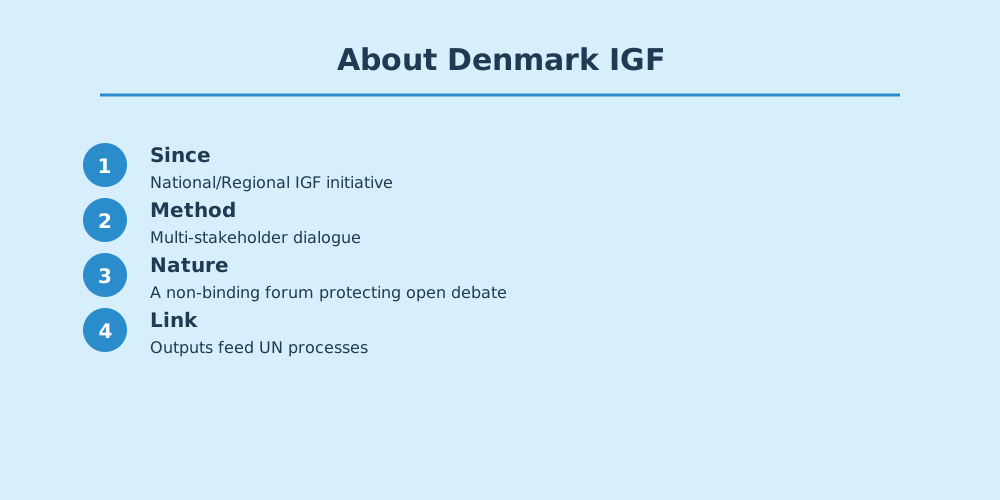
Denmark IGF is a National or Regional IGF Initiative (NRI), aligning local internet governance discussion with global IGF principles.
Why It Matters to You
What was discussed here becomes the baseline for national digital policy, platform rules and AI regulation worldwide within a few years. The principles confirmed at the 2019 meeting are the foundation of the "next rules" for the phones, social platforms and AI services you use every day.
Sources & References
- Internetdagen og Dansk IGF 2019 – NRI Annual Report(国連IGF提出の公式報告書PDF) — DIFO・Erhvervsstyrelsen/国連IGF事務局(intgovforum.org, Wayback Machine) (accessed 2026-07-23)
- Præsentationer fra Internetdagen & Dansk IGF 2019(事後公開のプレゼン資料一覧) — internetdagen.dk(DIFO・Erhvervsstyrelsen, Wayback Machine) (accessed 2026-07-23)
- Tak for i år!(2019-09-10付・主催者の御礼記事) — internetdagen.dk(DIFO・Erhvervsstyrelsen, Wayback Machine) (accessed 2026-07-23)
- Internetdagen og Dansk IGF 2019(公式サイト・2020年9月時点も2019年版のまま=2020年開催なしの傍証) — internetdagen.dk(DIFO・Erhvervsstyrelsen, Wayback Machine) (accessed 2026-07-23)
Quotes are translated or condensed from the records listed above. Bracketed numbers [n] refer to the source list.
Related links
- IGF official (NRI list): https://www.intgovforum.org/en/content/national-and-regional-igf-initiatives
- Japan IGF: https://japanigf.jp/
- Yuki Nakazawa's blog: https://nkzw.jp/category/igf/
更新履歴
第1稿投稿 2026年7月31日 14時21分(記事コンテンツアップ)
— 中澤祐樹

