
The 3-Line Summary
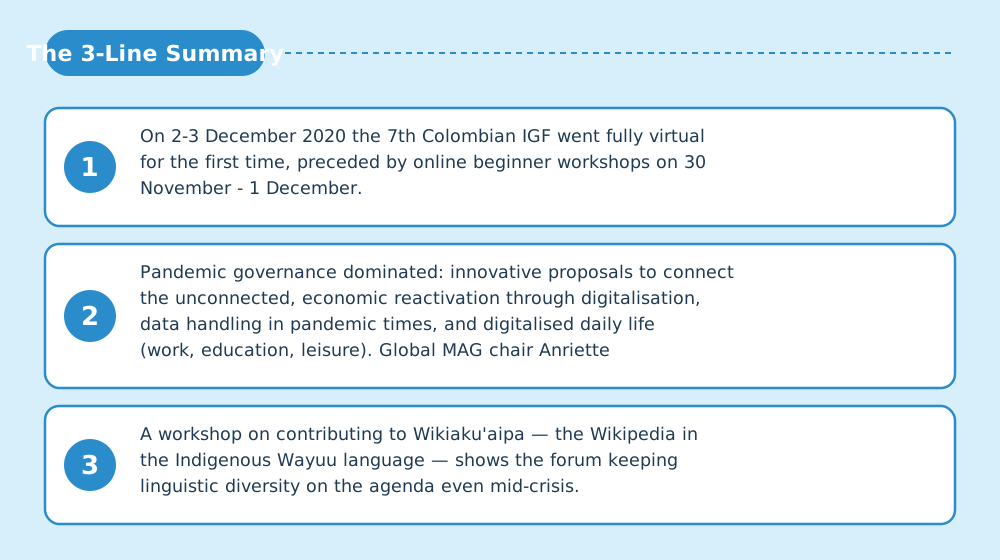
- On 2-3 December 2020 the 7th Colombian IGF went fully virtual for the first time, preceded by online beginner workshops on 30 November – 1 December.
- Pandemic governance dominated: innovative proposals to connect the unconnected, economic reactivation through digitalisation, data handling in pandemic times, and digitalised daily life (work, education, leisure). Global MAG chair Anriette Esterhuysen sent the opening greeting.
- A workshop on contributing to Wikiaku'aipa — the Wikipedia in the Indigenous Wayuu language — shows the forum keeping linguistic diversity on the agenda even mid-crisis.
Welcome — this is the Japan IGF Support Organization. This in-depth report on 7º Foro Colombiano de Gobernanza de Internet (7th Colombian Internet Governance Forum) draws on official outputs, session records and on-site reporting. In a hurry? The three lines above and the diagrams carry the gist.
Conference at a Glance (from official records)
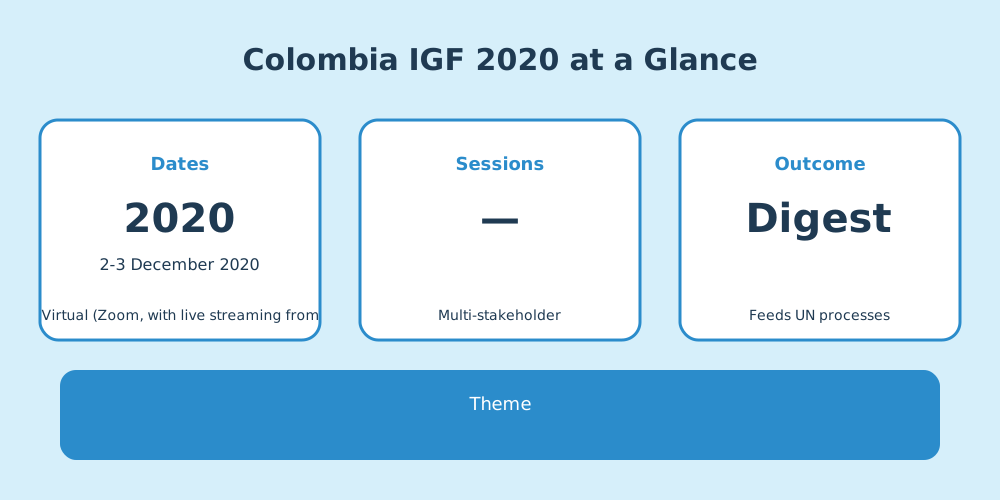
| Item | Detail |
|---|---|
| Official name | 7º Foro Colombiano de Gobernanza de Internet (7th Colombian Internet Governance Forum) |
| Dates | 2-3 December 2020 |
| Venue | Virtual (Zoom, with live streaming from the official site) |
| Theme | Regional governance themes |
| Format | Virtual |
| Host | Mesa Colombiana de Gobernanza de Internet |
(See the source list at the end of this article.)
Discussion Digest — from the Session Records
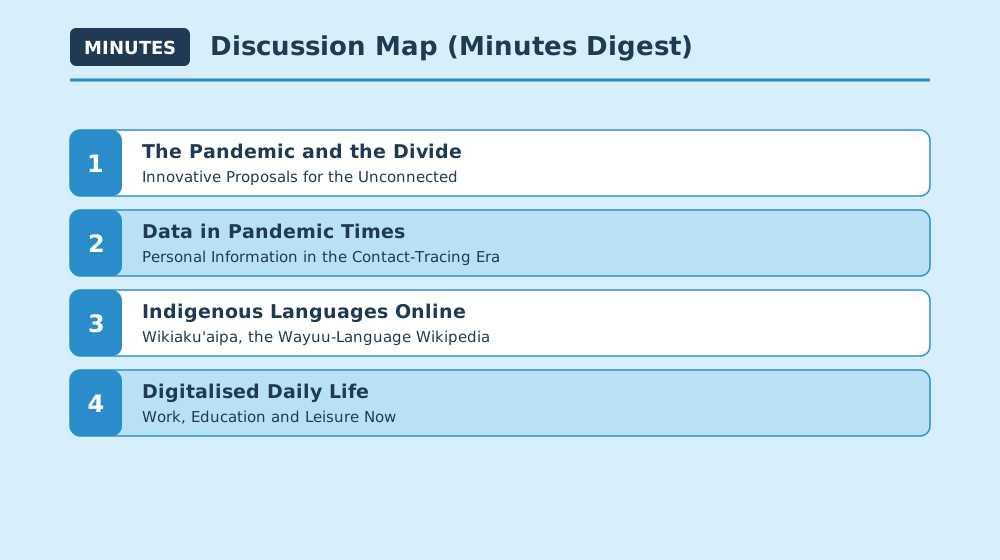
Key exchanges extracted from session records and transcripts.
1. The Pandemic and the Divide — Innovative Proposals for the Unconnected
Sessions: Panel 'Innovative proposals to connect the unconnected' (one of four panels, 2-3 Dec)
- With work and schooling forced online, closing the access gap topped the agenda — 'innovative proposals for access, digital inclusion and narrowing the divide' led the official invitation [1][2]
- A second panel on economic reactivation through digitalisation addressed digitising small businesses under lockdown [1][2]
- Individual moderators and speakers are not preserved on the archived pages, so this entry reflects the official programme's thematic structure [1][2]
2. Data in Pandemic Times — Personal Information in the Contact-Tracing Era
Sessions: Panel 'Data handling in pandemic times' and the workshop 'Where is my data?' (1 Dec)
- In the year contact-tracing apps and centralised health data went global, 'data handling in pandemic times' was a headline panel [1][2]
- The preparatory workshop 'Where is my data?' taught citizens where their data resides and what rights they hold over it [1][2]
- A user-level digital-security workshop for COVID-19 times addressed the risks of newly home-bound life [1][2]
3. Indigenous Languages Online — Wikiaku'aipa, the Wayuu-Language Wikipedia
Sessions: Workshop 'Wikiaku'aipa: building an encyclopedia in Wayuunaiki' (1 Dec)
- A hands-on session taught participants how to contribute to Wikiaku'aipa, the encyclopedia project in Wayuunaiki, the language of the Wayuu people [1][2]
- It stretched the access debate beyond 'getting people online' to 'in which language the content awaits them' — linguistic diversity and cultural appropriation of technology [1][2]
- Together with the opening greeting from global MAG chair Anriette Esterhuysen (of South Africa's APC), the edition kept the view from the periphery in focus [1][2]
4. Digitalised Daily Life — Work, Education and Leisure Now
Sessions: Panel 'The present of digitalisation' (2-3 Dec)
- A synthesis panel on 'the present of digitalisation' — the future of digital work, education, research, entertainment and everyday life — argued from lockdown experience [1][2]
- It revisited the 2019 labour panel's questions after the forced natural experiment of the pandemic [1][2]
- Closing announcements promised travel scholarships for an in-person 2021 edition — which in the event remained virtual [1][2]
Three-Minute Short Talk — Your Questions Answered
Q. What did COVID change?
A. The forum went fully online: four days on Zoom (two of workshops, two of panels) with sign-language interpretation, and an agenda dominated by the divide, data, economic reactivation and digitalised daily life.
Q. What set it apart from other national IGFs?
A. A hands-on session for writing Wikipedia in the Indigenous Wayuu language — asking not just whether people get online, but whether their language awaits them there.
Q. Why should I care?
A. Contact-tracing data and emergency remote schooling were universal 2020 dilemmas; this is also a case study in keeping multistakeholder dialogue alive online through a crisis.
What Is Colombia IGF? (for first-time readers)
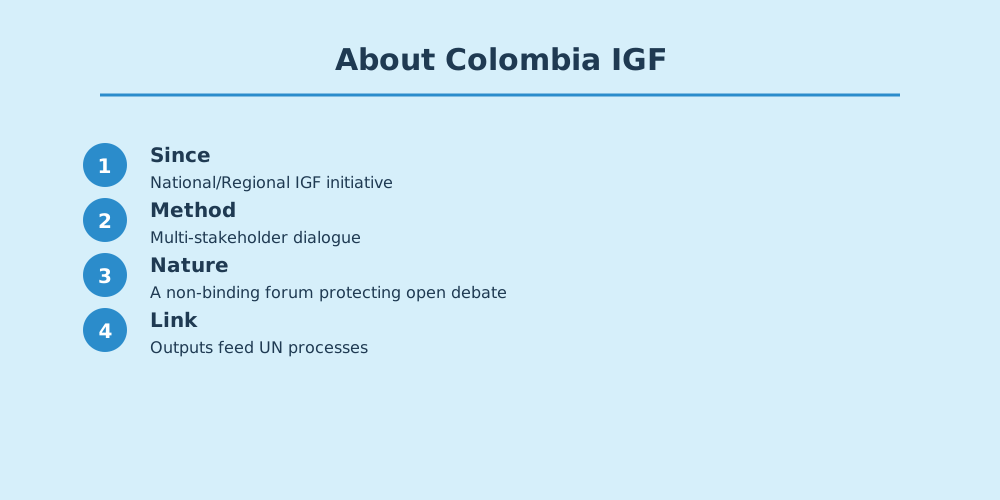
Colombia IGF is a National or Regional IGF Initiative (NRI), aligning local internet governance discussion with global IGF principles.
Why It Matters to You
What was discussed here becomes the baseline for national digital policy, platform rules and AI regulation worldwide within a few years. The principles confirmed at the 2020 meeting are the foundation of the "next rules" for the phones, social platforms and AI services you use every day.
Sources & References
- Foro de Gobernanza 2020 — Acerca del 7º Foro Colombiano de Gobernanza de Internet(公式サイト: 概要・招請状・タラー詳細) — Mesa Colombiana de Gobernanza de Internet(Wayback Machine 2020年11月26日スナップショット) (accessed 2026-07-22)
- Foros anteriores(第VII回=2020年12月2-3日・バーチャル(Zoom)の記録) — gobernanzadeinternet.co (accessed 2026-07-22)
- Mesa Colombiana de Gobernanza de Internet(系列の年次開催記録) — Colnodo(Wayback Machineアーカイブ) (accessed 2026-07-22)
Quotes are translated or condensed from the records listed above. Bracketed numbers [n] refer to the source list.
Related links
- IGF official (NRI list): https://www.intgovforum.org/en/content/national-and-regional-igf-initiatives
- Japan IGF: https://japanigf.jp/
- Yuki Nakazawa's blog: https://nkzw.jp/category/igf/
更新履歴
第1稿投稿 2026年7月19日 17時18分(記事コンテンツアップ)
— 中澤祐樹