


The 3-Line Summary
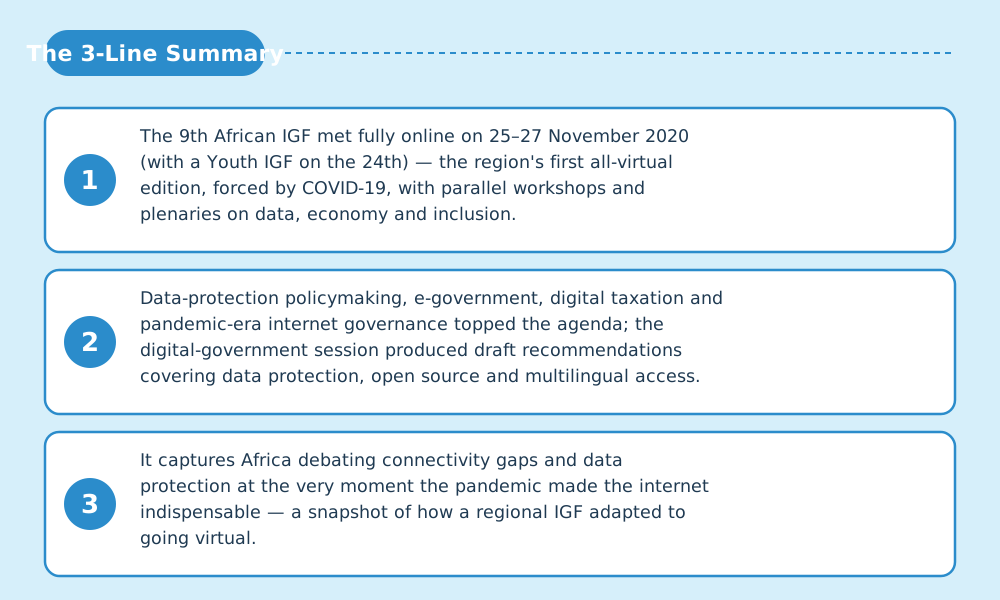
- The 9th African IGF met fully online on 25–27 November 2020 (with a Youth IGF on the 24th) — the region's first all-virtual edition, forced by COVID-19, with parallel workshops and plenaries on data, economy and inclusion.
- Data-protection policymaking, e-government, digital taxation and pandemic-era internet governance topped the agenda; the digital-government session produced draft recommendations covering data protection, open source and multilingual access.
- It captures Africa debating connectivity gaps and data protection at the very moment the pandemic made the internet indispensable — a snapshot of how a regional IGF adapted to going virtual.
Welcome — this is the Japan IGF Support Organization. This in-depth report on AfIGF 2020 in Virtual draws on official outputs, session records and on-site reporting. In a hurry? The three lines above and the diagrams carry the gist.
📍 Matches the catalogue: fully online — the first all-virtual AfIGF
Conference at a Glance (from official records)
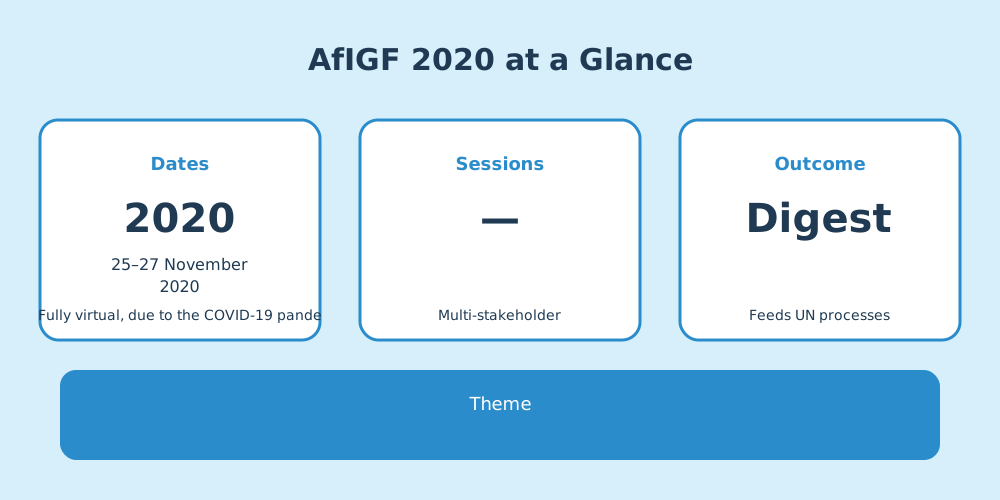
| Item | Detail |
|---|---|
| Edition | 9th African IGF (English Wikipedia calls it the 8th, but the 9th is what fits the official numbering (2021 = 10th, 2022 = 11th per the AU)) |
| Dates | 25–27 November 2020 (The African Youth IGF was held on 24 November; the official schedule spans 24–27 November) |
| Venue | Fully virtual, due to the COVID-19 pandemic |
| Theme | Regional governance themes |
| Host | AfIGF Secretariat (hosted by UNECA, supported by the African Union Commission) |
(See the source list at the end of this article.)
Discussion Digest — from the Session Records
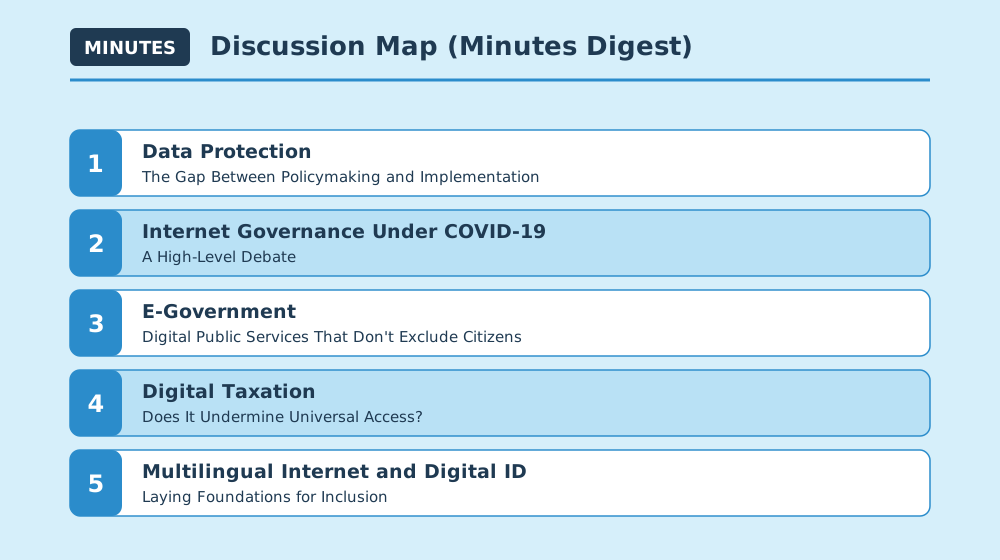
Key exchanges extracted from session records and transcripts.
1. Data Protection — The Gap Between Policymaking and Implementation
Sessions: Workshop "Key issues in Data protection policy making and implementation"
- With data-protection laws proliferating across Africa, the forum tackled the gap between enacting legislation and actually implementing and enforcing it [2][3]
- Developing data-protection and cybersecurity standards suited to Africa ran as a thread through the whole forum [2][3]
2. Internet Governance Under COVID-19 — A High-Level Debate
Sessions: Plenary "High-level Discussion on Internet Governance issues during and Post COVID-19"
- A high-level plenary examined internet governance during and after the pandemic [3][1]
- The forum going all-virtual for the first time was itself a mirror of Africa's connectivity conditions and digital divide [3][1]
3. E-Government — Digital Public Services That Don't Exclude Citizens
Sessions: Workshop "Digital Government Pipelines in Africa" (Research ICT Africa, moderated by Alex Comninos)
- Beyond infrastructure constraints, exclusionary design practices were flagged as a barrier to effective e-government [2]
- The session produced tentative recommendations on data-protection frameworks, citizen participation in platform design, open-source adoption and multilingual accessibility [2]
4. Digital Taxation — Does It Undermine Universal Access?
Sessions: Workshop "Digital Taxation in Africa" (moderated by Alison Gillwald, 60+ participants)
- The session weighed how Africa's spreading digital taxes affect universal internet access and inclusion [2]
- Research ICT Africa reported over 60 participants and an active Q&A [2]
5. Multilingual Internet and Digital ID — Laying Foundations for Inclusion
Sessions: Workshops incl. "Universal Acceptance (UA) and Email Address Internationalisation for Supporting a Multilingual Internet in Africa" and "Digital Identity in Africa"
- Universal Acceptance — making local-language domains and email addresses work everywhere — was discussed as key to a multilingual internet in Africa [3][1]
- Digital identity and the e-commerce opportunities and hurdles facing entrepreneurial youth were also on the agenda [3][1]
Three-Minute Short Talk — Your Questions Answered
Q. So what did the conference actually decide?
A. Nothing binding — it's Africa's annual forum where governments, business and civil society talk as equals. In 2020 it went fully online for the first time because of COVID-19, pooling the continent's experience on data protection and e-government.
Q. What was the biggest issue?
A. How to protect and use data. Debates ranged from the gap between passing and enforcing data-protection laws, to e-government designs that exclude citizens, to fears that digital taxes would price people off the internet.
Q. Why should I care?
A. It's a record of the year every conference went virtual. The data-protection and digital-taxation debates aired here fed into the international digital rulemaking that followed.
What Is AfIGF? (for first-time readers)
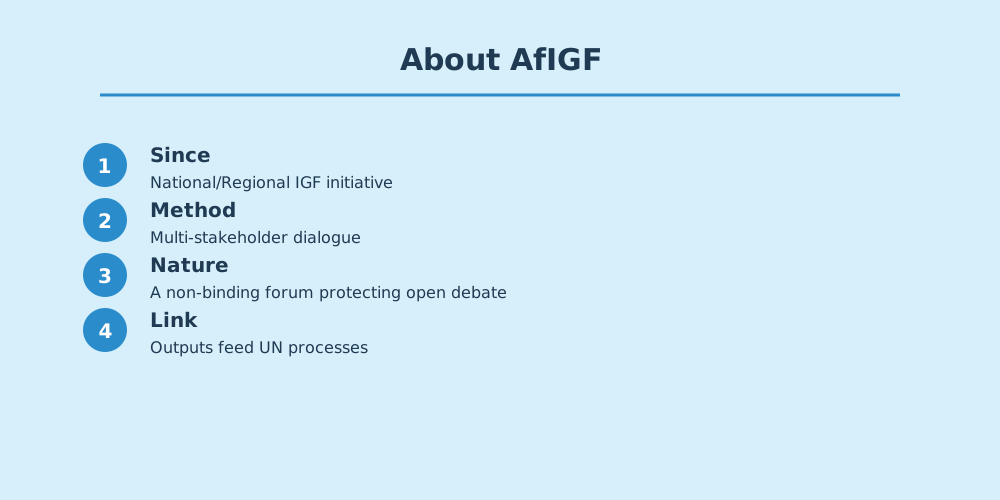
AfIGF is a National or Regional IGF Initiative (NRI), aligning local internet governance discussion with global IGF principles.
Why It Matters to You
What was discussed here becomes the baseline for national digital policy, platform rules and AI regulation worldwide within a few years. The principles confirmed at the 2020 meeting are the foundation of the "next rules" for the phones, social platforms and AI services you use every day.
Sources & References
- African Internet Governance Forum — en (accessed 2026-07-10)
- RIA at the African Internet Governance Forum 2020 — Research ICT Africa (accessed 2026-07-10)
- Africa Internet Governance Forum 2020 Schedule — Sched (accessed 2026-07-10)
- About us – Africa Internet Governance Forum(歴代開催一覧) — igf.africa (accessed 2026-07-10)
- African IGF (AfIGF) — UN IGF Secretariat, NRIページ (accessed 2026-07-10)
Quotes are translated or condensed from the records listed above. Bracketed numbers [n] refer to the source list.
Related links
- IGF official (NRI list): https://www.intgovforum.org/en/content/national-and-regional-igf-initiatives
- Japan IGF: https://japanigf.jp/
- Yuki Nakazawa's blog: https://nkzw.jp/category/igf/
Revision History
Rev. 1 — published 21 September 2020, 12:00 (Article published)
Rev. 2 — updated 10 July 2026, 23:16 (Fully revised into the in-depth edition: added the 3-line summary, minutes digest, short talk, source list and diagrams (all quotes verified against the listed sources))
— 中澤祐樹

