


The 3-Line Summary
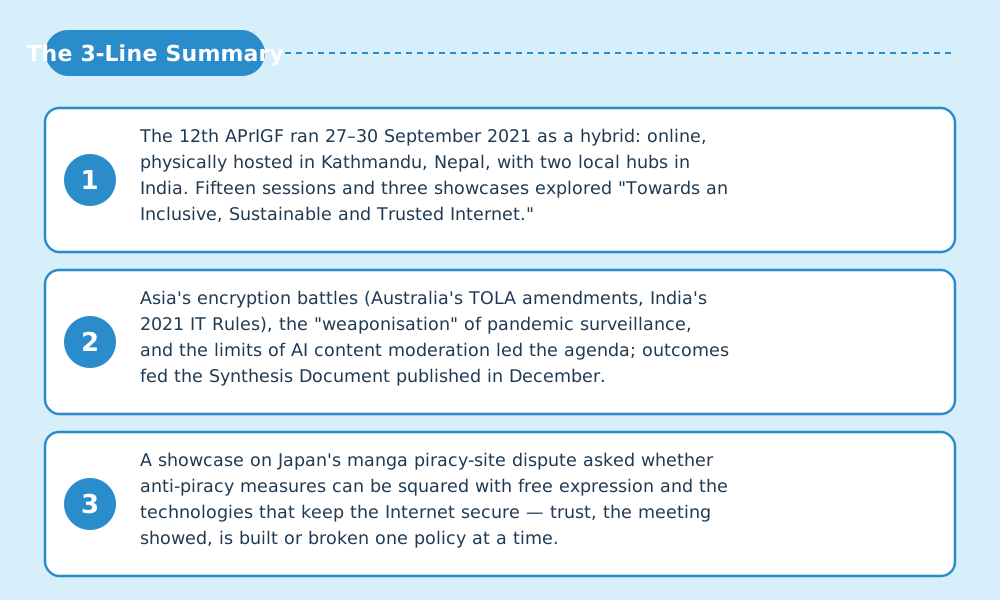
- The 12th APrIGF ran 27–30 September 2021 as a hybrid: online, physically hosted in Kathmandu, Nepal, with two local hubs in India. Fifteen sessions and three showcases explored "Towards an Inclusive, Sustainable and Trusted Internet."
- Asia's encryption battles (Australia's TOLA amendments, India's 2021 IT Rules), the "weaponisation" of pandemic surveillance, and the limits of AI content moderation led the agenda; outcomes fed the Synthesis Document published in December.
- A showcase on Japan's manga piracy-site dispute asked whether anti-piracy measures can be squared with free expression and the technologies that keep the Internet secure — trust, the meeting showed, is built or broken one policy at a time.
Welcome — this is the Japan IGF Support Organization. This in-depth report on AprIGF 2021 in Virtual draws on official outputs, session records and on-site reporting. In a hurry? The three lines above and the diagrams carry the gist.
📍 Catalogued as a virtual meeting, but officially a hybrid: the 12th APrIGF was physically hosted in Kathmandu, Nepal (organised locally by the Internet Governance Institute, Nepal Internet Foundation, ISOC Nepal and NPIX) with self-organised local hubs in Punjab and Hyderabad, India — partially realising the Nepal meeting abandoned in 2020
Conference at a Glance (from official records)
| Item | Detail |
|---|---|
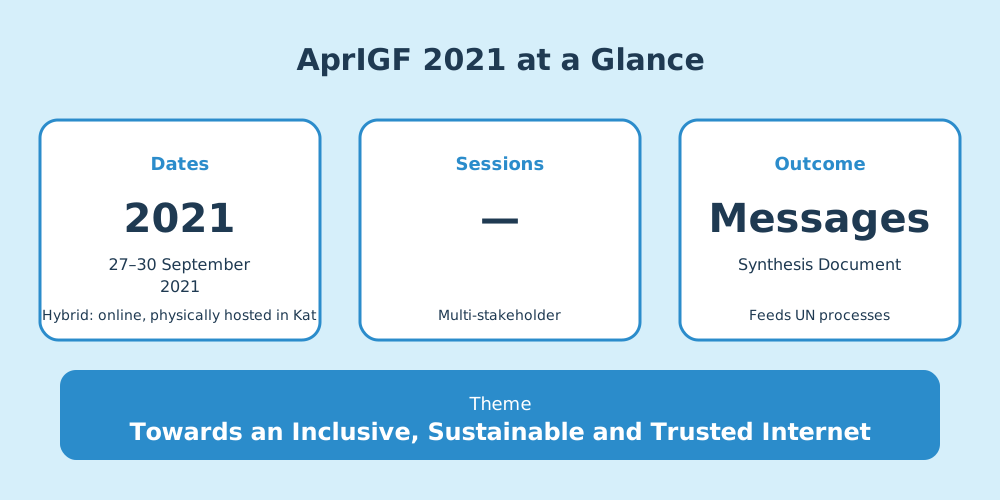
| Dates | 27–30 September 2021 |
| Venue | Hybrid: online, physically hosted in Kathmandu, Nepal, with two local hubs in India (Punjab and Hyderabad) |
| Theme | Towards an Inclusive, Sustainable and Trusted Internet |
| Tracks | First use of three high-level thematic tracks — Inclusion, Sustainability and Trust — a departure from the more specific themes of earlier years |
| Programme | 15 sessions and three showcases over three days, preceded by a Day 0 capacity-building programme for fellows and newcomers on 27 September |
| Host | Hosted by the APrIGF Multistakeholder Steering Group with the DotAsia-run Secretariat; local hosting by four Nepali Internet community organisations |
| Outcome | Synthesis Document (published 3 December 2021) |
(See the source list at the end of this article.)
Discussion Digest — from the Session Records
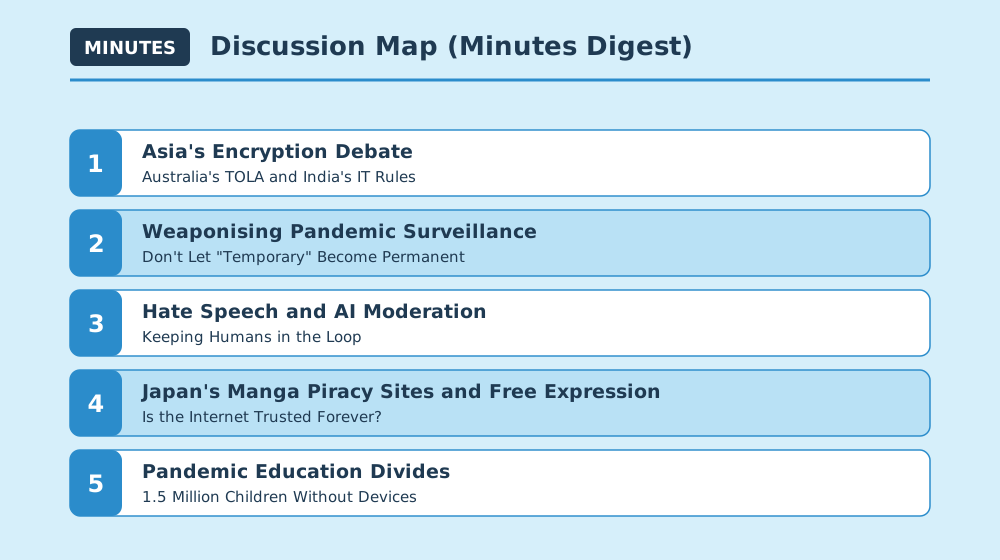
Key exchanges extracted from session records and transcripts.
1. Asia's Encryption Debate — Australia's TOLA and India's IT Rules
Sessions: "Decrypting the encryption debate in Asia Pacific" (Trust track)
- The region's end-to-end encryption flashpoints were mapped: Australia's TOLA amendments, India's IT (Intermediary Guidelines and Digital Media Ethics Code) Rules 2021, and CSAM-related encryption issues [1]
- Raising encryption literacy among lawmakers and citizens — and de-jargonising the debate — was framed as the surest way to protect E2E encryption in APAC [1]
- Sectors most affected, such as finance, banking and journalism, should be brought into the debate, which must sit within the wider regional context of access, security and trust [1]
2. Weaponising Pandemic Surveillance — Don't Let "Temporary" Become Permanent
Sessions: "Weaponization of surveillance amid a pandemic in South East Asia" and "Human rights impact of Covid-19 technologies and the role of businesses"
- Contact-tracing apps, centralised databases and expanded surveillance — supposedly temporary emergency measures — risk becoming permanent through "function creep" into long-term surveillance and policing [1][5]
- Emergency surveillance measures must include sunset provisions spelling out when and how they will be withdrawn and how collected data will be deleted or stored [1][5]
- Several COVID-19-related data breaches in the region showed the danger of centralising sensitive data in government databases; privacy-preserving design and regular data protection impact assessments were urged [1][5]
3. Hate Speech and AI Moderation — Keeping Humans in the Loop
Sessions: "More than wor(l)ds: Can AI effectively monitor online harms?" and "Citizen-Centered Approach on Tackling Hate Speech, Hindering State Authoritarianism and Algorithmic Censorship"
- In South and Southeast Asia hate speech increasingly manifests through disinformation; its context-dependent nature defeats simple detection, and the AI systems used for surveillance and takedowns face serious methodological, technical and ethical challenges [1][5]
- Fact-checkers should partner with platforms and local media to scale their work, and research should advance human-in-the-loop moderation combining manual and automated approaches [1][5]
- Governments are increasingly reaching for criminal law to regulate online behaviour — threatening the expression of communities marginalised by gender, ethnicity, class or migrant status; case studies spanned Nepal, Malaysia, Taiwan and Sri Lanka [1][5]
4. Japan's Manga Piracy Sites and Free Expression — Is the Internet Trusted Forever?
Sessions: Showcase "Is the Internet trusted forever? — The issue about the pirate site on 'Manga' and freedom of expression in Japan"
- A dedicated showcase examined Japan's manga piracy-site dispute and freedom of expression, turning a Japanese policy controversy into a shared regional case study [1]
- The Synthesis Document records that such legal measures can technically undermine encryption — a core technology of Internet security — and open the door to wider surveillance and data collection, more potent cyberattacks and greater online abuse [1]
- Policy decisions around the region can make the Internet a force for good or undermine it: the lesson was offered to all of APAC [1]
5. Pandemic Education Divides — 1.5 Million Children Without Devices
Sessions: "Helping kids learn in times of pandemic", "Building digital information literacy skills for trust and well-being" and others (Inclusion track)
- In Viet Nam an estimated 1.5 million children lack the devices and connectivity for online schooling; the Prime Minister's "Internet Connection and Computers for Students" programme aimed to support over a million students by end-2021 [1]
- From Central Asia came creative fixes such as Kyrgyzstan's Ilimbox, an offline digital library delivering local-language materials to remote communities — with training for educators (and parents of younger children) deemed essential [1]
- Host country Nepal reported gains from the Education Ministry's ICT Masterplan and READ Nepal's library-based digital literacy training, while noting mobile Internet quality remained inadequate [1]
Three-Minute Short Talk — Your Questions Answered
Q. So what did the conference actually decide?
A. Nothing binding — it's the Asia-Pacific edition of the IGF, where all stakeholders talk as equals. The 2021 edition ran as a hybrid between Kathmandu and the Internet, and its discussions were distilled into a Synthesis Document published in December as the region's input to the global IGF and UN processes.
Q. What was the most contentious topic?
A. Pandemic surveillance. The forum warned that 'temporary' contact-tracing and monitoring measures risk becoming permanent, and demanded sunset provisions with clear data-deletion rules. Encryption fights over Australia's TOLA and India's IT Rules ran it close.
Q. Why should I care?
A. Because the trade-offs debated here — anti-piracy enforcement vs free expression (via Japan's manga case), emergency surveillance vs privacy, AI moderation vs context — are exactly the ones every country's digital policy now has to answer.
What Is AprIGF? (for first-time readers)
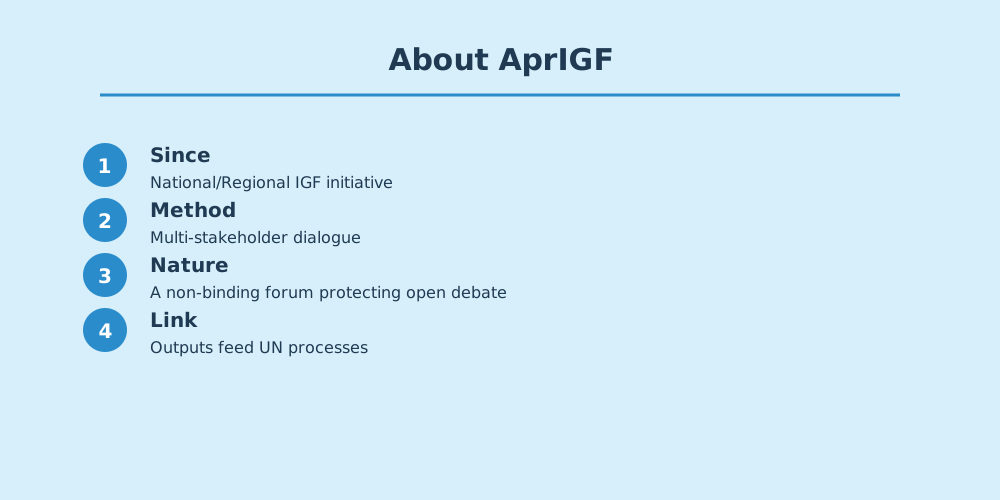
AprIGF is a National or Regional IGF Initiative (NRI), aligning local internet governance discussion with global IGF principles.
Why It Matters to You
What was discussed here becomes the baseline for national digital policy, platform rules and AI regulation worldwide within a few years. The principles confirmed at the 2021 meeting are the foundation of the "next rules" for the phones, social platforms and AI services you use every day.
Sources & References
- Asia Pacific Regional Internet Governance Forum 2021 Synthesis Document (PDF) — APrIGF Secretariat (accessed 2026-07-10)
- APrIGF 2021 Synthesis Document — APrIGF.Asia(公式サイト) (accessed 2026-07-10)
- APrIGF 2021 – Hybrid Kathmandu — APrIGF.Asia(公式サイト) (accessed 2026-07-10)
- Event Wrap: APrIGF 2021 — APNIC Blog (accessed 2026-07-10)
- Towards an inclusive, sustainable, trusted internet: APrIGF in 2021 — Association for Progressive Communications (accessed 2026-07-10)
Quotes are translated or condensed from the records listed above. Bracketed numbers [n] refer to the source list.
Related links
- IGF official (NRI list): https://www.intgovforum.org/en/content/national-and-regional-igf-initiatives
- Japan IGF: https://japanigf.jp/
- Yuki Nakazawa's blog: https://nkzw.jp/category/igf/
Revision History
Rev. 1 — published 27 September 2021, 10:00 (Article published)
Rev. 2 — updated 10 July 2026, 23:16 (Fully revised into the in-depth edition: added the 3-line summary, minutes digest, short talk, source list and diagrams (all quotes verified against the listed sources))
— 中澤祐樹

