


The 3-Line Summary
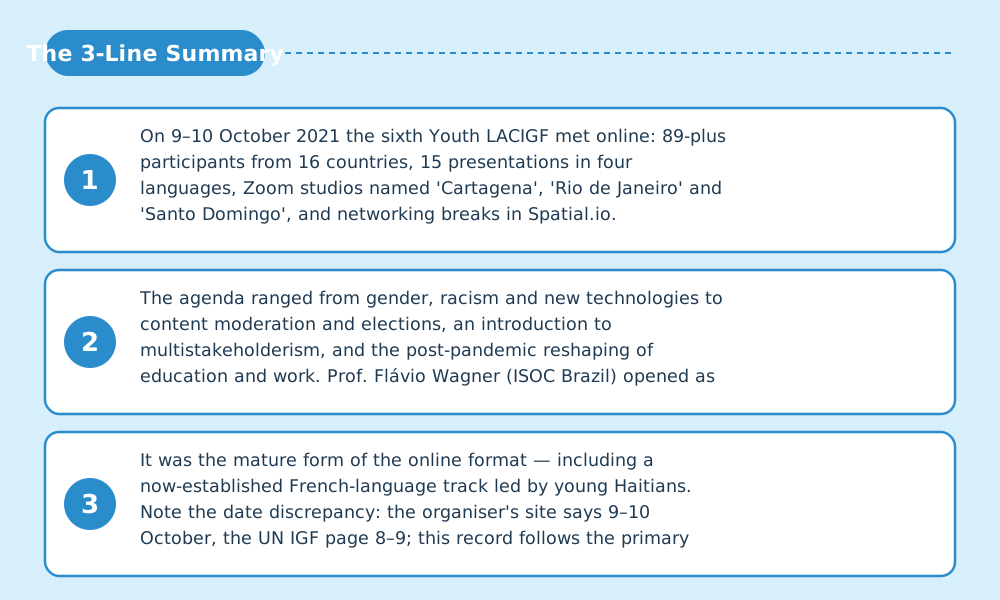
- On 9–10 October 2021 the sixth Youth LACIGF met online: 89-plus participants from 16 countries, 15 presentations in four languages, Zoom studios named 'Cartagena', 'Rio de Janeiro' and 'Santo Domingo', and networking breaks in Spatial.io.
- The agenda ranged from gender, racism and new technologies to content moderation and elections, an introduction to multistakeholderism, and the post-pandemic reshaping of education and work. Prof. Flávio Wagner (ISOC Brazil) opened as invited guest, and the forum hosted an official IGF 2021 preparatory session ahead of Katowice.
- It was the mature form of the online format — including a now-established French-language track led by young Haitians. Note the date discrepancy: the organiser's site says 9–10 October, the UN IGF page 8–9; this record follows the primary source.
Welcome — this is the Japan IGF Support Organization. This in-depth report on 6th Youth LACIGF (2021) draws on official outputs, session records and on-site reporting. In a hurry? The three lines above and the diagrams carry the gist.
Conference at a Glance (from official records)
| Item | Detail |
|---|---|
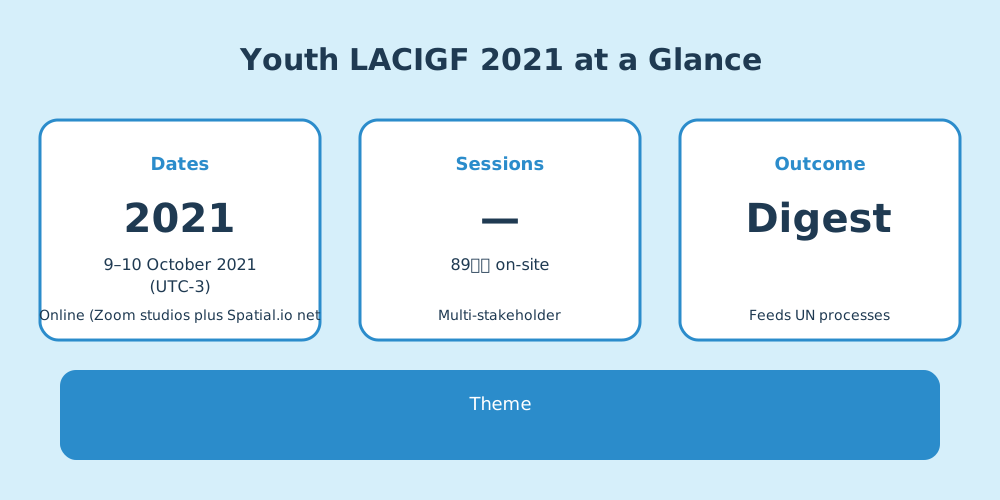
| Official name | 6th Youth LACIGF (2021) |
| Edition | 6th edition (second consecutive online year) |
| Dates | 9–10 October 2021 (UTC-3) (The organiser's own event site (archived 10 October 2021) states 'October 9, 2021 – October 10, 2021' with full session grids for both days, whereas the UN IGF NRI page says 8–9 October 2021. This JSON follows the organiser's primary source (9–10 October)) |
| Venue | Online (Zoom studios plus Spatial.io networking spaces) |
| Theme | Regional governance themes |
| Participants | Over 89 young people from 16 countries; 15 presentations |
| Format | Zoom studios were named after regional cities — Cartagena (Main Stage), Rio de Janeiro, Santo Domingo — with networking breaks in the virtual space Spatial.io |
| Languages | Sessions in Spanish, Portuguese, English and French |
| Host | The Youth LACIGF organising committee (the Youth Observatory / Internet Society SIG Youth community) |
(See the source list at the end of this article.)
Discussion Digest — from the Session Records
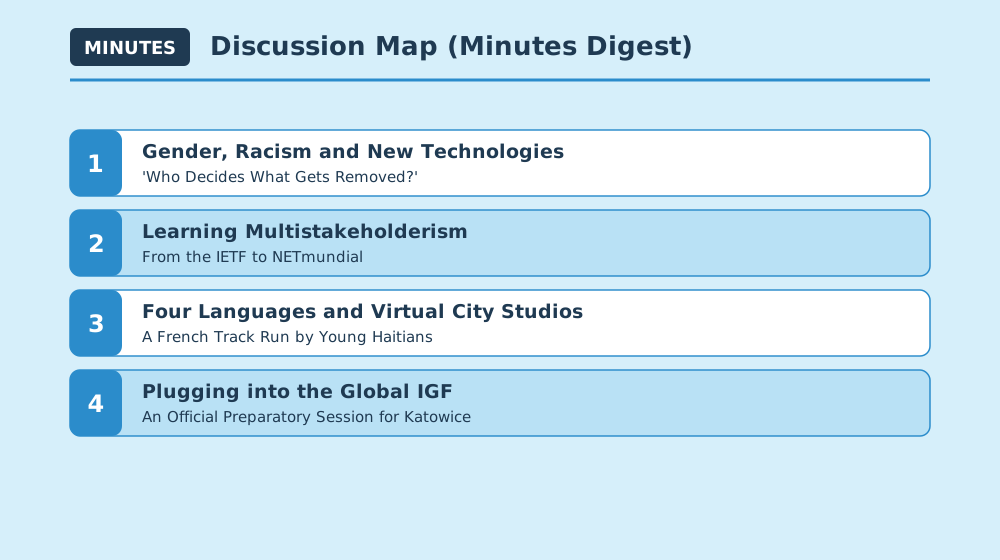
Key exchanges extracted from session records and transcripts.
1. Gender, Racism and New Technologies — 'Who Decides What Gets Removed?'
Sessions: Thematic area 'Género, Racismo y Nuevas Tecnologías' (9 October, 16:15–17:15, Cartagena Main Stage in Spanish; and 17:30–18:15, Rio de Janeiro studio in Portuguese)
- The Spanish session asked head-on: 'Who decides what should stay online and what should be removed — and who is in charge of that task?', interrogating the power dynamics of moderation [1][4]
- The Portuguese session 'Between anti-democratic attacks and inequalities: youth for digital rights' featured Ana Carolina da Hora, the prominent young Brazilian computer scientist and activist [1][4]
- Making the gender-race-technology intersection a standing thematic area carried into the in-person editions from 2023 (the digital-rights-and-inclusion track) [1][4]
2. Learning Multistakeholderism — From the IETF to NETmundial
Sessions: Session on multistakeholderism (9 October, 16:15–17:15, Cartagena Main Stage; speakers Nicolás Fiumarelli and David Aragort, mediator Juliana Novaes)
- Using NETmundial and the UN High-Level Panel (HLPDC) as case studies, the session mapped bottom-up processes — IETF, the RIRs, ICANN — as concrete entry points for young people [1][2]
- The 'future of internet governance' area also featured a session on youth initiatives across the region, presented by Juan Pájaro Velásquez and Benjamin Chong Castillo [1][2]
- Pairing institutional literacy with participation pathways extended the capacity-building line begun with the Open Course, whose second edition had launched on 1 July 2021 [1][2]
3. Four Languages and Virtual City Studios — A French Track Run by Young Haitians
Sessions: Language-track sessions (9–10 October; the French session was run entirely by young Haitians — three panellists, a moderator and two rapporteurs)
- Naming the Zoom studios after regional cities — Cartagena (Main Stage), Rio de Janeiro, Santo Domingo — gave the locked-down event a sense of touring the region [1]
- The French session was staffed entirely by young Haitians, from panellists to rapporteurs, while the English track featured Tracy Hackshaw of Trinidad and Tobago [1]
- Spatial.io networking breaks between sessions tried to recreate the hallway conversations of an in-person meeting [1]
4. Plugging into the Global IGF — An Official Preparatory Session for Katowice
Sessions: The 'IGF 2021 at Youth LACIGF' preparatory and engagement session, plus the opening session (9 October, 15:00–15:30, invited guest Prof. Flávio Wagner of ISOC Brazil)
- The UN IGF programme listed 'IGF 2021 at Youth LACIGF' as an official preparatory and engagement session, channelling regional youth voices toward the 16th IGF in Katowice that December [1][3][5]
- Prof. Flávio Wagner, president of ISOC Brazil, joined the organising committee as invited guest for the opening session [1][3][5]
- The UN IGF site's listing of Youth LACIGF among its recognised youth initiatives cemented the forum's international standing in this period [1][3][5]
Three-Minute Short Talk — Your Questions Answered
Q. How did year two online evolve?
A. Stagecraft and connection. Zoom studios were named after regional cities, breaks moved to Spatial.io, and an official UN IGF preparatory session piped the region's youth voices straight into Katowice.
Q. Which debates stood out?
A. The moderation-power question — who decides what gets removed from the internet — and the Portuguese session on anti-democratic attacks and digital rights featuring computer scientist Ana Carolina da Hora.
Q. Why should I care?
A. Registering a regional youth forum as an official IGF preparatory session is a concrete route for youth communities anywhere to get a seat at the global table.
What Is Youth LACIGF? (for first-time readers)
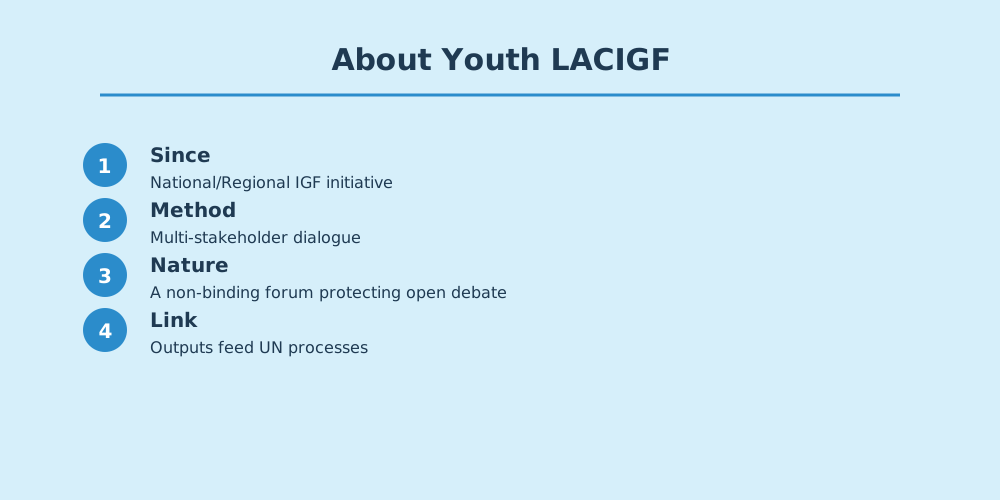
Youth LACIGF is a National or Regional IGF Initiative (NRI), aligning local internet governance discussion with global IGF principles.
Why It Matters to You
What was discussed here becomes the baseline for national digital policy, platform rules and AI regulation worldwide within a few years. The principles confirmed at the 2021 meeting are the foundation of the "next rules" for the phones, social platforms and AI services you use every day.
Sources & References
- 6th Youth LACIGF – 2021(公式イベントサイト・会期中アーカイブ:10月9〜10日の全セッション表・登壇者) — youthlacigf2021.youthlacigf.org(Internet Archive Wayback Machine・2021年10月10日取得) (accessed 2026-07-22)
- Youth LACIGF公式サイト(2021年9月26日時点アーカイブ:第6回のオンライン開催告知・オープンコース第2期) — youthlacigf.org(Internet Archive Wayback Machine) (accessed 2026-07-22)
- Youth LACIGF(国連IGFの公式NRIsページ。開催日は「8-9 October 2021」と記載され主催者資料と1日ずれる) — intgovforum.org (accessed 2026-07-22)
- Ediciones anteriores(歴代開催一覧:2021年オンライン・89人超・16カ国・発表15件) — Youth LACIGF公式サイト (accessed 2026-07-22)
- IGF 2021 Preparatory & Engagement Session: IGF 2021 at Youth LACIGF — intgovforum.org (accessed 2026-07-22)
Quotes are translated or condensed from the records listed above. Bracketed numbers [n] refer to the source list.
Related links
- IGF official (NRI list): https://www.intgovforum.org/en/content/national-and-regional-igf-initiatives
- Japan IGF: https://japanigf.jp/
- Yuki Nakazawa's blog: https://nkzw.jp/category/igf/
更新履歴
第1稿投稿 2026年7月18日 15時46分(記事コンテンツアップ)
— 中澤祐樹

