


The 3-Line Summary
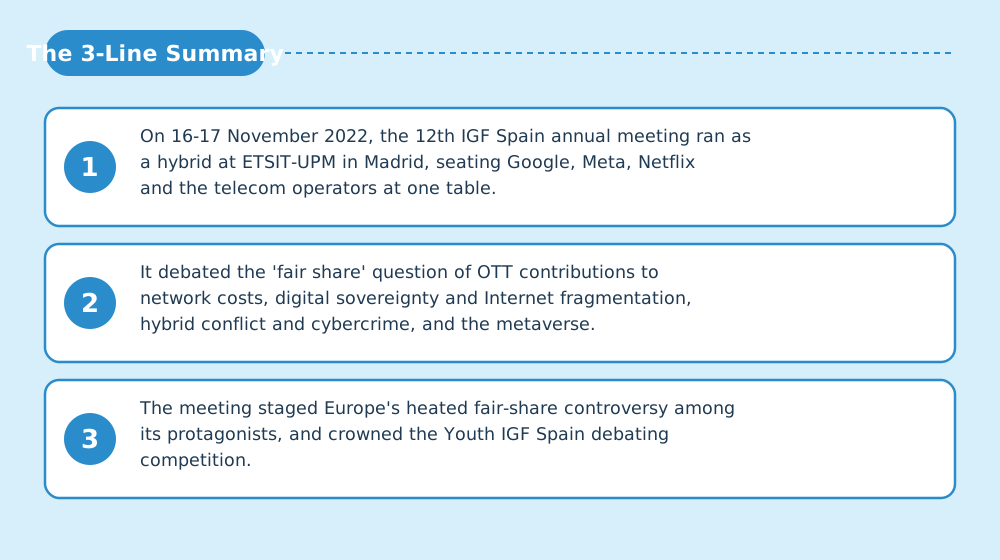
- On 16-17 November 2022, the 12th IGF Spain annual meeting ran as a hybrid at ETSIT-UPM in Madrid, seating Google, Meta, Netflix and the telecom operators at one table.
- It debated the 'fair share' question of OTT contributions to network costs, digital sovereignty and Internet fragmentation, hybrid conflict and cybercrime, and the metaverse.
- The meeting staged Europe's heated fair-share controversy among its protagonists, and crowned the Youth IGF Spain debating competition.
Welcome — this is the Japan IGF Support Organization. This in-depth report on 12th Annual Meeting of the Internet Governance Forum Spain (IGF Spain 2022) draws on official outputs, session records and on-site reporting. In a hurry? The three lines above and the diagrams carry the gist.
Conference at a Glance (from official records)
| Item | Detail |
|---|---|
| Official name | 12th Annual Meeting of the Internet Governance Forum Spain (IGF Spain 2022) |
| Edition | 12th Annual Meeting |
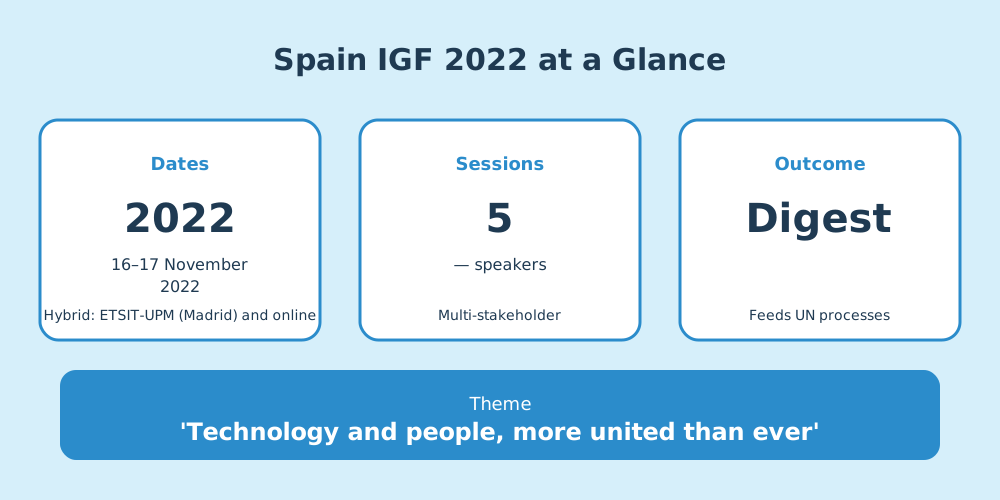
| Dates | 16–17 November 2022 |
| Venue | Hybrid: ETSIT-UPM (Madrid) and online |
| Theme | 'Technology and people, more united than ever' |
| Sessions | 5 (Five main sessions per the conclusions page (the archive counts seven roundtables, including interviews with former state secretaries and the Youth IGF award)) |
| Speakers | Over 50 speakers |
| Host | Coordinated by Jorge Pérez; opened with State Secretary Carme Artigas and UPM rector Guillermo Cisneros; supported by Fundación Telefónica, Fundación Vodafone España, Google, Orange and the ministry |
(See the source list at the end of this article.)
Discussion Digest — from the Session Records
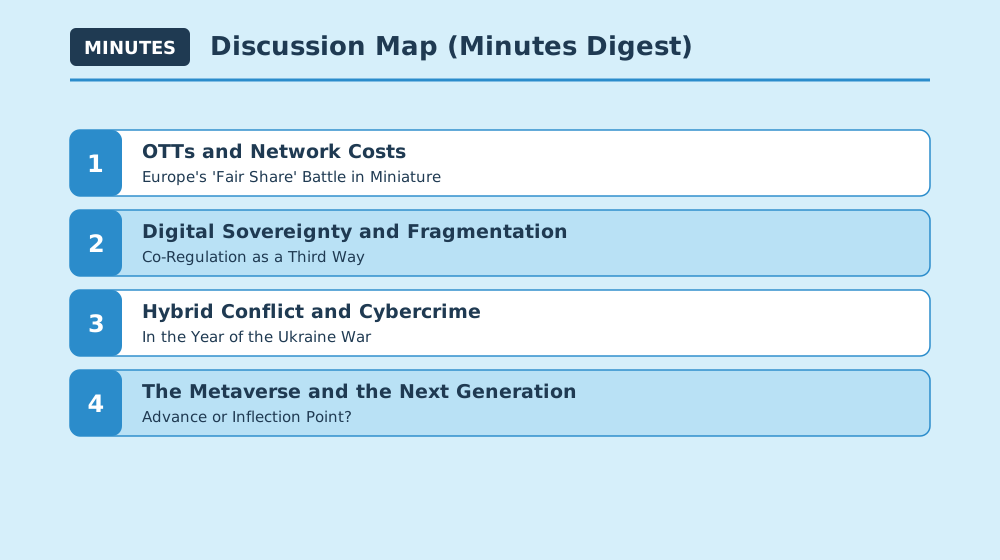
Key exchanges extracted from session records and transcripts.
1. OTTs and Network Costs — Europe's 'Fair Share' Battle in Miniature
Sessions: Roundtable 'The contribution of OTTs to financing European telecommunications infrastructure'
- The panel tackled 'fair share' head-on — whether large content providers generating most traffic should help fund networks, a question the European Commission itself took up in 2022 [1][2]
- With Google, Telefónica, Vodafone, Meta, Orange and Netflix at the table, participants agreed at least on the need for sustainability and cooperation among platforms, operators and users [1][2]
2. Digital Sovereignty and Fragmentation — Co-Regulation as a Third Way
Sessions: Roundtables 'Digital sovereignty and Internet fragmentation' and 'Towards co-regulation or co-governance of the Internet?'
- Panellists examined how tightening state control risks fragmenting the Internet, and how Europe's digital-sovereignty agenda relates to that risk [1][2]
- The opening session proposed moving beyond both state-only regulation and pure self-regulation towards co-regulation and co-governance [1][2]
3. Hybrid Conflict and Cybercrime — In the Year of the Ukraine War
Sessions: Roundtable 'From Internet vulnerabilities to hybrid conflict and cybercrime' (17 November)
- In the year Russia's invasion of Ukraine fused cyber and physical attack into real hybrid conflict, public- and private-sector experts audited the Internet's vulnerabilities [1][2]
- The discussion confirmed cybersecurity's elevation from a corporate concern to a matter of national and societal security [1][2]
4. The Metaverse and the Next Generation — Advance or Inflection Point?
Sessions: Roundtable 'Challenges and opportunities of the metaverse' and the Youth IGF Spain award
- Amid the metaverse boom, panellists asked whether virtual worlds represent an advance or an inflection point for governance, safety and the economy [1][2]
- The Youth IGF Spain debating prize (RETO DigitalES) went to Tomás Ridruejo, cementing institutionalised youth participation [1][2]
- Interviews with former state secretaries traced Spain's digitalisation journey and international standing [1][2]
Three-Minute Short Talk — Your Questions Answered
Q. What did the meeting decide?
A. Nothing binding — but it put telecom operators and Google, Meta and Netflix at one table over who pays for the pipes, a rare open dialogue in Europe's fair-share fight.
Q. What was the most contentious topic?
A. OTT network-cost contributions. Operators demanded big platforms pay their share; platforms countered they already invest heavily — the standoff that reached the European Commission.
Q. Why does it matter?
A. Fair-share debates spread worldwide, and the meeting's framing of cybersecurity as national security in the Ukraine-war year matched the strategic shift in most democracies.
What Is Spain IGF? (for first-time readers)
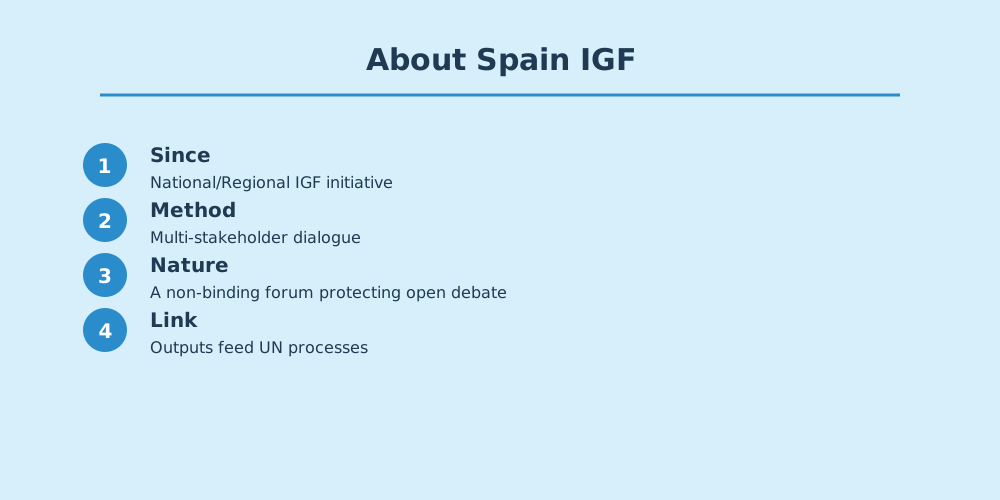
Spain IGF is a National or Regional IGF Initiative (NRI), aligning local internet governance discussion with global IGF principles.
Why It Matters to You
What was discussed here becomes the baseline for national digital policy, platform rules and AI regulation worldwide within a few years. The principles confirmed at the 2022 meeting are the foundation of the "next rules" for the phones, social platforms and AI services you use every day.
Sources & References
- IGF Spain 2022 – Tecnología y personas más unidos que nunca — igfspain.org (accessed 2026-07-22)
- Conclusiones del 12º Foro de la Gobernanza de Internet en España(セッション別結論) — igfspain.org (accessed 2026-07-22)
- Programa Jornadas IGF Spain 2022(プログラムPDF) — igfspain.org (accessed 2026-07-22)
- Historia de los 10 años del Foro de Gobernanza de Internet Spain — IGF Spain(10周年史, jornadasigfspain.es) (accessed 2026-07-22)
Quotes are translated or condensed from the records listed above. Bracketed numbers [n] refer to the source list.
Related links
- IGF official (NRI list): https://www.intgovforum.org/en/content/national-and-regional-igf-initiatives
- Japan IGF: https://japanigf.jp/
- Yuki Nakazawa's blog: https://nkzw.jp/category/igf/
更新履歴
第1稿投稿 2026年7月15日 11時29分(記事コンテンツアップ)
— 中澤祐樹

