


The 3-Line Summary
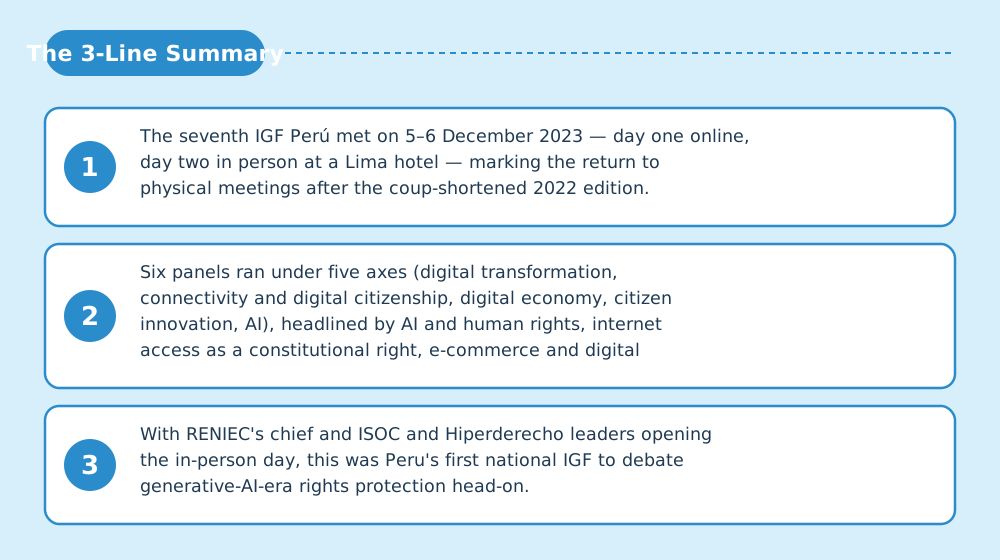
- The seventh IGF Perú met on 5–6 December 2023 — day one online, day two in person at a Lima hotel — marking the return to physical meetings after the coup-shortened 2022 edition.
- Six panels ran under five axes (digital transformation, connectivity and digital citizenship, digital economy, citizen innovation, AI), headlined by AI and human rights, internet access as a constitutional right, e-commerce and digital identity.
- With RENIEC's chief and ISOC and Hiperderecho leaders opening the in-person day, this was Peru's first national IGF to debate generative-AI-era rights protection head-on.
Welcome — this is the Japan IGF Support Organization. This in-depth report on IGF Perú 2023 (7th National IGF of Peru) draws on official outputs, session records and on-site reporting. In a hurry? The three lines above and the diagrams carry the gist.
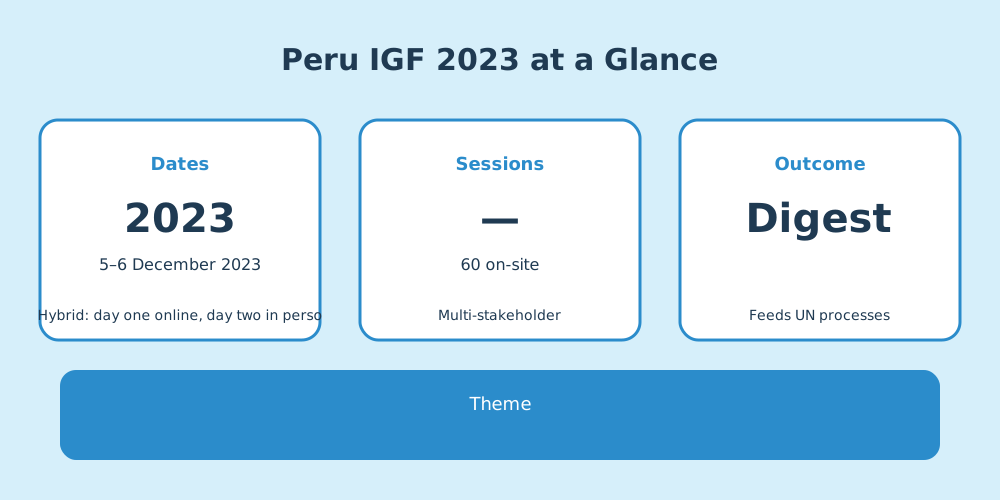
Conference at a Glance (from official records)
| Item | Detail |
|---|---|
| Official name | IGF Perú 2023 (7th National IGF of Peru) |
| Dates | 5–6 December 2023 |
| Venue | Hybrid: day one online, day two in person at the Hotel Ramada Encore in Lima |
| Theme | Regional governance themes |
| Participants | 60 (Around 60 people attended in person (per the official Edición 2024 page's retrospective figure); sessions were also streamed publicly on Facebook) |
| Host | Eight-member organising committee — Hiperderecho, ComexPerú, ISICRI, Cultura Digital.pe, RENIEC, CGI USMP, Red Científica Peruana and Democracia Digital — with the secretariat held by USMP's Internet Governance Studies Centre (CGI USMP) |
(See the source list at the end of this article.)
Discussion Digest — from the Session Records
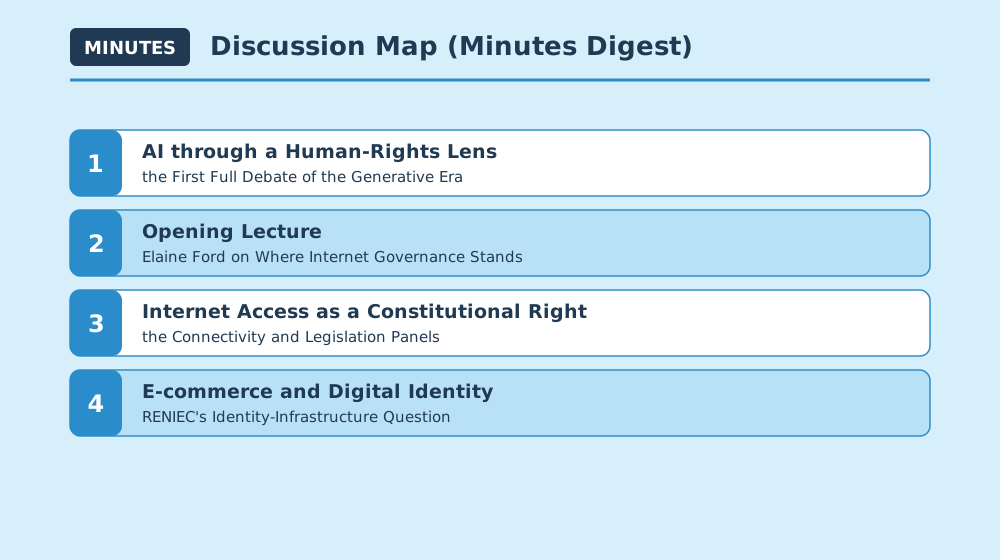
Key exchanges extracted from session records and transcripts.
1. AI through a Human-Rights Lens — the First Full Debate of the Generative Era
Sessions: Panel 3 'Inteligencia Artificial desde el Enfoque de Derechos Humanos' (6 December)
- Hiperderecho's panel brought together Fátima Toche (Iriarte y Asociados), Umut Pajaro (Internet Society) and Hiperderecho technology director Edgar Huaranga [2]
- Panellists converged on the need for a human-rights approach when building AI-based tools, and panel 4 linked the discussion to global AI-regulation trends [2]
2. Opening Lecture — Elaine Ford on Where Internet Governance Stands
Sessions: Day-two opening ceremony (6 December, Hotel Ramada Encore)
- Ford framed internet governance as the decentralised, collaborative processes and norms shaping how the internet is run, citing Diplo's seven baskets and highlighting the UN's 'Age of Digital Interdependence' report and the new Geneva AI working groups [1]
- RENIEC chief Carmen Velarde, CGI USMP's Maritza Agüero and Hiperderecho executive director Dilmar Villena shared the opening stage [1]
3. Internet Access as a Constitutional Right — the Connectivity and Legislation Panels
Sessions: Panels 1 'Conectividad e inclusión digital' and 2 on constitutionalising access and data-protection policy (6 December)
- Peru had just constitutionalised internet access in 2023, and implementing that right — together with data-protection reform — anchored the legal-policy panel [1]
- The connectivity panel addressed investment and inclusion for unconnected regions, embodying the forum's lead axis of connectivity and digital citizenship [1]
4. E-commerce and Digital Identity — RENIEC's Identity-Infrastructure Question
Sessions: Panels 5 'Desafíos del comercio electrónico en el Perú' and 6 on technologies for digital-identity governance (6 December)
- The e-commerce panel, led by ComexPerú, covered payments, logistics and consumer protection [1]
- With identity agency RENIEC on the committee, a dedicated panel examined the governance of Peru's national digital ID (DNIe) [1]
Three-Minute Short Talk — Your Questions Answered
Q. What kind of year was it?
A. The return to in-person meetings after the coup-shortened 2022 edition: day one online, day two at a Lima hotel with about 60 people in the room.
Q. What was the top issue?
A. AI. Panellists agreed AI tools must be built with a human-rights approach, and the forum also debated how to implement Peru's brand-new constitutional right to internet access.
Q. Why should I care?
A. Generative-AI rights impacts and digital-ID governance are universal questions — and Peru's constitutionalisation of internet access is an institutional experiment worth watching.
What Is Peru IGF? (for first-time readers)
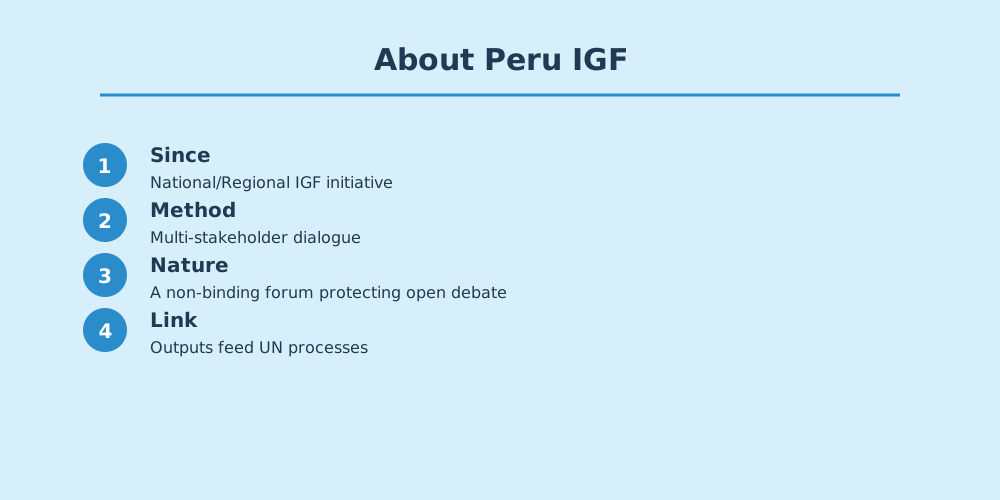
Peru IGF is a National or Regional IGF Initiative (NRI), aligning local internet governance discussion with global IGF principles.
Why It Matters to You
What was discussed here becomes the baseline for national digital policy, platform rules and AI regulation worldwide within a few years. The principles confirmed at the 2023 meeting are the foundation of the "next rules" for the phones, social platforms and AI services you use every day.
Sources & References
- IGF PERÚ | Una nueva edición del Foro de Gobernanza de Internet se llevó a cabo con expertos(2023年12月5〜6日開催の詳細報告) — Democracia Digital(D&D Internacional) (accessed 2026-07-23)
- Hablemos de Gobernanza de Internet en el Perú: IGF Perú 2023(共催者による開催報告。「octava」の回次表記は誤数え) — Hiperderecho (accessed 2026-07-23)
- Edición 2024 – Foro de Gobernanza de Internet Perú(2023年の対面参加約60人への言及) — IGF Perú(gobernanzadeinternet.pe) (accessed 2026-07-23)
- Peru IGF(NRI記録) — intgovforum.org (accessed 2026-07-23)
Quotes are translated or condensed from the records listed above. Bracketed numbers [n] refer to the source list.
Related links
- IGF official (NRI list): https://www.intgovforum.org/en/content/national-and-regional-igf-initiatives
- Japan IGF: https://japanigf.jp/
- Yuki Nakazawa's blog: https://nkzw.jp/category/igf/
更新履歴
第1稿投稿 2026年8月7日 8時17分(記事コンテンツアップ)
— 中澤祐樹

