


The 3-Line Summary
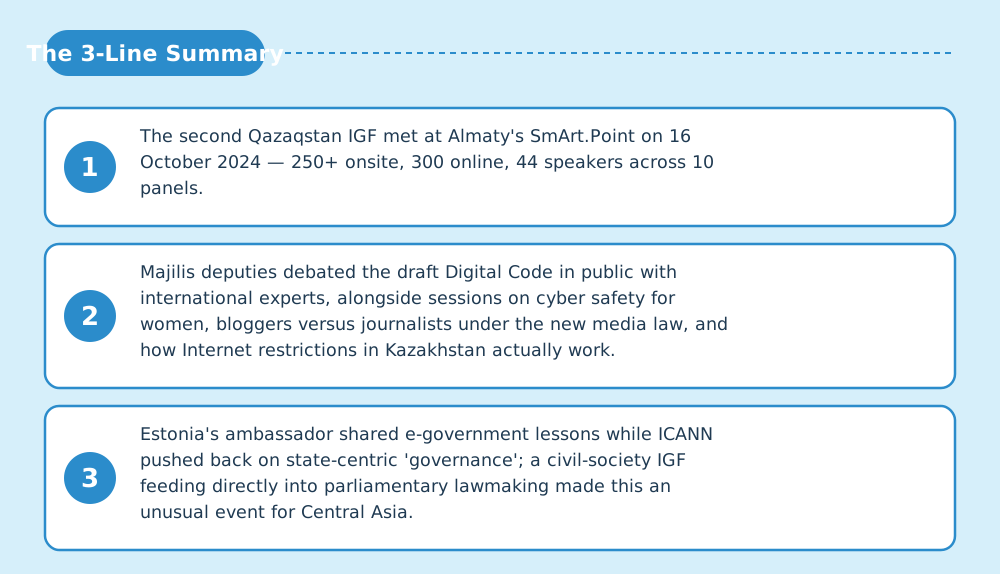
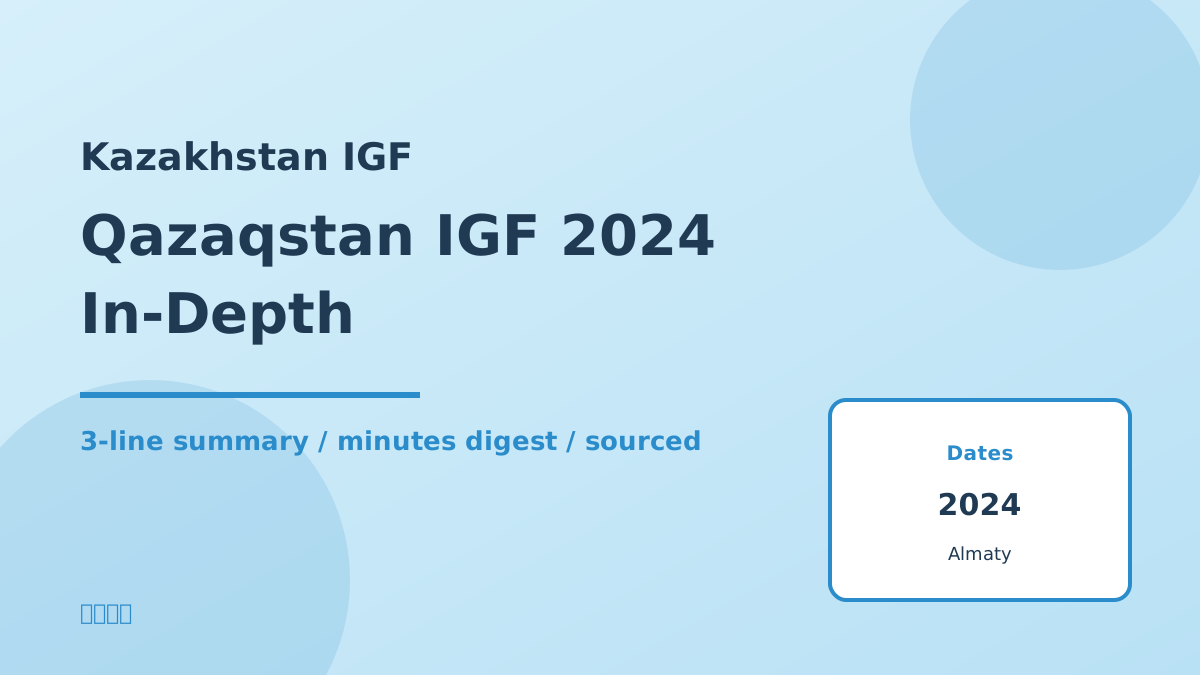
- The second Qazaqstan IGF met at Almaty's SmArt.Point on 16 October 2024 — 250+ onsite, 300 online, 44 speakers across 10 panels.
- Majilis deputies debated the draft Digital Code in public with international experts, alongside sessions on cyber safety for women, bloggers versus journalists under the new media law, and how Internet restrictions in Kazakhstan actually work.
- Estonia's ambassador shared e-government lessons while ICANN pushed back on state-centric 'governance'; a civil-society IGF feeding directly into parliamentary lawmaking made this an unusual event for Central Asia.
Welcome — this is the Japan IGF Support Organization. This in-depth report on Qazaqstan IGF 2024: the Second National Internet Governance Forum draws on official outputs, session records and on-site reporting. In a hurry? The three lines above and the diagrams carry the gist.
Conference at a Glance (from official records)
| Item | Detail |
|---|---|
| Official name | Qazaqstan IGF 2024: the Second National Internet Governance Forum |
| Edition | Second annual meeting |
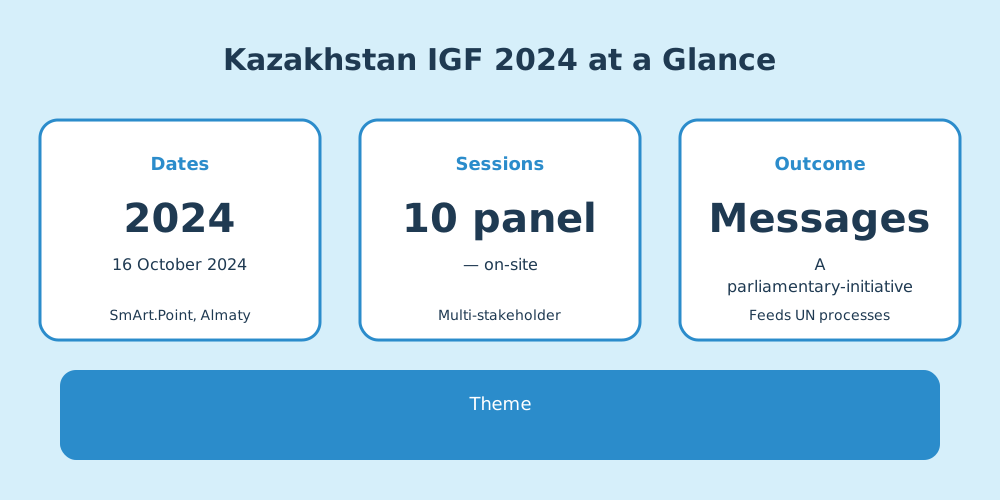
| Dates | 16 October 2024 |
| Venue | SmArt.Point, Almaty |
| Theme | Regional governance themes |
| Participants | More than 250 in-person participants plus 300 online listeners; 44 speakers across 10 panel sessions |
| Sessions | 10 panel sessions |
| Host | Organized by the Eurasian Digital Foundation and Digital Rights Center Qazaqstan (DRCQ); attended by the UN Mission, the Embassy of Estonia, Majilis deputies, the Information Security Committee, ICANN, RIPE NCC and USAID |
| Outcome | A parliamentary-initiative session on Kazakhstan's draft Digital Code with Majilis deputies and international experts (assisted by the global IGF Secretariat); the Digital Rights Compliance Rating 2024 (Freedom Bank, Yandex GO Delivery, Kcell/Activ); 31 media mentions in Kazakhstan by end-October |
(See the source list at the end of this article.)
Discussion Digest — from the Session Records
Key exchanges extracted from session records and transcripts.
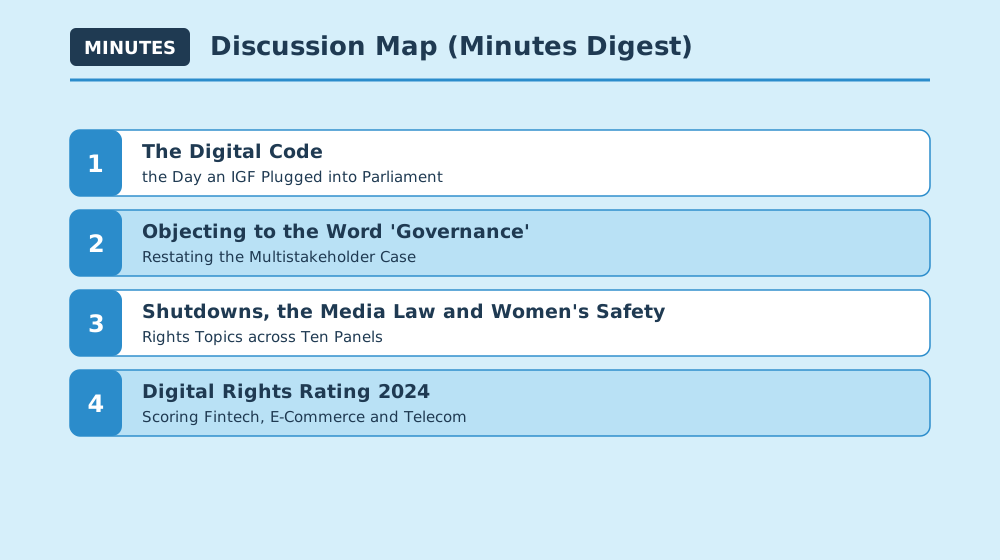
1. The Digital Code — the Day an IGF Plugged into Parliament
Sessions: Session 7: 'Initiative of the Parliament: Codification of Digital Legislation'
- Majilis deputies Yekaterina Smyshlyayeva and Pavel Kazantsev debated the draft Digital Code's design and long-term trajectory with international expert Nikolay Dmitrik — billed as a parliamentary-initiative session assisted by the global IGF Secretariat [1][2]
- Per zakon.kz, the initially overcomplicated draft (350 definitions) was recast around general principles modelled on the Civil Code, covering human precedence over algorithms, smart contracts and cybersecurity [1][2]
2. Objecting to the Word 'Governance' — Restating the Multistakeholder Case
Sessions: Forum opening / Session 1: 'Multistakeholder Internet Governance as a Way to Achieve Sustainable Development Goals'
"I don't really like the word 'governance' here. It's not some kind of pushing of a button, but the development of rules. We all want predictability and common rules. The Internet Governance Forum is a place where people check their watches and strive to understand which rules are necessary and which ones need to be adjusted."
— Mikhail Anisimov, ICANN Global Stakeholder Engagement Manager for Eastern Europe and Central Asia [1]
"Our mission is to ensure a digital future for everyone, and at the Eurasian Digital Foundation we aim to create that safe digital environment in the Republic of Kazakhstan based on trust, technological progress and Internet Governance Forum."
— Ruslan Daiyrbekov, Founder of the Eurasian Digital Foundation and Managing Partner at DRCQ [1]
- The outcome recommendations warned that state-only governance risks technical fragmentation — 'excessive sovereignty of the Internet within a single country' — arguing against excluding non-state actors [1]
- Estonia's ambassador Jaap Ora shared the experience of the world's second-ranked digital government and told Kazakhstan 'we are waiting for you in the top three' [1]
3. Shutdowns, the Media Law and Women's Safety — Rights Topics across Ten Panels
Sessions: Session 2: 'CyberSafe for Women' / Session 4: 'Blogger vs. Journalist' / Session 5: 'Restricting Access to the Internet in Kazakhstan: How Does It Work and What to Do about It?'
- Most striking was an open, in-country session titled 'Restricting Access to the Internet in Kazakhstan: how does it work and what to do about it' [1]
- The new mass media law was examined through a 'blogger versus journalist' lens, and cyber safety for women got its own panel [1]
- Other panels covered responsible AI regulation, digital-asset rules, training digital professionals and infrastructure resilience — 44 speakers from civil society, government, business and academia across ten panels [1]
4. Digital Rights Rating 2024 — Scoring Fintech, E-Commerce and Telecom
Sessions: Session 10: 'Digital Rights Rating' (companies in key sectors of the digital economy)
- In its second year the compliance rating expanded to fintech, e-commerce and telecom, naming Freedom Bank (fintech privacy), Yandex GO Delivery (e-commerce) and Kcell/Activ (telecom) as sector leaders [1][3]
- Scoring corporate policy and practice on governance, freedom of expression and privacy, the exercise entrenched routine civil-society monitoring of platforms [1][3]
Three-Minute Short Talk — Your Questions Answered
Q. What changed in year two?
A. The parliamentary link: Majilis deputies publicly debated the draft Digital Code in a session assisted by the global IGF Secretariat, wiring the forum into actual lawmaking. Attendance also grew past 250 onsite.
Q. The most surprising topic?
A. A session squarely titled 'Restricting Access to the Internet in Kazakhstan: how does it work and what to do about it' — held openly, inside the country, where shutdowns are a lived reality.
Q. Why should I care?
A. Kazakhstan's attempt to codify all digital law into a single Digital Code is a live experiment other legislatures are watching — and the civil-society platform rating is a replicable accountability tool.
What Is Kazakhstan IGF? (for first-time readers)
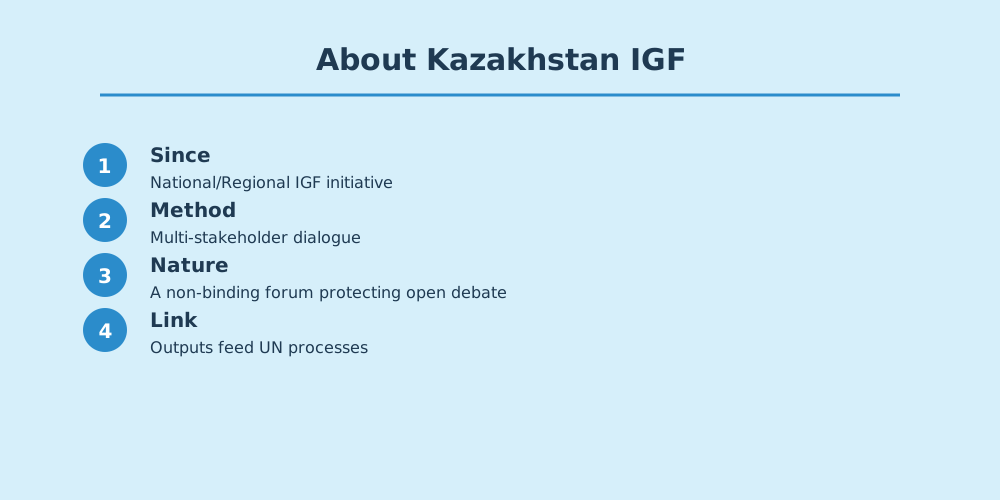
Kazakhstan IGF is a National or Regional IGF Initiative (NRI), aligning local internet governance discussion with global IGF principles.
Why It Matters to You
What was discussed here becomes the baseline for national digital policy, platform rules and AI regulation worldwide within a few years. The principles confirmed at the 2024 meeting are the foundation of the "next rules" for the phones, social platforms and AI services you use every day.
Sources & References
- Overview and Recommendations — Qazaqstan IGF 2024: The Second National Internet Governance Forum(公式報告書PDF) — Qazaqstan IGF (accessed 2026-07-23)
- В рамках Qazaqstan IGF 2024 прошло обсуждение Цифрового кодекса(ロシア語・デジタル法典セッションの詳報。引用は翻訳) — Zakon.kz (accessed 2026-07-23)
- Kazakhstan IGF(UN公式NRI登録ページ: 年次報告2023/2024/2025掲載) — UN IGF Secretariat (accessed 2026-07-23)
Quotes are translated or condensed from the records listed above. Bracketed numbers [n] refer to the source list.
Related links
- IGF official (NRI list): https://www.intgovforum.org/en/content/national-and-regional-igf-initiatives
- Japan IGF: https://japanigf.jp/
- Yuki Nakazawa's blog: https://nkzw.jp/category/igf/
更新履歴
第1稿投稿 2026年8月7日 19時47分(記事コンテンツアップ)
— 中澤祐樹

