


The 3-Line Summary
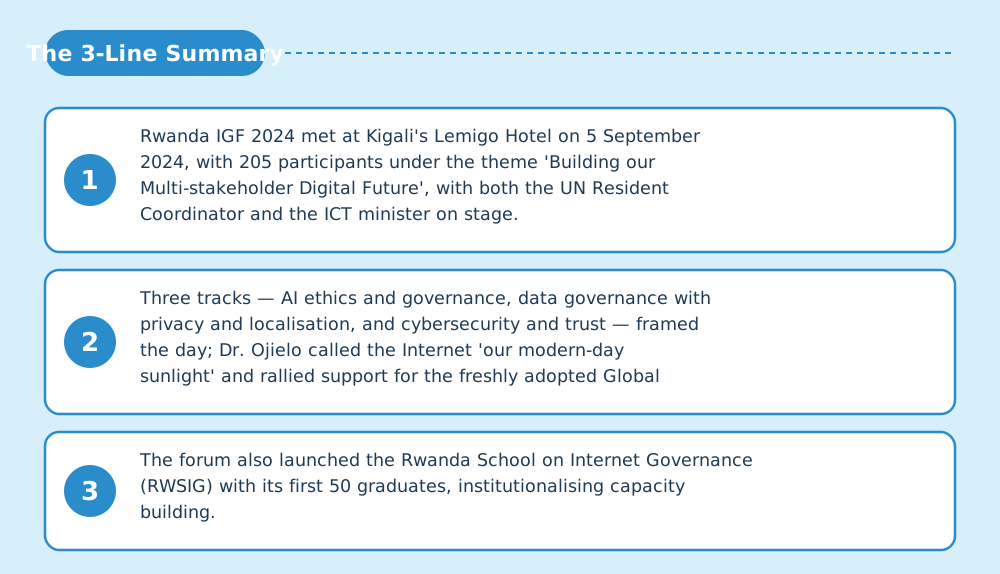
- Rwanda IGF 2024 met at Kigali's Lemigo Hotel on 5 September 2024, with 205 participants under the theme 'Building our Multi-stakeholder Digital Future', with both the UN Resident Coordinator and the ICT minister on stage.
- Three tracks — AI ethics and governance, data governance with privacy and localisation, and cybersecurity and trust — framed the day; Dr. Ojielo called the Internet 'our modern-day sunlight' and rallied support for the freshly adopted Global Digital Compact.
- The forum also launched the Rwanda School on Internet Governance (RWSIG) with its first 50 graduates, institutionalising capacity building.
Welcome — this is the Japan IGF Support Organization. This in-depth report on Rwanda Internet Governance Forum 2024 draws on official outputs, session records and on-site reporting. In a hurry? The three lines above and the diagrams carry the gist.
Conference at a Glance (from official records)
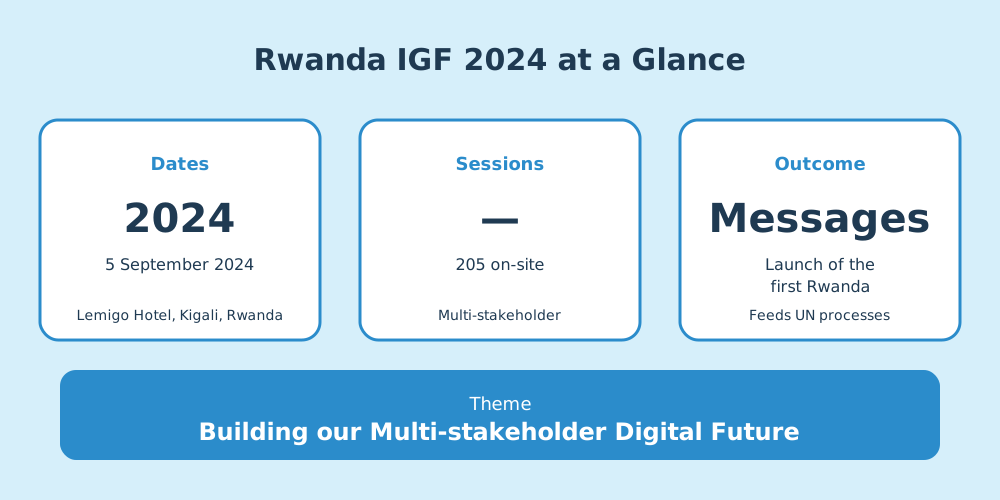
| Item | Detail |
|---|---|
| Official name | Rwanda Internet Governance Forum 2024 |
| Dates | 5 September 2024 |
| Venue | Lemigo Hotel, Kigali, Rwanda |
| Theme | Building our Multi-stakeholder Digital Future |
| Participants | 205 |
| Host | Hosted by RICTA with MINICT, RURA, GIZ, the Internet Society Foundation, the ISOC Rwanda Chapter, the ICT Chamber, NCSA, MTN, CMU-Africa, Team Cymru, AOS, TrAC and others |
| Outcome | Launch of the first Rwanda School on Internet Governance (RWSIG) with 50 participants |
(See the source list at the end of this article.)
Discussion Digest — from the Session Records
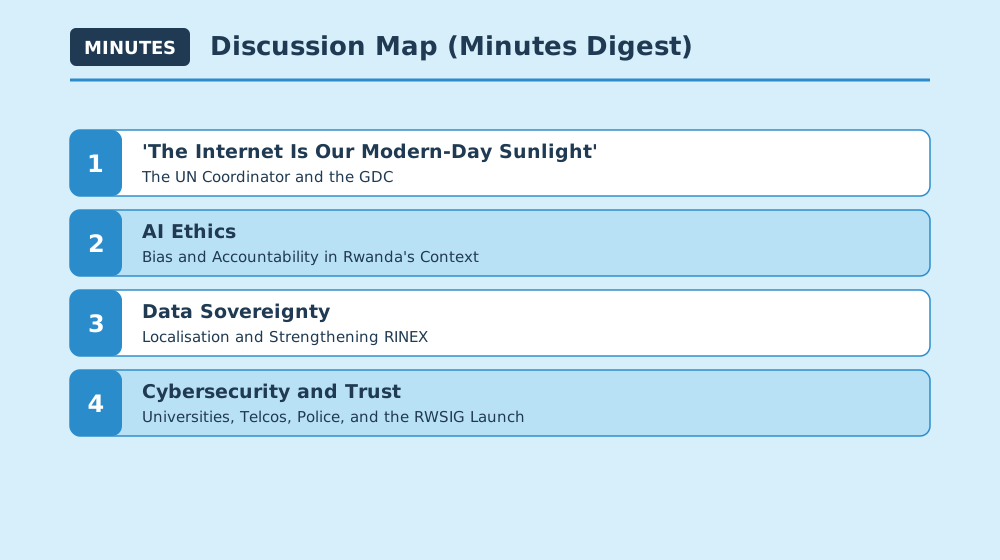
Key exchanges extracted from session records and transcripts.
1. 'The Internet Is Our Modern-Day Sunlight' — The UN Coordinator and the GDC
Sessions: Keynote by UN Resident Coordinator Dr. Ozonnia Ojielo
"Imagine a world where the sun never rises… The internet, in many ways, has become our modern-day sunlight, illuminating the path forward, connecting us across vast distances, and enabling us to explore new horizons. Just as the sun is indispensable to life on Earth, so too has the internet become indispensable to our lives, our economies, and our future"
— Dr. Ozonnia Ojielo (UN Resident Coordinator in Rwanda) [1][2]
- Dr. Ojielo cast cyber attackers as pirates after a treasure chest — making data protection a security matter — and warned that AI, like the sun, can sustain life or burn if misused [1][2]
- He walked through the UN Secretary-General's digital cooperation roadmap (universal affordable connectivity by 2030, digital public goods, human rights online) and rallied stakeholders behind the newly adopted Global Digital Compact, praising Rwanda's Connect Rwanda and macye macye device schemes [1][2]
2. AI Ethics — Bias and Accountability in Rwanda's Context
Sessions: First panel with C4IR Rwanda's AI/ML lead Alain Ndayishimiye, CMU-Africa's Dr. George Okeyo and the German Embassy's Clemens Häusler, moderated by Alex Ntale
- The panel flagged bias risks in AI systems and the need for inclusive AI reflecting Rwanda's demographics, recommending clear guidelines and accountability for applications in health, education and governance [1]
- Public awareness campaigns and education were recommended so citizens understand AI technologies and their rights concerning them [1]
3. Data Sovereignty — Localisation and Strengthening RINEX
Sessions: Second panel with RURA's Charles Gahungu, NCSA data-protection head Eraste Rurangwa, RICTA CEO Grace Ingabire and ISOC Rwanda chair Emmanuel Mfitumukiza, moderated by IGF committee chair Robert N. Ford
- Recommendations included privacy by design from the outset of product development and stronger oversight by the Data Protection Office [1]
- Stakeholders were urged to co-design a data-localisation framework balancing security, accessibility and cost, invest in local data infrastructure, and expand use of the RINEX exchange point for performance, cost and data sovereignty [1]
4. Cybersecurity and Trust — Universities, Telcos, Police, and the RWSIG Launch
Sessions: CMU-Africa presentation by Dr. Emmanuel Ndashimye, third panel with MIGEPROF, BSC and MTN moderated by Olivier Manzi, and the RWSIG certificate ceremony
- CMU-Africa framed universities' three roles — public awareness, training cybersecurity professionals, supporting national frameworks — while the panel added telco-regulator threat sharing, parental-control tools and cyberbullying awareness to the recommendations [1]
- The first Rwanda School on Internet Governance graduated 50 participants from diverse backgrounds, with the IGF committee committing to keep hosting it [1]
Three-Minute Short Talk — Your Questions Answered
Q. What did the meeting decide?
A. Eight recommendations — publish AI ethics guidelines, embed privacy by design, run nationwide cybersecurity awareness, expand RINEX use — plus the formal launch of the Rwanda School on Internet Governance.
Q. Why two competing dates?
A. Some accounts, including UN-linked coverage, suggested 8 August, but RICTA's official report states 5 September 2024 on its cover and throughout. The official record settles it.
Q. Why should I care?
A. It is an early example of a national IGF metabolising the just-adopted Global Digital Compact — and its pairing of data localisation with IXP strengthening as sovereignty tools speaks directly to cross-border data debates elsewhere.
What Is Rwanda IGF? (for first-time readers)
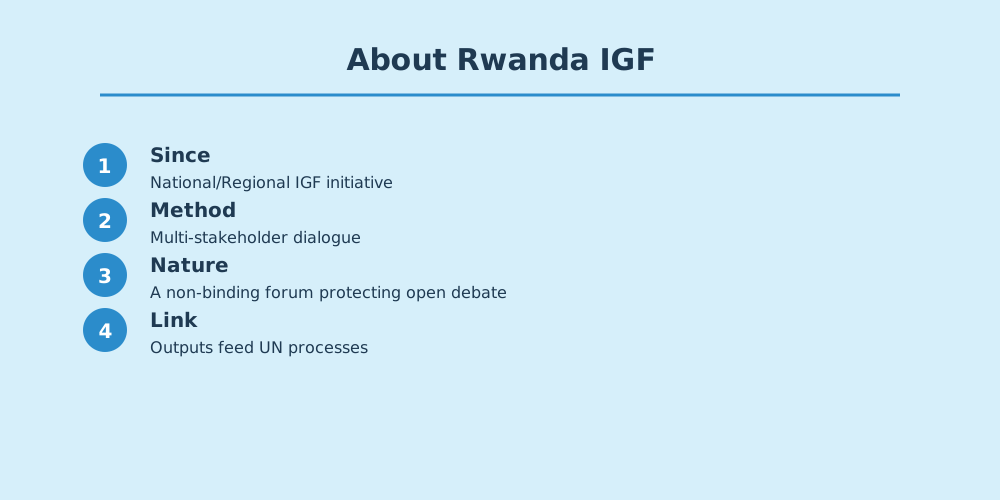
Rwanda IGF is a National or Regional IGF Initiative (NRI), aligning local internet governance discussion with global IGF principles.
Why It Matters to You
What was discussed here becomes the baseline for national digital policy, platform rules and AI regulation worldwide within a few years. The principles confirmed at the 2024 meeting are the foundation of the "next rules" for the phones, social platforms and AI services you use every day.
Sources & References
- Rwanda Internet Governance Forum 2024 Report(公式報告書: 2024-09-05・Lemigo Hotel・205名・3パネル1プレゼン・RWSIG発足・8項目勧告) — RICTA / Rwanda IGF(国連IGF filedepot経由) (accessed 2026-07-23)
- Rwanda Internet Governance Forum 2024: "Building our Multi-stakeholder Digital Future"(国連常駐調整官の基調挨拶を伝える記事) — UN Rwanda (accessed 2026-07-23)
- RW-IGF 2024 REPORT(公式報告書の rwigf.rw 掲載版。Wayback捕捉 2025-03-16) — Rwanda IGF(rwigf.rw、Wayback Machine保存版) (accessed 2026-07-23)
- Rwanda IGF(NRI公式記録: 年次報告書一覧に2024年掲載) — 国連IGF事務局 (accessed 2026-07-23)
- About RwIGF(公式沿革: 2024年にRwSIG開始と記載) — Rwanda IGF(rwigf.rw) (accessed 2026-07-23)
Quotes are translated or condensed from the records listed above. Bracketed numbers [n] refer to the source list.
Related links
- IGF official (NRI list): https://www.intgovforum.org/en/content/national-and-regional-igf-initiatives
- Japan IGF: https://japanigf.jp/
- Yuki Nakazawa's blog: https://nkzw.jp/category/igf/
更新履歴
第1稿投稿 2026年8月2日 21時49分(記事コンテンツアップ)
— 中澤祐樹

