


The 3-Line Summary
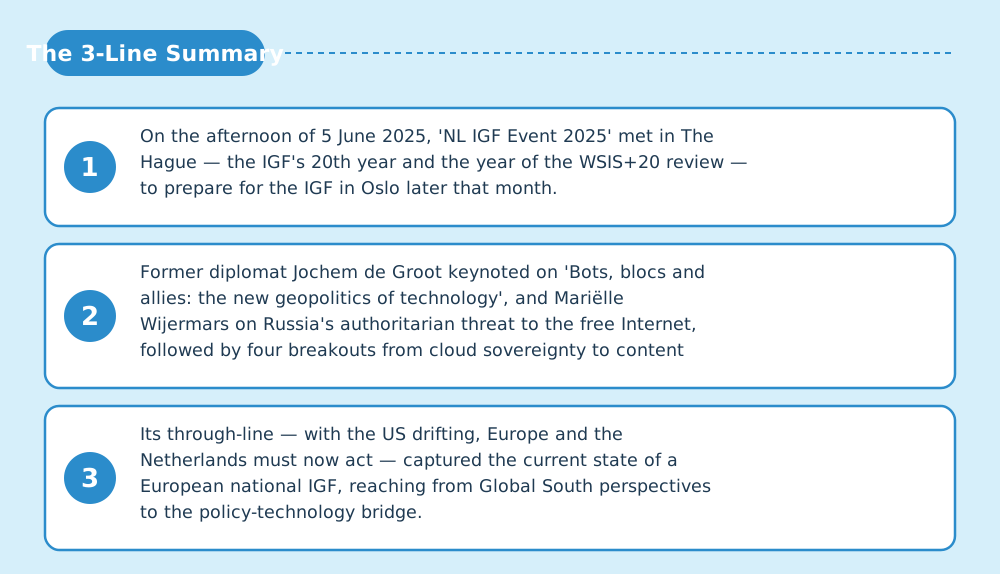
- On the afternoon of 5 June 2025, 'NL IGF Event 2025' met in The Hague — the IGF's 20th year and the year of the WSIS+20 review — to prepare for the IGF in Oslo later that month.
- Former diplomat Jochem de Groot keynoted on 'Bots, blocs and allies: the new geopolitics of technology', and Mariëlle Wijermars on Russia's authoritarian threat to the free Internet, followed by four breakouts from cloud sovereignty to content moderation.
- Its through-line — with the US drifting, Europe and the Netherlands must now act — captured the current state of a European national IGF, reaching from Global South perspectives to the policy-technology bridge.
Welcome — this is the Japan IGF Support Organization. This in-depth report on NL IGF Event 2025 draws on official outputs, session records and on-site reporting. In a hurry? The three lines above and the diagrams carry the gist.
📍 Organiser ECP's recap states the event took place in The Hague, while the UN IGF NRI record (WEOG, as of Feb 2026) lists '5 June 2025, Amsterdam' — a discrepancy; The Hague is adopted per the organiser's primary source
Conference at a Glance (from official records)
| Item | Detail |
|---|---|
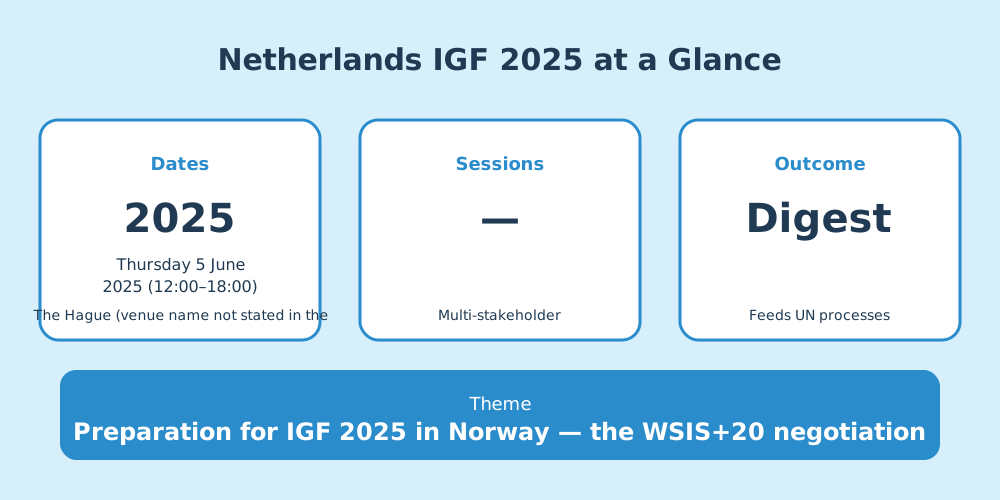
| Official name | NL IGF Event 2025 |
| Dates | Thursday 5 June 2025 (12:00–18:00) |
| Venue | The Hague (venue name not stated in the sources) |
| Theme | Preparation for IGF 2025 in Norway — the WSIS+20 negotiations and digital autonomy |
| Host | The Ministry of Economic Affairs, SIDN and ECP — the NL IGF consortium; opened by Marjolijn Bonthuis (ECP) |
| Note | Held in the IGF's 20th year, ahead of the WSIS+20 review |
(See the source list at the end of this article.)
Discussion Digest — from the Session Records
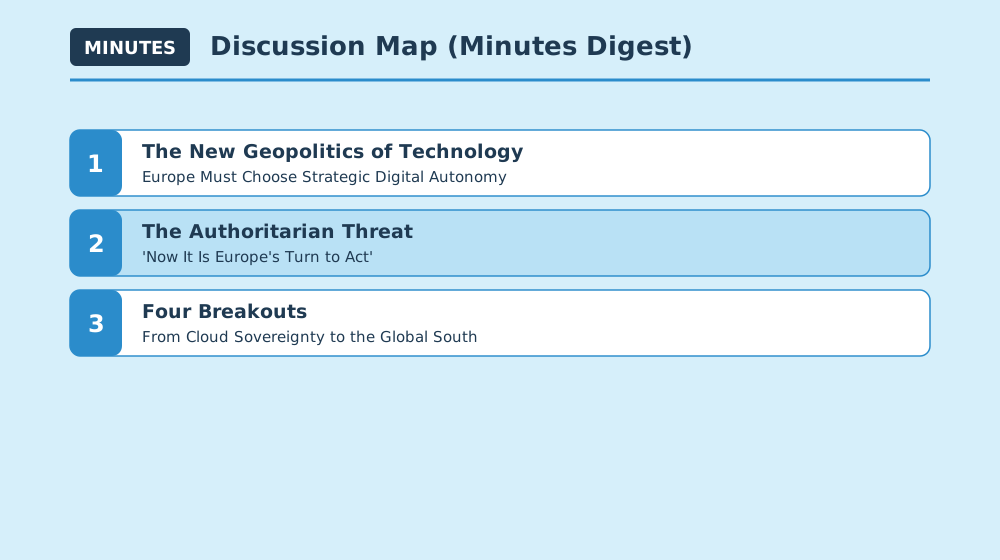
Key exchanges extracted from session records and transcripts.
1. The New Geopolitics of Technology — Europe Must Choose Strategic Digital Autonomy
Sessions: Keynote by Jochem de Groot (Humanative), 'Bots, blocs and allies'
- De Groot, a former diplomat and tech lobbyist, contrasted the deep historical entanglement of US Big Tech with defence (Microsoft, Amazon, Palantir and the Pentagon) with China's civil-military fusion and data-as-state-asset model [1]
- He argued Europe must pursue strategic digital autonomy — investing in its own cloud and AI capacity and exporting values-driven legislation — concluding that only conscious choices about values and infrastructure keep Europe geopolitically relevant [1]
2. The Authoritarian Threat — 'Now It Is Europe's Turn to Act'
Sessions: Keynote by Mariëlle Wijermars (Maastricht University), 'Russia's authoritarian threat: is there a future for the free Internet?'
- Wijermars warned of authoritarian states' ongoing erosion of human-rights norms and of the hollowing-out of the multistakeholder model through sham NGOs ('GONGOs') [1]
- With the US — until recently a defender of the open global Internet — turning inward, she argued Europe and especially the Netherlands must now act, treating the Oslo IGF as the moment to confirm and build coalitions [1]
3. Four Breakouts — From Cloud Sovereignty to the Global South
Sessions: 'Everything in the Cloud?' (moderated by Bjorn Hakansson, TNO, with the ministry, Leiden University, Leaseweb and Microsoft); a content-moderation debate (Ministry of Justice); an interview with Payal Arora (Utrecht University); and the policy-technology bridge (moderated by Cristian Hesselman, SIDN, with Olaf Kolkman and others)
- The cloud breakout probed hyperscaler power against public values and transparency, listing policy levers for digital autonomy — procurement requirements, standardisation policy, legislation — and fed into the 'Everything in the Cloud?' session at the Oslo IGF [1]
- Other tracks debated online content moderation, heard Global South perspectives from Payal Arora, and bridged policy-makers and technologists; a closing panel moderated by Lousewies van der Laan (Transparency International NL) with cyber ambassador Ernst Noorman drew the threads together [1]
Three-Minute Short Talk — Your Questions Answered
Q. What did the meeting decide?
A. Nothing binding — it built the shared Dutch platform for the UN IGF in Oslo and the WSIS+20 negotiations at year's end.
Q. What was the deepest worry?
A. That the free Internet is losing its defenders: alongside Russia's erosion of norms, speakers described a changing United States — leaving Europe and the Netherlands to lead.
Q. Why does it matter?
A. Cloud sovereignty and procurement leverage mirror economic-security debates in every digitising country, and the WSIS+20 fight over the IGF's mandate affects every national IGF community.
What Is Netherlands IGF? (for first-time readers)
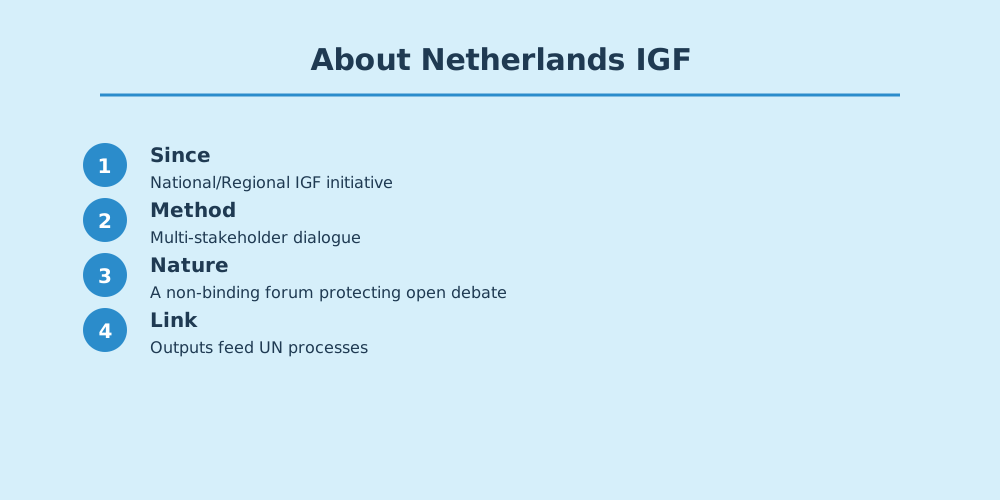
Netherlands IGF is a National or Regional IGF Initiative (NRI), aligning local internet governance discussion with global IGF principles.
Why It Matters to You
What was discussed here becomes the baseline for national digital policy, platform rules and AI regulation worldwide within a few years. The principles confirmed at the 2025 meeting are the foundation of the "next rules" for the phones, social platforms and AI services you use every day.
Sources & References
- Terugblik NL IGF Event 2025(公式の事後記事) — ECP | Platform voor de InformatieSamenleving (accessed 2026-07-23)
- National IGF initiatives – WEOG(Netherlands IGF年次会合欄: 5 June 2025。ただし都市は「Amsterdam」と記載され主催者情報と食い違う) — 国連IGF事務局(intgovforum.org, Wayback Machine) (accessed 2026-07-23)
- NL Internet Governance Forum(プロジェクト公式ページ: 2025年イベントの掲載) — ECP | Platform voor de InformatieSamenleving (accessed 2026-07-23)
Quotes are translated or condensed from the records listed above. Bracketed numbers [n] refer to the source list.
Related links
- IGF official (NRI list): https://www.intgovforum.org/en/content/national-and-regional-igf-initiatives
- Japan IGF: https://japanigf.jp/
- Yuki Nakazawa's blog: https://nkzw.jp/category/igf/
更新履歴
第1稿投稿 2026年8月3日 8時59分(記事コンテンツアップ)
— 中澤祐樹

