

The 3-Line Summary
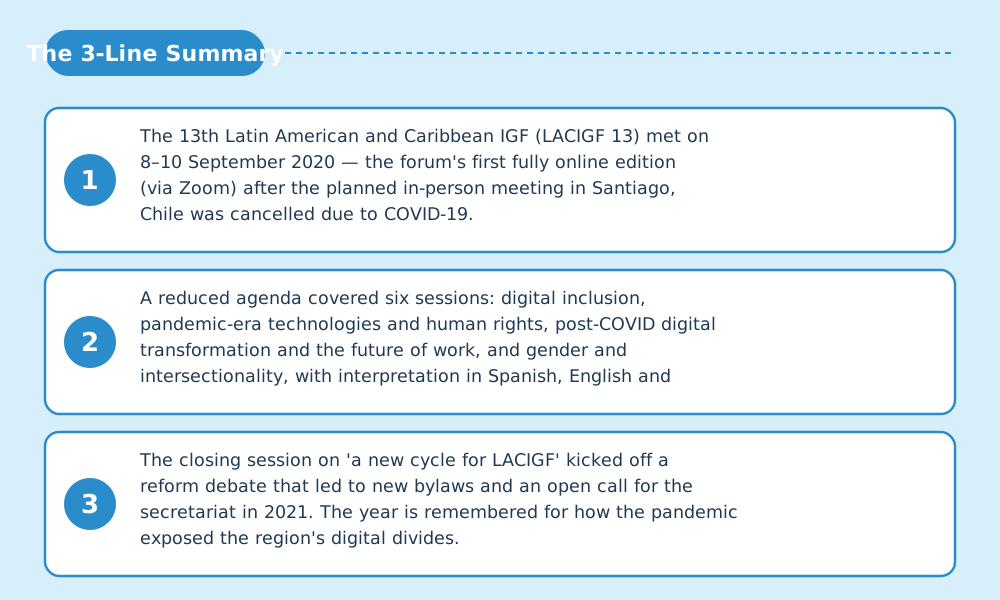
- The 13th Latin American and Caribbean IGF (LACIGF 13) met on 8–10 September 2020 — the forum's first fully online edition (via Zoom) after the planned in-person meeting in Santiago, Chile was cancelled due to COVID-19.
- A reduced agenda covered six sessions: digital inclusion, pandemic-era technologies and human rights, post-COVID digital transformation and the future of work, and gender and intersectionality, with interpretation in Spanish, English and Portuguese.
- The closing session on 'a new cycle for LACIGF' kicked off a reform debate that led to new bylaws and an open call for the secretariat in 2021. The year is remembered for how the pandemic exposed the region's digital divides.
Welcome — this is the Japan IGF Support Organization. This in-depth report on LACIGF 2020 in Virtual draws on official outputs, session records and on-site reporting. In a hurry? The three lines above and the diagrams carry the gist.
📍 Originally scheduled as an in-person meeting in Santiago, Chile; converted to the forum's first fully online edition due to the COVID-19 pandemic
Conference at a Glance (from official records)
| Item | Detail |
|---|---|
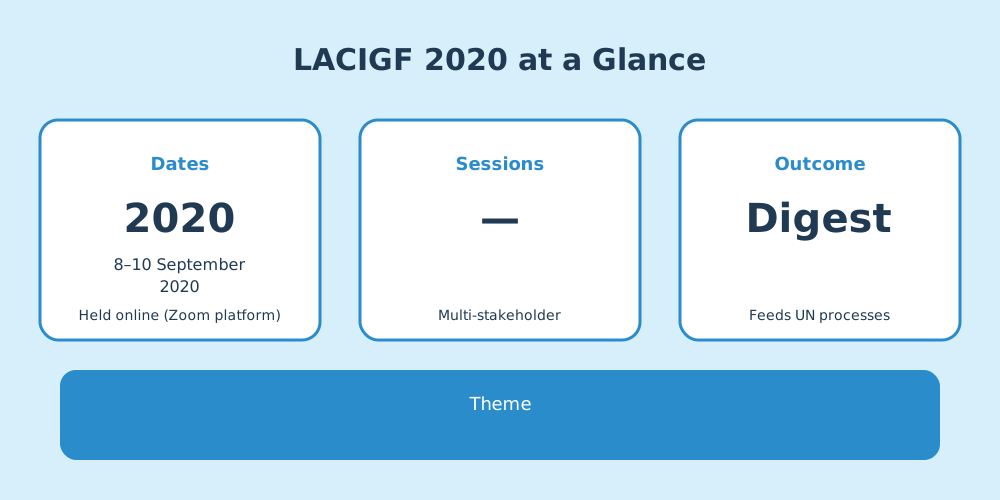
| Edition | 13th edition (LACIGF 13) |
| Dates | 8–10 September 2020 |
| Venue | Held online (Zoom platform) |
| Theme | Regional governance themes |
| Pre-event | Youth LACIGF held online on 5–6 September 2020 |
| Languages | Simultaneous interpretation in Spanish, English and Portuguese |
| Host | LACIGF Secretariat (LACNIC) and the multistakeholder Program Committee (government, technical community, private sector, civil society) |
(See the source list at the end of this article.)
Discussion Digest — from the Session Records
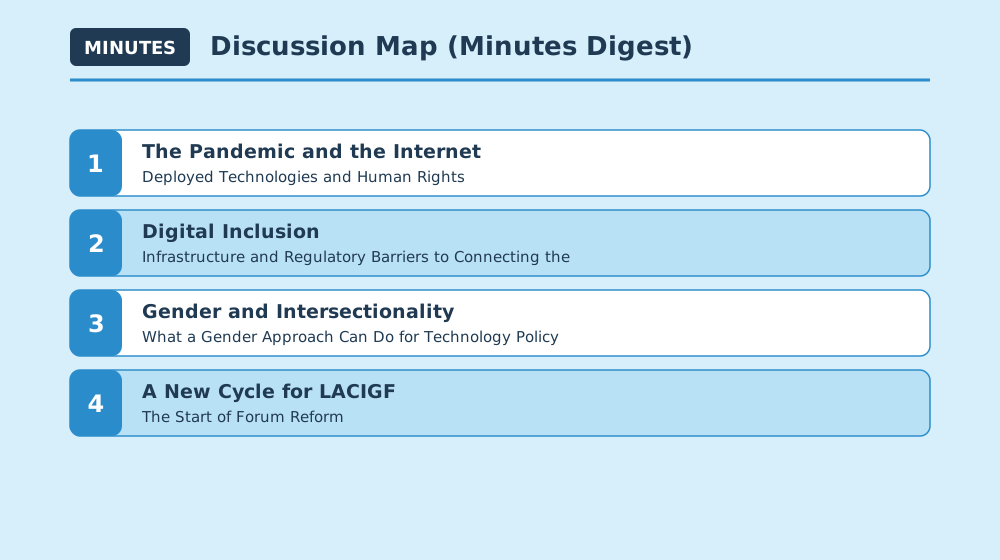
Key exchanges extracted from session records and transcripts.
1. The Pandemic and the Internet — Deployed Technologies and Human Rights
Sessions: "Internet and the Pandemic: Opportunities and Impacts of Deployed Technologies on Human Rights" (8 September)
"The unique situation created by the global pandemic has laid bare certain topics that are not so visible, yet they are extremely relevant."
— Ernesto Majó (LACNIC Deputy CEO) [1][2]
- The forum took stock of how tracking and surveillance technologies and rapid digitalisation deployed during the pandemic affect human rights across the region [1][2]
- With the in-person Santiago meeting cancelled, the forum moved to its first fully online format (Zoom) to keep the regional dialogue alive [1][2]
2. Digital Inclusion — Infrastructure and Regulatory Barriers to Connecting the Unconnected
Sessions: "Digital Inclusion: Models for an Inclusive Internet" (8 September) and "Connecting the Unconnected: Infrastructure and Regulatory Challenges" (9 September)
- As remote schooling and work spread overnight, the region's connectivity gaps translated directly into gaps in education and livelihoods — discussed in the context of the SDGs [1][2]
- Panellists stressed that expanding access requires regulatory reform alongside infrastructure investment [1][2]
3. Gender and Intersectionality — What a Gender Approach Can Do for Technology Policy
Sessions: "Internet Governance, Gender and Intersectionality: What Can a Gender Approach Do for Technology Policies?" (10 September)
- The forum put an intersectional gender approach to technology policy squarely on the regional IGF agenda [1][2]
- Participants shared concerns that the pandemic-driven shift online could amplify gender-based gaps and violence [1][2]
4. A New Cycle for LACIGF — The Start of Forum Reform
Sessions: "A New Cycle for LACIGF: Opportunities for Community Participation and Its Impact on Internet Policies in Our Region" (10 September)
- A 2019 review (based on consultations with 157 people) had called LACIGF an 'innovative, successful and important' mechanism that was nonetheless losing relevance, recommending a shift from an annual event to a permanent mechanism [1][4][5]
- This reform debate led to the adoption of new bylaws in 2021 and an open call for the secretariat — eventually won by Colnodo [1][4][5]
Three-Minute Short Talk — Your Questions Answered
Q. So what did the meeting actually decide?
A. LACIGF doesn't 'decide' — it's the regional IGF where governments, companies and civil society in Latin America and the Caribbean talk as equals. In 2020 it went online for the first time ever, and the closing reform debate fed into new bylaws the following year.
Q. What was the biggest issue?
A. The balance between pandemic-era tracking and surveillance technologies and human rights — and the plight of the unconnected, for whom remote school and work were simply out of reach.
Q. Why should I care?
A. It showed a regional IGF could keep multistakeholder dialogue alive online, a precedent other regions followed. The debates on pandemic-era digital divides and privacy apply far beyond Latin America.
What Is LACIGF? (for first-time readers)
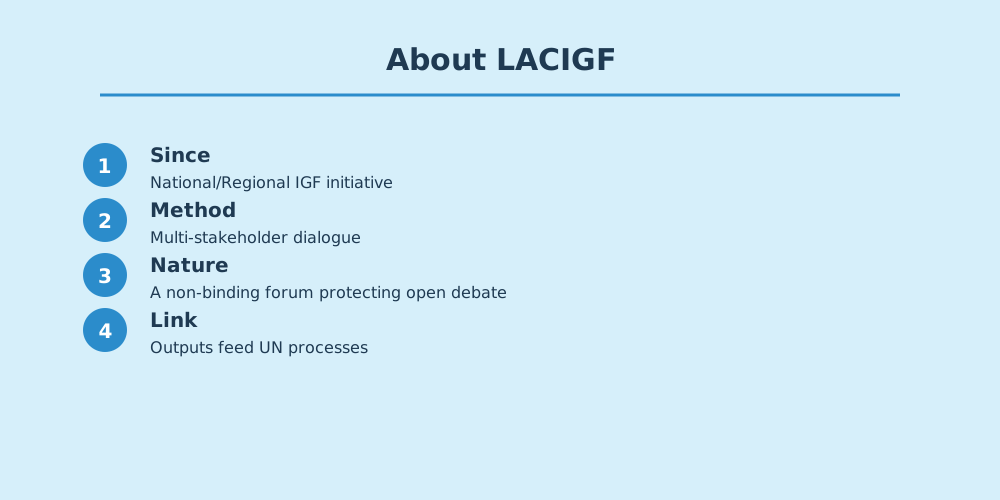
LACIGF is a National or Regional IGF Initiative (NRI), aligning local internet governance discussion with global IGF principles.
Why It Matters to You
What was discussed here becomes the baseline for national digital policy, platform rules and AI regulation worldwide within a few years. The principles confirmed at the 2020 meeting are the foundation of the "next rules" for the phones, social platforms and AI services you use every day.
Sources & References
- LACIGF 13(公式イベントページ) — LACIGF (accessed 2026-07-10)
- First Online LACIGF Will Be Held in September — LACNIC News (accessed 2026-07-10)
- Foros anteriores(歴代フォーラム一覧) — LACIGF (accessed 2026-07-10)
- Balance del Foro Latinoamericano y del Caribe de Gobernanza de Internet, LACIGF(2019年総括報告) — LACIGF (accessed 2026-07-10)
- Nosotros(LACIGFの歴史・組織) — LACIGF (accessed 2026-07-10)
Quotes are translated or condensed from the records listed above. Bracketed numbers [n] refer to the source list.
Related links
- IGF official (NRI list): https://www.intgovforum.org/en/content/national-and-regional-igf-initiatives
- Japan IGF: https://japanigf.jp/
- Yuki Nakazawa's blog: https://nkzw.jp/category/igf/
Revision History
Rev. 1 — published 4 August 2020, 14:00 (Article published)
Rev. 2 — updated 10 July 2026, 23:16 (Fully revised into the in-depth edition: added the 3-line summary, minutes digest, short talk, source list and diagrams (all quotes verified against the listed sources))
— 中澤祐樹

