


The 3-Line Summary
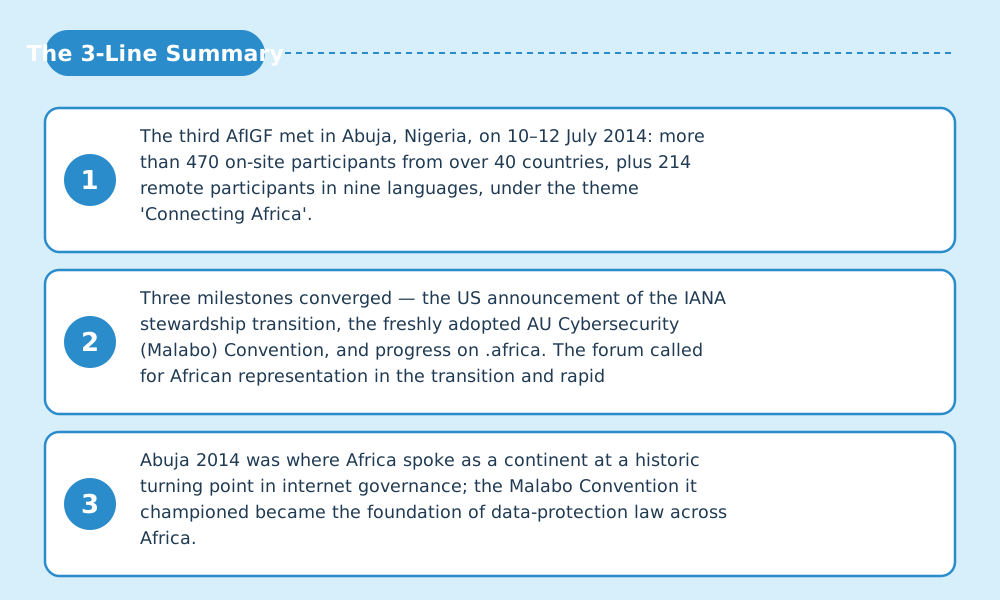
- The third AfIGF met in Abuja, Nigeria, on 10–12 July 2014: more than 470 on-site participants from over 40 countries, plus 214 remote participants in nine languages, under the theme 'Connecting Africa'.
- Three milestones converged — the US announcement of the IANA stewardship transition, the freshly adopted AU Cybersecurity (Malabo) Convention, and progress on .africa. The forum called for African representation in the transition and rapid ratification of the Convention.
- Abuja 2014 was where Africa spoke as a continent at a historic turning point in internet governance; the Malabo Convention it championed became the foundation of data-protection law across Africa.
Welcome — this is the Japan IGF Support Organization. This in-depth report on AfIGF 2014 in Abuja draws on official outputs, session records and on-site reporting. In a hurry? The three lines above and the diagrams carry the gist.
Conference at a Glance (from official records)
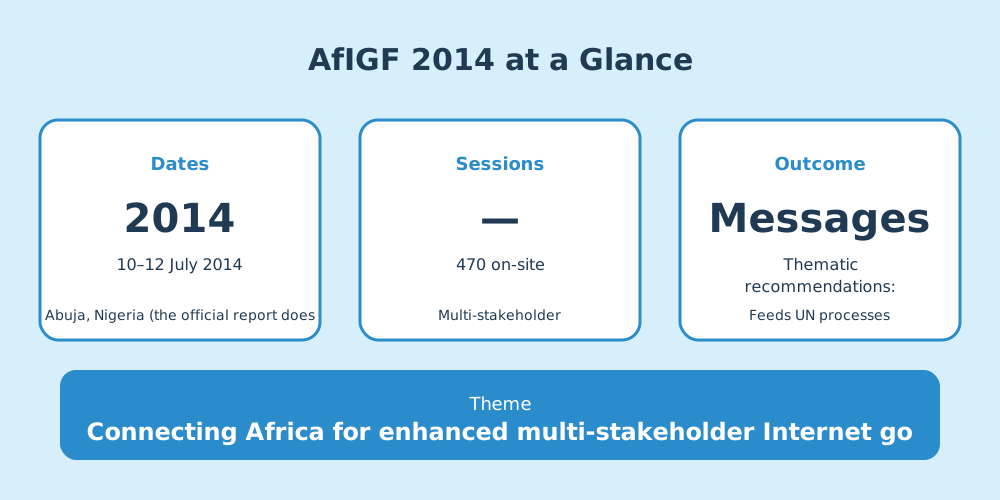
| Item | Detail |
|---|---|
| Edition | Third meeting |
| Dates | 10–12 July 2014 (Pre-forum workshops on 10 July; the main forum opened on the morning of 11 July) |
| Venue | Abuja, Nigeria (the official report does not name the venue building) |
| Theme | Connecting Africa for enhanced multi-stakeholder Internet governance |
| Participants | 470 (More than 470 on-site participants from more than 40 countries, plus 214 remote participants speaking nine languages) |
| Opening | Officially opened by Minister of Communication Technology Omobola Johnson; welcome remarks by Fatima Denton, Director of the Special Initiatives Division, ECA |
| Host | Organised by Nigeria's Federal Ministry of Communication Technology (through the Nigeria Internet Registration Association and the Nigeria IGF) with UNECA |
| Outcome | Thematic recommendations: African representation in the IANA transition, rapid ratification of the Malabo Convention, endorsement of the draft African Declaration on Internet Rights and Freedoms |
(See the source list at the end of this article.)
Discussion Digest — from the Session Records
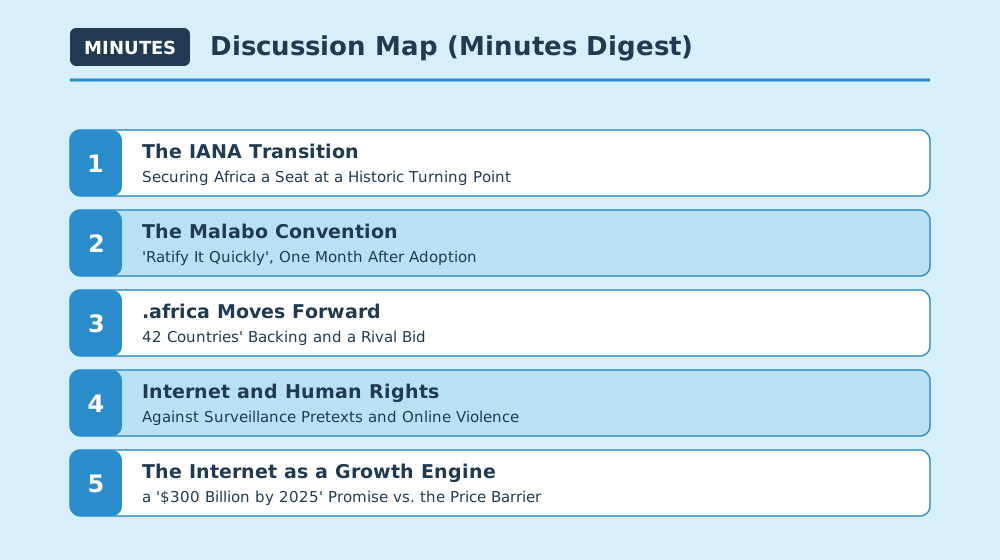
Key exchanges extracted from session records and transcripts.
1. The IANA Transition — Securing Africa a Seat at a Historic Turning Point
Sessions: Sessions on emerging issues and on the IGF and the future of the internet ecosystem (11–12 July)
- Following the NTIA's 14 March 2014 announcement that it would transition IANA stewardship to the multistakeholder community, the forum recommended ensuring African representation in the transition coordination group [1]
- With Washington refusing any government-led or intergovernmental replacement, participants stressed Africa must engage through the multistakeholder model [1]
- Brazil's representative shared the NETmundial experience; the forum recommended adopting its best practices and enhancing South-South cooperation [1]
2. The Malabo Convention — 'Ratify It Quickly', One Month After Adoption
Sessions: Session on enhancing digital trust (11–12 July)
- The AU Convention on Cyber Security and Personal Data Protection, adopted by AU heads of state in Malabo in June 2014, needed 15 ratifications to enter into force — the forum urged member states to act quickly [1]
- ECA and AUC were asked to assist countries in drafting cyber legislation and establishing computer emergency response teams [1]
- Participants affirmed the need to balance human rights, the economic benefits of the internet, and security [1]
3. .africa Moves Forward — 42 Countries' Backing and a Rival Bid
Sessions: Session on emerging issues (12 July)
- Participants welcomed the 42 countries backing the AUC's application and recommended a multi-stakeholder process for acquiring and managing dotAfrica [1]
- The rival DotConnectAfrica Trust bid, lacking support from 60% of member states, was under independent review at the time [1]
- Countries were urged to submit lists of reserved names and designate focal points — only 17 had done so [1]
4. Internet and Human Rights — Against Surveillance Pretexts and Online Violence
Sessions: Session on the internet and human rights (12 July)
"The same rights that people have offline must also be protected online"
— Emilar Vushe (Association for Progressive Communications) [1][2]
- Panellists warned that African governments increasingly violated rights online in the name of security — Nigeria's $40 million order of surveillance-capable equipment was cited [1][2]
- The forum endorsed the draft African Declaration on Internet Rights and Freedoms and prioritised tackling online violence against women [1][2]
5. The Internet as a Growth Engine — a '$300 Billion by 2025' Promise vs. the Price Barrier
Sessions: Opening session and session on the internet as an engine for growth and development (11 July)
- Opening the forum, Minister Omobola Johnson said the internet could contribute $300 billion to the GDP of Nigeria and other African countries by 2025, against an estimated $18 billion in 2013 (APC report) [1][2]
- ECA's Fatima Denton reported that 20% of Africans would be online by end-2014, with mobile-broadband penetration up from 2% in 2010 to nearly 20% — but fixed broadband at just 0.5% [1][2]
- Broadband cost about 64.3% of per-capita GNI in Africa, far above the world average of 22.1% — price was named the biggest barrier [1][2]
Three-Minute Short Talk — Your Questions Answered
Q. What was the biggest topic?
A. The US announcement that it would hand over stewardship of the internet's 'address book' — the IANA functions. The forum demanded African representation in the group deciding what comes next.
Q. Any lasting outcome?
A. The push to ratify the AU Cybersecurity (Malabo) Convention, adopted just a month earlier. It later became the common foundation for data-protection law across Africa.
Q. Why should I care?
A. The IANA transition reshaped who controls core internet infrastructure for every user worldwide, and Malabo-based data-protection laws now bind any company doing business in Africa.
What Is AfIGF? (for first-time readers)
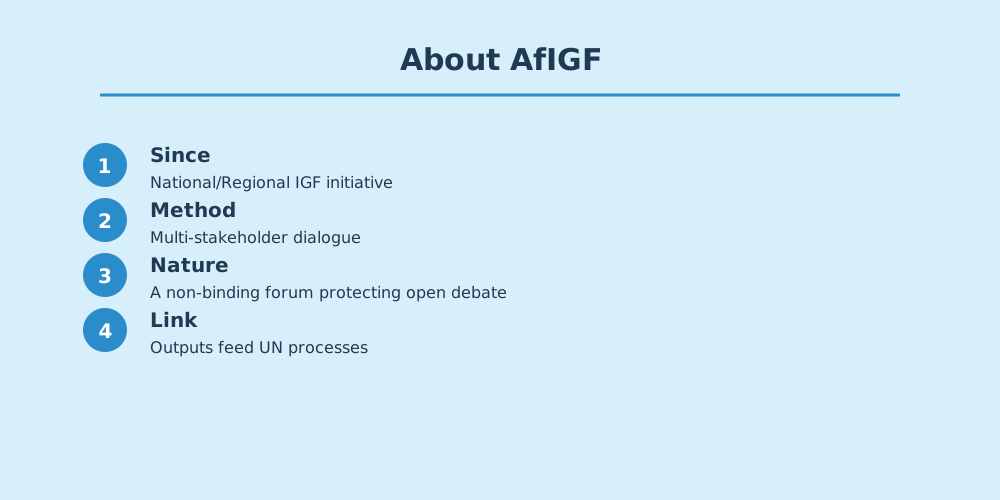
AfIGF is a National or Regional IGF Initiative (NRI), aligning local internet governance discussion with global IGF principles.
Why It Matters to You
What was discussed here becomes the baseline for national digital policy, platform rules and AI regulation worldwide within a few years. The principles confirmed at the 2014 meeting are the foundation of the "next rules" for the phones, social platforms and AI services you use every day.
Sources & References
- Third African Internet Governance Forum, Abuja — Draft Report (PDF) — AfIGF事務局 (UNECA/AUC) — igf.africa アーカイブ (accessed 2026-07-10)
- PROTEGE-QV: "Third African Internet Governance Forum a success" — APC (accessed 2026-07-10)
- African Internet Governance Forum (AfIGF) — archived programme page (3rd AfIGF) — UNECA (accessed 2026-07-10)
- African Internet Governance Forum — en (accessed 2026-07-10)
Quotes are translated or condensed from the records listed above. Bracketed numbers [n] refer to the source list.
Related links
- IGF official (NRI list): https://www.intgovforum.org/en/content/national-and-regional-igf-initiatives
- Japan IGF: https://japanigf.jp/
- Yuki Nakazawa's blog: https://nkzw.jp/category/igf/
Revision History
Rev. 1 — published 10 July 2014, 09:00 (Article published)
Rev. 2 — updated 10 July 2026, 23:16 (Fully revised into the in-depth edition: added the 3-line summary, minutes digest, short talk, source list and diagrams (all quotes verified against the listed sources))
— 中澤祐樹

