


The 3-Line Summary
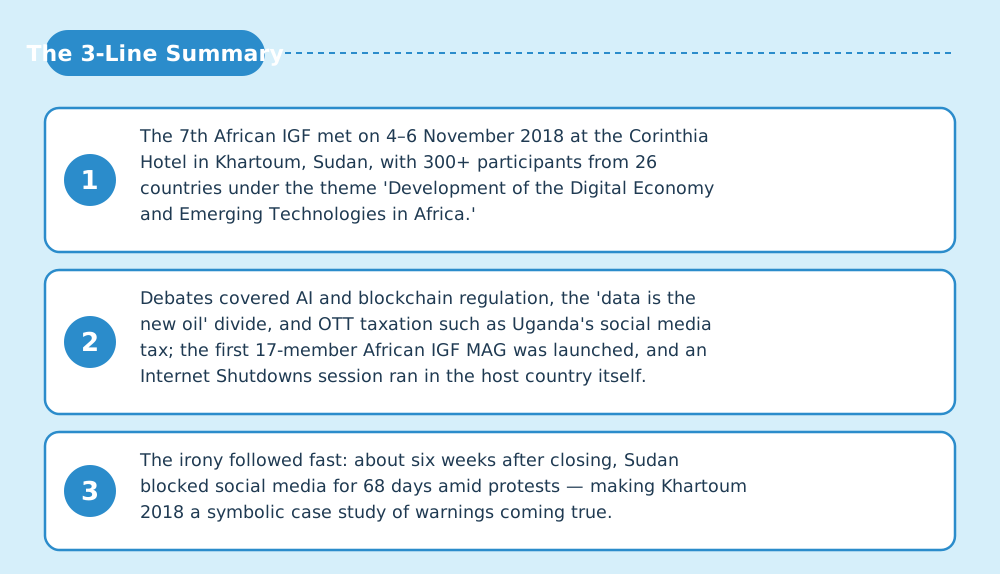
- The 7th African IGF met on 4–6 November 2018 at the Corinthia Hotel in Khartoum, Sudan, with 300+ participants from 26 countries under the theme 'Development of the Digital Economy and Emerging Technologies in Africa.'
- Debates covered AI and blockchain regulation, the 'data is the new oil' divide, and OTT taxation such as Uganda's social media tax; the first 17-member African IGF MAG was launched, and an Internet Shutdowns session ran in the host country itself.
- The irony followed fast: about six weeks after closing, Sudan blocked social media for 68 days amid protests — making Khartoum 2018 a symbolic case study of warnings coming true.
Welcome — this is the Japan IGF Support Organization. This in-depth report on AfIGF 2018 in Khartoum draws on official outputs, session records and on-site reporting. In a hurry? The three lines above and the diagrams carry the gist.
Conference at a Glance (from official records)
| Item | Detail |
|---|---|
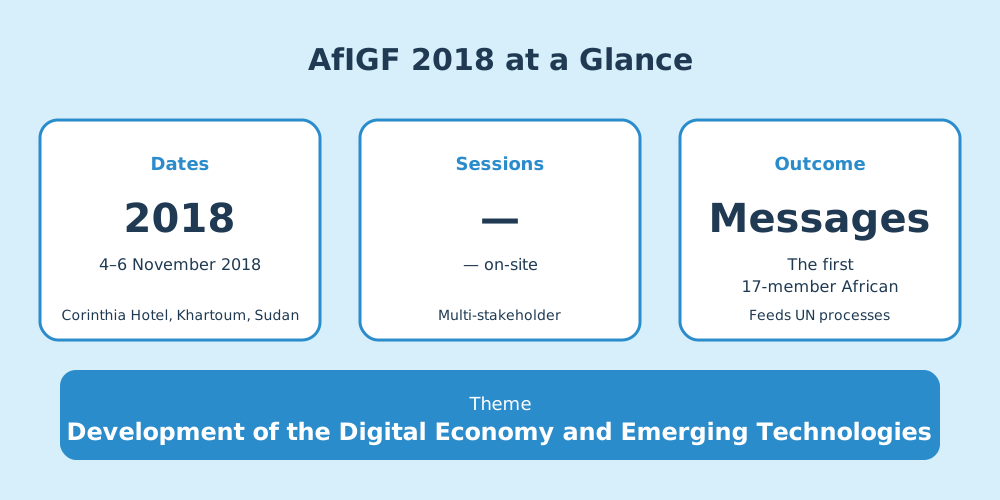
| Edition | 7th African Internet Governance Forum (AfIGF) |
| Dates | 4–6 November 2018 |
| Venue | Corinthia Hotel, Khartoum, Sudan |
| Theme | Development of the Digital Economy and Emerging Technologies in Africa |
| Participants | Over 300 on-site participants from 26 countries (official report) |
| Supporters | Technically and financially supported by TPRA (Sudan), APC, Facebook, ISOC, ICANN, IGFSA and AFRINIC |
| Host-country context | About six weeks after the forum closed, from 19 December 2018, Sudanese authorities blocked Facebook, Twitter and WhatsApp for 68 days amid anti-government protests (per NetBlocks) |
| Host | Organised by the African Union Commission in cooperation with the Government of Sudan; TPRA and the ISOC Sudan Chapter provided remote participation |
| Outcome | The first 17-member African IGF MAG was announced and endorsed; recommendations included ratifying the Malabo Convention and advancing open data |
(See the source list at the end of this article.)
Discussion Digest — from the Session Records
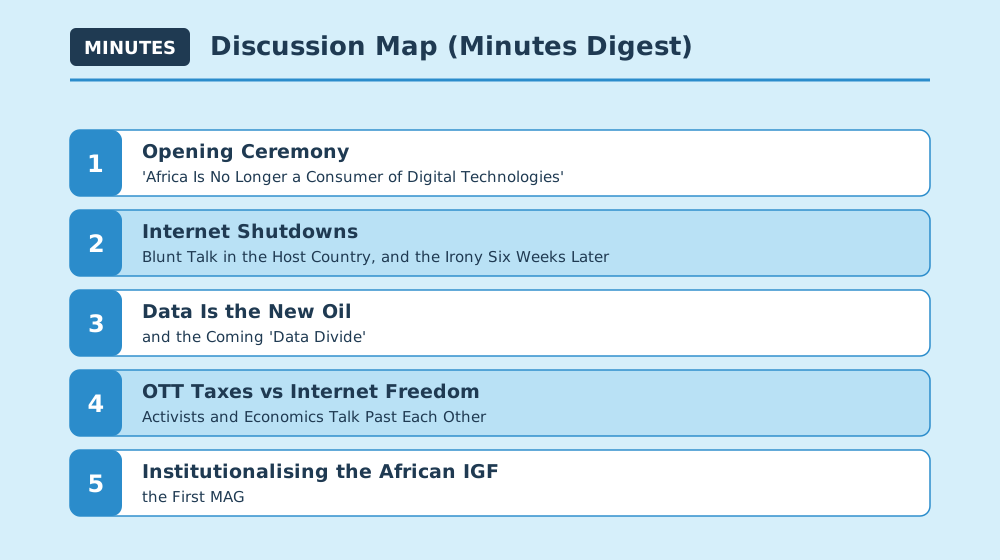
Key exchanges extracted from session records and transcripts.
1. Opening Ceremony — 'Africa Is No Longer a Consumer of Digital Technologies'
Sessions: Opening Ceremony (5 November, 9:00–9:30)
"Access to the internet should be a tool accessed by everyone and not a privilege for the exclusive party"
— Stefan Schweinfest (UN DESA, participating remotely; as recorded in the official report) [1]
- Sudan's ICT Minister Bushara Gumaa Arror stressed that Africa was no longer a consumer of digital technologies and must play its role in shaping them for African people [1]
- AU Commissioner Abou-Zeid's statement (read by Moctar Yedaly) put African internet penetration at 35%, and announced the AU Declaration on Internet Governance adopted by heads of state and the launch of the PRIDA capacity-building programme [1]
2. Internet Shutdowns — Blunt Talk in the Host Country, and the Irony Six Weeks Later
Sessions: Parallel session 'Internet Shutdowns' (4 November, 9:30–10:30, organised by Access Now)
- The official report records with unusual candour that African governments shut down or throttle the internet 'in order to exercise power,' rooted in 'inadequate trust of the people' [1][4]
- Cases from Uganda, Ethiopia, The Gambia and Kenya were shared, with warnings that the more economies move online, the costlier shutdowns become [1][4]
- About six weeks later, on 19 December, Sudan itself blocked major social platforms for 68 days amid protests; NetBlocks estimated the cost at some USD 15 million [1][4]
3. Data Is the New Oil — and the Coming 'Data Divide'
Sessions: Plenary sessions on AI & Blockchain and on the Digital Economy and the SDGs (5–6 November)
"The next divide, after the digital divide, is the data divide — in Africa we are starting from a disadvantaged position, because we aren't playing a role in where data is stored"
— Bob Ochieng (ICANN, as recorded in the official report) [1]
- Panellists argued AI and blockchain will win political backing only if they solve core governance problems — health, poverty, education — and called for AI regulation by the AU, EU and others, plus preparation for labour-market impacts [1]
- As preconditions for open data, the forum recommended ratifying the Malabo Convention and joining the Open Government Partnership [1]
4. OTT Taxes vs Internet Freedom — Activists and Economics Talk Past Each Other
Sessions: Parallel sessions including 'An African court for online conflict resolution'
- Uganda's Prudence Nyamishana argued that a social media tax in a country with 22% connectivity is comparable to a shutdown or censorship, and called for courts specialised in internet-related disputes [1][3]
- Paradigm Initiative's Babatunde Okunoye noted the internet-freedom debate lacked economic analysis, urging 'solid economic analysis and policy alternatives' for the tension between OTT services and tax-paying incumbents [1][3]
5. Institutionalising the African IGF — the First MAG
Sessions: Plenary Session 10, 'Announcement of the African IGF MAG members' (6 November, 15:30–16:00)
- The 17 MAG members selected by the nomination committee were announced and unanimously endorsed — the African IGF Charter adopted in 2017 took effect at this Khartoum edition [1]
- Reviewing the 2017 recommendations, the forum added that community-network stakeholders should be actively engaged in national, sub-regional and regional IGF agendas [1]
Three-Minute Short Talk — Your Questions Answered
Q. So what did the conference actually decide?
A. The AfIGF doesn't make binding decisions, but this edition launched the forum's first 17-member advisory group (MAG) under the newly effective Charter, and recommended ratifying the Malabo Convention and advancing open data.
Q. What was the most contentious topic?
A. Internet shutdowns. The official report bluntly stated governments shut down the internet 'to exercise power' — and six weeks later host Sudan itself blocked social media for 68 days during protests.
Q. Why should I care?
A. The 'data divide' — who stores and profits from data — now shapes cloud and data-centre policy everywhere, and Uganda's social media tax debated here became a global reference point for platform-taxation debates.
What Is AfIGF? (for first-time readers)
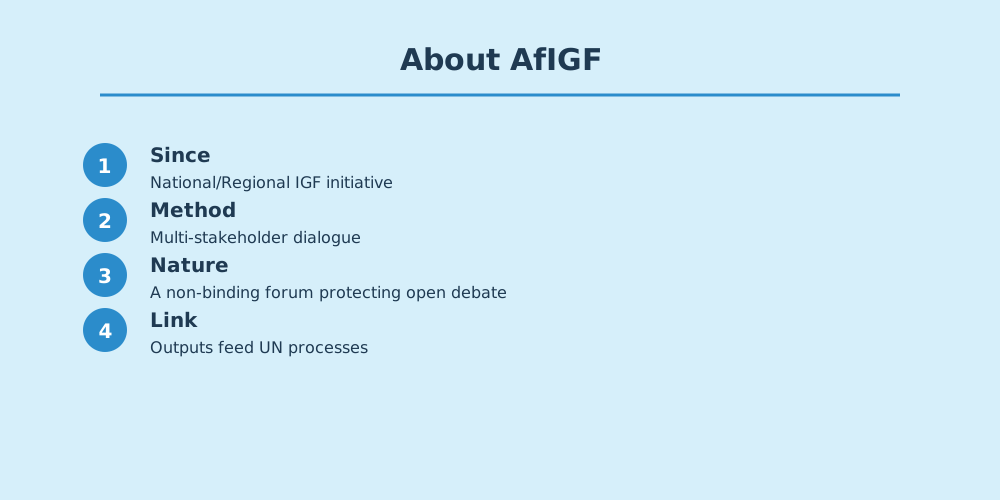
AfIGF is a National or Regional IGF Initiative (NRI), aligning local internet governance discussion with global IGF principles.
Why It Matters to You
What was discussed here becomes the baseline for national digital policy, platform rules and AI regulation worldwide within a few years. The principles confirmed at the 2018 meeting are the foundation of the "next rules" for the phones, social platforms and AI services you use every day.
Sources & References
- The African Internet Governance Forum – AfIGF 2018 Report (Khartoum, version of March 2019) — アフリカIGF事務局(AUC) (accessed 2026-07-10)
- 2018 African Internet Governance Forum to Convene in Sudan — African Union (accessed 2026-07-10)
- Mainstreaming economics into ICT policy conversations in Africa — African School on Internet Governance (APC) — Babatunde Okunoye (accessed 2026-07-10)
- Study shows extent of Sudan internet disruptions amid demonstrations — NetBlocks (accessed 2026-07-10)
- African Internet Governance Forum — en (accessed 2026-07-10)
Quotes are translated or condensed from the records listed above. Bracketed numbers [n] refer to the source list.
Related links
- IGF official (NRI list): https://www.intgovforum.org/en/content/national-and-regional-igf-initiatives
- Japan IGF: https://japanigf.jp/
- Yuki Nakazawa's blog: https://nkzw.jp/category/igf/
Revision History
Rev. 1 — published 5 November 2018, 09:00 (Article published)
Rev. 2 — updated 10 July 2026, 23:16 (Fully revised into the in-depth edition: added the 3-line summary, minutes digest, short talk, source list and diagrams (all quotes verified against the listed sources))
— 中澤祐樹

