


The 3-Line Summary
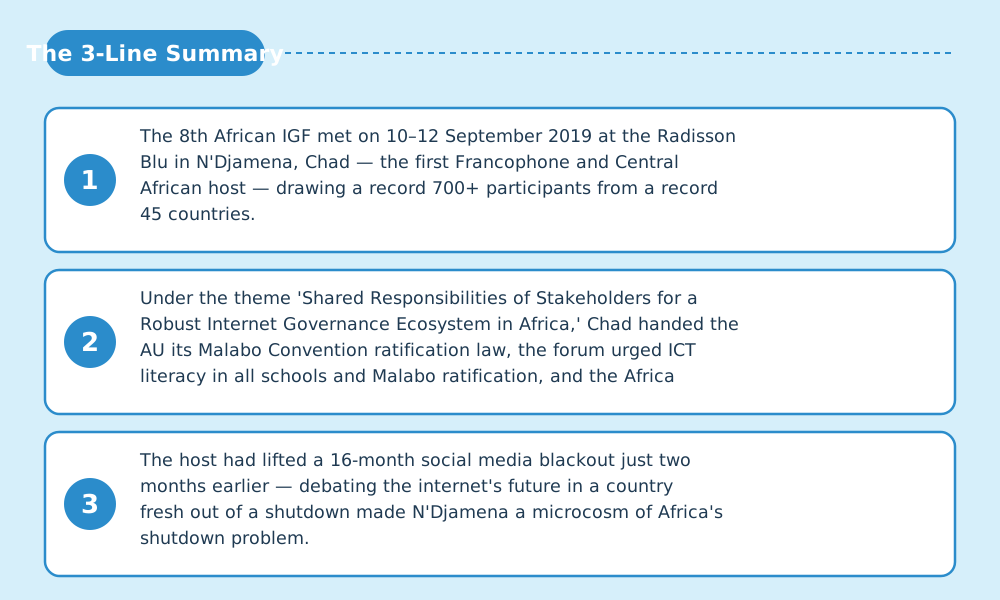
- The 8th African IGF met on 10–12 September 2019 at the Radisson Blu in N'Djamena, Chad — the first Francophone and Central African host — drawing a record 700+ participants from a record 45 countries.
- Under the theme 'Shared Responsibilities of Stakeholders for a Robust Internet Governance Ecosystem in Africa,' Chad handed the AU its Malabo Convention ratification law, the forum urged ICT literacy in all schools and Malabo ratification, and the Africa Youth IGF was born.
- The host had lifted a 16-month social media blackout just two months earlier — debating the internet's future in a country fresh out of a shutdown made N'Djamena a microcosm of Africa's shutdown problem.
Welcome — this is the Japan IGF Support Organization. This in-depth report on AfIGF 2019 in N'Djamena draws on official outputs, session records and on-site reporting. In a hurry? The three lines above and the diagrams carry the gist.
Conference at a Glance (from official records)
| Item | Detail |
|---|---|
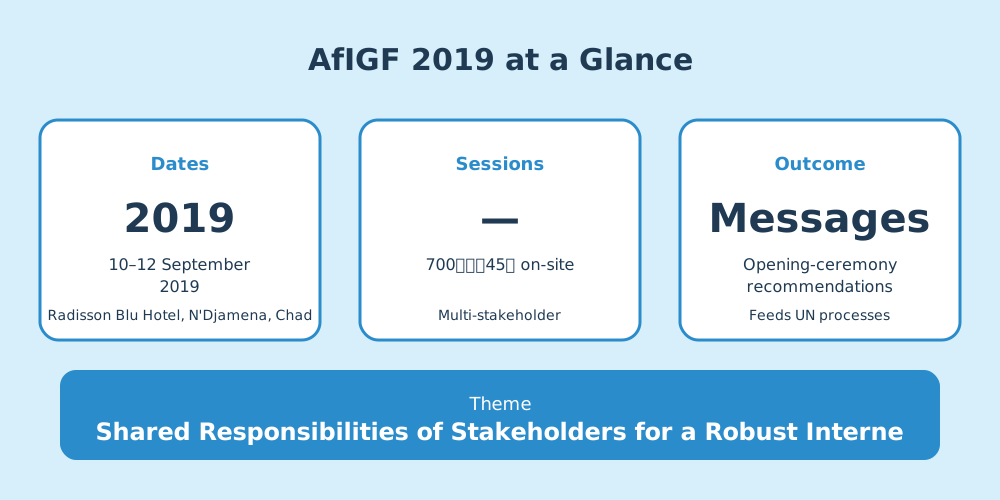
| Edition | 8th African Internet Governance Forum (AfIGF) |
| Dates | 10–12 September 2019 |
| Venue | Radisson Blu Hotel, N'Djamena, Chad |
| Theme | Shared Responsibilities of Stakeholders for a Robust Internet Governance Ecosystem in Africa |
| Participants | Over 700 participants from 45 countries (official report; both records at the time) (AFTLD's report says 'over 350 participants'; the official report's 2019 Key Highlights records an all-time-high 700+ from 45 countries, which this entry follows) |
| Supporters | Financially supported by PRIDA, APC, UNDESA, the Internet Society, ICANN, IGFSA, AFRINIC and Chadian local private-sector partners |
| Host | Organised by the African Union Commission in cooperation with the Government of Chad |
| Outcome | Opening-ceremony recommendations (ICT literacy in all African schools, signing/ratifying the Malabo Convention, activating national IGF processes) and the Seniors caucus's N'Djamena Statement |
| Firsts | First AfIGF hosted by a Francophone and Central African country; inaugural Africa Youth IGF (350+); first Seniors caucus; first awards ceremony |
(See the source list at the end of this article.)
Discussion Digest — from the Session Records
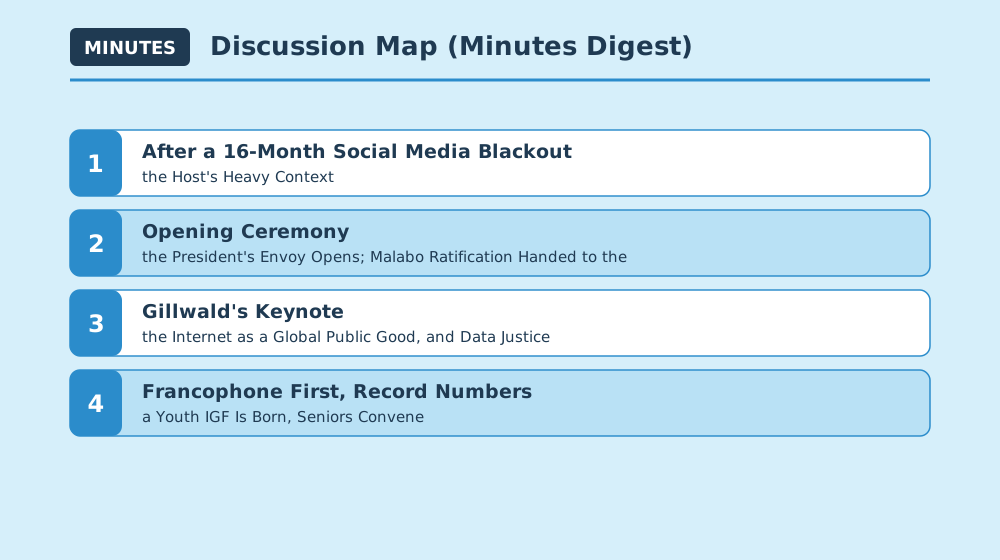
Key exchanges extracted from session records and transcripts.
1. After a 16-Month Social Media Blackout — the Host's Heavy Context
Sessions: Backdrop to the whole forum (the blackout was lifted in July 2019, two months before)
- Chad blocked Facebook, WhatsApp and Twitter for 16 months (March 2018 – July 2019); President Idriss Déby cited national security and announced the lifting at the closing of the Chad Digital Forum in N'Djamena [5][6]
- The block coincided with protests over constitutional changes extending Déby's rule, and citizens relied on VPNs. Even after lifting, civil society noted 1GB of data cost about USD 12 (roughly 12% of the minimum wage) with internet penetration at just 11.4% [5][6]
2. Opening Ceremony — the President's Envoy Opens; Malabo Ratification Handed to the AU
Sessions: Opening Ceremony (10 September, Radisson Blu Hotel)
"We are making good plans, but do we have capacity to implement those plans?"
— Pahimi Kalzebé Deubet (Chad's Minister of State and Secretary General of the Presidency, representing the President; as recorded in the official report) [1]
- Chad's Minister of Posts & ICT Idriss Saleh Bachar handed the AU an official copy of Law 022 of 10 January 2019 ratifying the Malabo Convention on cybersecurity and personal data protection [1]
- AU Commissioner Abou-Zeid, citing 40% penetration, urged all member states to ratify Malabo; UNECA's Mactar Seck pledged strategies so three African countries could host the global IGF by 2025 [1]
- Opening recommendations called for ICT literacy in all African schools, activating national IGF processes, and signing/ratifying the Malabo Convention [1]
3. Gillwald's Keynote — the Internet as a Global Public Good, and Data Justice
Sessions: Keynote (11 September, 14:30–15:00) by Dr Alison Gillwald, Executive Director, Research ICT Africa
- 'We can't expect rights online when they do not pertain offline,' she argued, urging African states to act on the Malabo and Budapest conventions [1]
- She asked who should pay for global public goods like the internet, how to tax companies profiting from them, and called for scrapping 'irrational social networking taxes' that keep people offline [1]
- Africa's biggest barriers are demand-side — device and data costs — so she proposed releasing unused spectrum and using universal service funds for public Wi-Fi, citing Cambridge Analytica as a warning about governing the internet in the public interest [1]
4. Francophone First, Record Numbers — a Youth IGF Is Born, Seniors Convene
Sessions: Pre-events (Africa Youth IGF, Chad national IGF, AfriSIG) and the main sessions
- Chad was the first Francophone and Central African host; 700+ participants from 45 countries set AfIGF records, and MAG chair Mary Uduma noted Chad had 'set the bar high' for the next host [1][2]
- The inaugural Africa Youth IGF drew 350+, and the first Seniors caucus adopted the N'Djamena Statement on the role of seniors in IG for development [1][2]
- A first-ever awards ceremony honoured Ridha Guellouz, who proposed convening WSIS back in 1998, and AfIGF founders-organisers Makane Faye and Moctar Yedaly [1][2]
Three-Minute Short Talk — Your Questions Answered
Q. So what did the conference actually decide?
A. It's a dialogue forum, not a decision-making body, but it recommended ICT literacy in all African schools and Malabo Convention ratification, launched the Africa Youth IGF, and saw Chad formally hand its ratification law to the African Union.
Q. What was the most contentious topic?
A. The host itself. Chad had lifted a 16-month social media blackout only two months earlier, and the keynote openly attacked 'irrational social networking taxes' that keep people offline.
Q. Why should I care?
A. The demand-side barriers diagnosed here — device and data costs — and remedies like public Wi-Fi funded by universal service funds are the same policy levers debated for digital divides everywhere.
What Is AfIGF? (for first-time readers)
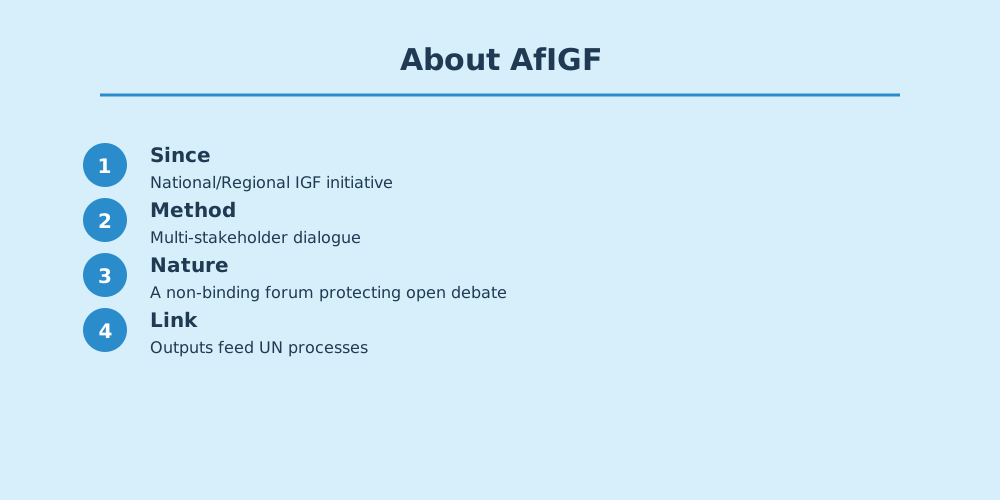
AfIGF is a National or Regional IGF Initiative (NRI), aligning local internet governance discussion with global IGF principles.
Why It Matters to You
What was discussed here becomes the baseline for national digital policy, platform rules and AI regulation worldwide within a few years. The principles confirmed at the 2019 meeting are the foundation of the "next rules" for the phones, social platforms and AI services you use every day.
Sources & References
- The African Internet Governance Forum – AfIGF 2019 Report (N'Djamena) — アフリカIGF事務局(AUC) (accessed 2026-07-10)
- Africa Internet Governance Forum 10 – September 2019 Ndjamena Chad — African Top Level Domains Organization (accessed 2026-07-10)
- 8th Meeting of the African Internet Governance Forum — DiploFoundation (accessed 2026-07-10)
- AfIGF 2019: Draft Report Eighth African IGF — igf.africa (accessed 2026-07-10)
- Chadians back on social media after 16 months net blockade — Africanews (accessed 2026-07-10)
- Chad Lifted the 16-Months Social Media Shutdown But Concerns Remain — CIPESA (accessed 2026-07-10)
Quotes are translated or condensed from the records listed above. Bracketed numbers [n] refer to the source list.
Related links
- IGF official (NRI list): https://www.intgovforum.org/en/content/national-and-regional-igf-initiatives
- Japan IGF: https://japanigf.jp/
- Yuki Nakazawa's blog: https://nkzw.jp/category/igf/
Revision History
Rev. 1 — published 23 September 2019, 09:00 (Article published)
Rev. 2 — updated 10 July 2026, 23:16 (Fully revised into the in-depth edition: added the 3-line summary, minutes digest, short talk, source list and diagrams (all quotes verified against the listed sources))
— 中澤祐樹

