


The 3-Line Summary
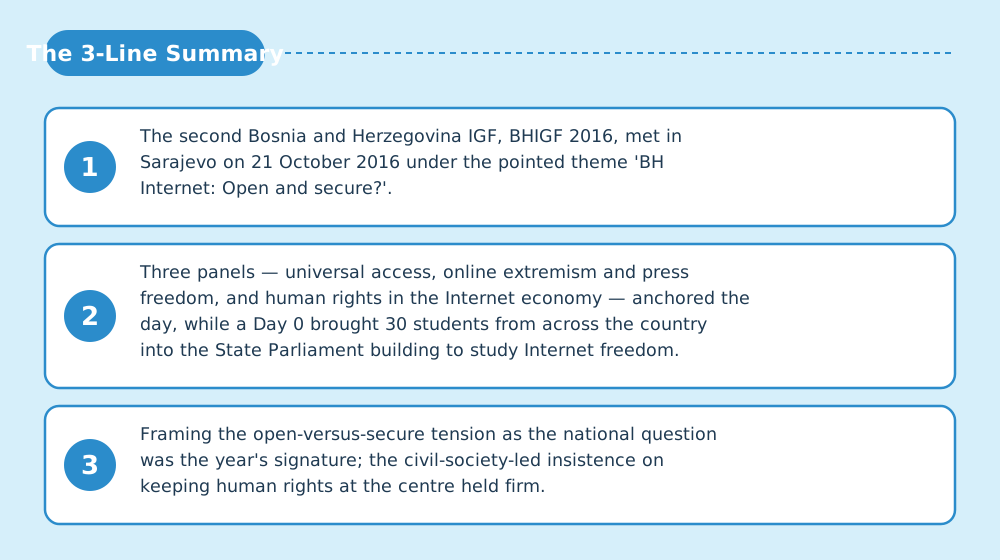
- The second Bosnia and Herzegovina IGF, BHIGF 2016, met in Sarajevo on 21 October 2016 under the pointed theme 'BH Internet: Open and secure?'.
- Three panels — universal access, online extremism and press freedom, and human rights in the Internet economy — anchored the day, while a Day 0 brought 30 students from across the country into the State Parliament building to study Internet freedom.
- Framing the open-versus-secure tension as the national question was the year's signature; the civil-society-led insistence on keeping human rights at the centre held firm.
Welcome — this is the Japan IGF Support Organization. This in-depth report on BHIGF 2016 (Bosnia and Herzegovina Internet Governance Forum) draws on official outputs, session records and on-site reporting. In a hurry? The three lines above and the diagrams carry the gist.
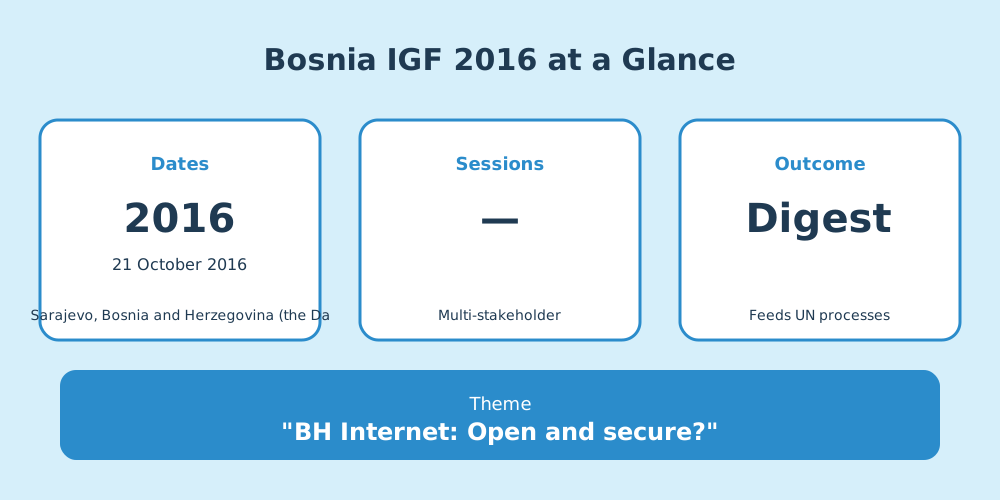
Conference at a Glance (from official records)
| Item | Detail |
|---|---|
| Official name | BHIGF 2016 (Bosnia and Herzegovina Internet Governance Forum) |
| Edition | Second edition |
| Dates | 21 October 2016 |
| Venue | Sarajevo, Bosnia and Herzegovina (the Day 0 student programme took place in the State Parliament building; the main venue name is not confirmed in primary sources) |
| Theme | "BH Internet: Open and secure?" |
| Supporters | Afilias, ICANN, IGFSA, APC, the Council of Europe and the OSCE (2016 funders per the GISWatch report) |
| Host | An organising committee centred on One World Platform and the Communications Regulatory Agency (CRA), with members from the Ministry of Foreign Affairs and the University of Sarajevo computing centre UTIC |
(See the source list at the end of this article.)
Discussion Digest — from the Session Records
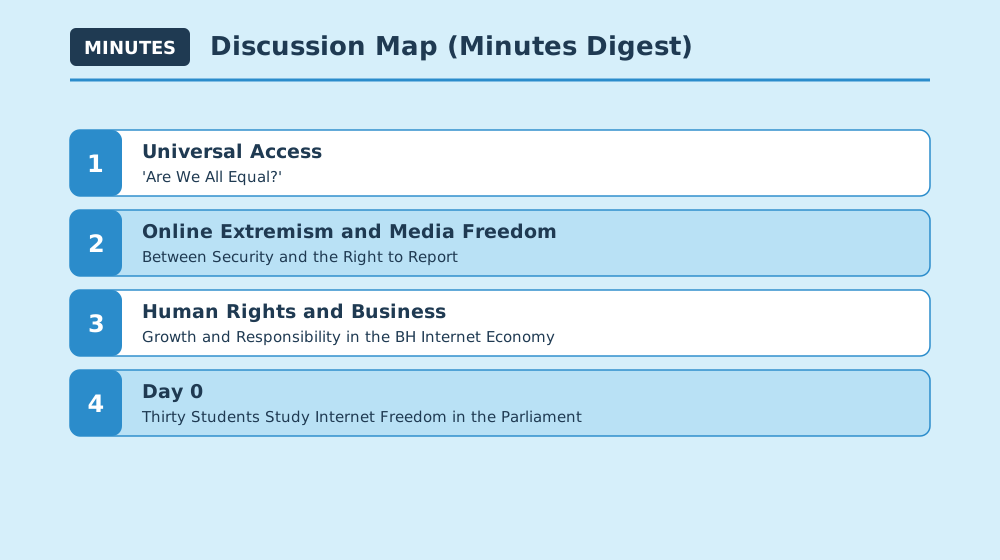
Key exchanges extracted from session records and transcripts.
1. Universal Access — 'Are We All Equal?'
Sessions: Panel I: 'Universal access – Are we all equal?'
- The panel tackled equal and affordable access to technology and information head-on, including accessibility for people with disabilities [1][2]
- Treating the empowerment of girls and women as inseparable from connectivity was a signature of a forum led by the women's-rights group One World Platform [1][2]
2. Online Extremism and Media Freedom — Between Security and the Right to Report
Sessions: Panel 'Violent extremism, terrorism and reporting rights' (listed in the GISWatch report as 'Security, extremism online and the freedom of media')
- Government, media and civil society sat together over the tension between violent extremism and terrorism on one side and journalists' reporting rights on the other [1][2]
- As the theme 'Open and secure?' signalled, the impact of surveillance and security measures on free expression ran through the whole meeting [1][2]
3. Human Rights and Business — Growth and Responsibility in the BH Internet Economy
Sessions: Panel 'Human rights and business in the BH Internet economy'
"Without us, human rights as an issue would not be presented"
— One World Platform (GISWatch country report, by Valida Hromadzic) [2]
- The panel examined what human-rights responsibilities business should carry in a growing Internet economy, in the BiH context [2]
- Yet the private sector made up just 7.5% of participants; the GISWatch report logs business, technical and media buy-in — and funding — as perennial challenges [2]
4. Day 0 — Thirty Students Study Internet Freedom in the Parliament Building
Sessions: Day 0 student programme, State Parliament building
- Thirty students from across the country gathered in the State Parliament building for a tour and presentations [2]
- Ana Gascón Marcén of the Council of Europe opened with 'What is internet freedom?', joined by European civil-society groups Metamorphosis, BlueLink, GreenNet, StrawberryNet and APC's Rolf Kleef [2]
- Bringing youth into the seat of government became a fixture, carried into the 2017 edition's student Day 0 [2]
Three-Minute Short Talk — Your Questions Answered
Q. What kind of meeting was this?
A. Bosnia and Herzegovina's second national IGF. Under 'BH Internet: Open and secure?' it ran three panels: universal access, online extremism versus press freedom, and human rights in the Internet economy.
Q. What stood out most?
A. The Day 0 student programme: 30 students from across the country were hosted in the State Parliament building and taught about Internet freedom by Council of Europe experts — a rare case of pulling youth into the seat of government.
Q. Why should I care?
A. The open-versus-secure question is the same one every democracy now faces over disinformation and platform regulation. A small national IGF made it the national question — literally putting it in the title.
What Is Bosnia IGF? (for first-time readers)
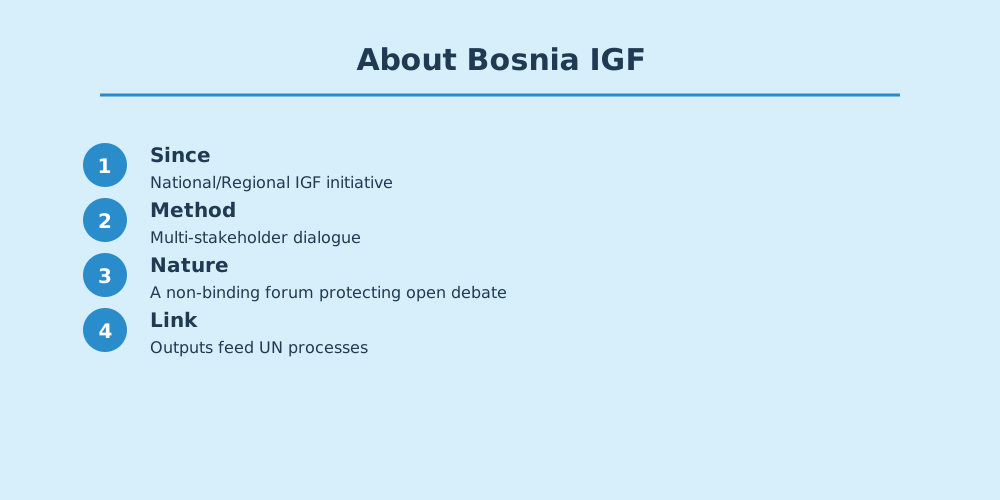
Bosnia IGF is a National or Regional IGF Initiative (NRI), aligning local internet governance discussion with global IGF principles.
Why It Matters to You
What was discussed here becomes the baseline for national digital policy, platform rules and AI regulation worldwide within a few years. The principles confirmed at the 2016 meeting are the foundation of the "next rules" for the phones, social platforms and AI services you use every day.
Sources & References
- Bosnia and Herzegovina Internet Governance Forum(2016年大会のイベント記録) — DiploFoundation (accessed 2026-07-11)
- Bosnia and Herzegovina IGF(GISWatch 2017特集号・国別報告、執筆: Valida Hromadzic/One World Platform) — APC (accessed 2026-07-11)
- Eastern European Regional Group — NRI records(BHIGFの年次報告リンクに2016年版を掲載) — 国連IGF事務局 (accessed 2026-07-11)
- About us – BH IGF(公式サイト: 「2015・2016・2017・2023年に開催」) — BH IGF(bhigf.ba) (accessed 2026-07-11)
Quotes are translated or condensed from the records listed above. Bracketed numbers [n] refer to the source list.
Related links
- IGF official (NRI list): https://www.intgovforum.org/en/content/national-and-regional-igf-initiatives
- Japan IGF: https://japanigf.jp/
- Yuki Nakazawa's blog: https://nkzw.jp/category/igf/
更新履歴
第1稿投稿 2026年7月20日 8時21分(記事コンテンツアップ)
— 中澤祐樹

