


The 3-Line Summary
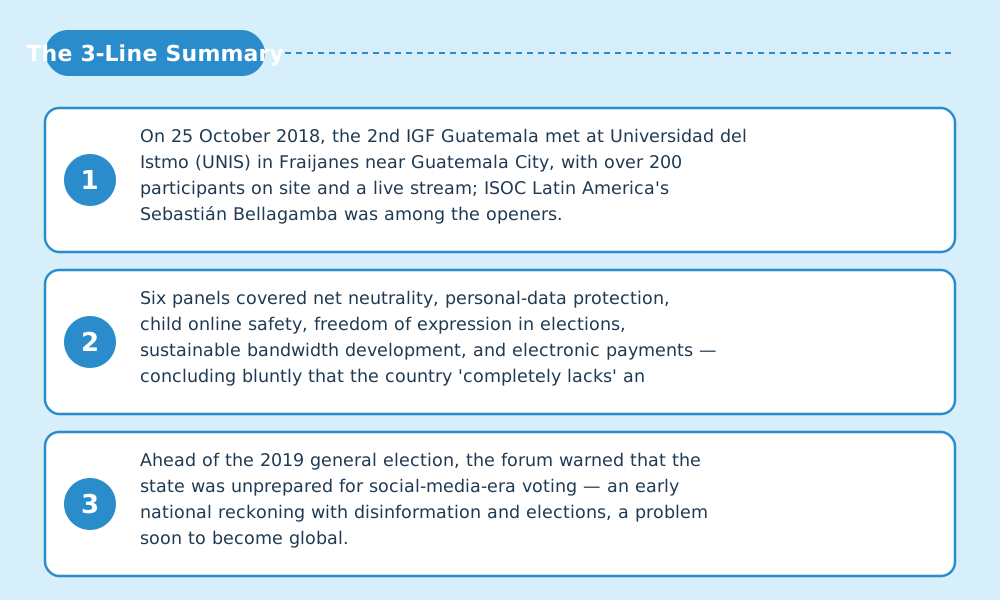
- On 25 October 2018, the 2nd IGF Guatemala met at Universidad del Istmo (UNIS) in Fraijanes near Guatemala City, with over 200 participants on site and a live stream; ISOC Latin America's Sebastián Bellagamba was among the openers.
- Six panels covered net neutrality, personal-data protection, child online safety, freedom of expression in elections, sustainable bandwidth development, and electronic payments — concluding bluntly that the country 'completely lacks' an internet legal framework.
- Ahead of the 2019 general election, the forum warned that the state was unprepared for social-media-era voting — an early national reckoning with disinformation and elections, a problem soon to become global.
Welcome — this is the Japan IGF Support Organization. This in-depth report on IGF Guatemala 2018 (2nd Guatemala Internet Governance Forum) draws on official outputs, session records and on-site reporting. In a hurry? The three lines above and the diagrams carry the gist.
📍 The venue is in Fraijanes, about 27 km from Guatemala City; the catalogue's earlier 'Quetzaltenango' location was wrong, corrected against the official agenda in the UN-submitted report ('UNIS Fraijanes') and dig.watch
Conference at a Glance (from official records)
| Item | Detail |
|---|---|
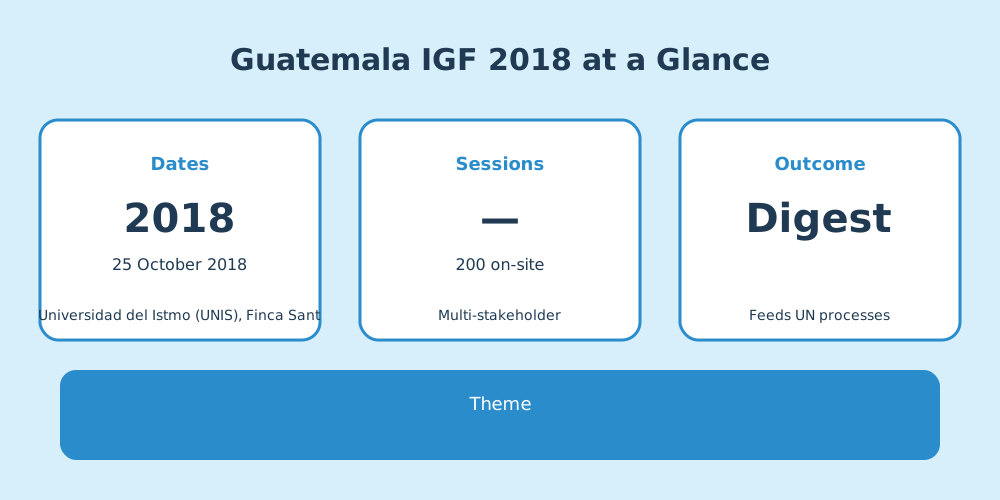
| Official name | IGF Guatemala 2018 (2nd Guatemala Internet Governance Forum) |
| Dates | 25 October 2018 |
| Venue | Universidad del Istmo (UNIS), Finca Santa Isabel campus, Fraijanes, Department of Guatemala |
| Theme | Regional governance themes |
| Participants | 200 (The 2018 report says 'over 200 people' (three buses of students arrived); the 2022 retrospective claims 'more than 300 participants and over 2,000 via live broadcast'. The contemporaneous lower figure is adopted here) |
| Host | A multistakeholder organizing committee (ISOC Guatemala Chapter, UNESCO, COPREDEH, SIT, AGEXPORT, CETEL, DEMOS Institute, UNIS and others) |
(See the source list at the end of this article.)
Discussion Digest — from the Session Records
Key exchanges extracted from session records and transcripts.
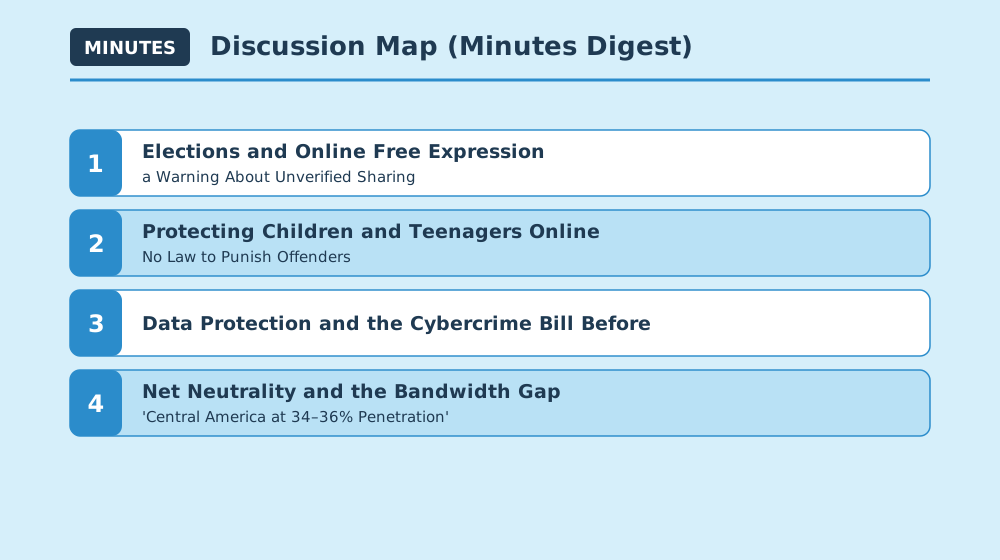
1. Elections and Online Free Expression — a Warning About Unverified Sharing
Sessions: Panel 'Freedom of expression in the electoral context' (DEMOS, UNESCO and COPREDEH; speakers included journalists Sofía Menchú, Gustavo Berganza and Ronaldo Robles, and Stephanie López of the Supreme Electoral Tribunal)
- The panel concluded that 'Guatemala, as a State, is far from being prepared for the challenge that social networks represent in a voting event' — with the 2019 general election looming [1]
- Speakers noted that users massively forward messages without verifying them and tend to treat what they read on social networks as true [1]
- Recommendations urged awareness of incitement and hate speech, critical reading, and not forwarding unverified content [1]
2. Protecting Children and Teenagers Online — No Law to Punish Offenders
Sessions: Panel 'Responsible and safe use of the Internet for children and teenagers' (UNESCO, COPREDEH, DEMOS) — among the best-attended of the day
- The panel identified two gaps: no legislation punishing crimes and offences against minors, and parents unaware of online risks [1][5]
- Children and teenagers were recognised as the group most exposed on the internet; teaching them to report abuse and monitoring screen time and content were recommended [1][5]
- Field organisations such as Aldeas Infantiles SOS and child-protection NGO Refugio de la Niñez brought frontline perspectives [1][5]
3. Data Protection and the Cybercrime Bill Before Congress
Sessions: Panel 'Protection of the data and information of Internet users' (CETEL and ISOC; speakers included Congressman Valladares, Vice-Minister Gabriel Juárez Lucas and ISOC's Raquel Gatto) — one of the day's largest audiences
- The forum's blunt conclusion: 'Guatemala is not ready to face cybercrime' — compounded by victims' widespread reluctance to disclose incidents [1][5]
- Participants recommended supporting Congress with specific amendments to pass the cybercrime bill then under discussion [1][5]
- A sitting congressman, a vice-minister and the international technical community shared one multistakeholder panel [1][5]
4. Net Neutrality and the Bandwidth Gap — 'Central America at 34–36% Penetration'
Sessions: Panels 'Defense of the Network Neutrality Principles' (ISOC) and 'Sustainable Development of the Bandwidth for Guatemala' (AGEXPORT)
"I am very pleased with the conclusions of this forum, 2018"
— Wilfredo Recinos (LEC Computación) — participant testimonial published on the following year's official site; translated from Spanish [1][3]
- After debate, speakers agreed net neutrality does exist in Guatemala — while warning it could come under threat in the approaching general election [1][3]
- A huge digital gap driven by lack of incentives, investment, clear rules and transparency was documented, with Central American penetration put at 34–36% [1][3]
- Recommendations included modernising the telecommunications law (LGT), a strong regulator, and dedicated ICT public policies [1][3]
Three-Minute Short Talk — Your Questions Answered
Q. Where was it held?
A. At Universidad del Istmo (UNIS) in Fraijanes, about 27 km from Guatemala City — organisers ran three buses to bring students out. Earlier records claiming 'Quetzaltenango' are wrong.
Q. What was the biggest issue?
A. Social media and the 2019 general election. The forum concluded the state was unprepared and that users forward unverified information as fact. The absence of any law punishing online crimes against children ran a close second.
Q. Why should I care?
A. Disinformation in elections, online harm to children and weak data-protection law all became global headline issues. This 2018 Central American debate is an early record of just how universal they are.
What Is Guatemala IGF? (for first-time readers)
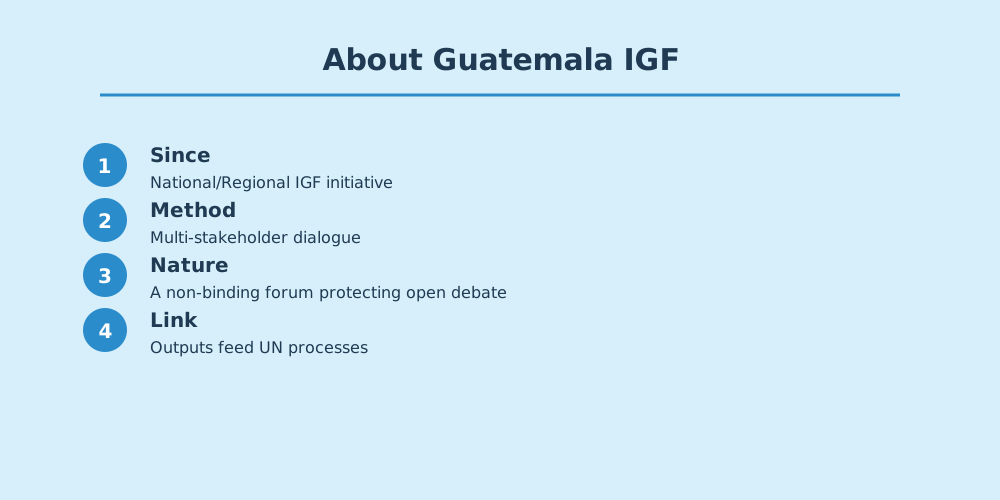
Guatemala IGF is a National or Regional IGF Initiative (NRI), aligning local internet governance discussion with global IGF principles.
Why It Matters to You
What was discussed here becomes the baseline for national digital policy, platform rules and AI regulation worldwide within a few years. The principles confirmed at the 2018 meeting are the foundation of the "next rules" for the phones, social platforms and AI services you use every day.
Sources & References
- Short Story of the Guatemala Internet Governance Forum, November 2018(第2回報告書・公式アジェンダ「2° FORO … 25 de octubre de 2018, UNIS Fraijanes」収録・UN提出) — intgovforum.org (accessed 2026-07-17)
- Internet Governance Forum (IGF) Guatemala — 25 Oct 2018, Fraijanes, Guatemala — DiploFoundation (accessed 2026-07-17)
- IGF – Capitulo Guatemala 2019年版公式サイト(2018年参加者の声を掲載。Waybackアーカイブ) — IGF Guatemala(Internet Archive) (accessed 2026-07-17)
- Latin American and Caribbean Regional Group (GRULAC) — Guatemala IGF(設立2017・2018年報告書リンク) — intgovforum.org (accessed 2026-07-17)
- IV Annual, 2022 Guatemala Internet Governance Forum Final Report(回顧章: 参加300人超・配信2,000人超、フライハネス開催の再確認) — intgovforum.org (accessed 2026-07-17)
Quotes are translated or condensed from the records listed above. Bracketed numbers [n] refer to the source list.
Related links
- IGF official (NRI list): https://www.intgovforum.org/en/content/national-and-regional-igf-initiatives
- Japan IGF: https://japanigf.jp/
- Yuki Nakazawa's blog: https://nkzw.jp/category/igf/
更新履歴
第1稿投稿 2026年7月9日 19時55分(記事コンテンツアップ)
— 中澤祐樹

