


The 3-Line Summary
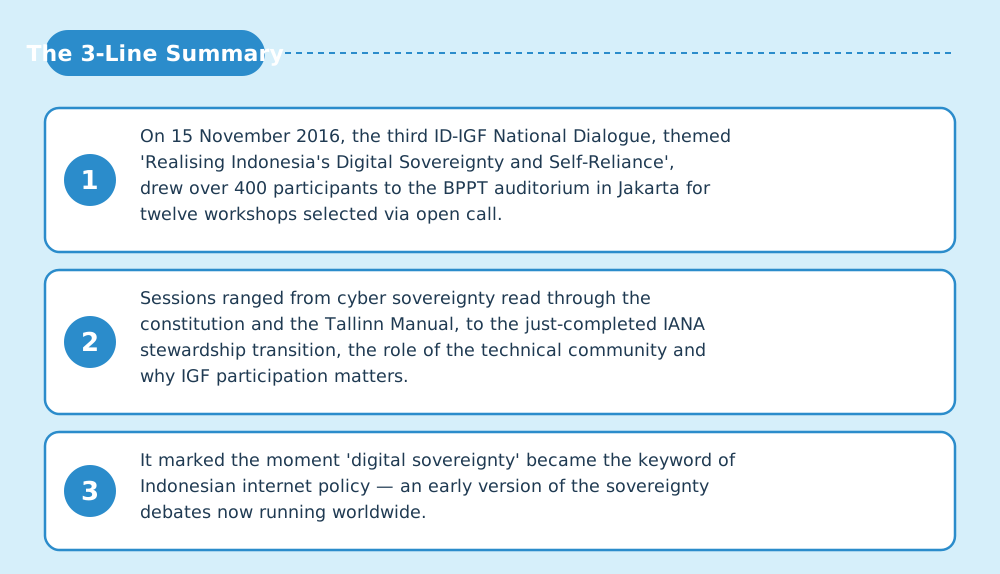
- On 15 November 2016, the third ID-IGF National Dialogue, themed 'Realising Indonesia's Digital Sovereignty and Self-Reliance', drew over 400 participants to the BPPT auditorium in Jakarta for twelve workshops selected via open call.
- Sessions ranged from cyber sovereignty read through the constitution and the Tallinn Manual, to the just-completed IANA stewardship transition, the role of the technical community and why IGF participation matters.
- It marked the moment 'digital sovereignty' became the keyword of Indonesian internet policy — an early version of the sovereignty debates now running worldwide.
Welcome — this is the Japan IGF Support Organization. This in-depth report on ID-IGF National Dialogue 2016 (Indonesia IGF) draws on official outputs, session records and on-site reporting. In a hurry? The three lines above and the diagrams carry the gist.
Conference at a Glance (from official records)
| Item | Detail |
|---|---|
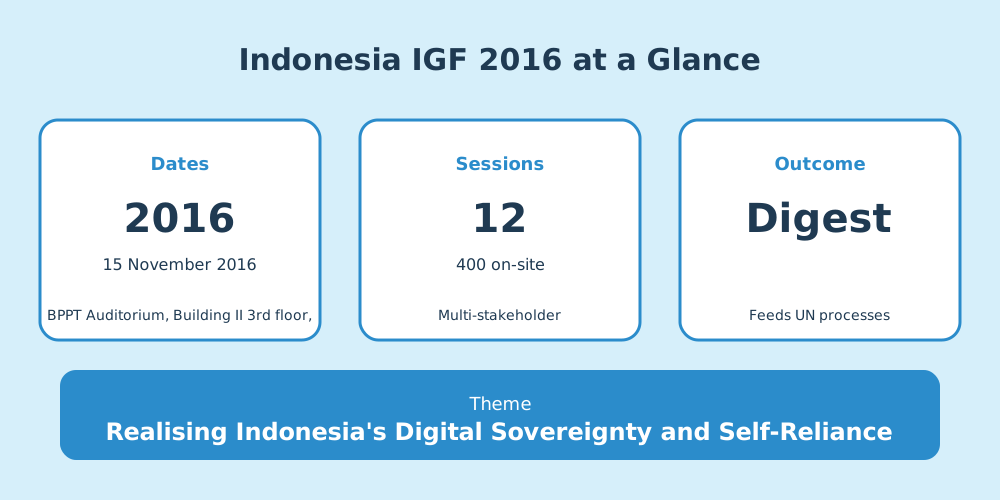
| Official name | ID-IGF National Dialogue 2016 (Indonesia IGF) |
| Dates | 15 November 2016 |
| Venue | BPPT Auditorium, Building II 3rd floor, Jl. MH Thamrin No. 8, Jakarta |
| Theme | Realising Indonesia's Digital Sovereignty and Self-Reliance |
| Participants | 400 (More than 400 (organiser figures)) |
| Sessions | 12 (Twelve parallel workshops selected via open call, organised in four baskets (infrastructure, laws and regulations, socio-culture, economy)) |
| Host | ID-IGF, supported by Kominfo, the Foreign Ministry, APJII, PANDI and ICT Watch |
(See the source list at the end of this article.)
Discussion Digest — from the Session Records
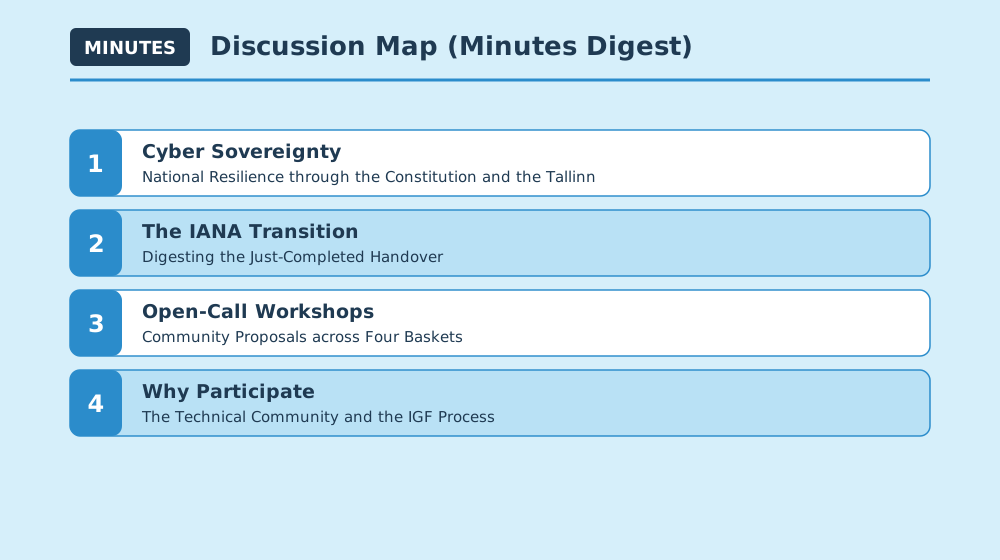
Key exchanges extracted from session records and transcripts.
1. Cyber Sovereignty — National Resilience through the Constitution and the Tallinn Manual
Sessions: Law basket workshop 3, 'National Cyber Sovereignty and Resilience', presented by Prof. Edmon Makarim (Faculty of Law, University of Indonesia)
- The presentation anchored cyber strategy in Indonesia's constitutional mandates and cited the Tallinn Manual view that states may exercise jurisdiction over objects, persons and activities in cyberspace on the basis of sovereignty [4]
- Rather than state control alone, it advocated multistakeholder cyber defence coordinated across government, business and civil society [4]
- It called for 'cyberdiplomacy' built on coordination, cooperation and collaboration to keep cyberspace open, secure and inclusive [4]
2. The IANA Transition — Digesting the Just-Completed Handover
Sessions: Workshop 'Development of the IANA Transition Process and Its Impacts' (Joyce Chen, APNIC)
- Held just after the IANA functions passed from US-government oversight to the global multistakeholder community, the workshop walked through the transition and its implications for Indonesia [2]
- The end of single-government stewardship of internet resources resonated with the dialogue's 'digital sovereignty' theme [2]
3. Open-Call Workshops — Community Proposals across Four Baskets
Sessions: Overall programme (twelve parallel workshops)
- Workshops were selected from an open call for proposals across four baskets — infrastructure, laws and regulations, socio-culture and economy — importing the global IGF's format into the national dialogue [2][3]
- More than 400 participants attended twelve parallel workshops running from morning to evening, facilitated by internet-governance experts and practitioners [2][3]
4. Why Participate — The Technical Community and the IGF Process
Sessions: Talks 'Technical Aspects of Internet Governance' (Garin Ganis) and 'The IGF and Why It's Important to Participate' (Shita Laksmi)
- Speakers explained the internet's decentralised operation from a technical-community perspective and urged engineers to join policy debates [2][3]
- Veterans of the global IGF's MAG mapped how national discussions feed into international processes [2][3]
- Ensuring 'continuous meaningful contribution' and roughly equal participation across stakeholder groups remained an acknowledged challenge [2][3]
Three-Minute Short Talk — Your Questions Answered
Q. What does the 'digital sovereignty' theme mean?
A. The idea that a country can shape its own internet without being at the mercy of foreign platforms or governments. In 2016 it became the unifying theme of Indonesia's national dialogue.
Q. What was the timeliest topic?
A. The IANA transition. Internet resource stewardship had just left US-government oversight for a global multistakeholder model, and an APNIC expert unpacked what that meant.
Q. Why should I care?
A. The sovereignty questions aired here — where data lives, who writes the internet's rules — are the same ones now driving cloud, security and platform policy debates worldwide.
What Is Indonesia IGF? (for first-time readers)
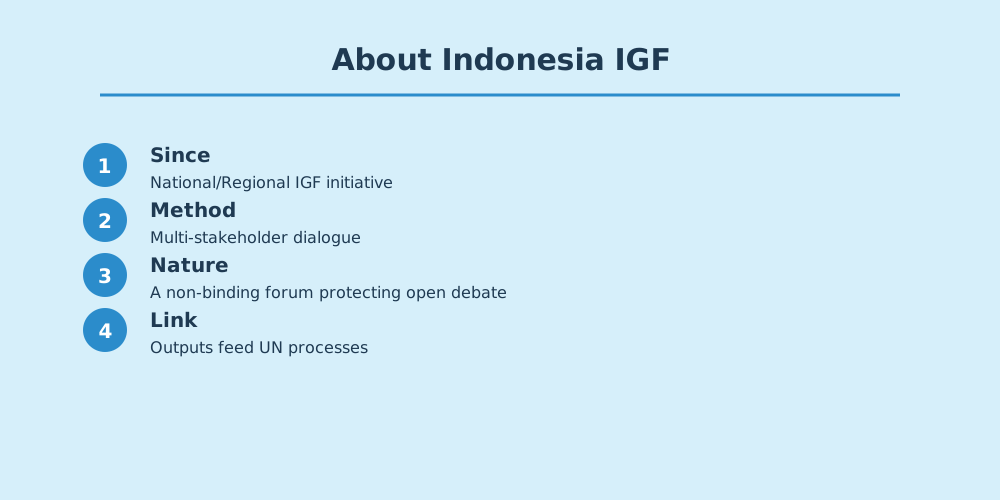
Indonesia IGF is a National or Regional IGF Initiative (NRI), aligning local internet governance discussion with global IGF principles.
Why It Matters to You
What was discussed here becomes the baseline for national digital policy, platform rules and AI regulation worldwide within a few years. The principles confirmed at the 2016 meeting are the foundation of the "next rules" for the phones, social platforms and AI services you use every day.
Sources & References
- 2016 ID-IGF Dialogue(公式開催アーカイブ) — igf.id (accessed 2026-07-11)
- ID-IGF Gelar Diskusi Kemandirian Digital Indonesia(開催告知・概要) — Kominfo (accessed 2026-07-11)
- Indonesia IGF — country report — APC (accessed 2026-07-11)
- ID IGF 2016 – Hukum 3 – Kedaulatan dan Ketahanan Cyber Nasional(Edmon Makarim講演資料) — ID-IGF / SlideShare (accessed 2026-07-11)
Quotes are translated or condensed from the records listed above. Bracketed numbers [n] refer to the source list.
Related links
- IGF official (NRI list): https://www.intgovforum.org/en/content/national-and-regional-igf-initiatives
- Japan IGF: https://japanigf.jp/
- Yuki Nakazawa's blog: https://nkzw.jp/category/igf/
更新履歴
第1稿投稿 2026年7月22日 13時47分(記事コンテンツアップ)
— 中澤祐樹

