


The 3-Line Summary
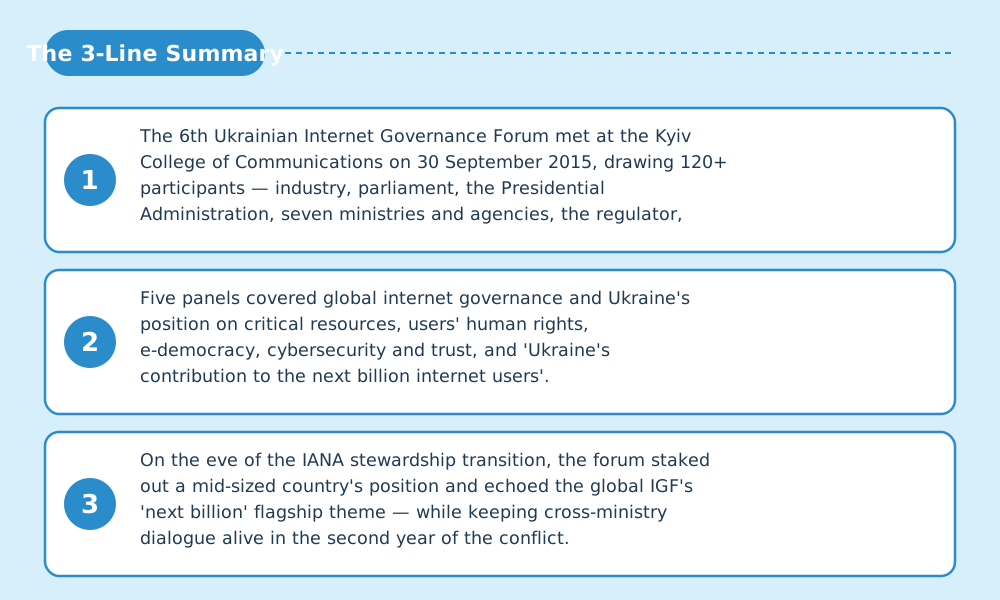
- The 6th Ukrainian Internet Governance Forum met at the Kyiv College of Communications on 30 September 2015, drawing 120+ participants — industry, parliament, the Presidential Administration, seven ministries and agencies, the regulator, and experts from eight countries.
- Five panels covered global internet governance and Ukraine's position on critical resources, users' human rights, e-democracy, cybersecurity and trust, and 'Ukraine's contribution to the next billion internet users'.
- On the eve of the IANA stewardship transition, the forum staked out a mid-sized country's position and echoed the global IGF's 'next billion' flagship theme — while keeping cross-ministry dialogue alive in the second year of the conflict.
Welcome — this is the Japan IGF Support Organization. This in-depth report on 6th Ukrainian Internet Governance Forum (IGF-UA 2015) draws on official outputs, session records and on-site reporting. In a hurry? The three lines above and the diagrams carry the gist.
Conference at a Glance (from official records)
| Item | Detail |
|---|---|
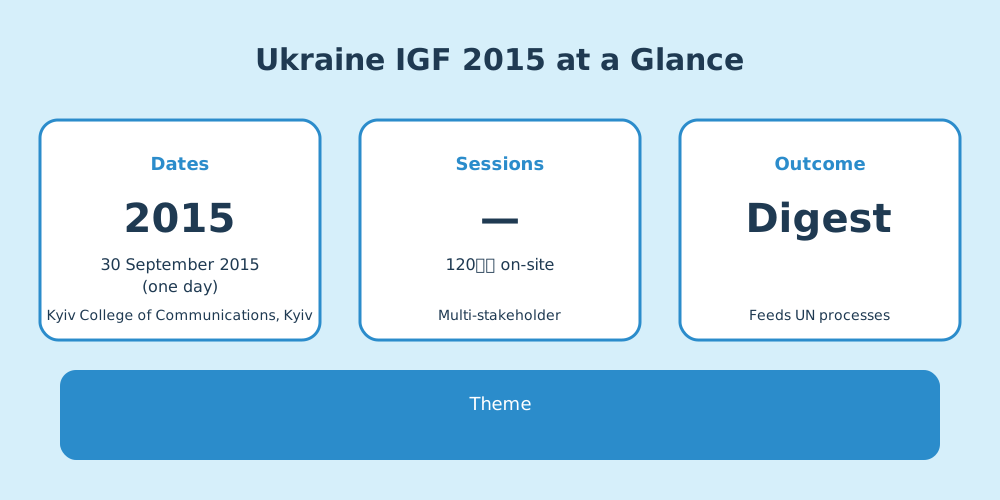
| Official name | 6th Ukrainian Internet Governance Forum (IGF-UA 2015) |
| Dates | 30 September 2015 (one day) |
| Venue | Kyiv College of Communications, Kyiv |
| Theme | Regional governance themes |
| Participants | Over 120 participants including experts from eight countries, with many more joining remotely |
| Host | Internet Association of Ukraine (InAU), the joint EU–Council of Europe project 'Strengthening the Information Society in Ukraine', the Commission on Science and IT of the Ukrainian Union of Industrialists and Entrepreneurs, and the Kyiv College of Communications |
(See the source list at the end of this article.)
Discussion Digest — from the Session Records
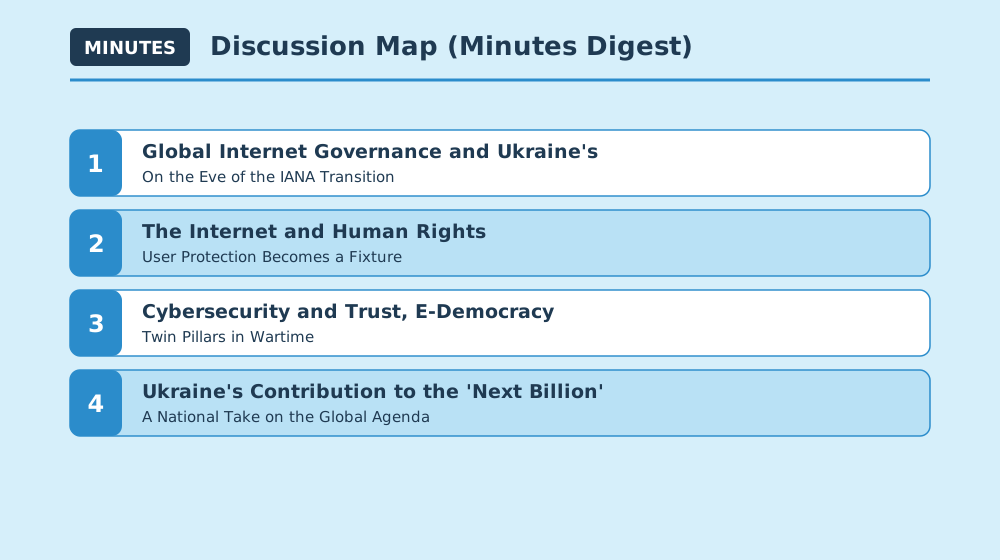
Key exchanges extracted from session records and transcripts.
1. Global Internet Governance and Ukraine's Position — On the Eve of the IANA Transition
Sessions: Panel 'Internet governance at the global level, critical network resources and infrastructure, and Ukraine's position' (30 September)
- The opening panel squarely addressed 'Ukraine's position' on global internet governance and critical network resources — held amid the international debate over the IANA stewardship transition completed the following year [2][3]
- With the Presidential Administration, parliament and seven ministries and agencies (interior, economy, information policy, justice, education, the SBU and the special communications service) in the room, the cast matched the ambition [2][3]
2. The Internet and Human Rights — User Protection Becomes a Fixture
Sessions: Panel 'The internet and human rights; protecting the rights of internet users' (30 September)
- Human rights and user protection had a panel of their own, and with the joint EU–Council of Europe project among the organisers, the forum connected European human-rights standards to Ukrainian internet policy [2][3]
- Making the topic a fixture laid the ground for the Multistakeholder Declaration on online human rights adopted at the 2016 edition [2][3]
3. Cybersecurity and Trust, E-Democracy — Twin Pillars in Wartime
Sessions: Panels 'Cybersecurity and trust' and 'E-democracy' (30 September)
- With the conflict in the east ongoing, the cybersecurity panel framed the issue around trust as much as defence [2][3]
- The e-democracy panel carried forward the post-Maidan democratisation agenda of digitising government and politics [2][3]
4. Ukraine's Contribution to the 'Next Billion' — A National Take on the Global Agenda
Sessions: Panel 'Ukraine's contribution to the next billion internet users: problems and tasks' (30 September)
- The closing panel, 'Ukraine's contribution to the next billion internet users', echoed the 'Connecting the Next Billion' priority then being advanced by the global IGF's João Pessoa cycle [2][3]
- It is a textbook case of a national IGF translating the global agenda into a national context — visible in the panel title itself [2][3]
Three-Minute Short Talk — Your Questions Answered
Q. What did this meeting decide?
A. Nothing binding — five panels where state and non-state actors compared notes. What stood out was government presence: the Presidential Administration plus seven ministries and agencies.
Q. What was the highlight?
A. The closing panel on 'Ukraine's contribution to the next billion internet users', which mapped the global IGF's connectivity agenda onto a country at war.
Q. Why should I care?
A. Translating global agendas into national context is exactly what every national IGF — Japan's included — does. And cross-ministry dialogue surviving a second year of conflict says much about institutional resilience.
What Is Ukraine IGF? (for first-time readers)
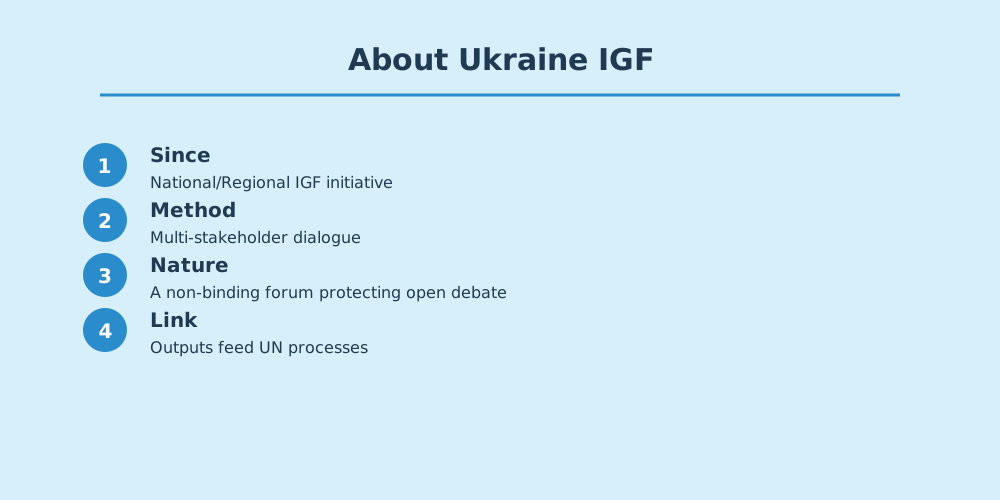
Ukraine IGF is a National or Regional IGF Initiative (NRI), aligning local internet governance discussion with global IGF principles.
Why It Matters to You
What was discussed here becomes the baseline for national digital policy, platform rules and AI regulation worldwide within a few years. The principles confirmed at the 2015 meeting are the foundation of the "next rules" for the phones, social platforms and AI services you use every day.
Sources & References
- IGF-UA 2015 公式アーカイブ(ヘッダに「6th Ukrainian Internet Governance Forum IGF-UA 2015 Kyiv September 30, 2015」) — IGF-UA組織委員会 (accessed 2026-07-11)
- 30 вересня 2015 року відбувся 6-й Український форум з управління Інтернетом IGF-UA(第6回開催報告・5パネルと主催者一覧) — IGF-UA公式サイト (accessed 2026-07-11)
- ІнАУ з партнерами провела 6-й Український форум з управління Інтернетом IGF-UA(InAU開催報告・参加120人超と省庁一覧。旧サイトのためInternet Archive経由で内容確認) — ウクライナ・インターネット協会(InAU) (accessed 2026-07-11)
- VII Ukrainian Internet Governance Forum IGF-UA — Annual report(第6回と第7回の間の常設組織委員会活動を記録・系列の継続性) — IGF-UA組織委員会(国連IGF事務局提出年次報告書) (accessed 2026-07-11)
Quotes are translated or condensed from the records listed above. Bracketed numbers [n] refer to the source list.
Related links
- IGF official (NRI list): https://www.intgovforum.org/en/content/national-and-regional-igf-initiatives
- Japan IGF: https://japanigf.jp/
- Yuki Nakazawa's blog: https://nkzw.jp/category/igf/
更新履歴
第1稿投稿 2026年7月12日 20時57分(記事コンテンツアップ)
— 中澤祐樹

