


The 3-Line Summary
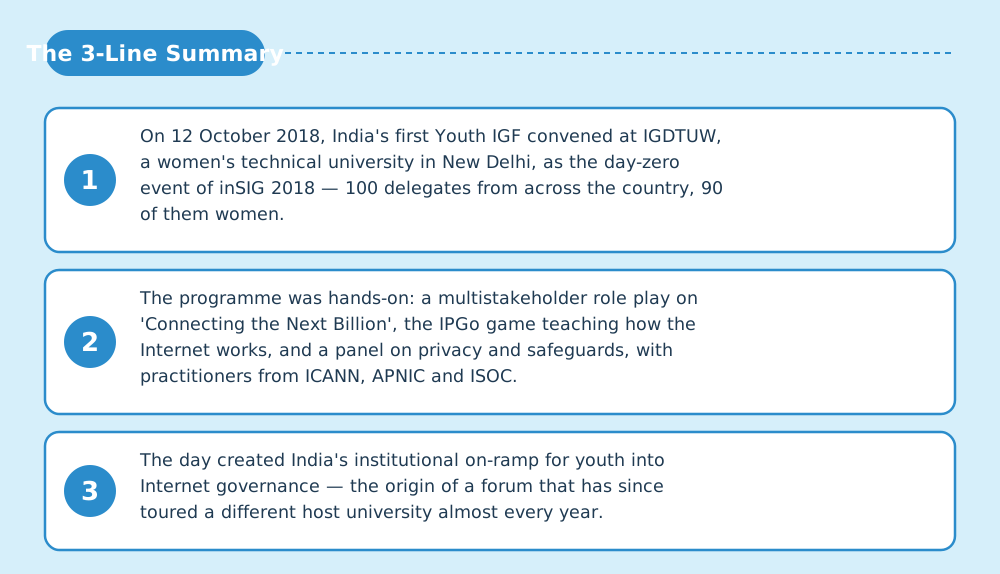
- On 12 October 2018, India's first Youth IGF convened at IGDTUW, a women's technical university in New Delhi, as the day-zero event of inSIG 2018 — 100 delegates from across the country, 90 of them women.
- The programme was hands-on: a multistakeholder role play on 'Connecting the Next Billion', the IPGo game teaching how the Internet works, and a panel on privacy and safeguards, with practitioners from ICANN, APNIC and ISOC.
- The day created India's institutional on-ramp for youth into Internet governance — the origin of a forum that has since toured a different host university almost every year.
Welcome — this is the Japan IGF Support Organization. This in-depth report on Youth IGF India 2018 (1st edition, New Delhi) draws on official outputs, session records and on-site reporting. In a hurry? The three lines above and the diagrams carry the gist.
Conference at a Glance (from official records)
| Item | Detail |
|---|---|
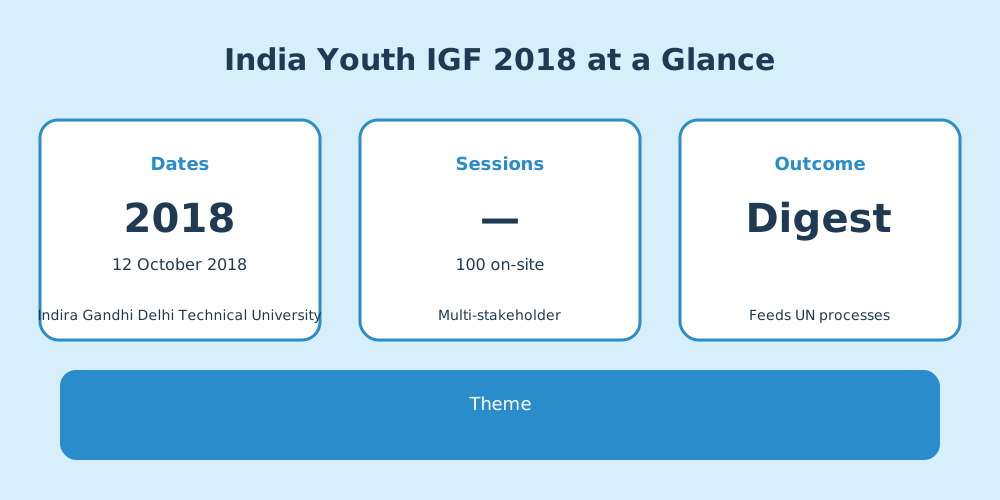
| Official name | Youth IGF India 2018 (1st edition, New Delhi) |
| Dates | 12 October 2018 |
| Venue | Indira Gandhi Delhi Technical University for Women (IGDTUW), New Delhi |
| Theme | Regional governance themes |
| Participants | 100 (100 delegates (90 of them women), joining in person and remotely; 200+ fellowship applications, with 5 travel+accommodation and 10 accommodation fellowships awarded) |
| Host | A youth-led initiative founded by inSIG fellows Shahul Hameed and Ihita Gangavarapu, supported by inSIG, ICANN, APNIC, IGDTUW and the Internet Society |
(See the source list at the end of this article.)
Discussion Digest — from the Session Records
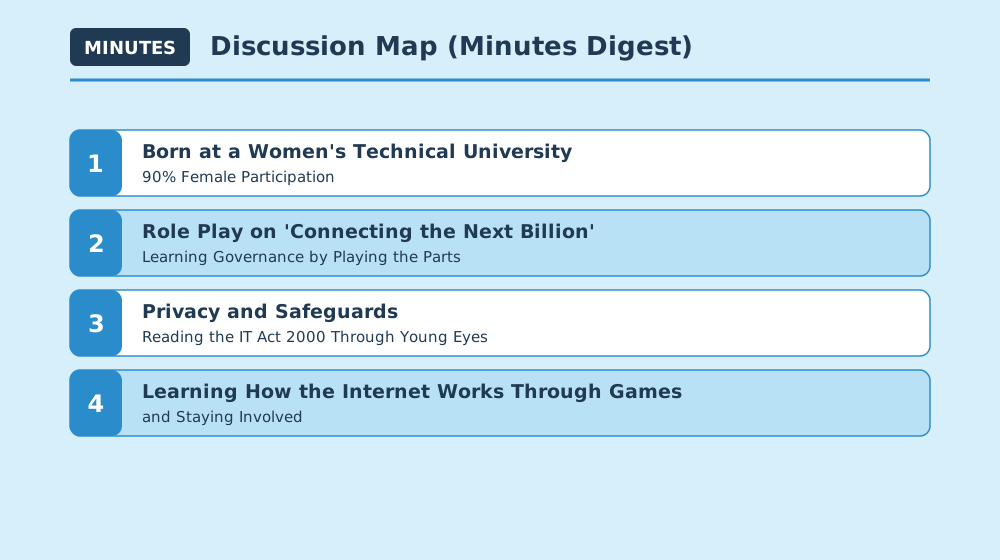
Key exchanges extracted from session records and transcripts.
1. Born at a Women's Technical University — 90% Female Participation
Sessions: Opening ceremony (remarks by IGDTUW Vice-Chancellor Anita Devi and others)
- Held at IGDTUW, a women's technical university, with 90 of 100 delegates being women — a strikingly gender-inclusive debut by global youth-IGF standards [1][2]
- The forum opened with a traditional lamp-lighting; the Vice-Chancellor raised cybercrime awareness among youth, and ISOC Delhi's Amrita Choudhury spoke on the Internet's 'haves and have-nots' and a next generation of users centred on Asia and Africa [1][2]
- Founders Shahul Hameed and Ihita Gangavarapu, both inSIG fellows, took the idea from mentorship at inSIG 2017 to a full event in one year [1][2]
2. Role Play on 'Connecting the Next Billion' — Learning Governance by Playing the Parts
Sessions: Multi-stakeholder Role Play (from 10:40)
- In groups of five, participants took the roles of civil society, private sector, technical community and government to argue issues and remedies for connecting the next billion [1]
- Civil society flagged language barriers, digital literacy and the gender gap; the technical group rural and mountain access and speeds; the government group friendlier public websites and awareness of Internet law [1]
- ICANN's India head Samiran Gupta lectured on the inclusive, consensual and flexible nature of the multistakeholder model, with Q&A ranging from WhatsApp encryption to IPv4 exhaustion [1]
3. Privacy and Safeguards — Reading the IT Act 2000 Through Young Eyes
Sessions: Panel discussion 'Privacy & Safeguards in Internet' (from 15:05)
- A mixed panel — IGDTUW academia, ISOC Kolkata, a practising lawyer and the Cyber Peace Foundation — debated what challenges privacy online [1]
- Digital privacy, they argued, differs from traditional expectations: protecting user information is the core, and the issues shift rapidly [1]
- The panel also examined the limits of the Information Technology Act 2000, then India's most comprehensive legal provisions on Internet privacy [1]
4. Learning How the Internet Works Through Games — and Staying Involved
Sessions: 'How the Internet Works – IPGo Game' and the experience-sharing session
"'Being a technologist means, you get involved with the technology' (from the official report)"
— Sunny Chendi (APNIC, concluding remarks) [1][2]
- APNIC's Sunny Chendi and ICANN's Dilpreet Kaur ran the card-based IPGo game so every attendee could feel how IP addressing and routing work [1][2]
- The forum closed with organisers sharing their own journeys into Internet governance, urging students to keep engaging with conferences and the community [1][2]
Three-Minute Short Talk — Your Questions Answered
Q. What was this event?
A. India's first UN IGF-recognised youth conference on Internet governance — not a decision-making body, but an on-ramp where students learn through role plays and games who sets the Internet's rules and how.
Q. What made it unique?
A. Ninety of the 100 delegates were women. Hosting it at a women's technical university flipped the usual gender ratio of tech policy events — rare for any youth IGF's first edition.
Q. Why should I care?
A. Its playful formats — role plays and the IPGo game — are a reusable blueprint for getting newcomers into policy debates anywhere, and this forum became the template for India's touring youth IGF.
What Is India Youth IGF? (for first-time readers)
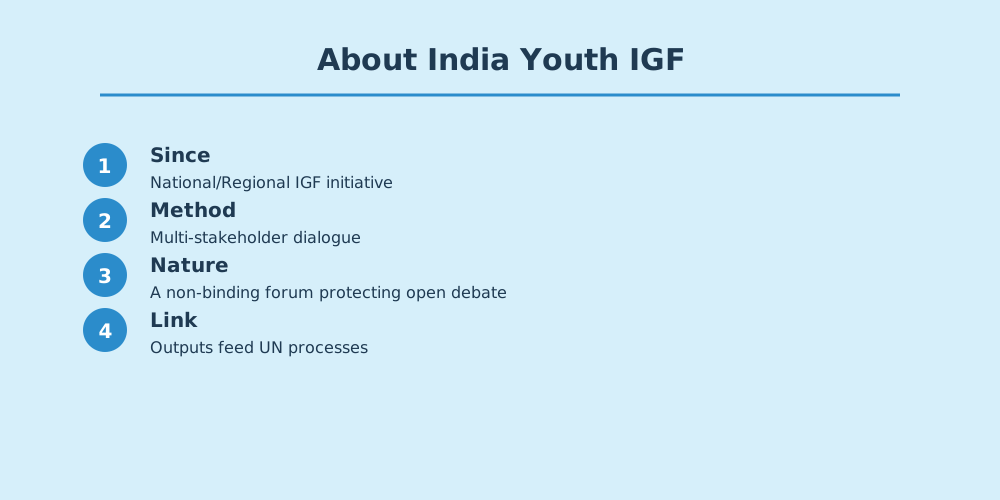
India Youth IGF is a National or Regional IGF Initiative (NRI), aligning local internet governance discussion with global IGF principles.
Why It Matters to You
What was discussed here becomes the baseline for national digital policy, platform rules and AI regulation worldwide within a few years. The principles confirmed at the 2018 meeting are the foundation of the "next rules" for the phones, social platforms and AI services you use every day.
Sources & References
- Youth Internet Governance Forum India – 2018 Report(公式報告書PDF) — Youth IGF India / 国連IGF事務局 filedepot (accessed 2026-07-22)
- Youth IGF India 2018(公式サイト・過去大会ページ) — youthigf.in (accessed 2026-07-22)
- Youth IGF Initiatives(India Youth IGF:2018年設立・2018-10-12ニューデリー初会合) — UN IGF Secretariat (accessed 2026-07-22)
- Past Editions(2018 IGDTUW・デリー) — youthigf.in (accessed 2026-07-22)
Quotes are translated or condensed from the records listed above. Bracketed numbers [n] refer to the source list.
Related links
- IGF official (NRI list): https://www.intgovforum.org/en/content/national-and-regional-igf-initiatives
- Japan IGF: https://japanigf.jp/
- Yuki Nakazawa's blog: https://nkzw.jp/category/igf/
更新履歴
第1稿投稿 2026年7月19日 10時39分(記事コンテンツアップ)
— 中澤祐樹

