


The 3-Line Summary
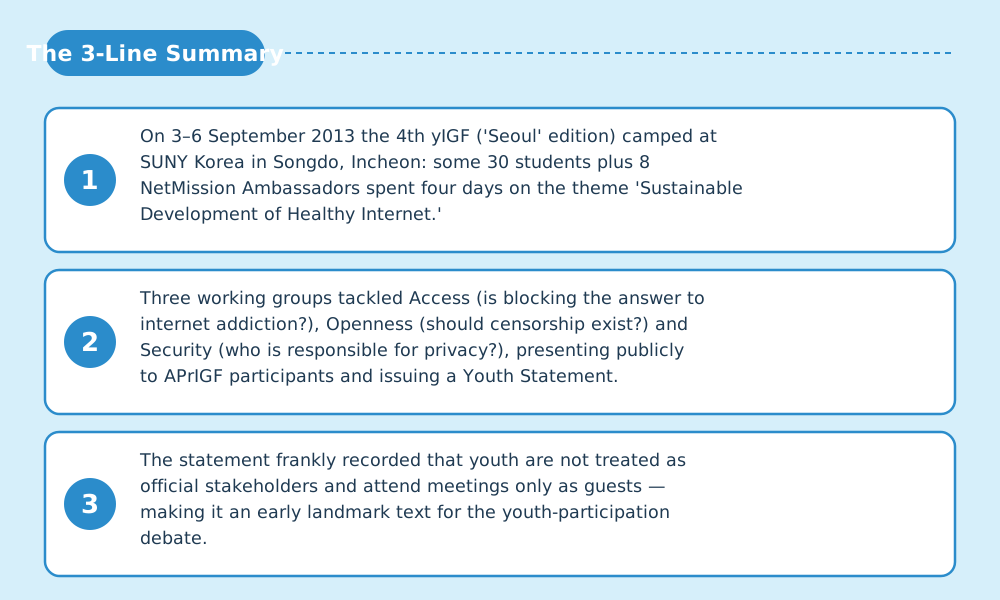
- On 3–6 September 2013 the 4th yIGF ('Seoul' edition) camped at SUNY Korea in Songdo, Incheon: some 30 students plus 8 NetMission Ambassadors spent four days on the theme 'Sustainable Development of Healthy Internet.'
- Three working groups tackled Access (is blocking the answer to internet addiction?), Openness (should censorship exist?) and Security (who is responsible for privacy?), presenting publicly to APrIGF participants and issuing a Youth Statement.
- The statement frankly recorded that youth are not treated as official stakeholders and attend meetings only as guests — making it an early landmark text for the youth-participation debate.
Welcome — this is the Japan IGF Support Organization. This in-depth report on Youth Internet Governance Forum 2013 (yIGF 2013), Seoul draws on official outputs, session records and on-site reporting. In a hurry? The three lines above and the diagrams carry the gist.
📍 Officially 'yIGF 2013 Seoul'; the actual venue was SUNY Korea in Songdo, Incheon, shared with the parent APrIGF 2013
Conference at a Glance (from official records)
| Item | Detail |
|---|---|
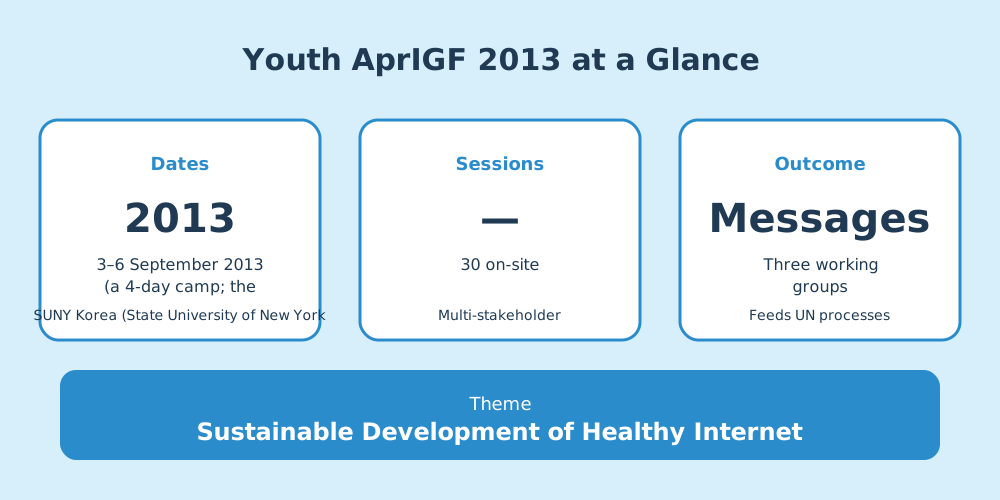
| Official name | Youth Internet Governance Forum 2013 (yIGF 2013), Seoul |
| Edition | 4th edition — the official page calls it the 4th Youth Internet Governance Camp |
| Dates | 3–6 September 2013 (a 4-day camp; the parent APrIGF 2013 Seoul ran 4–6 September) |
| Venue | SUNY Korea (State University of New York, Korea) in Songdo International City, Incheon — branded the 'Seoul' edition though the venue was in Songdo |
| Theme | Sustainable Development of Healthy Internet |
| Participants | 30 (About 30 students (the youth statement says 'more than 30 international students'; the official history page says 'around 30 local students in South Korea'), joined by 8 NetMission Ambassadors from Hong Kong) |
| Host | Organised by NetMission Ambassadors (NetMission.Asia), supported by the APrIGF, the Korea Internet Governance Alliance, DotAsia, Korea's Ministry of Science, ICT & Future Planning, KISA, ICANN and SUNY Korea |
| Outcome | Three working groups (Access, Openness, Security) presented their research and issued a Youth Statement; the final session was open to all APrIGF participants |
(See the source list at the end of this article.)
Discussion Digest — from the Session Records
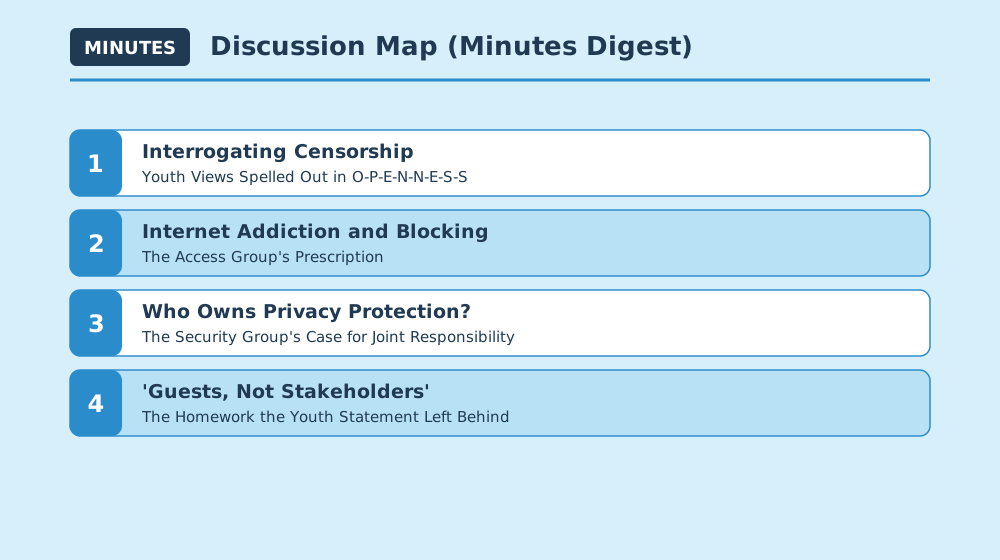
Key exchanges extracted from session records and transcripts.
1. Interrogating Censorship — Youth Views Spelled Out in O-P-E-N-N-E-S-S
Sessions: Openness working group: 'Should Internet censorship exist?'
"Censorship cuts both sides; to make the right use of it, it is imperative to put 'neutrality', or a censorship program considering public interest, in a top priority"
— Haejin (yIGF 2013 participant, as recorded in the Youth Statement) [2]
- Each participant spoke to one letter of O-P-E-N-N-E-S-S (Originality, Participation, Essential and so on), building a multi-angle case on censorship [2]
- The debate went beyond a simple yes/no: censorship has been beloved of dictatorships, yet designed with all stakeholders reflected it could guard against cyberbullying and scams [2]
- Host-country South Korea's real-name and content-regulation policies provided the living context [2]
2. Internet Addiction and Blocking — The Access Group's Prescription
Sessions: Access working group: 'Is blocking a necessary way to tackle cyber addiction?'
- Blocking was judged a direct but short-term fix, to be paired with education and offline alternatives in the long run [2][1]
- The group urged game makers to build educational titles, communities to run outdoor activities and awareness campaigns, and government to coordinate both while investing in children [2][1]
- With South Korea's 2011 'shutdown law' restricting late-night gaming under international scrutiny, this was the affected generation talking back [2][1]
3. Who Owns Privacy Protection? — The Security Group's Case for Joint Responsibility
Sessions: Security working group: 'Who should bear the greatest responsibility of safeguarding privacy on the Internet?'
- The group diagnosed a gap between the ideal — users as ultimate masters of their own data — and a reality of pervasive personal-data leakage [2]
- Rather than naming a single culprit, it assigned joint responsibility: lenient government regulation, insufficient corporate self-control, and users' own over-sharing [2]
- The youth pledged self-discipline against over-sharing, while urging government to enact stricter legal frameworks and to involve young people in legislation [2]
4. 'Guests, Not Stakeholders' — The Homework the Youth Statement Left Behind
Sessions: Youth Statement by NetMission Ambassadors @ yIGF 2013
- The statement named three barriers: not knowing how to contribute; the powerlessness of attending meetings only as guests whose views are taken merely for reference; and the wall of jargon and meeting culture [2][1]
- Its self-diagnosis — using the internet 'like breathing' while knowing nothing of how bodies like ICANN work — prefigured the capacity-building-first design of later youth tracks [2][1]
- It closed with the conviction that youth voices count and matter, pledging continued participation [2][1]
Three-Minute Short Talk — Your Questions Answered
Q. What was this event?
A. A four-day youth camp at SUNY Korea in Songdo, Incheon. About 30 students split into three working groups on internet addiction and blocking, censorship, and privacy, presenting to APrIGF participants on the final day.
Q. What stood out most?
A. The Youth Statement — a frank, on-the-record admission that young people attend governance meetings only as guests, not stakeholders. It became an early landmark for the youth-participation debate.
Q. Why should I care?
A. Blocking for addiction, neutral censorship, and shared responsibility for privacy are still front-line policy battles today; this is an early, articulate youth answer to all three.
What Is Youth AprIGF? (for first-time readers)
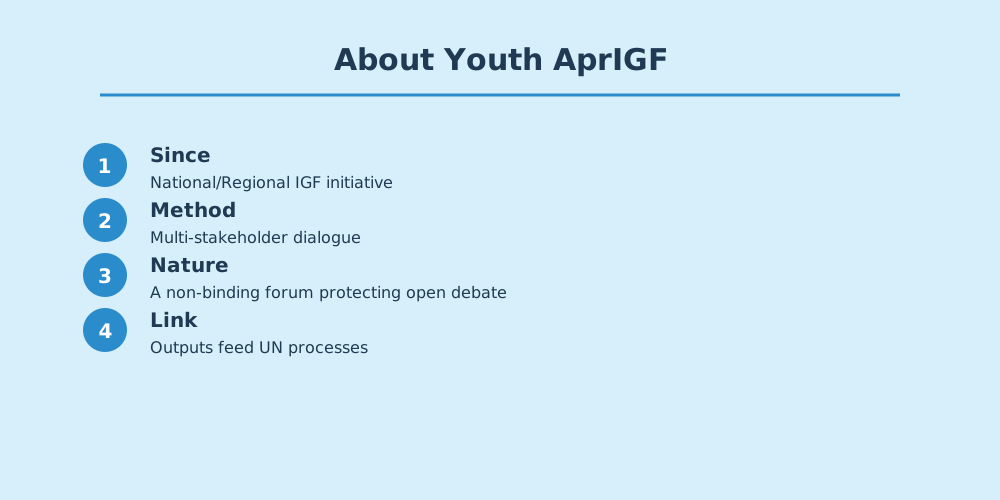
Youth AprIGF is a National or Regional IGF Initiative (NRI), aligning local internet governance discussion with global IGF principles.
Why It Matters to You
What was discussed here becomes the baseline for national digital policy, platform rules and AI regulation worldwide within a few years. The principles confirmed at the 2013 meeting are the foundation of the "next rules" for the phones, social platforms and AI services you use every day.
Sources & References
- yIGF 2013 Seoul(公式・歴代イベントページ) — Asia Pacific Youth IGF(yigf.asia) (accessed 2026-07-22)
- Youth Statement by NetMission Ambassadors @ yIGF 2013 Seoul(公式レポートアーカイブ掲載のユース声明。9/3-6・SUNY Korea・3作業部会の全記録) — NetMission.Asia(公式レポートアーカイブ) (accessed 2026-07-22)
- Conference Report APrIGF 2015 Macao(巻末にAPrIGF/yIGF歴代日程一覧: YIGF 2013 September 03-06 Seoul) — APrIGF事務局(DotAsia) (accessed 2026-07-22)
- Reports and Charter(公式レポート一覧。yIGF 2013 Seoul報告を収録) — Asia Pacific Youth IGF(yigf.asia) (accessed 2026-07-22)
Quotes are translated or condensed from the records listed above. Bracketed numbers [n] refer to the source list.
Related links
- IGF official (NRI list): https://www.intgovforum.org/en/content/national-and-regional-igf-initiatives
- Japan IGF: https://japanigf.jp/
- Yuki Nakazawa's blog: https://nkzw.jp/category/igf/
更新履歴
第1稿投稿 2026年7月18日 14時58分(記事コンテンツアップ)
— 中澤祐樹

