

The 3-Line Summary
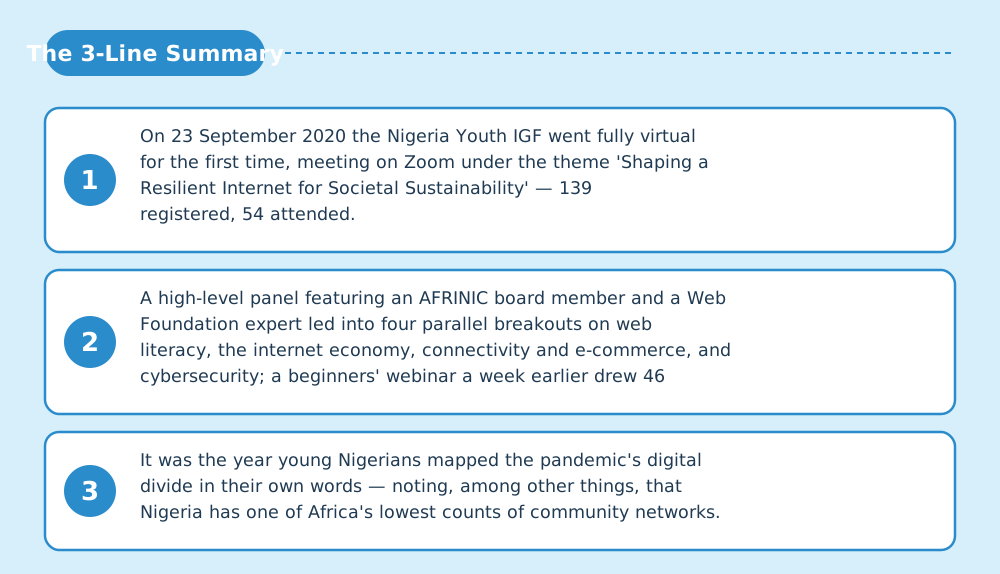
- On 23 September 2020 the Nigeria Youth IGF went fully virtual for the first time, meeting on Zoom under the theme 'Shaping a Resilient Internet for Societal Sustainability' — 139 registered, 54 attended.
- A high-level panel featuring an AFRINIC board member and a Web Foundation expert led into four parallel breakouts on web literacy, the internet economy, connectivity and e-commerce, and cybersecurity; a beginners' webinar a week earlier drew 46 participants.
- It was the year young Nigerians mapped the pandemic's digital divide in their own words — noting, among other things, that Nigeria has one of Africa's lowest counts of community networks.
Welcome — this is the Japan IGF Support Organization. This in-depth report on Nigeria Youth Internet Governance Forum 2020 (Virtual) draws on official outputs, session records and on-site reporting. In a hurry? The three lines above and the diagrams carry the gist.
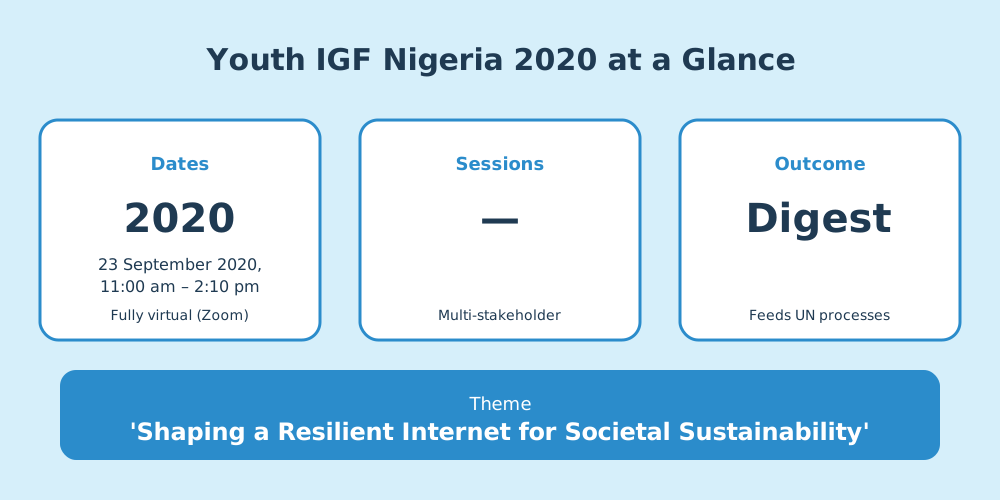
Conference at a Glance (from official records)
| Item | Detail |
|---|---|
| Official name | Nigeria Youth Internet Governance Forum 2020 (Virtual) |
| Dates | 23 September 2020, 11:00 am – 2:10 pm WAT (pre-event webinar on 16 September) |
| Venue | Fully virtual (Zoom) |
| Theme | 'Shaping a Resilient Internet for Societal Sustainability' |
| Registrants | 139 |
| Attendees | 54 |
(See the source list at the end of this article.)
Discussion Digest — from the Session Records
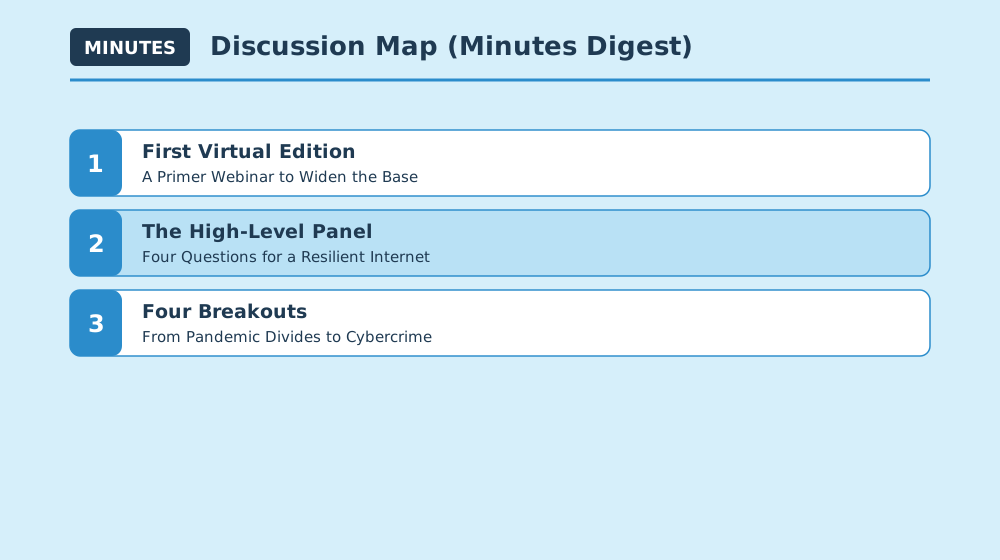
Key exchanges extracted from session records and transcripts.
1. First Virtual Edition — A Primer Webinar to Widen the Base
Sessions: Pre-event webinar (16 September, 10:00–11:00 WAT) and the main-day opening (23 September)
- A week ahead, a primer webinar on internet-governance principles and youth participation drew 46 people — lowering the jargon barrier before the main day [1]
- NYIGF coordinator Uffa Modey (Digital Grassroots) opened the forum, with goodwill messages from NIGF chair Dr Haru Alhassan, the UN IGF Secretariat's Anja Gengo, AFRINIC's Brice Abba and West African IGF coordinator Mary Uduma [1]
- That a national youth meeting drew the UN IGF Secretariat, AFRINIC and the WAIGF onto one screen showed how firmly the NYIGF sits inside the international NRI network [1]
2. The High-Level Panel — Four Questions for a Resilient Internet
Sessions: High-level panel (23 September, 11:30–12:30 WAT; moderated by Morisola Alaba, Media Rights Agenda)
- AFRINIC board member Seun Ojedeji, the Web Foundation's Chenai Chair and TechHive Advisory's Ridwan Oloyede debated four questions: closing the digital divide, the technical community's capacity-building role, strategies for a secure internet, and the conditions for youth participation [1]
- Panellists noted Nigeria has one of the lowest numbers of community networks in Africa, urging capacity-building through community networks and events on multiple tracks [1]
- They called for laws that respect human rights rather than merely punish crime, a working judiciary, decision-makers who actively listen to youth — and warned that without affordable access, participation remains theoretical [1]
3. Four Breakouts — From Pandemic Divides to Cybercrime
Sessions: Breakout sessions 1–4 (23 September, 12:46–1:30 pm WAT, in parallel)
- The four rooms covered web literacy and ICT skills in the COVID era, youth in the global internet economy, connectivity and e-business, and cybersecurity — with data costs, device access and unreliable power recurring as barriers [1]
- In the connectivity room, Univelcity founder Joseph Agunbiade praised Lagos State's 3,000 km fibre build as 'just a beginning', urged investment in low-bandwidth technology like USSD payments, and advised spending more on access than on fighting cybercrime [1]
- The cybersecurity room cited the finding that 66% of breaches stem from weak passwords, recommending VPNs and strong authentication alongside regulation — the 2019 NDPR — to underpin biometric identity [1]
Three-Minute Short Talk — Your Questions Answered
Q. What did they discuss in the COVID year?
A. The digital divide the pandemic laid bare: high data costs, scarce devices and unreliable power — Nigeria's specific barriers — and what each stakeholder should do about them.
Q. Did the online format work?
A. 139 registered, 54 attended, and 46 joined the primer webinar. Modest numbers, but the two-stage design — a primer, then the forum — became the series' standard.
Q. Why should I care?
A. It's a case study in moving a youth forum online without losing its policy function, and its 'train first, convene second' pattern is reusable by any youth IGF community.
What Is Youth IGF Nigeria? (for first-time readers)
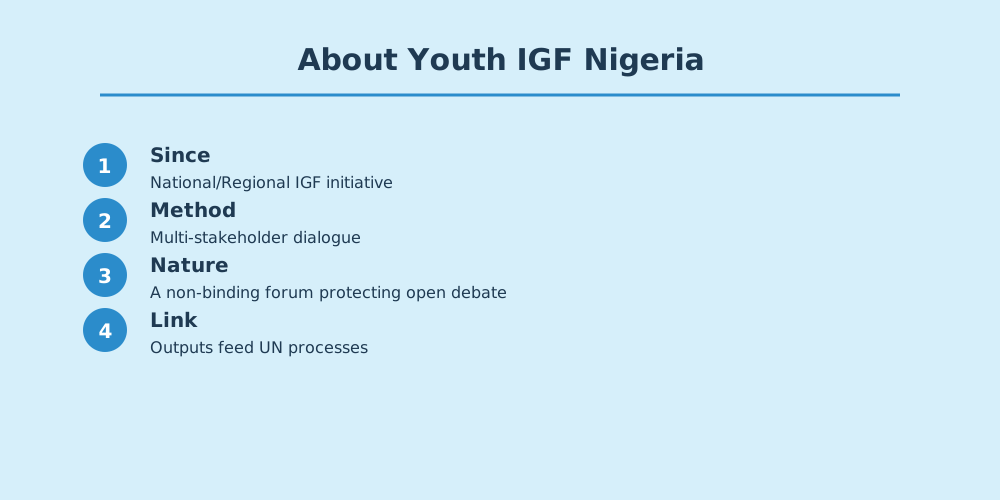
Youth IGF Nigeria is a National or Regional IGF Initiative (NRI), aligning local internet governance discussion with global IGF principles.
Why It Matters to You
What was discussed here becomes the baseline for national digital policy, platform rules and AI regulation worldwide within a few years. The principles confirmed at the 2020 meeting are the foundation of the "next rules" for the phones, social platforms and AI services you use every day.
Sources & References
- Report of The Nigeria Youth Internet Governance Forum 2020 (Virtual)(公式報告書) — Nigeria Youth IGF (accessed 2026-07-22)
- NYIGF-2020(公式アーカイブページ) — Nigeria Youth IGF (accessed 2026-07-22)
- Reports – Nigeria Youth Internet Governance Forum(年次報告書一覧) — Nigeria Youth IGF (accessed 2026-07-22)
Quotes are translated or condensed from the records listed above. Bracketed numbers [n] refer to the source list.
Related links
- IGF official (NRI list): https://www.intgovforum.org/en/content/national-and-regional-igf-initiatives
- Japan IGF: https://japanigf.jp/
- Yuki Nakazawa's blog: https://nkzw.jp/category/igf/
更新履歴
第1稿投稿 2026年7月14日 8時22分(記事コンテンツアップ)
— 中澤祐樹