


The 3-Line Summary
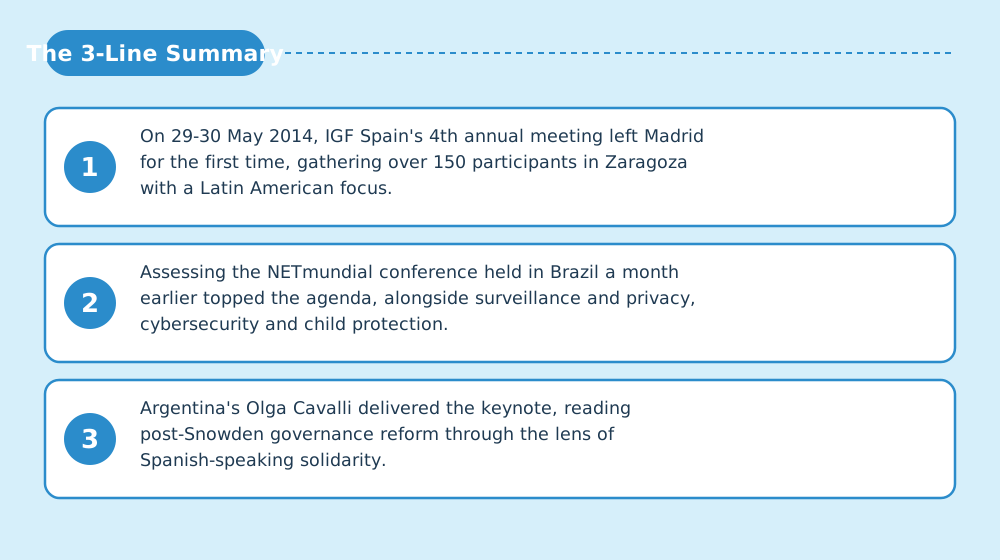
- On 29-30 May 2014, IGF Spain's 4th annual meeting left Madrid for the first time, gathering over 150 participants in Zaragoza with a Latin American focus.
- Assessing the NETmundial conference held in Brazil a month earlier topped the agenda, alongside surveillance and privacy, cybersecurity and child protection.
- Argentina's Olga Cavalli delivered the keynote, reading post-Snowden governance reform through the lens of Spanish-speaking solidarity.
Welcome — this is the Japan IGF Support Organization. This in-depth report on 4th Annual Meeting of the Internet Governance Forum Spain (IGF Spain 2014) draws on official outputs, session records and on-site reporting. In a hurry? The three lines above and the diagrams carry the gist.
📍 The only edition held outside Madrid. The catalogue's 'Madrid' is incorrect: official records place the meeting in Zaragoza, with the city's deputy mayor, the Aragon government and the University of Zaragoza rector at the opening. Catalogue needs correction
Conference at a Glance (from official records)
| Item | Detail |
|---|---|
| Official name | 4th Annual Meeting of the Internet Governance Forum Spain (IGF Spain 2014) |
| Edition | 4th Annual Meeting |
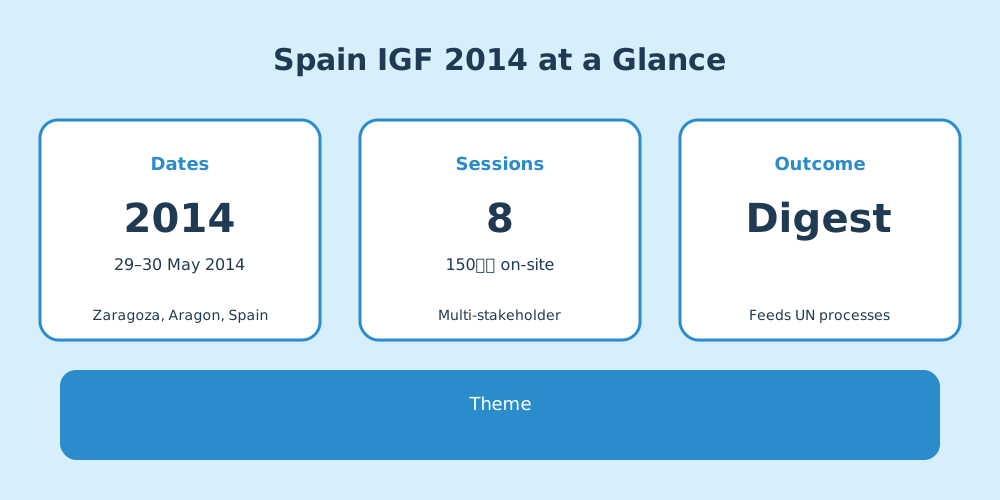
| Dates | 29–30 May 2014 |
| Venue | Zaragoza, Aragon, Spain |
| Theme | Regional governance themes |
| Participants | Over 150 participants |
| Sessions | 8 (Eight roundtables and expert presentations over two days) |
| Host | Coordinated by Jorge Pérez (ETSIT-UPM); organising committee chaired by Pedro J. Canut Zazurca; supported by Fundación Telefónica, Google, Orange and Vodafone |
(See the source list at the end of this article.)
Discussion Digest — from the Session Records
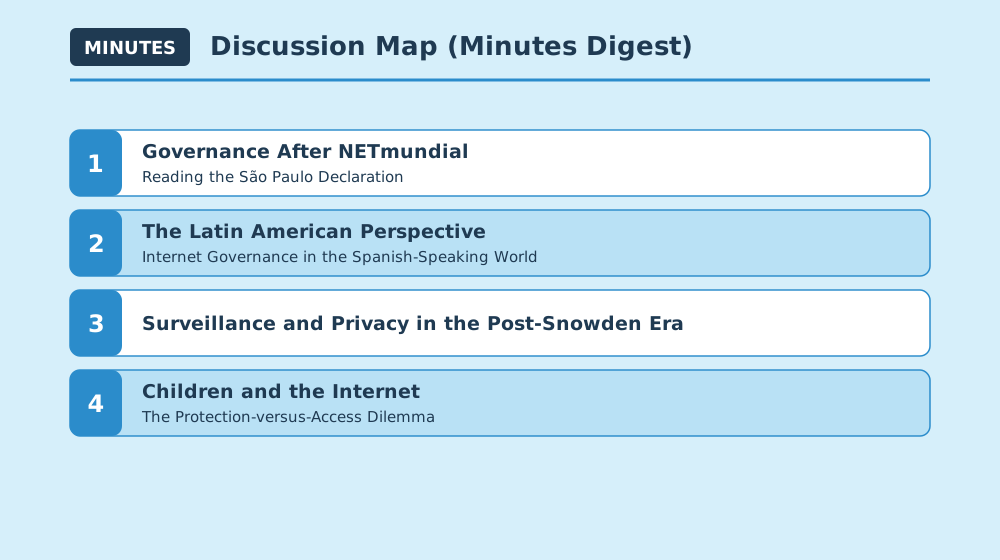
Key exchanges extracted from session records and transcripts.
1. Governance After NETmundial — Reading the São Paulo Declaration
Sessions: Roundtable 'Internet governance after NETmundial (Brazil)' (29 May, 12:00-13:30)
- Panellists weighed the significance and limits of the non-binding Multistakeholder Statement adopted in São Paulo in April 2014 — ten Internet principles plus an ecosystem roadmap [1][2]
- Brazil's Marco Civil Internet-rights law, passed just before the conference and not fully aligned with NETmundial's outcome, also came under scrutiny [1][2]
- Speakers included Christoph Steck (Telefónica), Gema Campillos (SETSI), Francisco Ruiz (Google), IGF MAG member Olga Cavalli and Panamanian civil-society delegate Lía Hernández [1][2]
2. The Latin American Perspective — Internet Governance in the Spanish-Speaking World
Sessions: Keynote 'Internet governance: a view from Latin America' by Olga Cavalli (29 May)
- Olga Cavalli, Argentina's representative on ICANN's GAC, keynoted on governance challenges as seen from Latin America [1][2]
- The meeting explicitly foregrounded Latin American realities, debating how Spanish-speaking countries could amplify their voice in global rule-making [1][2]
3. Surveillance and Privacy in the Post-Snowden Era
Sessions: Roundtables on privacy and surveillance in the digital era, and cybersecurity
- A year after the Snowden revelations, the tension between privacy and surveillance was a headline theme [1][2]
- Cybersecurity, the digital economy and tech entrepreneurship ran in parallel, with participants endorsing inclusive, multilateral and transparent governance [1][2]
4. Children and the Internet — The Protection-versus-Access Dilemma
Sessions: Roundtable 'Children and the Internet' (led by Miguel Pérez Subías and Ana Moreno)
- The panel confronted the tension between children's freedom of expression and information under Article 13 of the UN CRC and protection through content blocking [1][2]
- With children then already spending over six hours a day with screens, speakers questioned protective rules that are unenforceable online in practice [1][2]
Three-Minute Short Talk — Your Questions Answered
Q. What did the meeting decide?
A. Nothing binding — but held right after NETmundial, where the world debated rebuilding Internet governance post-Snowden, it distilled Spain's reading of that moment into published messages.
Q. Why Zaragoza?
A. It is the series' only meeting outside Madrid, opened jointly by the city, the Aragon government and the University of Zaragoza — a deliberate regional outreach paired with the Latin American focus.
Q. Why does it matter?
A. The São Paulo Multistakeholder Statement assessed here became a cornerstone of the governance model most democracies, including Japan, still champion.
What Is Spain IGF? (for first-time readers)
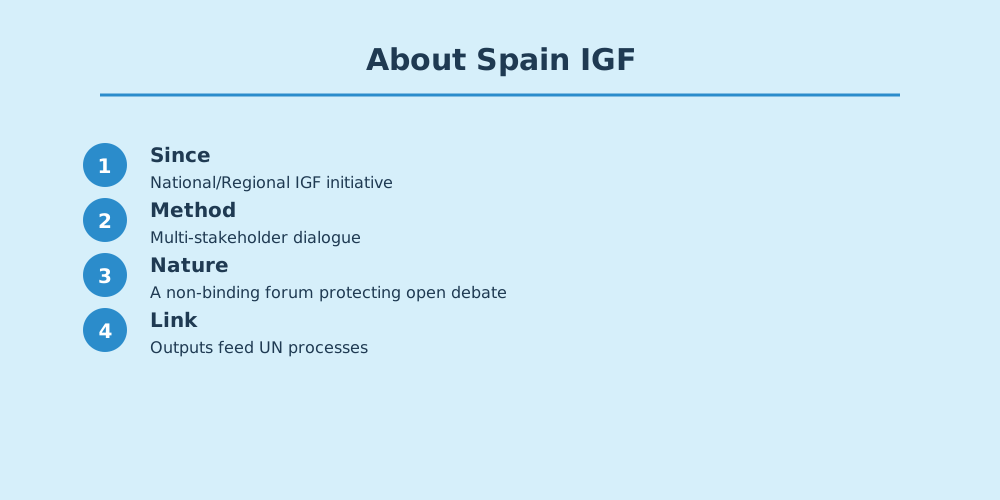
Spain IGF is a National or Regional IGF Initiative (NRI), aligning local internet governance discussion with global IGF principles.
Why It Matters to You
What was discussed here becomes the baseline for national digital policy, platform rules and AI regulation worldwide within a few years. The principles confirmed at the 2014 meeting are the foundation of the "next rules" for the phones, social platforms and AI services you use every day.
Sources & References
- IGF Spain 2014 – IV Jornada anual — igfspain.org (accessed 2026-07-22)
- IV Jornadas Anuales IGF Spain 2014(当時のプログラム・登壇者詳細) — igfspain.org (accessed 2026-07-22)
- Historia de los 10 años del Foro de Gobernanza de Internet Spain — IGF Spain(10周年史, jornadasigfspain.es) (accessed 2026-07-22)
- Acerca de IGF Spain(フォーラム概要・コーディネーター) — igfspain.org (accessed 2026-07-22)
Quotes are translated or condensed from the records listed above. Bracketed numbers [n] refer to the source list.
Related links
- IGF official (NRI list): https://www.intgovforum.org/en/content/national-and-regional-igf-initiatives
- Japan IGF: https://japanigf.jp/
- Yuki Nakazawa's blog: https://nkzw.jp/category/igf/
更新履歴
第1稿投稿 2026年7月15日 13時28分(記事コンテンツアップ)
— 中澤祐樹

