
The 3-Line Summary
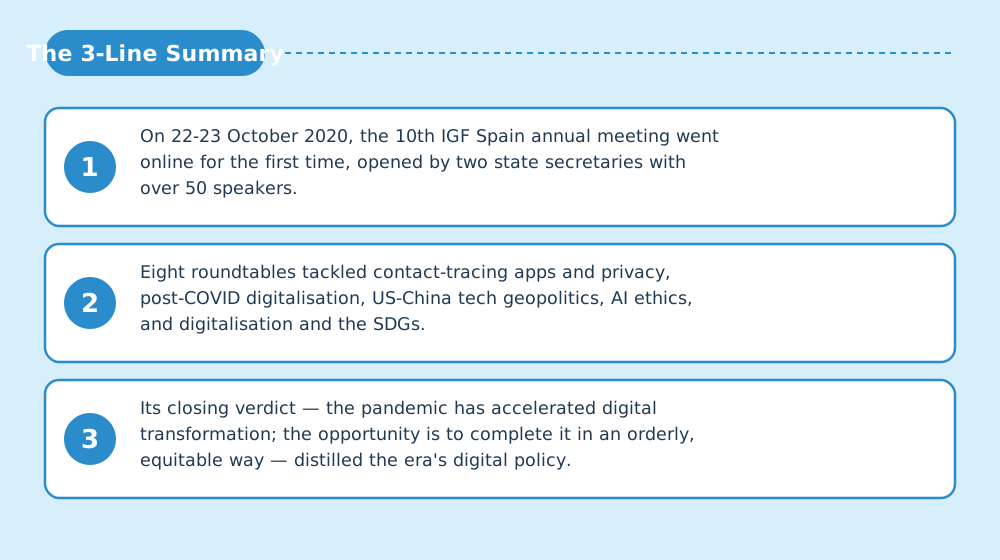
- On 22-23 October 2020, the 10th IGF Spain annual meeting went online for the first time, opened by two state secretaries with over 50 speakers.
- Eight roundtables tackled contact-tracing apps and privacy, post-COVID digitalisation, US-China tech geopolitics, AI ethics, and digitalisation and the SDGs.
- Its closing verdict — the pandemic has accelerated digital transformation; the opportunity is to complete it in an orderly, equitable way — distilled the era's digital policy.
Welcome — this is the Japan IGF Support Organization. This in-depth report on 10th Annual Meeting of the Internet Governance Forum Spain (IGF Spain 2020, online) draws on official outputs, session records and on-site reporting. In a hurry? The three lines above and the diagrams carry the gist.
📍 Online due to COVID-19; the official page lists 'formato online' with ETSIT UPM, Madrid, as the base. Resolves the catalogue's TBD: online, based in Madrid, 22-23 October 2020
Conference at a Glance (from official records)
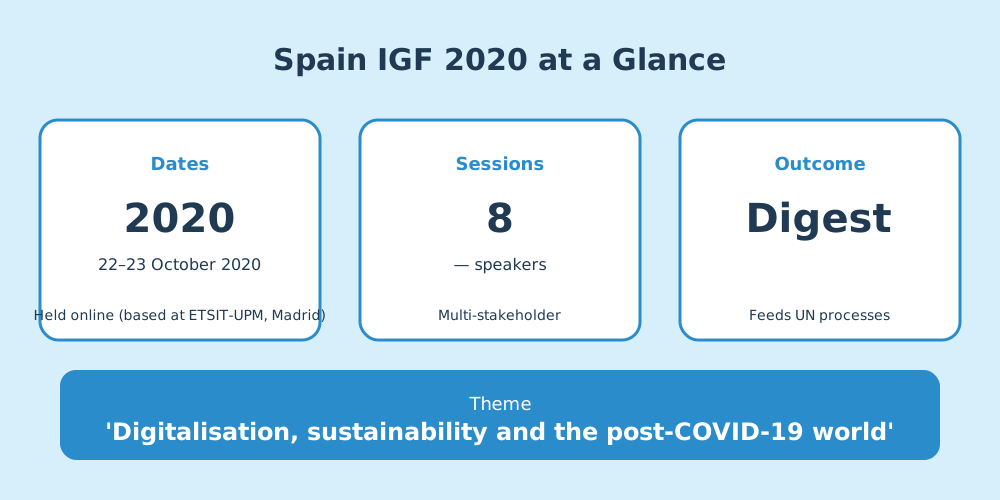
| Item | Detail |
|---|---|
| Official name | 10th Annual Meeting of the Internet Governance Forum Spain (IGF Spain 2020, online) |
| Edition | 10th Annual Meeting |
| Dates | 22–23 October 2020 |
| Venue | Held online (based at ETSIT-UPM, Madrid) |
| Theme | 'Digitalisation, sustainability and the post-COVID-19 world' |
| Sessions | 8 (Eight roundtables over two online days; an annual report was also published) |
| Speakers | Over 50 speakers |
| Host | Coordinated by Jorge Pérez; opened with State Secretaries Carme Artigas (digitalisation and AI) and Roberto Sánchez (telecommunications and digital infrastructure) |
(See the source list at the end of this article.)
Discussion Digest — from the Session Records
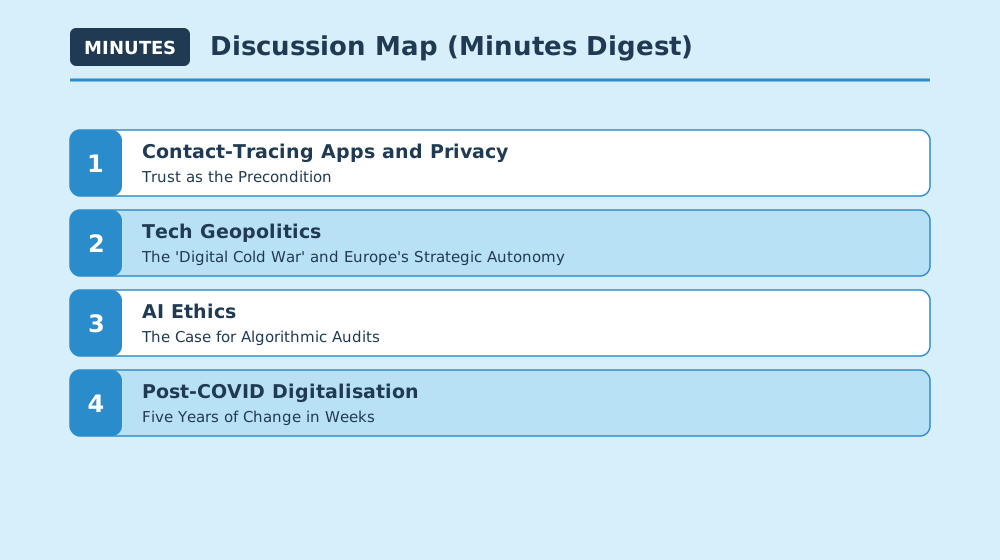
Key exchanges extracted from session records and transcripts.
1. Contact-Tracing Apps and Privacy — Trust as the Precondition
Sessions: Roundtable 'Technology in the fight against COVID-19'
- Tracing apps were framed as complements, not substitutes, for manual contact tracing, effective only with citizen uptake and links to testing and isolation capacity [1][2]
- Spain's Radar COVID choice of a decentralised, voluntary, Bluetooth-based design without geolocation was credited with protecting public trust [1][2]
- Guaranteed anonymity, limited data retention and transparent management were set as conditions of that trust [1][2]
2. Tech Geopolitics — The 'Digital Cold War' and Europe's Strategic Autonomy
Sessions: Roundtable 'The geopolitics of technology and communications'
- Panellists described a new 'digital cold war' as the US and China contest AI, biotech and semiconductors — and with them standards, regulation and infrastructure [1][2]
- With Europe barely present among global AI and cloud leaders, they prescribed better research-to-startup transfer and completing the digital single market [1][2]
- The principle that data belongs to the citizens who generate it was stressed as the basis of a digital-rights architecture [1][2]
3. AI Ethics — The Case for Algorithmic Audits
Sessions: Roundtable 'Ethics and artificial intelligence' (moderated by Pilar Bernat, Zona Movilidad)
- The session argued ethics must not be delegated to statistics but owned by the people who build the technology, tracing how social biases transfer into algorithms (per the session record; no speaker named) [1][2]
- Algorithmic audits — applying the precautionary principle as in medicine or food safety, assessing social, legal and ethical impact before deployment — emerged as the key prescription [1][2]
- Speakers warned of a 'space of impunity' where unregulated algorithms already shape decisions on benefits, risk scores and employment [1][2]
4. Post-COVID Digitalisation — Five Years of Change in Weeks
Sessions: Roundtable 'The Internet's role in the post-COVID world' (moderated by Ignacio del Castillo, Expansión) and closing
- Teleworking, online education and digital government planned on five-year horizons were deployed in weeks, breaking cultural as well as technical resistance [1][2]
- Yet the crisis exposed chronic weaknesses — basic digital-skills gaps, under-digitalised SMEs and unequal connectivity — prompting calls for inclusion policies [1][2]
- Rather than returning to the 2019 model, Spain should use digitalisation to diversify its economy and build technological sovereignty, panellists argued [1][2]
Three-Minute Short Talk — Your Questions Answered
Q. What did the meeting decide?
A. Nothing binding — but in the middle of the pandemic it audited the full crisis-digital agenda, from tracing apps to the EU data strategy, and published an annual report.
Q. What was the most contentious topic?
A. AI ethics: the principle that ethics must not be outsourced to statistics, set against the reality of unregulated algorithms already deciding benefits and jobs.
Q. Why does it matter?
A. The decentralised, voluntary tracing-app design endorsed here was the same choice made across democracies, and the exposed gaps in digital government drove reform agendas worldwide.
What Is Spain IGF? (for first-time readers)
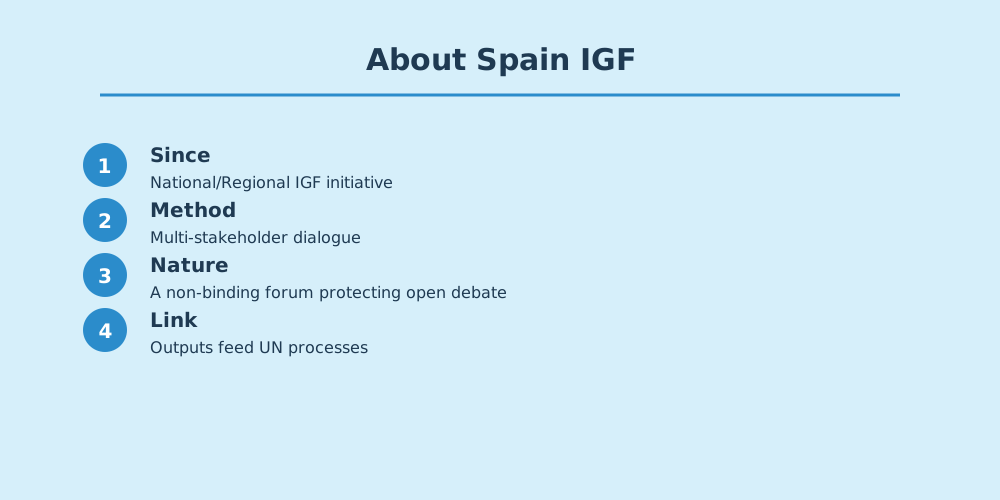
Spain IGF is a National or Regional IGF Initiative (NRI), aligning local internet governance discussion with global IGF principles.
Why It Matters to You
What was discussed here becomes the baseline for national digital policy, platform rules and AI regulation worldwide within a few years. The principles confirmed at the 2020 meeting are the foundation of the "next rules" for the phones, social platforms and AI services you use every day.
Sources & References
- IGF Spain 2020 – Digitalización, Sostenibilidad, y mundo post COVID-19 — igfspain.org (accessed 2026-07-22)
- Conclusiones del 10º Foro de la Gobernanza de Internet en España(セッション別結論) — igfspain.org (accessed 2026-07-22)
- Programa Jornadas IGF Spain 22-23 de octubre 2020(プログラムPDF) — igfspain.org (accessed 2026-07-22)
- Historia de los 10 años del Foro de Gobernanza de Internet Spain — IGF Spain(10周年史, jornadasigfspain.es) (accessed 2026-07-22)
Quotes are translated or condensed from the records listed above. Bracketed numbers [n] refer to the source list.
Related links
- IGF official (NRI list): https://www.intgovforum.org/en/content/national-and-regional-igf-initiatives
- Japan IGF: https://japanigf.jp/
- Yuki Nakazawa's blog: https://nkzw.jp/category/igf/
更新履歴
第1稿投稿 2026年7月10日 14時03分(記事コンテンツアップ)
— 中澤祐樹