


The 3-Line Summary
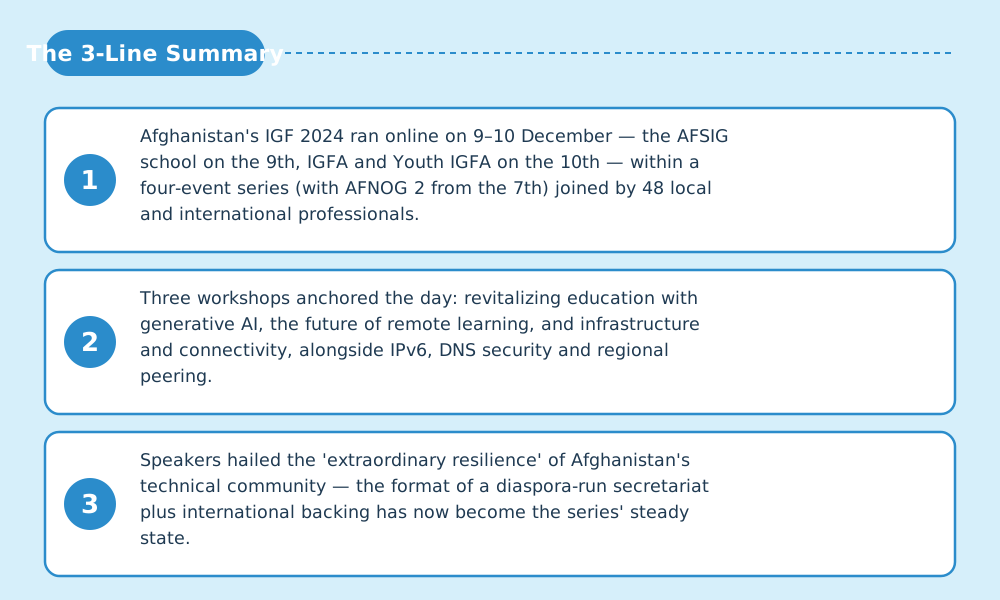
- Afghanistan's IGF 2024 ran online on 9–10 December — the AFSIG school on the 9th, IGFA and Youth IGFA on the 10th — within a four-event series (with AFNOG 2 from the 7th) joined by 48 local and international professionals.
- Three workshops anchored the day: revitalizing education with generative AI, the future of remote learning, and infrastructure and connectivity, alongside IPv6, DNS security and regional peering.
- Speakers hailed the 'extraordinary resilience' of Afghanistan's technical community — the format of a diaspora-run secretariat plus international backing has now become the series' steady state.
Welcome — this is the Japan IGF Support Organization. This in-depth report on IGFA 2024 — Afghanistan Internet Governance Forum 2024 (online) draws on official outputs, session records and on-site reporting. In a hurry? The three lines above and the diagrams carry the gist.
Conference at a Glance (from official records)
| Item | Detail |
|---|---|
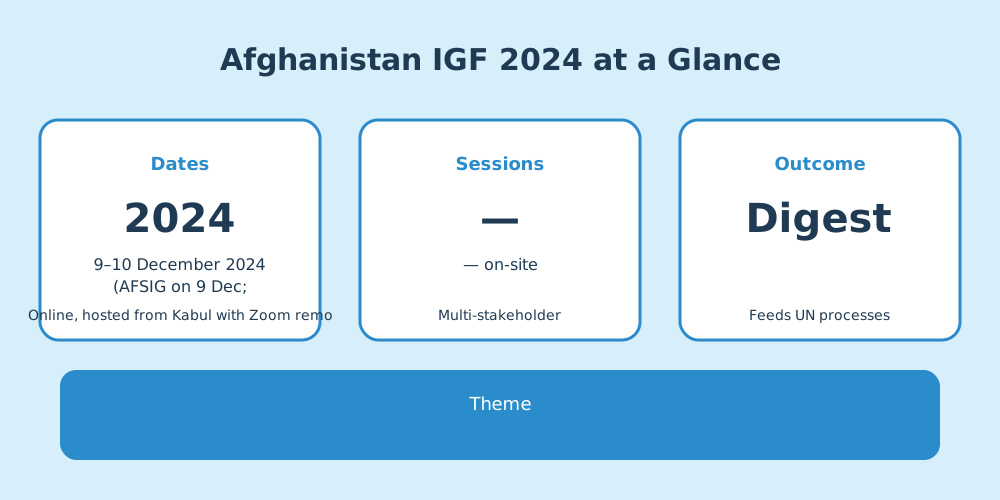
| Official name | IGFA 2024 — Afghanistan Internet Governance Forum 2024 (online) |
| Dates | 9–10 December 2024 (AFSIG on 9 Dec; IGFA and Youth IGFA on 10 Dec; the full co-located series incl. AFNOG 2 ran 7–10 Dec) |
| Venue | Online, hosted from Kabul with Zoom remote participation |
| Theme | Regional governance themes |
| Participants | 48 local and international professionals across the four co-located events (per APNIC) |
| Host | Run by Internet Afghanistan Inc., supported by the APNIC Foundation, ICANN and the UN IGF Secretariat, with backing from DotAsia and ISOC |
(See the source list at the end of this article.)
Discussion Digest — from the Session Records
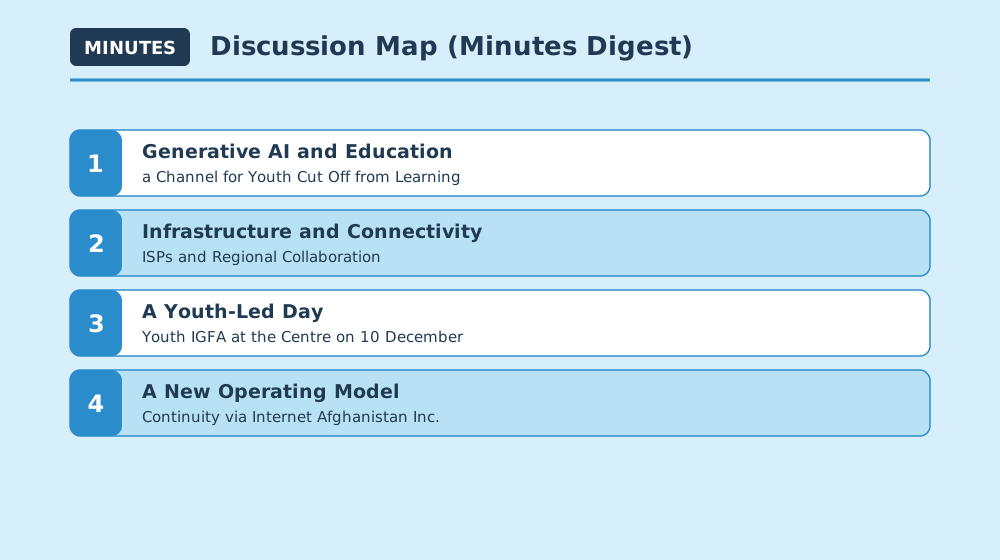
Key exchanges extracted from session records and transcripts.
1. Generative AI and Education — a Channel for Youth Cut Off from Learning
Sessions: Workshop 1: 'Revolutionizing Education in Afghanistan: Empowering Youth with Generative AI' (10 December, 11:00 AFT)
- With formal education access constrained, the workshop tackled AI-assisted learning, literacy building and adoption challenges head-on [3]
- Workshop 2, 'The Future of Remote Learning in Afghanistan', then examined digital-education strategies and their dependence on connectivity [3]
2. Infrastructure and Connectivity — ISPs and Regional Collaboration
Sessions: Workshop 3: 'Infrastructure and Connectivity' (10 December, 15:15 AFT) and AFNOG 2 sessions
- APNIC Foundation CEO Raj Singh flagged the fundamental problem of limited Internet access [2][3]
- AFNOG 2 covered DNS security, routing and regional peering, with Md. Zobair Khan on the regional traffic-exchange panel; Omar Ansari's closing remarks pressed for institutionalizing AFNOG [2][3]
- APNIC's Jia Rong Low, in welcome remarks, acknowledged Afghanistan's 'extraordinary resilience' and urged continued participation in regional collaboration [2][3]
3. A Youth-Led Day — Youth IGFA at the Centre on 10 December
Sessions: Youth IGF main session: 'Empowering the Youth in shaping the future of the internet' (10 December, 9:30 AFT)
- The day opened with the Youth IGF main session, covering cybersecurity, regional youth involvement and the ICANN Fellowship Program [1][3]
- Practitioners including the UN IGF Secretariat's Anja Gengo, DotAsia CEO Edmon Chung and APNIC's Joyce Chen addressed the youth audience [1][3]
- The series' remote, multilingual format again bridged young Afghans inside the country and in the diaspora [1][3]
4. A New Operating Model — Continuity via Internet Afghanistan Inc.
Sessions: Multiple sessions
- The event was run by the non-profit Internet Afghanistan Inc. with APNIC Foundation, ICANN and UN IGF Secretariat backing — cementing the 'diaspora-run, internationally backed' model that keeps the series alive [2][4]
- In closing, Omar Ansari framed closing the digital divide, strengthening cybersecurity and ensuring meaningful connectivity for underserved Afghan communities as a collective stakeholder responsibility [2][4]
Three-Minute Short Talk — Your Questions Answered
Q. Isn't 48 participants tiny?
A. Down from 80+ the year before — but that counts experts across four events. Sustaining any open dialogue under tightening constraints was itself the achievement, with UN, ICANN and APNIC practitioners carrying the programme.
Q. What was actually discussed?
A. Education above all: generative AI as a substitute channel for learning, the future of remote schooling, and the infrastructure to support both — plus IPv6, DNS security and regional peering.
Q. Why should I care?
A. It is a live experiment in whether international institutions can keep a country's Internet community functioning from outside its borders — a question with implications far beyond Afghanistan.
What Is Afghanistan IGF? (for first-time readers)
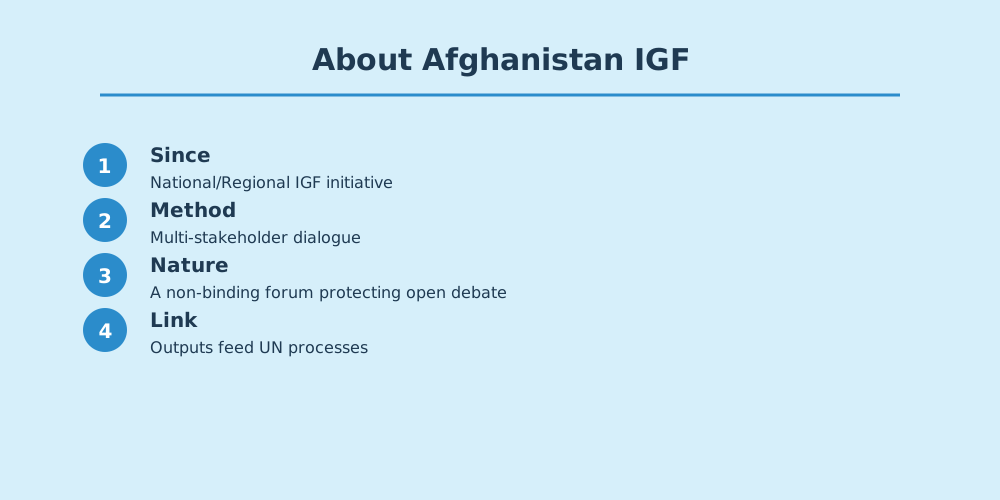
Afghanistan IGF is a National or Regional IGF Initiative (NRI), aligning local internet governance discussion with global IGF principles.
Why It Matters to You
What was discussed here becomes the baseline for national digital policy, platform rules and AI regulation worldwide within a few years. The principles confirmed at the 2024 meeting are the foundation of the "next rules" for the phones, social platforms and AI services you use every day.
Sources & References
- WEBCAST DEC 9-10 – AFSIG 2024 / IGFA 2024 / yIGFA 2024(中継告知・全アジェンダ) — ISOC LIVE (accessed 2026-07-23)
- Event Wrap: AFNOG 2, AFSIG 2024, IGFA 2024, and yIGFA 2024 — APNIC Blog (accessed 2026-07-23)
- Agenda for the Afghanistan Internet Governance Forum, AFyIGF 2024 — APNIC Foundation (accessed 2026-07-23)
- NRIs Meetings in 2023-2024(「Afghanistan IGF 5-8 December 2024, hosted online from Kabul」) — UN IGF Secretariat (accessed 2026-07-23)
Quotes are translated or condensed from the records listed above. Bracketed numbers [n] refer to the source list.
Related links
- IGF official (NRI list): https://www.intgovforum.org/en/content/national-and-regional-igf-initiatives
- Japan IGF: https://japanigf.jp/
- Yuki Nakazawa's blog: https://nkzw.jp/category/igf/
更新履歴
第1稿投稿 2026年8月8日 10時02分(記事コンテンツアップ)
— 中澤祐樹

