


The 3-Line Summary
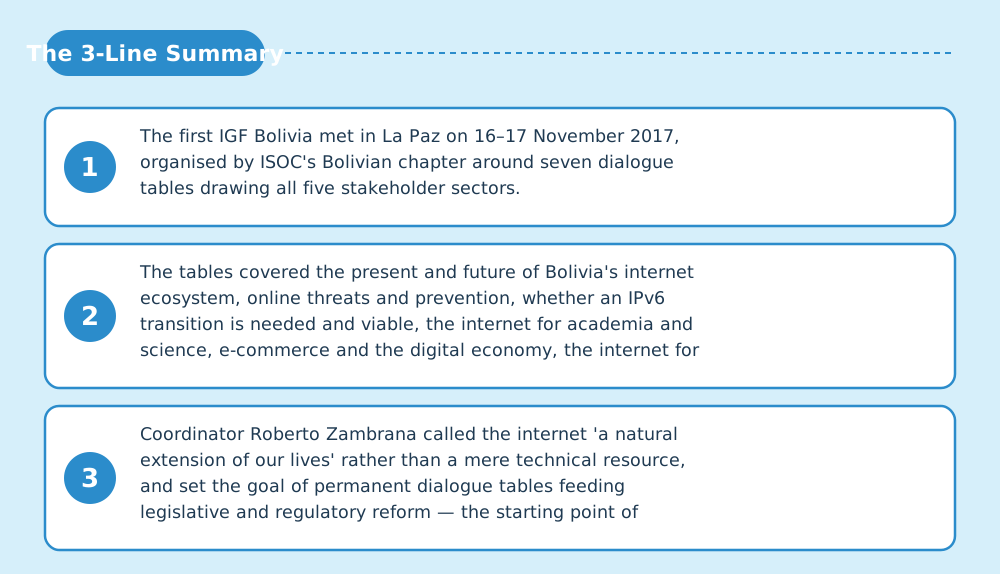
- The first IGF Bolivia met in La Paz on 16–17 November 2017, organised by ISOC's Bolivian chapter around seven dialogue tables drawing all five stakeholder sectors.
- The tables covered the present and future of Bolivia's internet ecosystem, online threats and prevention, whether an IPv6 transition is needed and viable, the internet for academia and science, e-commerce and the digital economy, the internet for exercising rights, and information security.
- Coordinator Roberto Zambrana called the internet 'a natural extension of our lives' rather than a mere technical resource, and set the goal of permanent dialogue tables feeding legislative and regulatory reform — the starting point of Bolivian multistakeholder dialogue.
Welcome — this is the Japan IGF Support Organization. This in-depth report on IGF Bolivia 2017 (First Internet Governance Forum of Bolivia) draws on official outputs, session records and on-site reporting. In a hurry? The three lines above and the diagrams carry the gist.
📍 No surviving source names the venue building
Conference at a Glance (from official records)
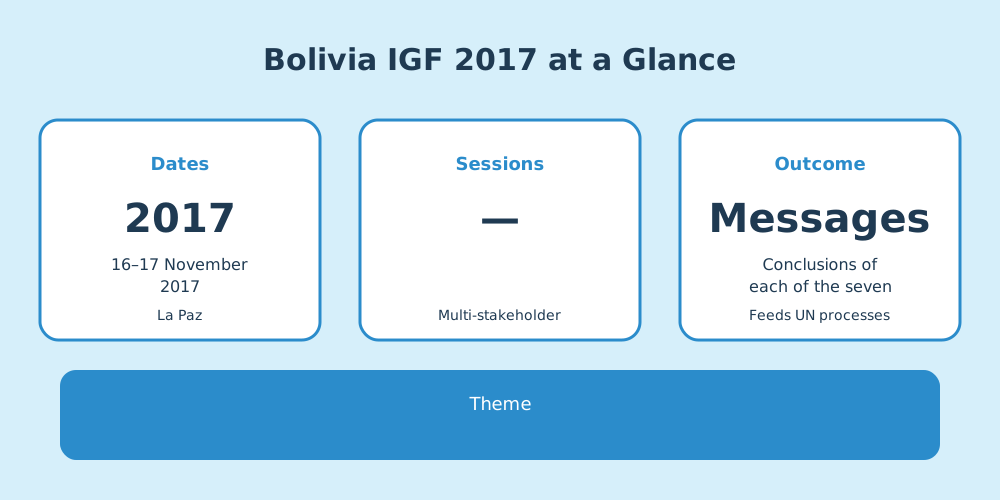
| Item | Detail |
|---|---|
| Official name | IGF Bolivia 2017 (First Internet Governance Forum of Bolivia) |
| Dates | 16–17 November 2017 (Resolves the catalogue's 'city/date unconfirmed': the official registration page (Wayback, 19 Nov 2017) asks about lunches on Thursday 16 and Friday 17 November, and the trade outlet TeleinfoPRESS's post-event article states it was held 16–17 November in the city of La Paz) |
| Venue | La Paz, Bolivia |
| Theme | Regional governance themes |
| Format | Seven dialogue tables (mesas de diálogo) spanning the five stakeholder sectors — government, private sector, civil society, academia and the technical community |
| Host | Organised by the Internet Society's Bolivian chapter (ISOC Bolivia); Roberto Zambrana is the coordinator of record with the UN |
| Outcome | Conclusions of each of the seven tables were being systematised as rapporteur reports for publication with the videos on igfbolivia.bo and isoc.bo; installing permanent dialogue tables was named as the next goal |
(See the source list at the end of this article.)
Discussion Digest — from the Session Records
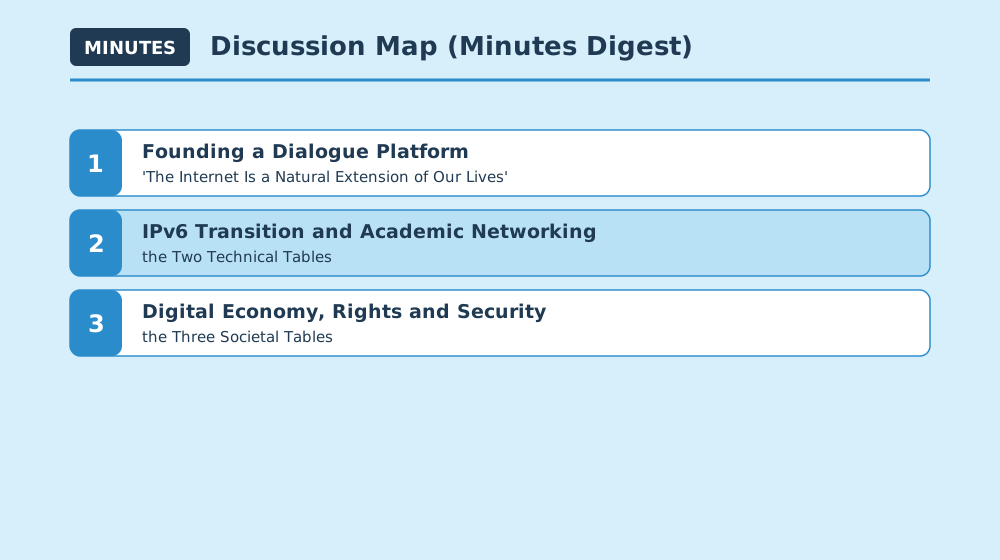
Key exchanges extracted from session records and transcripts.
1. Founding a Dialogue Platform — 'The Internet Is a Natural Extension of Our Lives'
Sessions: The inaugural forum overall and table 1 on the present and future of Bolivia's internet ecosystem
"The recent IGF Bolivia 2017, and those to be organised in the coming years, will establish an effective platform for articulation… the internet is no longer a mere technological resource, a new communication channel or an information source, but has become a natural extension of our lives (exclusive interview with TeleinfoPRESS, translated from Spanish)"
— Roberto Zambrana (ISOC Bolivia chapter) [1]
- Zambrana hoped government would use the dialogue's outputs for legislative and regulatory adjustments, calling permanent dialogue tables ISOC Bolivia's aspiration [1]
- Participation was defined broadly: universities, activist collectives, government at every level, telecom operators and ISPs, and NGOs — anyone representing a sector of the country [1]
2. IPv6 Transition and Academic Networking — the Two Technical Tables
Sessions: Tables '¿Es necesaria y viable una transición hacia IPv6?' and 'Internet para el sector académico y científico del país'
- A dedicated table asked whether an IPv6 transition was necessary and viable — Bolivia's first multistakeholder treatment of address-resource policy [1]
- The academic-and-scientific-internet table began a thread that led, by the 2021 edition, to debate on a CSIRT for the Bolivian academic network [1]
3. Digital Economy, Rights and Security — the Three Societal Tables
Sessions: Tables on e-commerce and the digital economy, the internet for the full exercise of rights, and information security and cybersecurity
- Tables on e-commerce, the internet for exercising rights, information security and online threats tied the forum directly to daily digital life [1][2]
- Each table's conclusions were to be systematised as rapporteur reports and published with the full videos on the official sites [1][2]
Three-Minute Short Talk — Your Questions Answered
Q. What was this meeting?
A. Bolivia's first national IGF: two days in La Paz (16–17 November 2017), organised by ISOC's Bolivian chapter, with participants from five sectors split across seven dialogue tables.
Q. What did it decide?
A. Nothing binding, but each table's conclusions were compiled as rapporteur reports intended as input for legislative and regulatory reform, with permanent dialogue tables as the next goal.
Q. Why should I care?
A. It is a clean example of a single ISOC chapter bootstrapping a country's multistakeholder dialogue from scratch.
What Is Bolivia IGF? (for first-time readers)
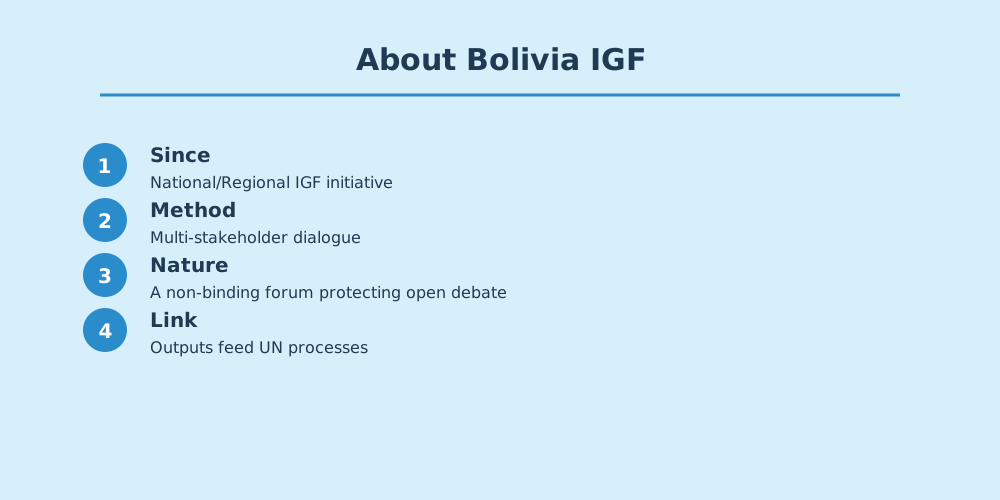
Bolivia IGF is a National or Regional IGF Initiative (NRI), aligning local internet governance discussion with global IGF principles.
Why It Matters to You
What was discussed here becomes the baseline for national digital policy, platform rules and AI regulation worldwide within a few years. The principles confirmed at the 2017 meeting are the foundation of the "next rules" for the phones, social platforms and AI services you use every day.
Sources & References
- 1ER FORO DE GOBERNANZA DE INTERNET (IGF)(サンブラナ氏独占インタビューを含む事後報告記事) — TeleinfoPRESS (accessed 2026-07-23)
- Registro – IGF Bolivia 2017(公式参加登録ページ。11月16・17日の2日間開催と5セクター登録を確認、Wayback) — IGF Bolivia(igfbolivia.bo) (accessed 2026-07-23)
- IGF Bolivia 2017 – Sitio oficial del Foro de Gobernanza de Internet en Bolivia(当時の公式サイトトップ、Wayback 2017年11月17日) — IGF Bolivia(igfbolivia.bo) (accessed 2026-07-23)
- Latin American and Caribbean Regional Group (GRULAC) — Bolivia IGF(「organized in 2017」・コーディネーター記録) — intgovforum.org (accessed 2026-07-23)
- IGF Bolivia 公式サイト(2023年再建版)Histórico: IGF Bolivia 2017(Wayback 2025年1月取得) — IGF Bolivia(igfbolivia.bo) (accessed 2026-07-23)
Quotes are translated or condensed from the records listed above. Bracketed numbers [n] refer to the source list.
Related links
- IGF official (NRI list): https://www.intgovforum.org/en/content/national-and-regional-igf-initiatives
- Japan IGF: https://japanigf.jp/
- Yuki Nakazawa's blog: https://nkzw.jp/category/igf/
更新履歴
第1稿投稿 2026年8月12日 15時30分(記事コンテンツアップ)
— 中澤祐樹

