


The 3-Line Summary
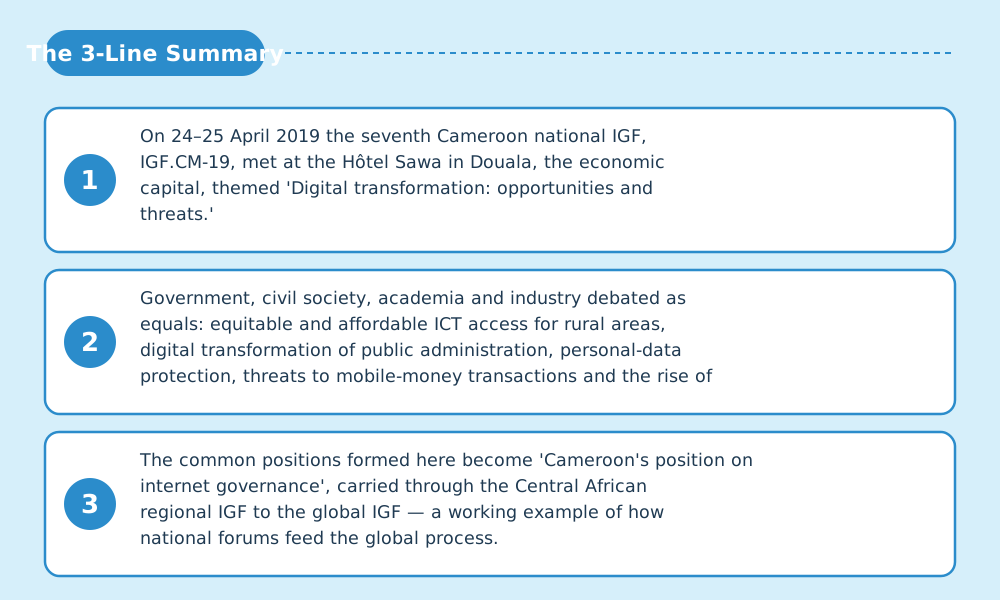
- On 24–25 April 2019 the seventh Cameroon national IGF, IGF.CM-19, met at the Hôtel Sawa in Douala, the economic capital, themed 'Digital transformation: opportunities and threats.'
- Government, civil society, academia and industry debated as equals: equitable and affordable ICT access for rural areas, digital transformation of public administration, personal-data protection, threats to mobile-money transactions and the rise of hate speech.
- The common positions formed here become 'Cameroon's position on internet governance', carried through the Central African regional IGF to the global IGF — a working example of how national forums feed the global process.
Welcome — this is the Japan IGF Support Organization. This in-depth report on Forum National sur la Gouvernance de l'Internet au Cameroun (IGF.CM-19) — seventh edition draws on official outputs, session records and on-site reporting. In a hurry? The three lines above and the diagrams carry the gist.
Conference at a Glance (from official records)
| Item | Detail |
|---|---|
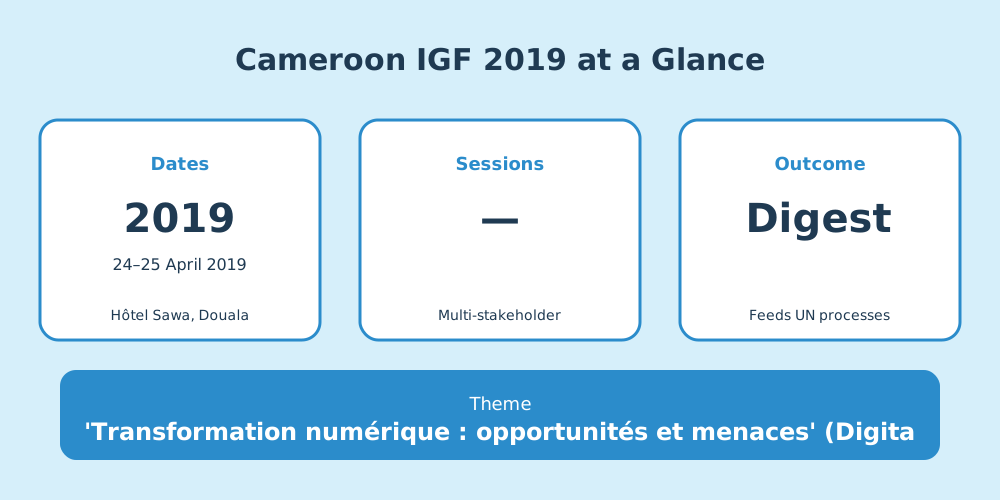
| Official name | Forum National sur la Gouvernance de l'Internet au Cameroun (IGF.CM-19) — seventh edition |
| Dates | 24–25 April 2019 |
| Venue | Hôtel Sawa, Douala |
| Theme | 'Transformation numérique : opportunités et menaces' (Digital transformation: opportunities and threats) |
| Host | ANTIC (Agence Nationale des Technologies de l'Information et de la Communication) |
(See the source list at the end of this article.)
Discussion Digest — from the Session Records
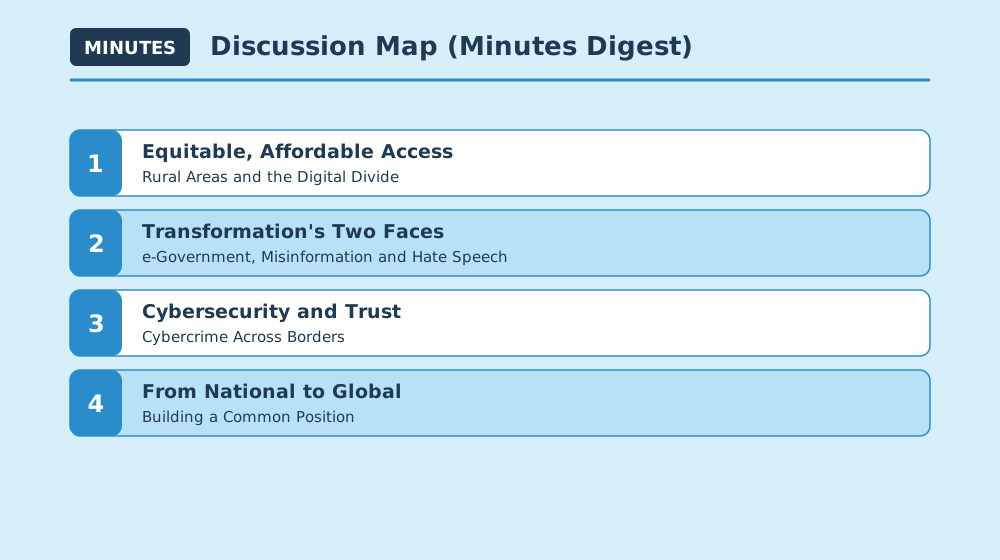
Key exchanges extracted from session records and transcripts.
1. Equitable, Affordable Access — Rural Areas and the Digital Divide
Sessions: Access sessions (24–25 April)
"Achieving the public service of the Internet requires an equitable and affordable access to ICT infrastructure for all"
— Prof. Ebot Ebot Enaw (Director-General, ANTIC) — translated from the English report [2]
- Extending ICT infrastructure to rural and underserved populations led the agenda, including the deployment of multi-purpose community telecentres to narrow the digital divide [2]
- ANTIC's post-event report was issued in English with access equity as its headline — sharing outcomes in both official languages [2]
2. Transformation's Two Faces — e-Government, Misinformation and Hate Speech
Sessions: Theme sessions (24–25 April)
- The official post-event article records government, civil society, academia and industry debating on an equal footing: strategies to improve ICT access, misinformation, and the transformational dimension of the internet [1]
- Digital transformation of Cameroon's public administration, personal-data protection and the rise of hate speech anchored the discussions [1]
- Amid the ongoing anglophone crisis, putting hate speech on the agenda brought the country's social situation into internet-governance terms [1]
3. Cybersecurity and Trust — Cybercrime Across Borders
Sessions: Security sessions
- Internet security was framed as central because doing business online requires user trust in ICTs [1][2]
- With cybercrime's cross-border nature complicating government responses, the forum called for exploring national and international cooperation on best practice [1][2]
- Threats to mobile-money transactions were a concrete concern — the flip side of advancing financial inclusion [1][2]
4. From National to Global — Building a Common Position
Sessions: The forum's institutional design (per the official site)
- The official site defines IGF.CM as an annual multistakeholder public policy dialogue bringing all of Cameroon's ICT actors under one roof to debate as equals [1][3]
- It states that the common position formed each year becomes 'Cameroon's position on internet governance', presented to sub-regional and regional IGFs ahead of the global IGF [1][3]
- A documented example of the standard route by which a national IGF (NRI) feeds the global IGF ecosystem [1][3]
Three-Minute Short Talk — Your Questions Answered
Q. What did the meeting decide?
A. Nothing binding — but the common views formed here become Cameroon's official position, carried via the regional IGF to the global IGF. It shows how national dialogue reaches the world stage.
Q. What was the main issue?
A. The 'threats' half of digital transformation: crime targeting mobile money, misinformation, hate speech — how to face the dangers that grow alongside convenience.
Q. Why should I care?
A. Rural access gaps, government digitalisation and data protection are universal problems, and the pipeline from national debate to international forums is a model any country's IGF community uses.
What Is Cameroon IGF? (for first-time readers)
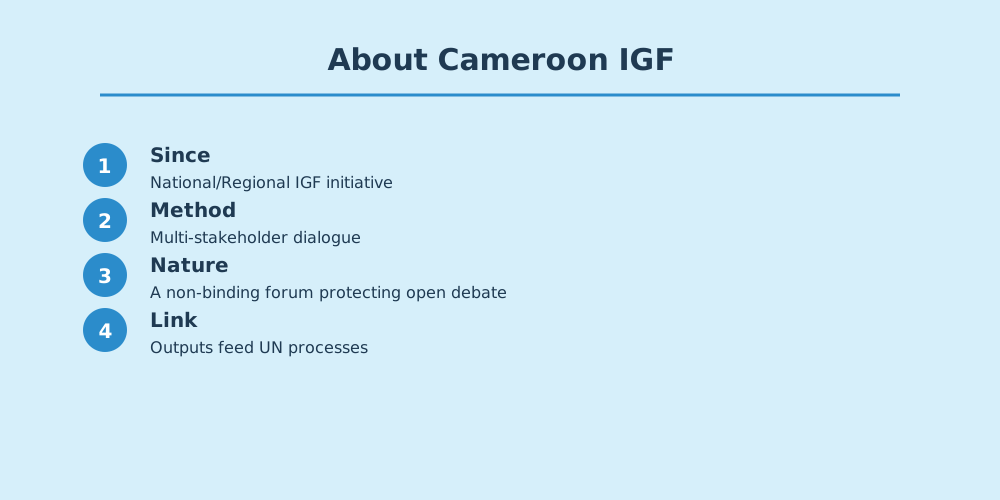
Cameroon IGF is a National or Regional IGF Initiative (NRI), aligning local internet governance discussion with global IGF principles.
Why It Matters to You
What was discussed here becomes the baseline for national digital policy, platform rules and AI regulation worldwide within a few years. The principles confirmed at the 2019 meeting are the foundation of the "next rules" for the phones, social platforms and AI services you use every day.
Sources & References
- Septième Forum National sur la Gouvernance de l'Internet(事後記事:討議内容と制度設計) — IGF.CM公式サイト(ANTIC)/Wayback Machine保存 (accessed 2026-07-23)
- IGF.CM-19: equitable and affordable access to ICT infrastructure under focus(ANTIC事後報告・長官発言) — ANTIC(国家情報通信技術庁) (accessed 2026-07-23)
- Septième Edition du Forum National sur la Gouvernance de l'Internet(開催案内:4月24〜25日・サワ・ホテル) — ANTIC(国家情報通信技術庁) (accessed 2026-07-23)
- Forum National sur la Gouvernance de l'Internet — 系列全回次の記録(第7回=2019年ドゥアラ・Hôtel Sawa) — Osidimbea(カメルーン組織史事典) (accessed 2026-07-23)
Quotes are translated or condensed from the records listed above. Bracketed numbers [n] refer to the source list.
Related links
- IGF official (NRI list): https://www.intgovforum.org/en/content/national-and-regional-igf-initiatives
- Japan IGF: https://japanigf.jp/
- Yuki Nakazawa's blog: https://nkzw.jp/category/igf/
更新履歴
第1稿投稿 2026年8月6日 10時52分(記事コンテンツアップ)
— 中澤祐樹

