


The 3-Line Summary
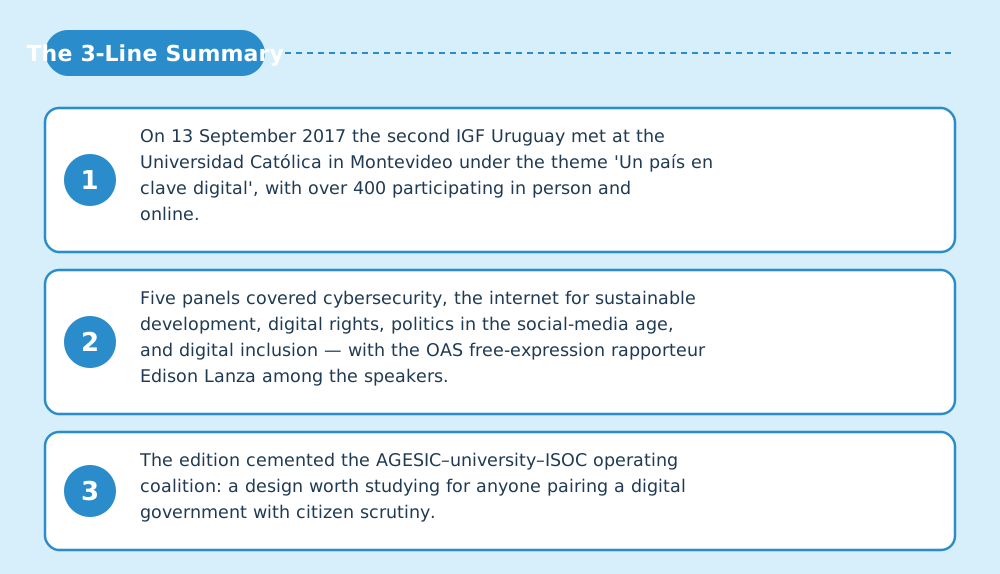
- On 13 September 2017 the second IGF Uruguay met at the Universidad Católica in Montevideo under the theme 'Un país en clave digital', with over 400 participating in person and online.
- Five panels covered cybersecurity, the internet for sustainable development, digital rights, politics in the social-media age, and digital inclusion — with the OAS free-expression rapporteur Edison Lanza among the speakers.
- The edition cemented the AGESIC–university–ISOC operating coalition: a design worth studying for anyone pairing a digital government with citizen scrutiny.
Welcome — this is the Japan IGF Support Organization. This in-depth report on Second IGF Uruguay — 'Un país en clave digital' (A Country in a Digital Key) draws on official outputs, session records and on-site reporting. In a hurry? The three lines above and the diagrams carry the gist.
Conference at a Glance (from official records)
| Item | Detail |
|---|---|
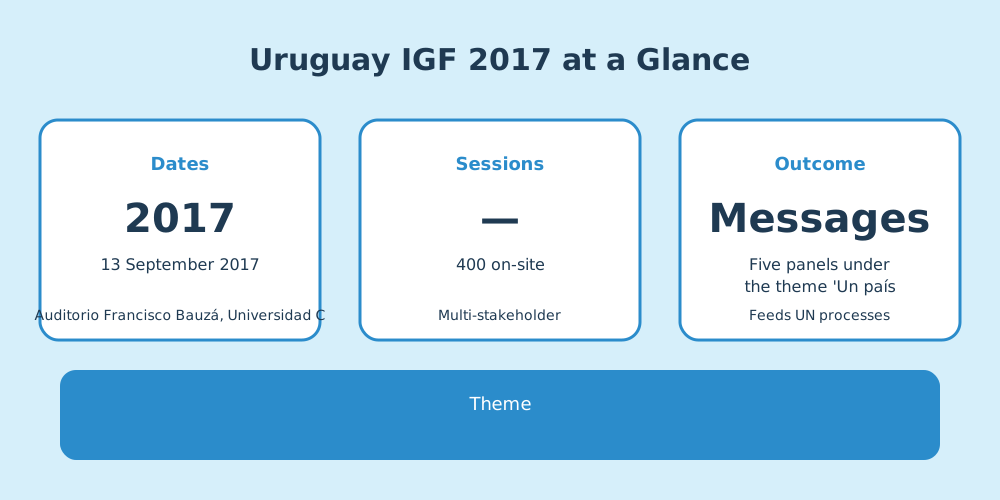
| Official name | Second IGF Uruguay — 'Un país en clave digital' (A Country in a Digital Key) |
| Dates | 13 September 2017 |
| Venue | Auditorio Francisco Bauzá, Universidad Católica del Uruguay, Montevideo |
| Theme | Regional governance themes |
| Participants | 400 (Press coverage reports 'over 400' combining in-person participants and remote followers) |
| Host | Co-organised by AGESIC, the Internet Society, Observatic (UdelaR), Universidad Católica and UTEC, with ASIET support; funded by IGFSA and ISOC's Beyond the Net programme |
| Outcome | Five panels under the theme 'Un país en clave digital', consolidating the public-private-academic organising coalition |
(See the source list at the end of this article.)
Discussion Digest — from the Session Records
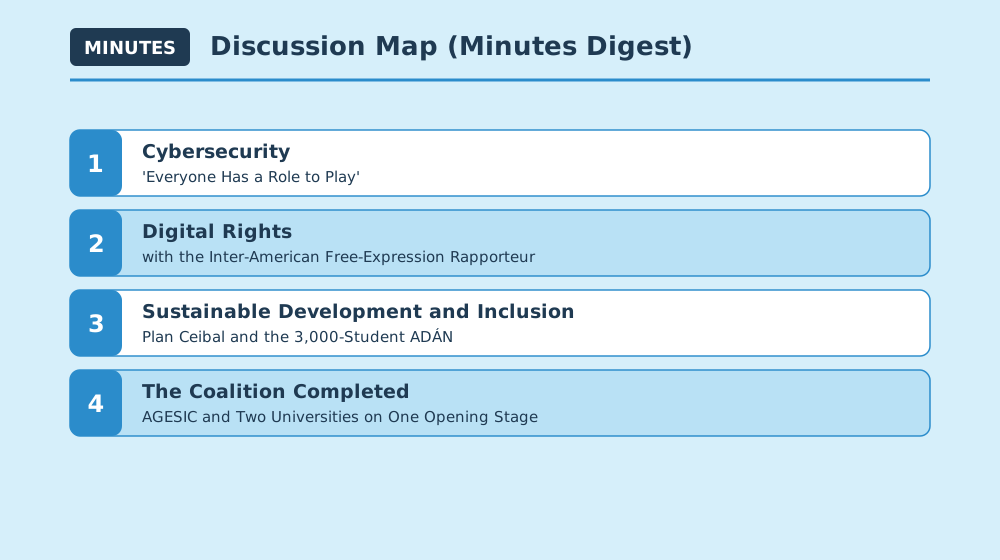
Key exchanges extracted from session records and transcripts.
1. Cybersecurity — 'Everyone Has a Role to Play'
Sessions: Cybersecurity panel (Gabriel Lima, Interior Ministry; Santiago Paz, CERTuy; and others)
- The Interior Ministry and national CERT (CERTuy) laid out threat-response capabilities and the public-private division of labour [1][2]
- Coverage records a shared sense that 'we must all play a role regarding internet security' [1][2]
- Defending the e-government stack gave the debate the urgency peculiar to a digital-state pioneer [1][2]
2. Digital Rights — with the Inter-American Free-Expression Rapporteur
Sessions: Digital rights panel (Edison Lanza, IACHR; Patricia Díaz, Creative Commons Uruguay; and others)
- Edison Lanza, the IACHR's Uruguayan special rapporteur for freedom of expression, framed the privacy–expression balance in regional jurisprudence [1]
- Patricia Díaz of Creative Commons Uruguay pressed the case for modernising copyright [1]
- The privacy-versus-expression relationship is recorded across coverage as a central theme [1]
3. Sustainable Development and Inclusion — Plan Ceibal and the 3,000-Student ADÁN
Sessions: Panels on the internet for sustainable human development, and digital inclusion and accessibility
- Telefónica's Mercedes Aramendia cast access as a precondition of development; Plan Ceibal's Fiorella Haim showed the education-inclusion record [1][2]
- Concrete tools — library-based access and the ADÁN learning platform with 3,000+ students — addressed the remaining divides [1][2]
- A politics-and-social-media panel examined how platforms had altered collective action [1][2]
4. The Coalition Completed — AGESIC and Two Universities on One Opening Stage
Sessions: Opening session (José Clastornik, AGESIC; Sebastián Bellagamba, ISOC; José Pedro Derrégibus, Telecoms Chamber; Universidad Católica representatives)
- AGESIC director José Clastornik, ISOC's Sebastián Bellagamba, the Telecoms Chamber president and the host university opened the day together [2][1]
- Operations combined AGESIC, ISOC, two universities and UTEC, funded through IGFSA and ISOC's Beyond the Net — the standard international recipe [2][1]
- Moving from the public UdelaR (2016) to the private Universidad Católica began a rotating-venue practice [2][1]
Three-Minute Short Talk — Your Questions Answered
Q. What did the theme mean?
A. 'A country in a digital key' asked how a state already ahead in e-government should run itself digitally — pride and self-scrutiny in one title.
Q. Who was the headline speaker?
A. Edison Lanza, the OAS system's special rapporteur for freedom of expression — an international human-rights mechanism speaking at his own country's national IGF.
Q. Why should I care?
A. A digital-government agency co-organising on equal terms with civil society and universities is a concrete model for any country with a digital ministry.
What Is Uruguay IGF? (for first-time readers)
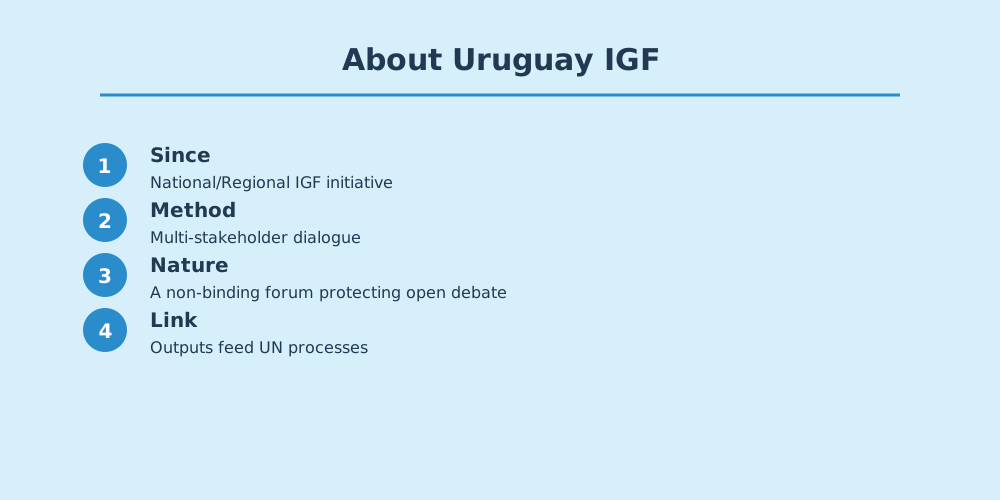
Uruguay IGF is a National or Regional IGF Initiative (NRI), aligning local internet governance discussion with global IGF principles.
Why It Matters to You
What was discussed here becomes the baseline for national digital policy, platform rules and AI regulation worldwide within a few years. The principles confirmed at the 2017 meeting are the foundation of the "next rules" for the phones, social platforms and AI services you use every day.
Sources & References
- Uruguay celebró su segunda edición del foro local sobre gobernanza de Internet(詳細報道: 400人超・5パネル・登壇者) — jentel.mx (accessed 2026-07-23)
- Segundo Foro de Gobernanza de Internet en Uruguay(主催団体の一角・通信企業会議所の事後報告) — Cámara de Telecomunicaciones del Uruguay(Wayback Machineアーカイブ) (accessed 2026-07-23)
- Uruguay national IGF(NRI公式記録) — UN IGF Secretariat (accessed 2026-07-23)
- Iniciativas de gobernanza — 国別イニシアチブ一覧 — lacigf.org (accessed 2026-07-23)
Quotes are translated or condensed from the records listed above. Bracketed numbers [n] refer to the source list.
Related links
- IGF official (NRI list): https://www.intgovforum.org/en/content/national-and-regional-igf-initiatives
- Japan IGF: https://japanigf.jp/
- Yuki Nakazawa's blog: https://nkzw.jp/category/igf/
更新履歴
第1稿投稿 2026年8月13日 9時03分(記事コンテンツアップ)
— 中澤祐樹

