


The 3-Line Summary
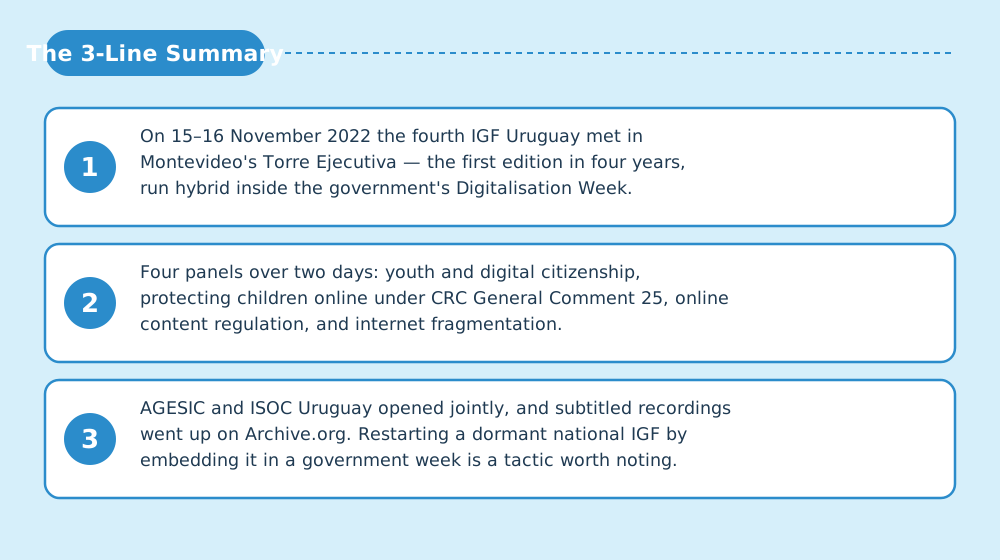
- On 15–16 November 2022 the fourth IGF Uruguay met in Montevideo's Torre Ejecutiva — the first edition in four years, run hybrid inside the government's Digitalisation Week.
- Four panels over two days: youth and digital citizenship, protecting children online under CRC General Comment 25, online content regulation, and internet fragmentation.
- AGESIC and ISOC Uruguay opened jointly, and subtitled recordings went up on Archive.org. Restarting a dormant national IGF by embedding it in a government week is a tactic worth noting.
Welcome — this is the Japan IGF Support Organization. This in-depth report on Fourth IGF Uruguay — Foro de Gobernanza de Internet Uruguay 2022 draws on official outputs, session records and on-site reporting. In a hurry? The three lines above and the diagrams carry the gist.
Conference at a Glance (from official records)
| Item | Detail |
|---|---|
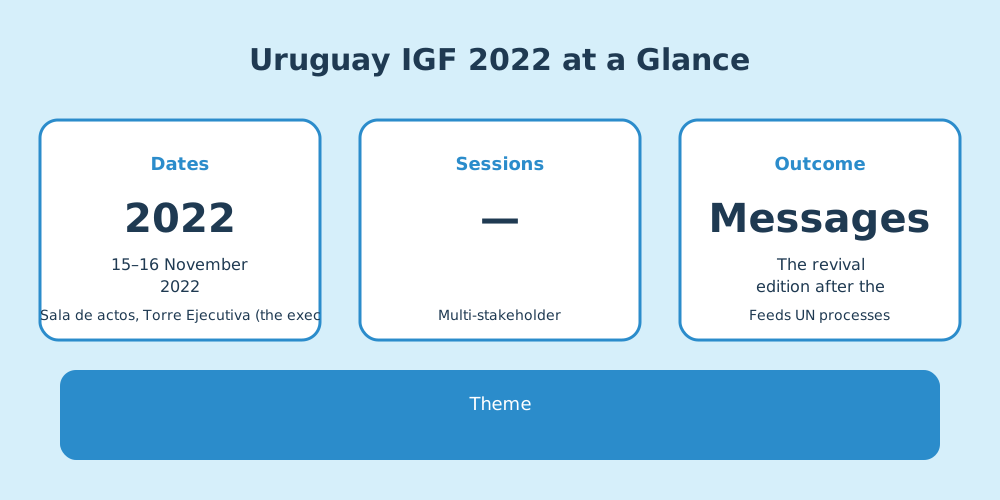
| Official name | Fourth IGF Uruguay — Foro de Gobernanza de Internet Uruguay 2022 |
| Dates | 15–16 November 2022 |
| Venue | Sala de actos, Torre Ejecutiva (the executive-branch tower), Montevideo; hybrid format |
| Theme | Regional governance themes |
| Host | Organised by AGESIC and the ISOC Uruguay chapter with LACNIC, ICANN and civil-society partners, within the government's 'Semana de la Digitalización' |
| Outcome | The revival edition after the 2019–2021 hiatus; session recordings were published on Archive.org with Spanish/English subtitles |
(See the source list at the end of this article.)
Discussion Digest — from the Session Records
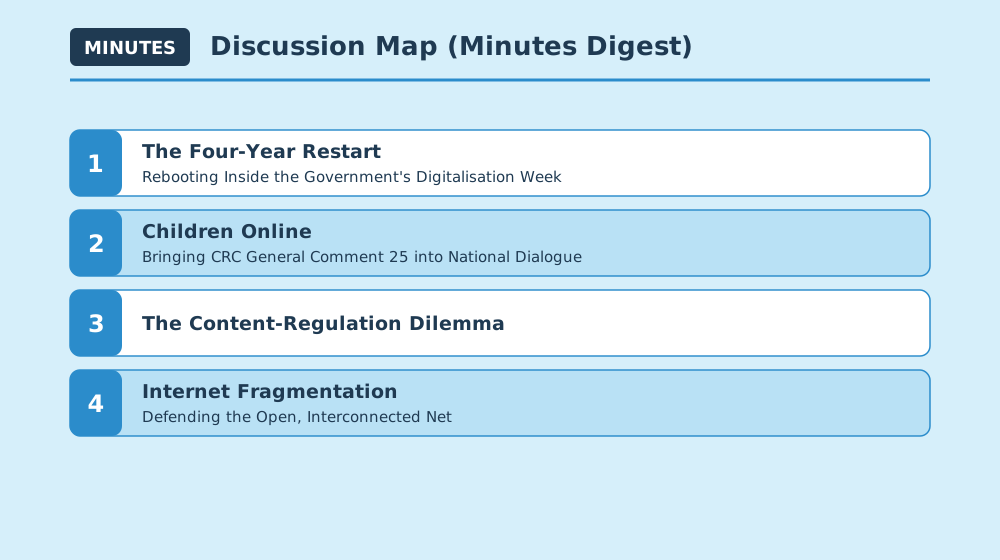
Key exchanges extracted from session records and transcripts.
1. The Four-Year Restart — Rebooting Inside the Government's Digitalisation Week
Sessions: Opening (15 Nov; Virginia Pardo, AGESIC, and Laura Margolis, ISOC Uruguay)
- Organisers billed it as 'the 4th edition' after 'years of the health emergency', officially acknowledging the 2019–2021 gap [1][2]
- Meeting in the executive tower and piggybacking on AGESIC's Digitalisation Week cut venue, publicity and mobilisation costs [1][2]
- AGESIC's Virginia Pardo and ISOC Uruguay's Laura Margolis opened jointly, embodying the public-civic partnership [1][2]
2. Children Online — Bringing CRC General Comment 25 into National Dialogue
Sessions: Panel on protecting children online (15 Nov, 11:40; Carola Kweksilber, Pablo de los Campos and others)
- The panel worked from CRC General Comment 25 (2021) on children's rights in the digital environment, balancing protection with participation [1][2]
- The morning youth panel addressed bringing digital citizenship to the most vulnerable young people, with Youth IGF-linked speakers [1][2]
- With Plan Ceibal in schools, Uruguay debates children online as operations, not abstraction [1][2]
3. The Content-Regulation Dilemma
Sessions: Panel 'Implications of online content regulation' (16 Nov, 2 pm; moderator Ernesto Majó; Raúl Echeberría, Gustavo Gómez and others)
- ALAI's Raúl Echeberría, Observacom's Gustavo Gómez and lawyer Guzmán Acosta y Lara debated regulatory design and its free-expression costs [1][2]
- The regional 'what, who and how' of platform regulation was grounded in Uruguay's own media-law debates [1][2]
- Industry, civil society and the bar were deliberately seated together to avoid a binary for/against framing [1][2]
4. Internet Fragmentation — Defending the Open, Interconnected Net
Sessions: Panel 'Internet fragmentation' (16 Nov, 3:30 pm; moderator Oscar Giudice; Christian O'Flaherty, Nicolás Antoniello and others)
- ISOC's Christian O'Flaherty and ICANN technologist Nicolás Antoniello mapped the technical and legislative threats to an 'open, interconnected and interoperable' internet [1][2][3]
- The 2022 context — sanctions, shutdown talk and splinternet fears after the invasion of Ukraine — entered the national dialogue through this panel [1][2][3]
- Recordings were preserved on Archive.org with Spanish/English subtitles after ISOC Live's multi-channel simulcast [1][2][3]
Three-Minute Short Talk — Your Questions Answered
Q. How did it restart after four years?
A. By embedding itself in AGESIC's Digitalisation Week — borrowing the government's venue, publicity and audience. A pragmatic reboot recipe for dormant national IGFs.
Q. What was discussed?
A. Youth digital citizenship, children online under CRC General Comment 25, content regulation, and internet fragmentation — 2022's global agenda in miniature.
Q. Why should I care?
A. Fragmentation is on every IGF's agenda now, and archiving subtitled recordings on Archive.org sets a standard for treating meeting records as public goods.
What Is Uruguay IGF? (for first-time readers)
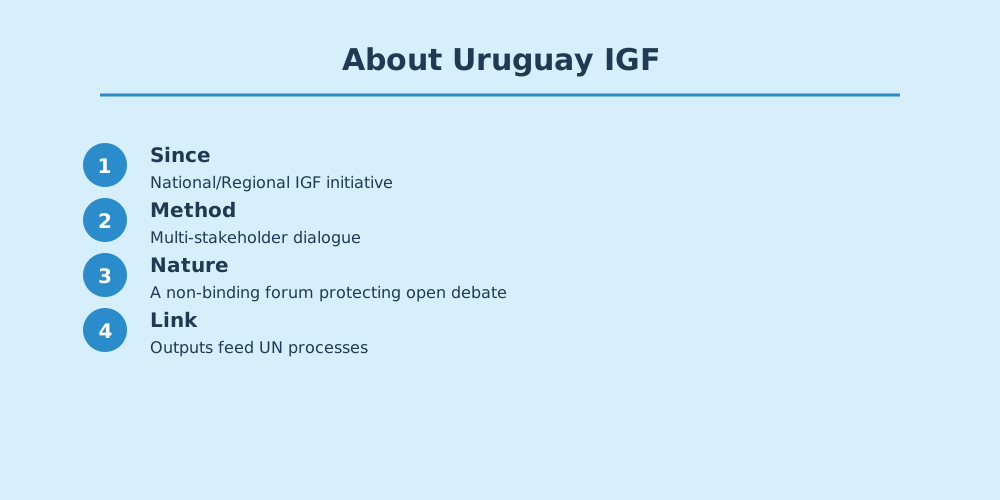
Uruguay IGF is a National or Regional IGF Initiative (NRI), aligning local internet governance discussion with global IGF principles.
Why It Matters to You
What was discussed here becomes the baseline for national digital policy, platform rules and AI regulation worldwide within a few years. The principles confirmed at the 2022 meeting are the foundation of the "next rules" for the phones, social platforms and AI services you use every day.
Sources & References
- WEBCAST 15-16 NOV — Foro de Gobernanza de Internet Uruguay 2022(詳細告知: 第4回・再開・全パネルと登壇者) — isoc.live (accessed 2026-07-23)
- Ediciones pasadas — IGF Uruguay 2022(公式サイトの過去大会記録: 会場Torre Ejecutiva・パネル詳細) — igf.org.uy (accessed 2026-07-23)
- Foro de Gobernanza de Internet Uruguay 2022(全セッション録画・西英字幕付き) — ISOC Uruguay / Internet Archive (accessed 2026-07-23)
- Uruguay national IGF(NRI公式記録) — UN IGF Secretariat (accessed 2026-07-23)
Quotes are translated or condensed from the records listed above. Bracketed numbers [n] refer to the source list.
Related links
- IGF official (NRI list): https://www.intgovforum.org/en/content/national-and-regional-igf-initiatives
- Japan IGF: https://japanigf.jp/
- Yuki Nakazawa's blog: https://nkzw.jp/category/igf/
更新履歴
第1稿投稿 2026年7月31日 21時43分(記事コンテンツアップ)
— 中澤祐樹

