


The 3-Line Summary
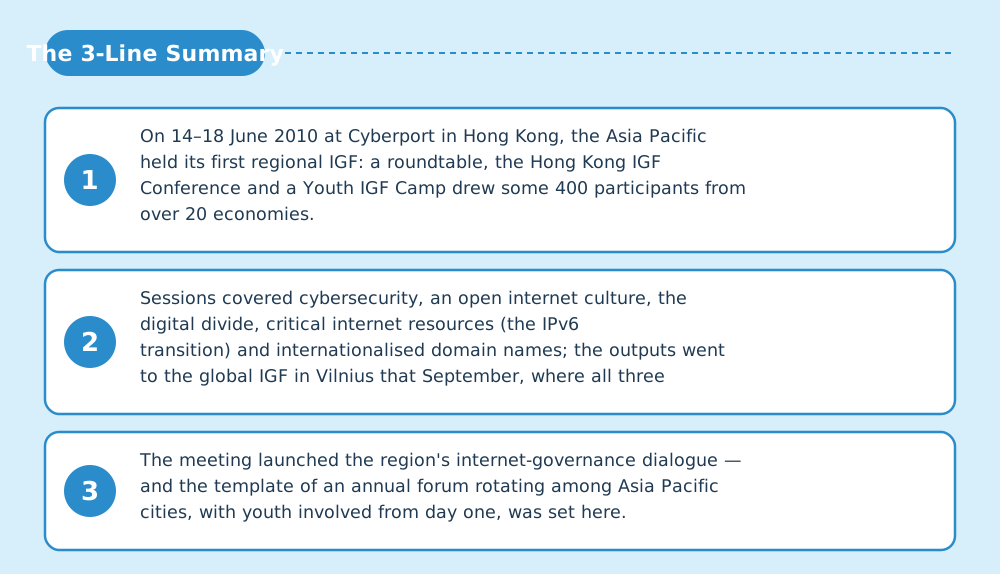
- On 14–18 June 2010 at Cyberport in Hong Kong, the Asia Pacific held its first regional IGF: a roundtable, the Hong Kong IGF Conference and a Youth IGF Camp drew some 400 participants from over 20 economies.
- Sessions covered cybersecurity, an open internet culture, the digital divide, critical internet resources (the IPv6 transition) and internationalised domain names; the outputs went to the global IGF in Vilnius that September, where all three proposed workshops were accepted.
- The meeting launched the region's internet-governance dialogue — and the template of an annual forum rotating among Asia Pacific cities, with youth involved from day one, was set here.
Welcome — this is the Japan IGF Support Organization. This in-depth report on AprIGF 2010 in Hong Kong draws on official outputs, session records and on-site reporting. In a hurry? The three lines above and the diagrams carry the gist.
Conference at a Glance (from official records)
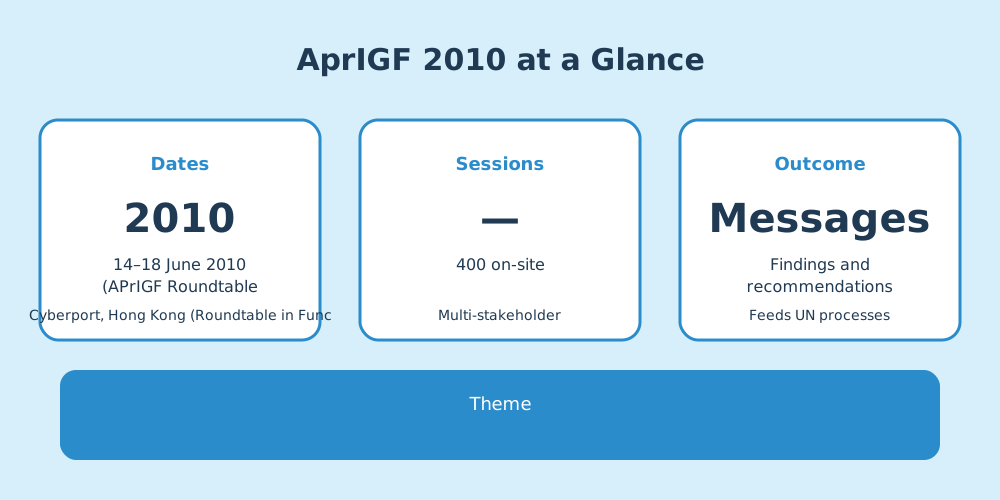
| Item | Detail |
|---|---|
| Dates | 14–18 June 2010 (APrIGF Roundtable 14–16 June; Hong Kong IGF Conference 17–18 June; Youth IGF Camp 12–14 June) |
| Venue | Cyberport, Hong Kong (Roundtable in Function Rooms 1–3, Level 3, Cyberport 3); Youth IGF Camp in Sai Kung |
| Theme | Regional governance themes |
| Participants | 400 (Approx. 400 unique participants across the three events (organiser's self-evaluation report): Roundtable ~200, Hong Kong IGF Conference ~250, Youth IGF Camp 51 students (68 incl. facilitators and guests); attendees from over 20 economies) |
| Significance | The first regional IGF ever convened in the Asia Pacific (inaugural APrIGF), and the first regional IGF to include youth participation from its inception |
| Host | DotAsia Organisation (secretariat), with hosting organisations incl. APNIC, APTLD, ISOC Hong Kong, HKCSS, HKFYG, Freedom House and iProA; the Hong Kong Government's OGCIO served as advisor and funder |
| Outcome | Findings and recommendations fed into IGF 2010 in Vilnius (14–17 September); all three workshops proposed by the APrIGF team were accepted onto the global IGF agenda |
(See the source list at the end of this article.)
Discussion Digest — from the Session Records
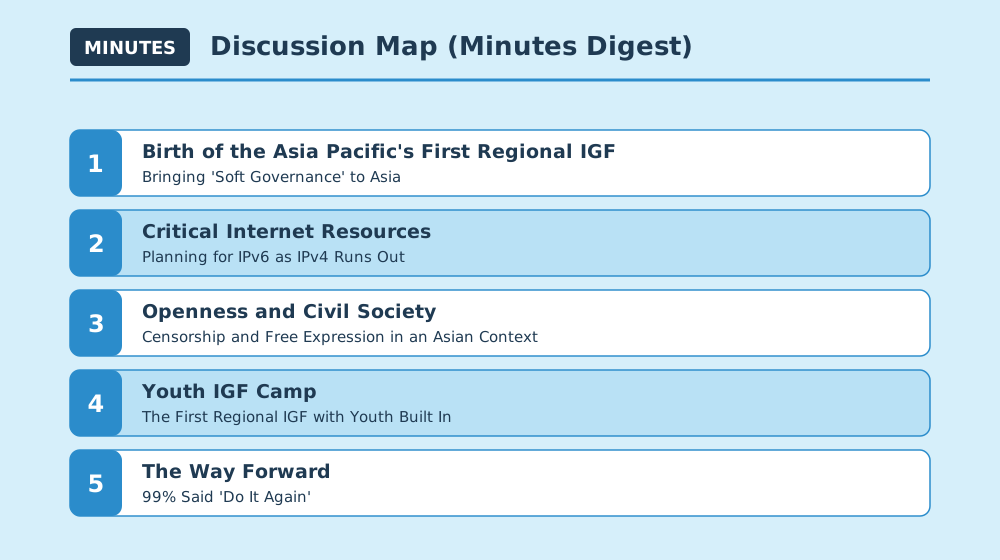
Key exchanges extracted from session records and transcripts.
1. Birth of the Asia Pacific's First Regional IGF — Bringing 'Soft Governance' to Asia
Sessions: Opening remarks and "Introduction: Setting the Scene" (15 June, 9:30–10:45, moderated by Prof. Ang Peng-Hwa, NTU)
"It's a pleasure to welcome so many people, I think from 25 different economies and countries, coming to this first Asia Pacific regional IGF"
— Jeremy Godfrey (Government CIO, Hong Kong) [1][6]
"It is based on a soft governance approach that can shape public opinion and decision making"
— Markus Kummer (IGF Executive Coordinator) [1][6]
- Five years into the global IGF — after Africa, Europe, Latin America and the Caribbean — Asia finally gained a regional forum [1][6]
- The initiative came from Ang Peng Hwa (Singapore) and Edmon Chung (Hong Kong) after the 2009 IGF in Sharm El-Sheikh; Chung famously persuaded Hong Kong's Government CIO to host it during a stopover on the flight home [1][6]
2. Critical Internet Resources — Planning for IPv6 as IPv4 Runs Out
Sessions: "Managing Critical Internet Resources" (16 June, 9:30–11:00, moderated by Paul Wilson, APNIC Director General)
"Our Asian Pacific region is a region with the most on-line population. Also, it's still growing fastest among the regions in the world"
— Zhang Jian (APTLD) [4][1][2]
- Paul Wilson pressed the need for networks to start planning for IPv6; resource registries such as APNIC, APTLD and JPRS were deeply involved from this first edition [4][1][2]
- Domain-name heavyweights — ICANN Chair Peter Dengate Thrush, APTLD Chair Keith Davidson and auDA CEO Chris Disspain — converged on Hong Kong [4][1][2]
3. Openness and Civil Society — Censorship and Free Expression in an Asian Context
Sessions: "Openness: Challenges and Criticalness of an Open Internet Culture" (15 June, 14:00–15:30, moderated by Robert Guerra, Freedom House) and "Role of Civil Society in Internet Governance" (16 June)
- Freedom House was among the hosting organisations; speakers included Thai independent news editor Chiranuch Premchaiporn and bloggers from the Philippines and China [2]
- The civil-society session brought together Chinese blogger Isaac Mao, India's Parminder Jeet Singh and Hong Kong's Christine Loh to chart citizen participation in the region [2]
4. Youth IGF Camp — The First Regional IGF with Youth Built In
Sessions: Youth IGF Camp (12–14 June, Sai Kung)
- 51 Hong Kong secondary and university students spent three days role-playing governments, businesses, NGOs and parents to negotiate internet policy issues [3][5]
- The students presented their findings at the Hong Kong IGF Conference, and roughly 8–10 camp alumni were sent to the global IGF in Vilnius that September [3][5]
- International experts acclaimed the format, which became the prototype for youth engagement at later APrIGFs and the global IGF [3][5]
5. The Way Forward — 99% Said 'Do It Again'
Sessions: "The Way Forward: The Next Model of the IGF" (16 June, 16:00–17:30, moderated by Cheryl Langdon-Orr, ICANN ALAC Chair)
- In an onsite survey (~100 responses), 99% favoured holding the APrIGF again, 90% called it important, and 57% backed rotating host cities (42% preferred staying in Hong Kong) — setting up the annual rotation that followed [3][2]
- Wolfgang Kleinwächter, Peter Dengate Thrush and others debated the next model for the global IGF as its initial five-year charter expired [3][2]
Three-Minute Short Talk — Your Questions Answered
Q. What exactly is the APrIGF?
A. It's the Asia Pacific edition of the UN's Internet Governance Forum — a venue where the region's governments, companies and civil society talk as equals. Hong Kong 2010 was the very first one, and its discussions were carried to the global IGF as Asia's input.
Q. What was the biggest outcome of this first meeting?
A. The forum itself. 99% of surveyed participants wanted it repeated, and it grew into an annual meeting rotating across the region — Singapore in 2011, Tokyo in 2012, and onward.
Q. Why does a 2010 meeting still matter?
A. It set the template: multistakeholder dialogue, youth participation from day one, and regional input feeding the global IGF. Almost everything the APrIGF does today traces back to this Hong Kong blueprint.
What Is AprIGF? (for first-time readers)
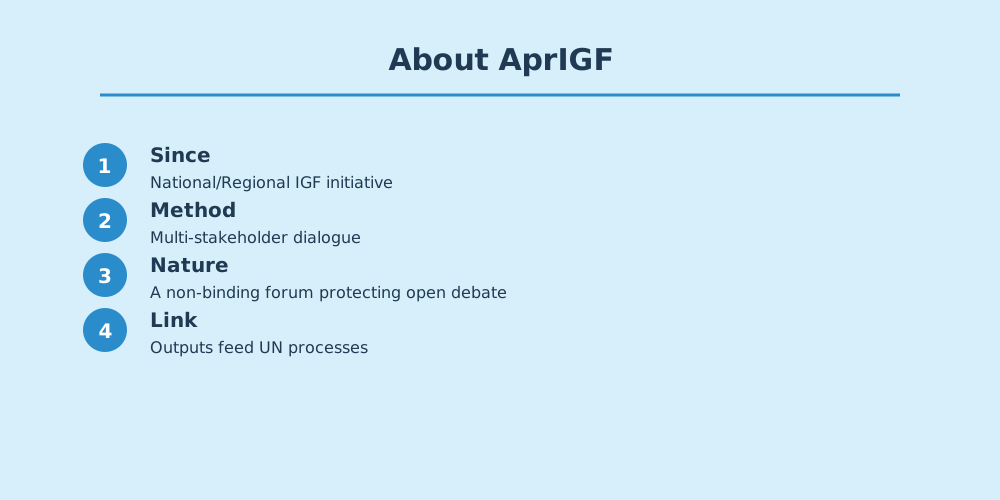
AprIGF is a National or Regional IGF Initiative (NRI), aligning local internet governance discussion with global IGF principles.
Why It Matters to You
What was discussed here becomes the baseline for national digital policy, platform rules and AI regulation worldwide within a few years. The principles confirmed at the 2010 meeting are the foundation of the "next rules" for the phones, social platforms and AI services you use every day.
Sources & References
- APrIGF Roundtable Transcript — 15 June 2010, Session 1 (Opening / Setting the Scene) — rigf.asia (accessed 2026-07-10)
- Agenda & Transcripts — APrIGF Roundtable 2010 — rigf.asia (accessed 2026-07-10)
- RIGF Project Self-Evaluation Report (Conference Report APrIGF 2010 Hong Kong) — DotAsia Organisation(AprIGF事務局) (accessed 2026-07-10)
- APNIC at inaugural Asia Pacific regional Internet Governance Forum — APNIC (accessed 2026-07-10)
- About APrIGF — 2010 APrIGF.Asia — rigf.asia (accessed 2026-07-10)
- Asia Pacific Regional Internet Governance Forum (APrIGF) — APC (accessed 2026-07-10)
- Events — APrIGF.Asia(歴代開催一覧) — AprIGF事務局 (accessed 2026-07-10)
Quotes are translated or condensed from the records listed above. Bracketed numbers [n] refer to the source list.
Related links
- IGF official (NRI list): https://www.intgovforum.org/en/content/national-and-regional-igf-initiatives
- Japan IGF: https://japanigf.jp/
- Yuki Nakazawa's blog: https://nkzw.jp/category/igf/
Revision History
Rev. 1 — published 15 June 2010, 09:00 (Article published)
Rev. 2 — updated 10 July 2026, 23:16 (Fully revised into the in-depth edition: added the 3-line summary, minutes digest, short talk, source list and diagrams (all quotes verified against the listed sources))
— 中澤祐樹

