

The 3-Line Summary
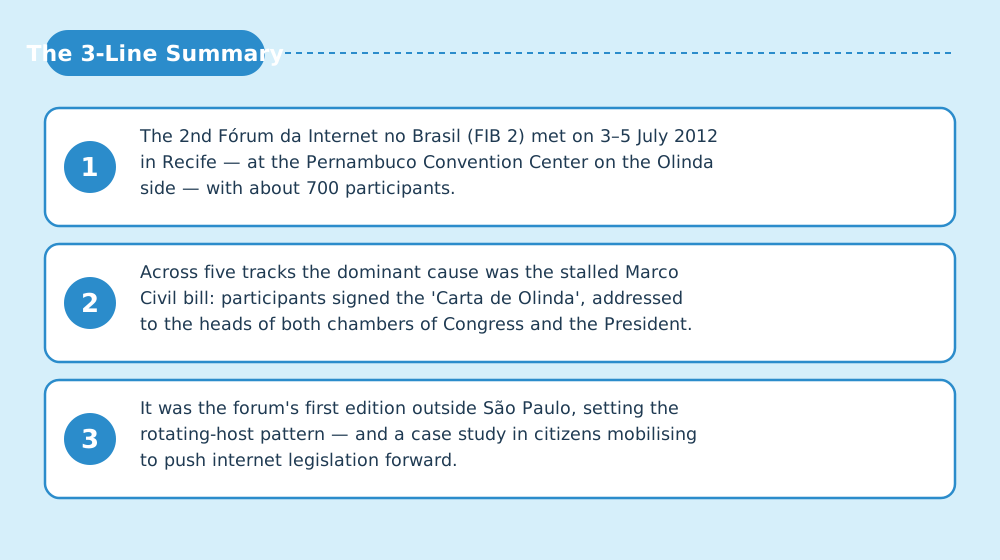
- The 2nd Fórum da Internet no Brasil (FIB 2) met on 3–5 July 2012 in Recife — at the Pernambuco Convention Center on the Olinda side — with about 700 participants.
- Across five tracks the dominant cause was the stalled Marco Civil bill: participants signed the 'Carta de Olinda', addressed to the heads of both chambers of Congress and the President.
- It was the forum's first edition outside São Paulo, setting the rotating-host pattern — and a case study in citizens mobilising to push internet legislation forward.
Welcome — this is the Japan IGF Support Organization. This in-depth report on 2nd Brazilian Internet Forum (II Fórum da Internet no Brasil) draws on official outputs, session records and on-site reporting. In a hurry? The three lines above and the diagrams carry the gist.
📍 Billed as Recife; the Pernambuco Convention Center venue sits on the Olinda side of the metropolitan border — hence the outcome document 'Carta de Olinda'
Conference at a Glance (from official records)
| Item | Detail |
|---|---|
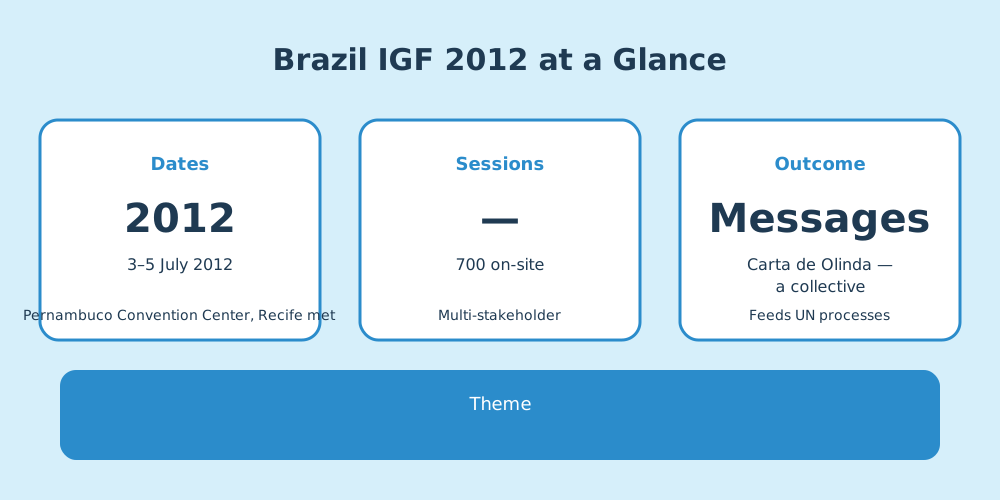
| Official name | 2nd Brazilian Internet Forum (II Fórum da Internet no Brasil) |
| Dates | 3–5 July 2012 |
| Venue | Pernambuco Convention Center, Recife metropolitan area, Brazil |
| Theme | Regional governance themes |
| Participants | 700 |
| Tracks | 5 |
| Host | Brazilian Internet Steering Committee (CGI.br) |
| Outcome | Carta de Olinda — a collective letter in defence of passing the Marco Civil bill |
(See the source list at the end of this article.)
Discussion Digest — from the Session Records
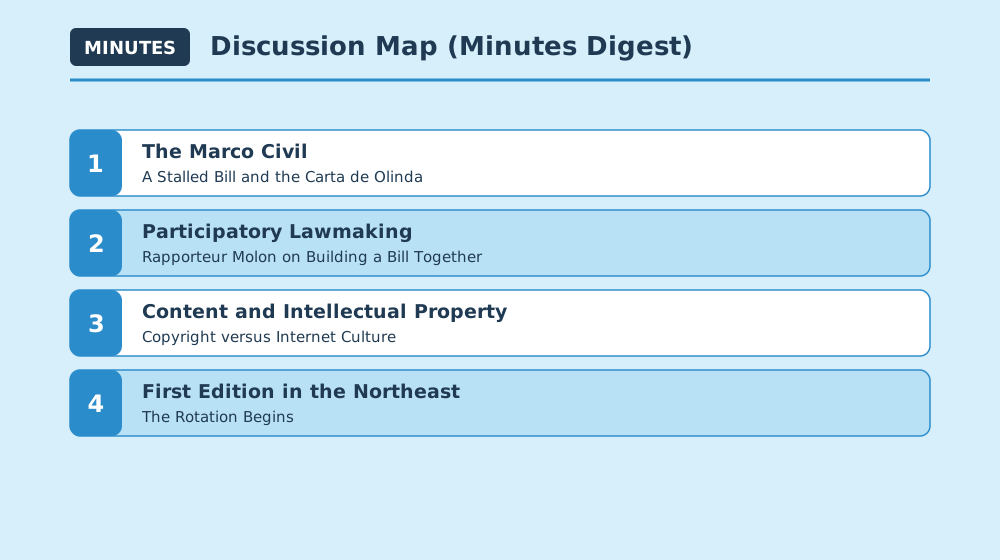
Key exchanges extracted from session records and transcripts.
1. The Marco Civil — A Stalled Bill and the Carta de Olinda
Sessions: 'Marco Civil' track on online rights and the closing plenary
- The Marco Civil bill, sent to Congress in 2011, kept being pulled from the voting agenda — so the forum devoted an entire track to it [2][3]
- Participants drafted and signed the Carta de Olinda in defence of a genuinely free internet, to be delivered to the presidents of the Chamber, the Senate and the Republic [2][3]
- Proposals gathered in each track were presented at the closing plenary and compiled into a final report published on CGI.br's website [2][3]
2. Participatory Lawmaking — Rapporteur Molon on Building a Bill Together
Sessions: Closing ceremony (5 July)
- Federal deputy Alessandro Molon (PT-RJ), rapporteur of the Marco Civil, joined the closing ceremony to walk through his report and the bill's consultation-driven drafting process [2][3]
- Molon argued the innovative collaborative process should be replicated by other legislators, and pointed participants to the online comment window open until 6 July (paraphrased from Portuguese) [2][3]
- The whole forum could be followed remotely via chat and live webcast — remote participation in lawmaking was itself on display [2][3]
3. Content and Intellectual Property — Copyright versus Internet Culture
Sessions: 'Content and Platforms' and 'Intellectual Property' tracks
- Two of the five tracks — 'Content and Platforms' and 'Intellectual Property' — tackled copyright reform and the promotion of Brazilian digital content [1]
- Parallel tracks on global governance and digital inclusion carried the forum's pre-IGF role of aggregating national input for the UN IGF [1]
- Participant-driven 'unconferences' and technical talks made their first appearance at this edition [1]
4. First Edition in the Northeast — The Rotation Begins
Sessions: Event-wide
- Leaving São Paulo (784 participants in 2011) for Pernambuco in the Northeast, the forum established its practice of rotating host cities every year [1][4][5]
- A travel-grant scheme helped researchers, educators and under-funded civil-society representatives attend, broadening regional participation [1][4][5]
- About 700 people debated the state of the internet and Brazil's development challenges across all sectors [1][4][5]
Three-Minute Short Talk — Your Questions Answered
Q. What came out of this edition?
A. The Carta de Olinda — a collective letter urging Congress to pass the Marco Civil, Brazil's internet bill of rights, signed by participants and addressed to the heads of both chambers and the President.
Q. Why two city names, Recife and Olinda?
A. The event was billed as Recife, but the Pernambuco Convention Center sits just across the municipal line in Olinda — which is why the outcome document is called the Carta de Olinda.
Q. Did the letter work?
A. The bill kept stalling until the 2013 NSA surveillance revelations turbo-charged it; the Marco Civil finally became law in April 2014. This grassroots push helped build that momentum.
What Is Brazil IGF? (for first-time readers)
Brazil IGF is a National or Regional IGF Initiative (NRI), aligning local internet governance discussion with global IGF principles.
Why It Matters to You
What was discussed here becomes the baseline for national digital policy, platform rules and AI regulation worldwide within a few years. The principles confirmed at the 2012 meeting are the foundation of the "next rules" for the phones, social platforms and AI services you use every day.
Sources & References
- Recife sediará o II Fórum da Internet no Brasil — CGI.br(プレスリリース) (accessed 2026-07-11)
- Plenária encerra atividades do II Fórum da Internet no Brasil — CGI.br(ニュース) (accessed 2026-07-11)
- Marco Civil da Internet e a Carta de Olinda (10jul2012) — Wikipédia (pt) Esplanada (accessed 2026-07-11)
- II Fórum de Internet no Brasil – PE, 03 a 05/07/2012(開催告知) — Agência Patrícia Galvão (accessed 2026-07-11)
- Edições — Fórum da Internet no Brasil — CGI.br(FIB公式サイト) (accessed 2026-07-11)
Quotes are translated or condensed from the records listed above. Bracketed numbers [n] refer to the source list.
Related links
- IGF official (NRI list): https://www.intgovforum.org/en/content/national-and-regional-igf-initiatives
- Japan IGF: https://japanigf.jp/
- Yuki Nakazawa's blog: https://nkzw.jp/category/igf/
Revision History
Rev. 1 — published 23 August 2012, 13:00 (Article published)
Rev. 2 — updated 16 July 2026, 20:09 (Fully revised into the in-depth edition: added the 3-line summary, minutes digest, short talk, source list and diagrams (all quotes verified against the listed sources))
— 中澤祐樹