


The 3-Line Summary
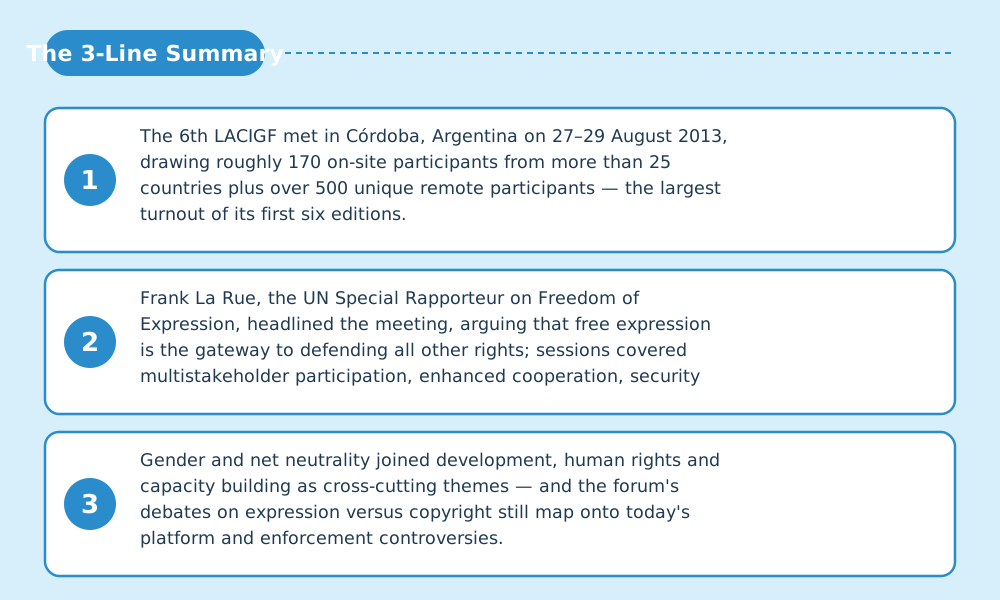
- The 6th LACIGF met in Córdoba, Argentina on 27–29 August 2013, drawing roughly 170 on-site participants from more than 25 countries plus over 500 unique remote participants — the largest turnout of its first six editions.
- Frank La Rue, the UN Special Rapporteur on Freedom of Expression, headlined the meeting, arguing that free expression is the gateway to defending all other rights; sessions covered multistakeholder participation, enhanced cooperation, security and Internet governance principles.
- Gender and net neutrality joined development, human rights and capacity building as cross-cutting themes — and the forum's debates on expression versus copyright still map onto today's platform and enforcement controversies.
Welcome — this is the Japan IGF Support Organization. This in-depth report on LACIGF 2013 in Córdoba draws on official outputs, session records and on-site reporting. In a hurry? The three lines above and the diagrams carry the gist.
📍 The official list confirms the 6th LACIGF met in Córdoba, Argentina on 27–29 August 2013, matching the catalogue; the one-year offset found for 2023–2025 does not affect this edition. Note that the 18th edition (2025) was also held in Córdoba — do not conflate the two.
Conference at a Glance (from official records)
| Item | Detail |
|---|---|
| Edition | 6th edition (LACIGF 6) |
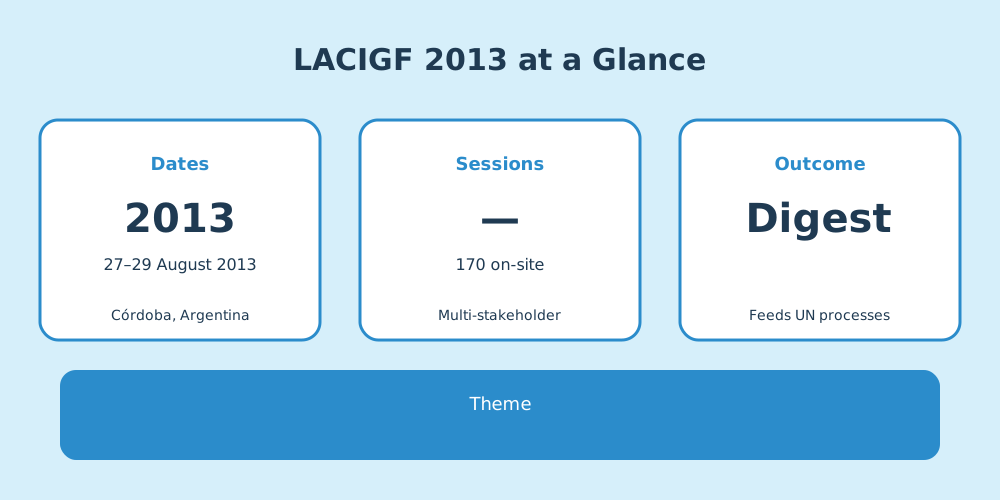
| Dates | 27–29 August 2013 |
| Venue | Córdoba, Argentina |
| Theme | Regional governance themes |
| On-site participants | 170 (Approximately 170 in the room — the largest attendance of the six editions held to date) |
| Remote participants | 500 (More than 500 unique remote participants) |
| Participating countries | 25 (Representatives from more than 25 countries) |
| Special guest | Frank La Rue, UN Special Rapporteur on Freedom of Expression, addressed the meeting |
| Host | LACNIC served as Technical Secretariat with AGEIA DENSI as the locally selected organiser; supported by APC, Google, the Internet Society, ICANN and NIC.br, among others |
(See the source list at the end of this article.)
Discussion Digest — from the Session Records
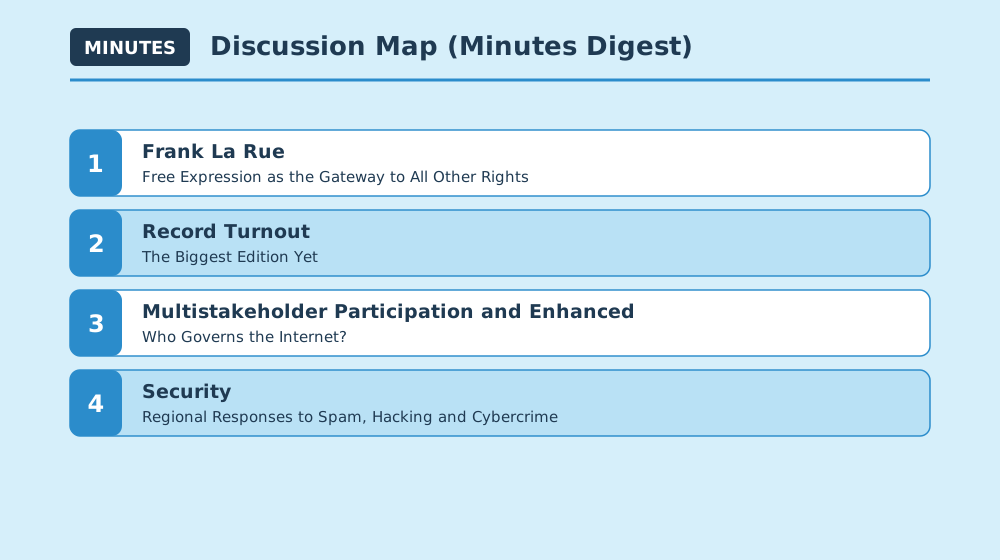
Key exchanges extracted from session records and transcripts.
1. Frank La Rue — Free Expression as the Gateway to All Other Rights
Sessions: Address by UN Special Rapporteur Frank La Rue (27 August, 14:00) and the session 'Human rights, freedom of expression and the free flow of information on the Internet' (29 August, morning)
"Exercising freedom of expression implies the possibility of defending all other rights (translated from Spanish)"
— Frank La Rue (UN Special Rapporteur on Freedom of Expression) [4][2]
- While conceding copyright has merit, La Rue said it had been 'abused excessively' by large commercial interests, criticising term extensions and disproportionate penalties and citing SOPA and PIPA as cautionary examples [4][2]
- He argued states bear responsibility for bringing Internet access to the poor, through community telecentres and public schools [4][2]
- Free thought, he stressed, requires media diversity and a plurality of ideas [4][2]
2. Record Turnout — The Biggest Edition Yet
Sessions: The meeting overall (27–29 August)
- With roughly 170 in the room from more than 25 countries and over 500 unique remote participants, this was the largest of the six editions held so far [3]
- A Programme Committee of civil-society, private-sector, technical-community and government representatives ran the meeting, with LACNIC as Technical Secretariat and open-call selectee AGEIA DENSI as local organiser [3]
- A donor-funded financial assistance programme underwrote diverse participation from across the region [3]
3. Multistakeholder Participation and Enhanced Cooperation — Who Governs the Internet?
Sessions: 'Principles of multistakeholder participation' (28 August, morning), 'Enhanced cooperation' (28 August, afternoon) and 'Internet governance principles' (29 August, morning)
- A full session interrogated the principles of multistakeholder participation and how the region practises them [2][6]
- 'Enhanced cooperation' — UN shorthand that can imply a larger intergovernmental role — got its own slot, sharpening regional positions ahead of the IGF in Bali that October [2][6]
- The closing day debated Internet governance principles, with gender and net neutrality newly framed as cross-cutting themes [2][6]
4. Security — Regional Responses to Spam, Hacking and Cybercrime
Sessions: 'Security' session (28 August from 15:00, continuing on the 29th)
- Across two days, the forum weighed responses to spam, hacking and cybercrime against the protection of rights [2]
- Slotted between the opening access-and-diversity debate and the closing human-rights session, security was treated as inseparable from rights and development — a pattern that became the regional norm [2]
Three-Minute Short Talk — Your Questions Answered
Q. So what did the forum decide?
A. Nothing binding — it's the regional forum where Latin America and the Caribbean consolidate views ahead of the UN IGF (Bali, that October). Governments, business, civil society and technologists debated as equals for three days.
Q. What was the highlight?
A. Frank La Rue, the UN Special Rapporteur on Freedom of Expression. He called free expression the gateway to defending all other rights, criticised excessive copyright enforcement, and argued states must guarantee Internet access for the poor.
Q. Why should I care?
A. The balance between copyright and expression, and between cybercrime enforcement and rights protection, is the same debate playing out in most countries today — and this forum flagged net neutrality as a cross-cutting theme before most of the world did.
What Is LACIGF? (for first-time readers)
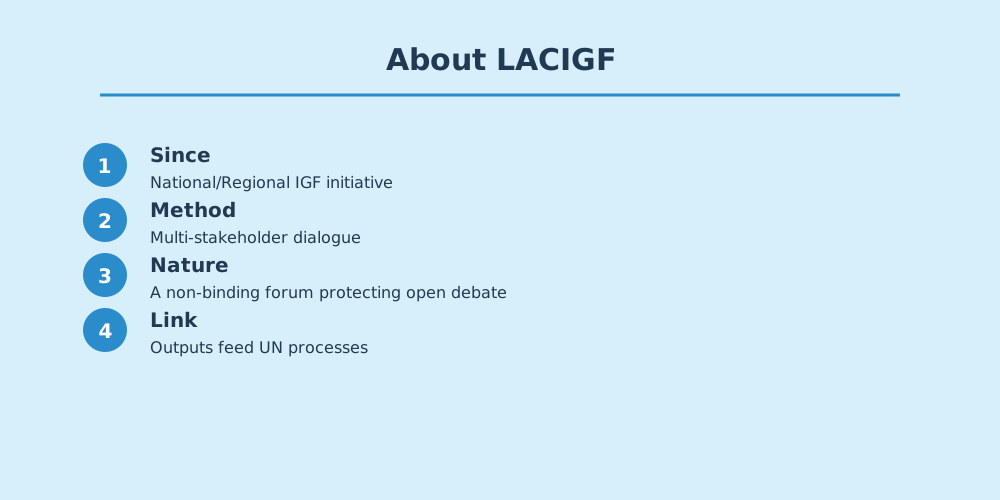
LACIGF is a National or Regional IGF Initiative (NRI), aligning local internet governance discussion with global IGF principles.
Why It Matters to You
What was discussed here becomes the baseline for national digital policy, platform rules and AI regulation worldwide within a few years. The principles confirmed at the 2013 meeting are the foundation of the "next rules" for the phones, social platforms and AI services you use every day.
Sources & References
- lacigf6 — VI Reunión Regional Preparatoria para el FGI(公式アーカイブ) — LACIGF(公式アーカイブサイト) (accessed 2026-07-10)
- lacigf6 — Agenda — LACIGF(公式アーカイブサイト) (accessed 2026-07-10)
- LACNIC 2013 Annual Report (PDF) — LACNIC(当時のLACIGFテクニカル事務局) (accessed 2026-07-10)
- La Rue, relator especial de ONU: "ejercer la libertad de expresión implica la posibilidad de defender los demás derechos" — APC(Asociación para el Progreso de las Comunicaciones) (accessed 2026-07-10)
- Foros anteriores(歴代開催一覧) — LACIGF(公式) (accessed 2026-07-10)
- Reunión Regional Preparatoria para el Foro para la Gobernanza de Internet — Wikipedia(スペイン語版) (accessed 2026-07-10)
Quotes are translated or condensed from the records listed above. Bracketed numbers [n] refer to the source list.
Related links
- IGF official (NRI list): https://www.intgovforum.org/en/content/national-and-regional-igf-initiatives
- Japan IGF: https://japanigf.jp/
- Yuki Nakazawa's blog: https://nkzw.jp/category/igf/
Revision History
Rev. 1 — published 26 September 2013, 09:00 (Article published)
Rev. 2 — updated 10 July 2026, 23:16 (Fully revised into the in-depth edition: added the 3-line summary, minutes digest, short talk, source list and diagrams (all quotes verified against the listed sources))
— 中澤祐樹

