


The 3-Line Summary
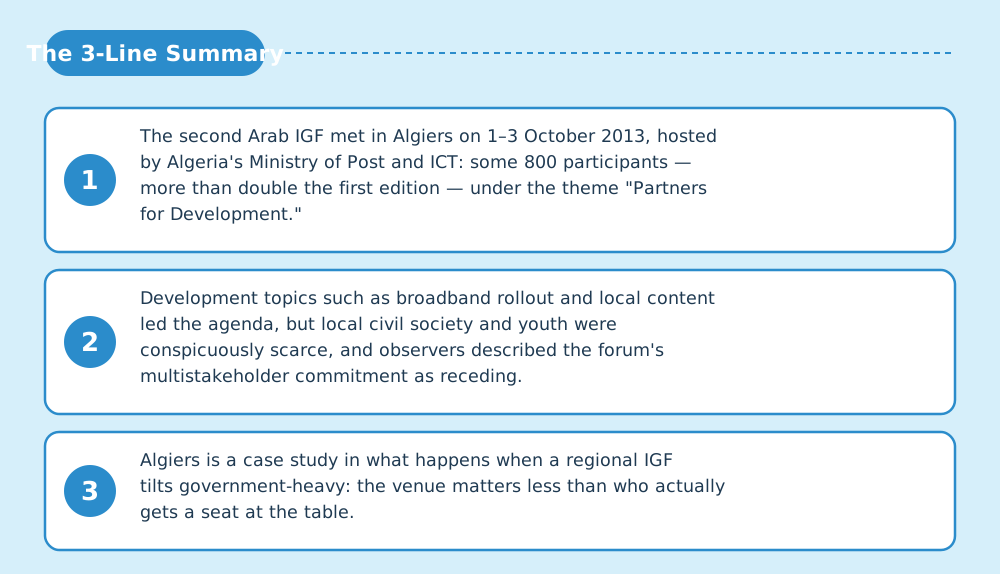
- The second Arab IGF met in Algiers on 1–3 October 2013, hosted by Algeria's Ministry of Post and ICT: some 800 participants — more than double the first edition — under the theme "Partners for Development."
- Development topics such as broadband rollout and local content led the agenda, but local civil society and youth were conspicuously scarce, and observers described the forum's multistakeholder commitment as receding.
- Algiers is a case study in what happens when a regional IGF tilts government-heavy: the venue matters less than who actually gets a seat at the table.
Welcome — this is the Japan IGF Support Organization. This in-depth report on Arab IGF 2013 in Algiers draws on official outputs, session records and on-site reporting. In a hurry? The three lines above and the diagrams carry the gist.
📍 The Algiers meeting as catalogued; the venue, the long-disused Palais des Nations government conference complex on the city's western outskirts, was refurbished for the forum
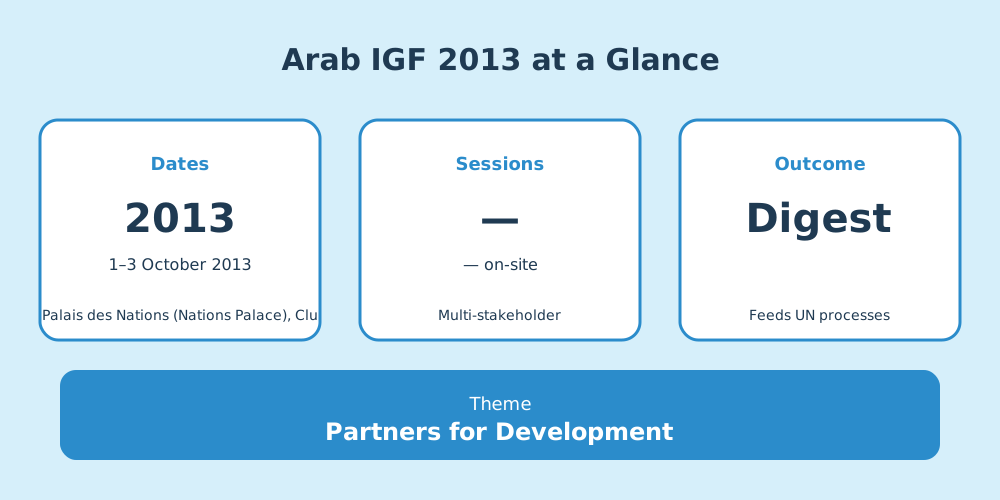
Conference at a Glance (from official records)
| Item | Detail |
|---|---|
| Dates | 1–3 October 2013 |
| Venue | Palais des Nations (Nations Palace), Club des Pins, on the western outskirts of Algiers |
| Theme | Partners for Development |
| Participants | Some 800 participants |
| Organisers | Umbrella organisations: UN ESCWA and the League of Arab States; secretariat: Egypt's NTRA |
| Host | Hosted by Algeria's Ministry of Post, Information and Telecommunication Technologies, under the auspices of President Abdelaziz Bouteflika |
(See the source list at the end of this article.)
Discussion Digest — from the Session Records
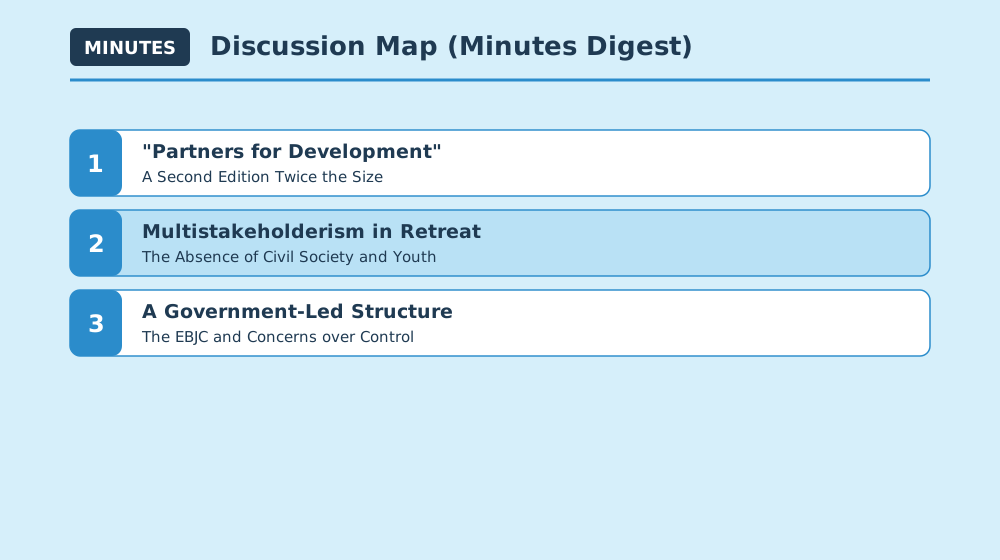
Key exchanges extracted from session records and transcripts.
1. "Partners for Development" — A Second Edition Twice the Size
Sessions: Opening ceremony and plenaries at the Palais des Nations
- Attendance roughly doubled from Kuwait's 300-plus to some 800; under President Bouteflika's auspices the government refurbished the long-disused Palais des Nations for the occasion [2][5][6]
- Debate followed the Arab IGF's issue spectrum in a development key: accelerating broadband penetration, promoting local content, user rights, critical Internet resources, cybersecurity and privacy [2][5][6]
2. Multistakeholderism in Retreat — The Absence of Civil Society and Youth
Sessions: Civil-society assessments of the meeting overall
- Observers judged the forum's multistakeholder commitment to have receded at Algiers: the private sector was well represented, but local civil society and youth were starkly absent [3][4]
- Beirut-based civil-society group SMEX published a report titled "Lack of Stakeholder Participation a Priority to be Remedied," pressing for change at future editions [3][4]
3. A Government-Led Structure — The EBJC and Concerns over Control
Sessions: Debates over the forum's governance
- From 2013 ESCWA, the League of Arab States and the NTRA operated as an Executive Bureau of Joint Coordination (EBJC), with the Arab MAG (AMAG) shaping the programme [3]
- Later civil-society analysis argued the forum was designed as a lever for a unified Arab policy agenda, and that improvised processes and divergent readings of multistakeholderism granted governments disproportionate control throughout the first mandate [3]
Three-Minute Short Talk — Your Questions Answered
Q. How was the second edition different?
A. Scale. Attendance doubled to some 800, and Algeria staged it as a national event under presidential auspices, refurbishing the Palais des Nations. The theme, "Partners for Development," set a strongly developmental tone.
Q. What was the biggest complaint?
A. Who was in the room. Next to a strong government and private-sector presence, local civil society and youth were strikingly absent — critics called it multistakeholderism in retreat.
Q. Why should I care?
A. It shows that opening a forum is not the same as opening participation — a lesson that applies to Internet-policy dialogues everywhere.
What Is Arab IGF? (for first-time readers)
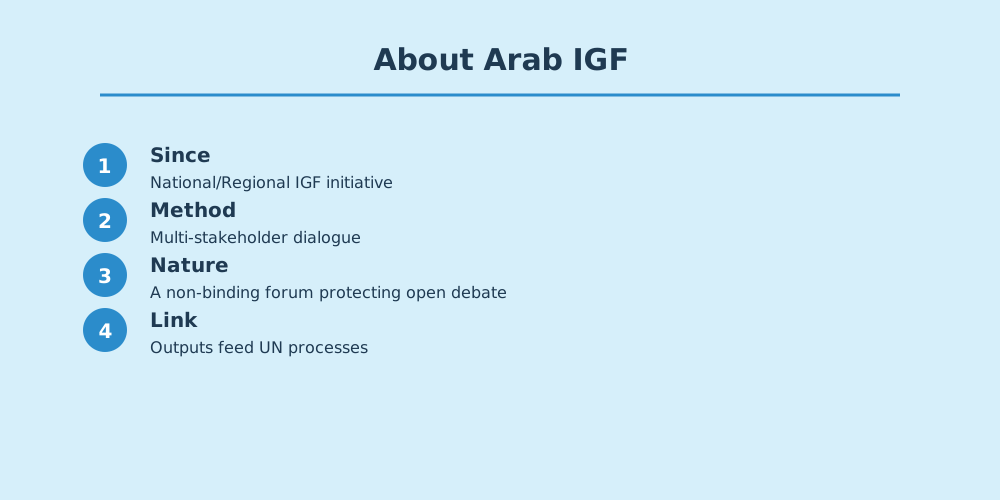
Arab IGF is a National or Regional IGF Initiative (NRI), aligning local internet governance discussion with global IGF principles.
Why It Matters to You
What was discussed here becomes the baseline for national digital policy, platform rules and AI regulation worldwide within a few years. The principles confirmed at the 2013 meeting are the foundation of the "next rules" for the phones, social platforms and AI services you use every day.
Sources & References
- Second Annual Meeting Of the ArabIGF — UN ESCWA, archive (accessed 2026-07-11)
- Arab Internet Governance Forum 2012-2015 (About) — igfarab2015.org (accessed 2026-07-11)
- Arab Internet Governance Forum (Arab IGF) — GISWatch/APC (accessed 2026-07-11)
- Second Arab Internet Governance Forum – Lack of Stakeholder Participation a Priority to be Remedied — SMEX(ベイルートのデジタル権利団体) (accessed 2026-07-11)
- Arab IGF — ICANNWiki (accessed 2026-07-11)
- Arab IGF (event page) — DiploFoundation (accessed 2026-07-11)
Quotes are translated or condensed from the records listed above. Bracketed numbers [n] refer to the source list.
Related links
- IGF official (NRI list): https://www.intgovforum.org/en/content/national-and-regional-igf-initiatives
- Japan IGF: https://japanigf.jp/
- Yuki Nakazawa's blog: https://nkzw.jp/category/igf/
Revision History
Rev. 1 — published 29 October 2013, 09:00 (Article published)
Rev. 2 — updated 11 July 2026, 02:14 (Fully revised into the in-depth edition: added the 3-line summary, minutes digest, short talk, source list and diagrams (all quotes verified against the listed sources))
— 中澤祐樹

