

The 3-Line Summary
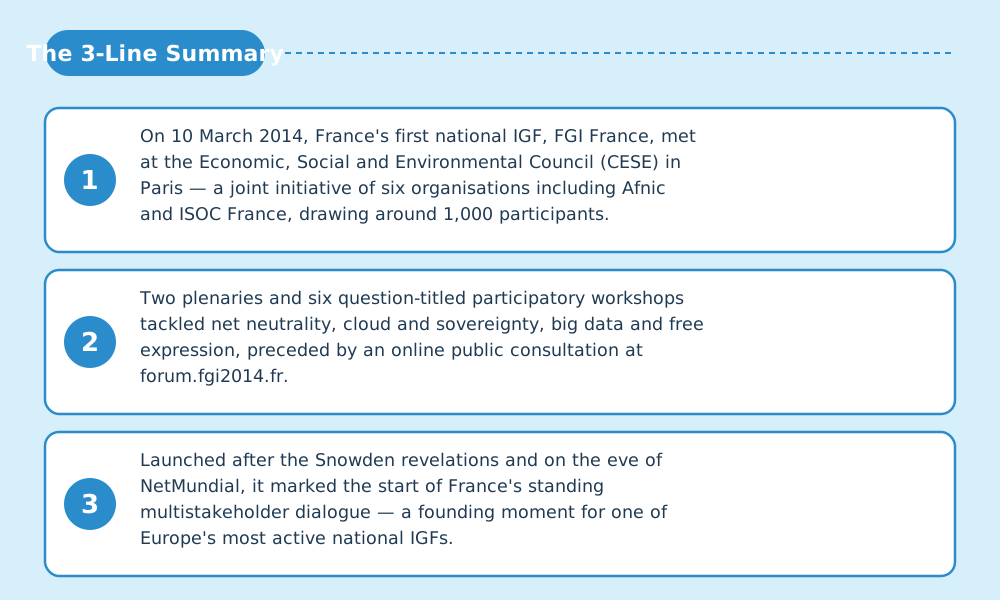
- On 10 March 2014, France's first national IGF, FGI France, met at the Economic, Social and Environmental Council (CESE) in Paris — a joint initiative of six organisations including Afnic and ISOC France, drawing around 1,000 participants.
- Two plenaries and six question-titled participatory workshops tackled net neutrality, cloud and sovereignty, big data and free expression, preceded by an online public consultation at forum.fgi2014.fr.
- Launched after the Snowden revelations and on the eve of NetMundial, it marked the start of France's standing multistakeholder dialogue — a founding moment for one of Europe's most active national IGFs.
Welcome — this is the Japan IGF Support Organization. This in-depth report on FGI France 2014 (French Internet Governance Forum) draws on official outputs, session records and on-site reporting. In a hurry? The three lines above and the diagrams carry the gist.
Conference at a Glance (from official records)
| Item | Detail |
|---|---|
| Official name | FGI France 2014 (French Internet Governance Forum) |
| Edition | 1st edition — inaugural FGI France |
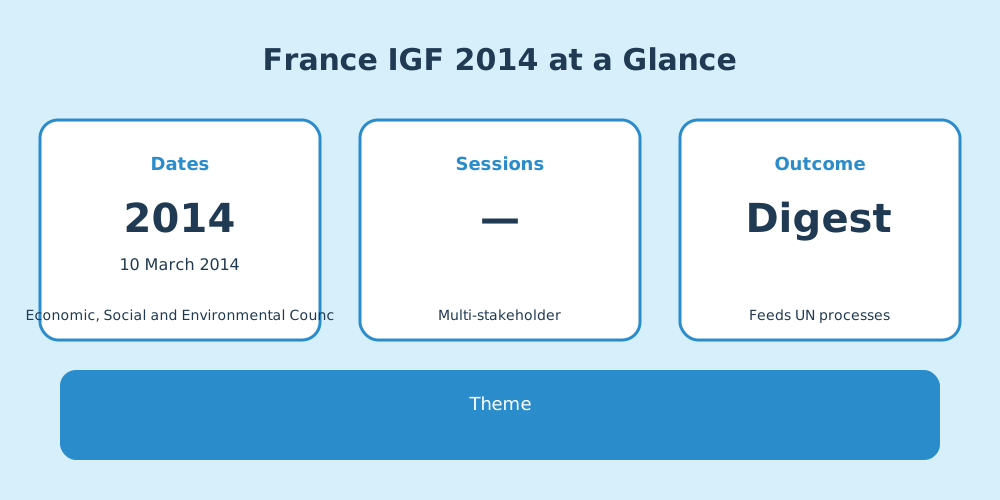
| Dates | 10 March 2014 |
| Venue | Economic, Social and Environmental Council (CESE), Palais d'Iéna, Paris |
| Theme | Regional governance themes |
| Format | Two plenaries and six participatory workshops, open to all |
| Host | Initiative of six organisations — Afdel, Afnic, Cap Digital, Club Jade, ISOC France and Renaissance Numérique — with a 10-member organising committee chaired by Bertrand de La Chapelle |
(See the source list at the end of this article.)
Discussion Digest — from the Session Records
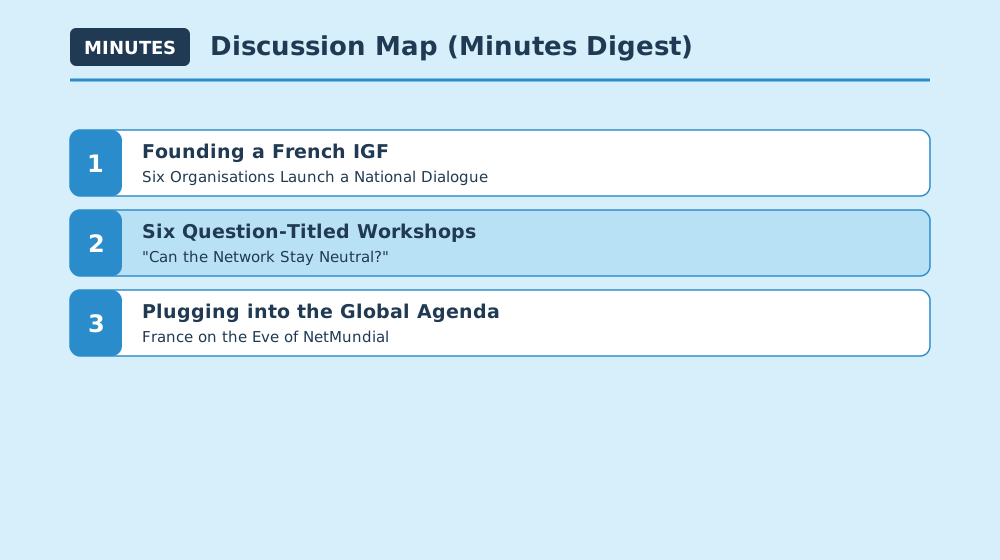
Key exchanges extracted from session records and transcripts.
1. Founding a French IGF — Six Organisations Launch a National Dialogue
Sessions: Opening and overall framework (10 March 2014, CESE)
"Internet governance has become a major issue for our societies, and France has an important role to play in the international debate"
— Bertrand de La Chapelle (Organising Committee Chair; former ICANN Board member) [1][4]
- Launched by six organisations — Afdel, Afnic, Cap Digital, Club Jade, ISOC France and Renaissance Numérique — with support from public bodies including the National Digital Council (CNNum) [1][4]
- Held at the Palais d'Iéna, seat of the CESE, putting the multistakeholder model into practice domestically with government, business, civil society and the technical community on an equal footing [1][4]
- Around 1,000 participants according to the official history; the forum continued in 2015 and 2018 and became France's IGF-recognised national initiative (NRI) [1][4]
2. Six Question-Titled Workshops — "Can the Network Stay Neutral?"
Sessions: Participatory workshops (two blocks of three parallel sessions)
- All six workshops bore question titles: "Le réseau peut-il rester neutre ?" (Can the network stay neutral?), "Peut-on dire n'importe quoi sur Internet ?" (Can you say anything on the internet?), "Peut-on faire confiance au cloud ?", "Big Data ou big brother ?", "De quoi avons-nous peur ?" (What are we afraid of?) and "Internet m'a tuer ?" [3][2]
- Topics spanned net neutrality, free expression, cloud and digital sovereignty, personal-data protection, cybersecurity governance and digital disruption of the economy and society [3][2]
- An online public consultation at forum.fgi2014.fr collected citizens' concerns ahead of the forum [3][2]
3. Plugging into the Global Agenda — France on the Eve of NetMundial
Sessions: Morning plenary on international issues (9:00–11:00)
- The morning plenary addressed NetMundial (due in Brazil the following month), ICANN, EuroDIG and the EU data-protection reform — translating the post-Snowden governance shake-up for a French audience [2][1]
- Speakers included Philippe Boillat of the Council of Europe and CNIL President Isabelle Falque-Pierrotin, alongside representatives of Google, Facebook, Orange and government ministries [2][1]
- The closing plenary (16:30–18:00) was devoted to coordination among French actors — building a standing national mechanism was on the agenda from day one [2][1]
Three-Minute Short Talk — Your Questions Answered
Q. What exactly was this gathering?
A. The first French national edition of the UN's Internet Governance Forum — an attempt to give France a standing venue where government, business, civil society and technologists debate internet rules as equals.
Q. What was discussed?
A. Six question-titled workshops — "Can the network stay neutral?", "Can we trust the cloud?" — covering net neutrality, personal data and free expression, just months after the Snowden revelations put surveillance and data sovereignty on everyone's mind.
Q. Why does it matter?
A. National IGFs are where global internet debates get translated into domestic policy. FGI France's design — a coalition of organisations plus an online pre-consultation — became a reference for how to build and sustain such forums.
What Is France IGF? (for first-time readers)
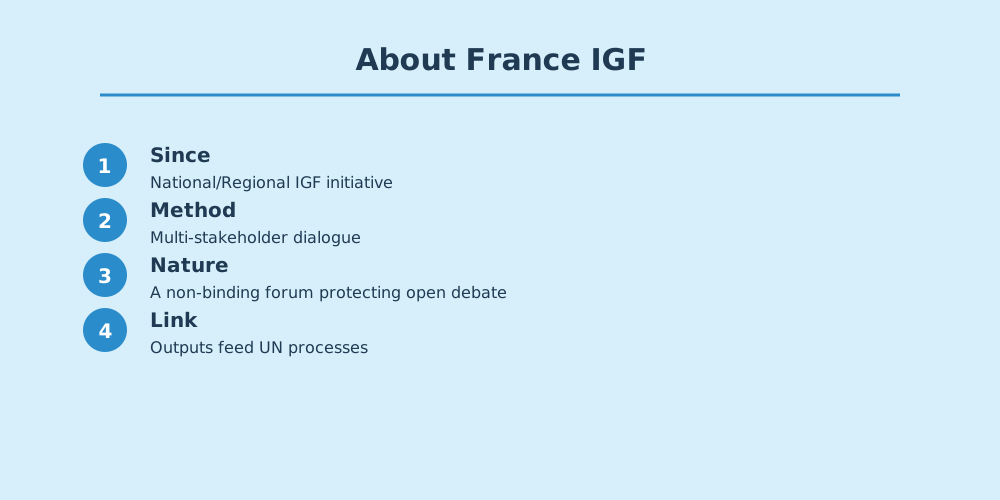
France IGF is a National or Regional IGF Initiative (NRI), aligning local internet governance discussion with global IGF principles.
Why It Matters to You
What was discussed here becomes the baseline for national digital policy, platform rules and AI regulation worldwide within a few years. The principles confirmed at the 2014 meeting are the foundation of the "next rules" for the phones, social platforms and AI services you use every day.
Sources & References
- La France organise son premier Forum de la gouvernance Internet — Silicon.fr (accessed 2026-07-11)
- Forum de la Gouvernance Internet – France(開催案内・プログラム) — CESE, lecese.fr (accessed 2026-07-11)
- Découvrir les thèmes abordés lors du FGI-France, le 10 mars 2014 — Afnic (accessed 2026-07-11)
- Forum sur la Gouvernance de l'Internet France(公式サイト・沿革) — igf-france.fr (accessed 2026-07-11)
Quotes are translated or condensed from the records listed above. Bracketed numbers [n] refer to the source list.
Related links
- IGF official (NRI list): https://www.intgovforum.org/en/content/national-and-regional-igf-initiatives
- Japan IGF: https://japanigf.jp/
- Yuki Nakazawa's blog: https://nkzw.jp/category/igf/
Revision History
Rev. 1 — published 26 June 2014, 09:00 (Article published)
Rev. 2 — updated 16 July 2026, 20:09 (Fully revised into the in-depth edition: added the 3-line summary, minutes digest, short talk, source list and diagrams (all quotes verified against the listed sources))
— 中澤祐樹