


The 3-Line Summary
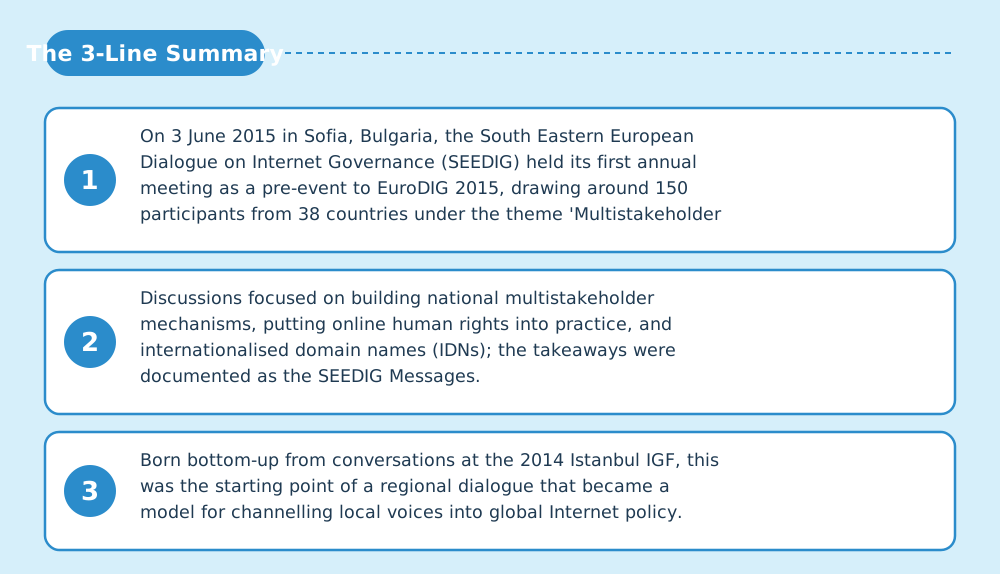
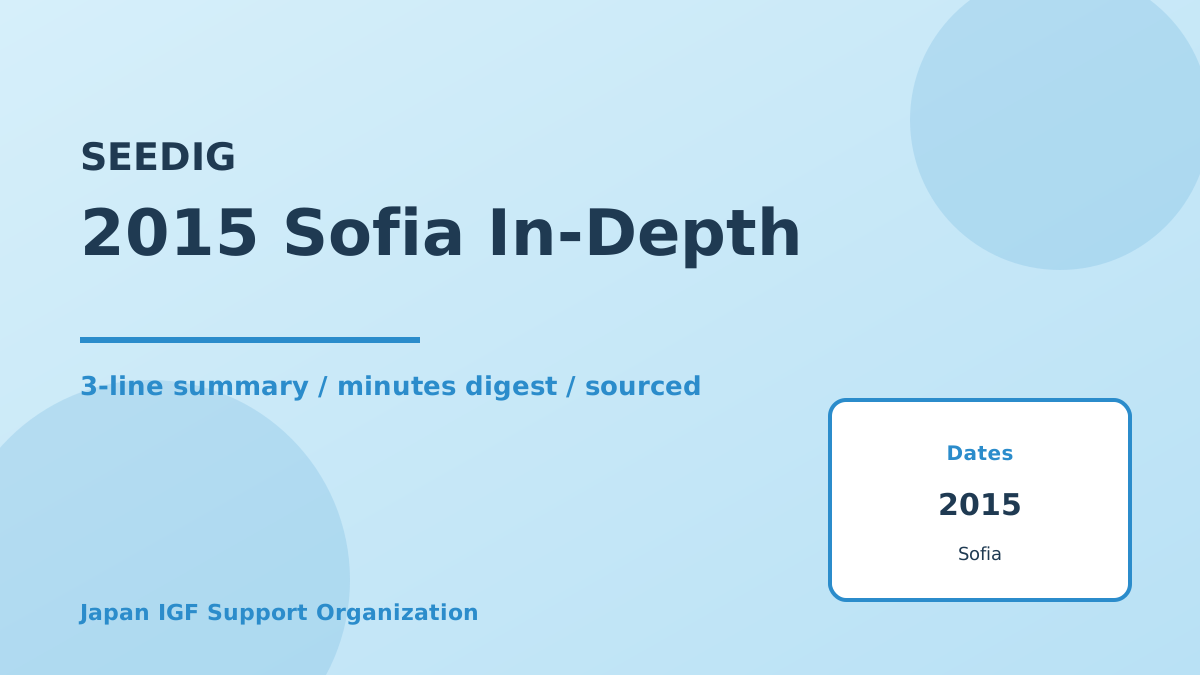
- On 3 June 2015 in Sofia, Bulgaria, the South Eastern European Dialogue on Internet Governance (SEEDIG) held its first annual meeting as a pre-event to EuroDIG 2015, drawing around 150 participants from 38 countries under the theme 'Multistakeholder Internet governance: from global debates to South Eastern European realities.'
- Discussions focused on building national multistakeholder mechanisms, putting online human rights into practice, and internationalised domain names (IDNs); the takeaways were documented as the SEEDIG Messages.
- Born bottom-up from conversations at the 2014 Istanbul IGF, this was the starting point of a regional dialogue that became a model for channelling local voices into global Internet policy.
Welcome — this is the Japan IGF Support Organization. This in-depth report on SEEDIG 2015 in Sofia draws on official outputs, session records and on-site reporting. In a hurry? The three lines above and the diagrams carry the gist.
📍 Held in Sofia as catalogued — a one-day meeting organised as a pre-event to EuroDIG 2015 (4–5 June, also in Sofia), and the first SEEDIG annual meeting
Conference at a Glance (from official records)
| Item | Detail |
|---|---|
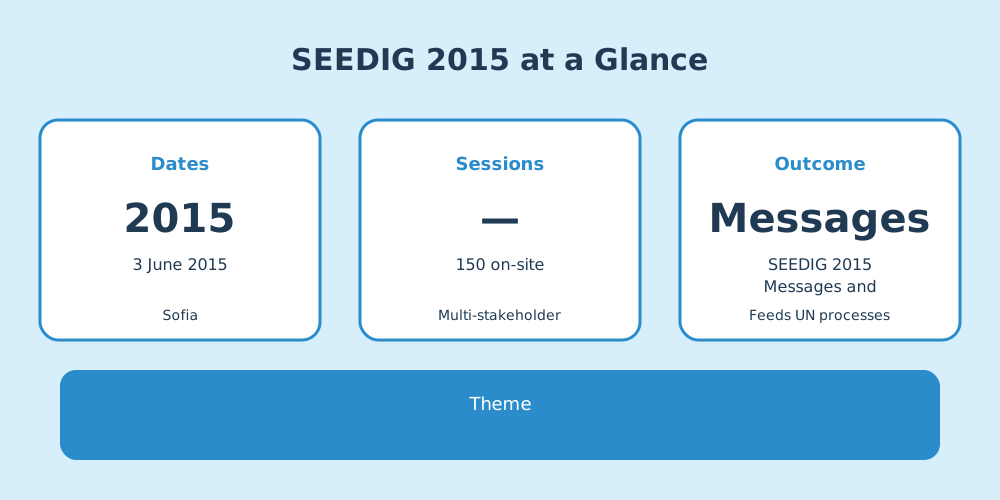
| Dates | 3 June 2015 |
| Venue | Sofia, Bulgaria |
| Theme | Multistakeholder Internet governance: from global debates to South Eastern European realities |
| Participants | 150 (Around 150 on-site participants from 38 countries; 73% from SEE and the neighbouring area, 27% from outside the region) |
| Host | Community-organised, with the cooperation of the EuroDIG Secretariat |
| Outcome | SEEDIG 2015 Messages and annual report |
(See the source list at the end of this article.)
Discussion Digest — from the Session Records
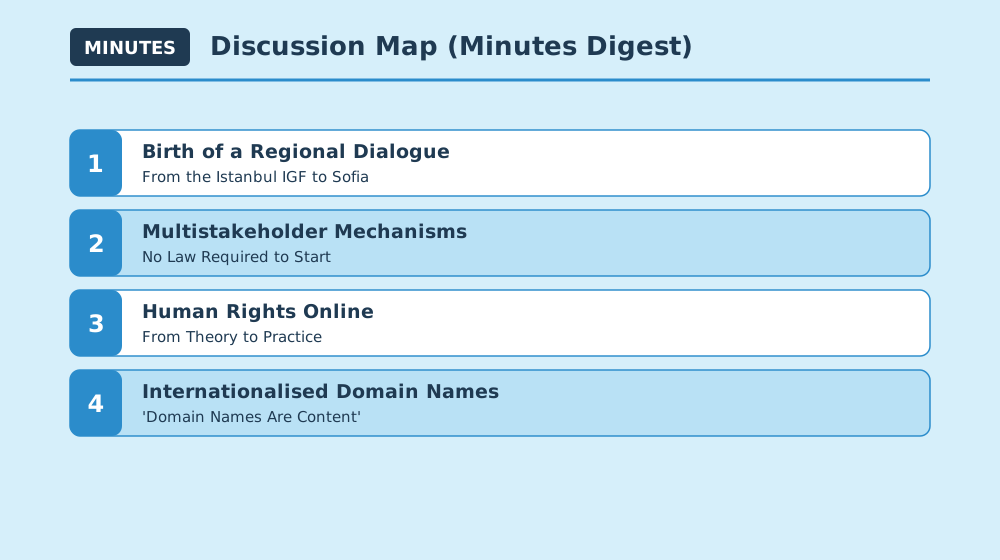
Key exchanges extracted from session records and transcripts.
1. Birth of a Regional Dialogue — From the Istanbul IGF to Sofia
Sessions: Full-day programme (pre-event to EuroDIG 2015, 3 June)
- SEEDIG was founded bottom-up in 2014, following discussions at the Istanbul IGF; the first meeting materialised in Sofia with the cooperation of the EuroDIG Secretariat, building on EuroDIG's platform and network [1][3][4]
- Around 150 participants from 38 countries attended, 73% from SEE and the neighbouring area; the event was designed as both capacity building and a space for region-specific policy debate [1][3][4]
- The agenda rested on three pillars: multistakeholder governance, human rights for Internet users, and the domain name space in SEE [1][3][4]
2. Multistakeholder Mechanisms — No Law Required to Start
Sessions: Session on multistakeholder mechanisms at the national level
- Participants affirmed that Internet governance should be understood as a process of dialogue, collaboration and cooperation [2]
- A practical takeaway: formal legislative frameworks are not prerequisites for creating national multistakeholder mechanisms [2]
- The Messages called for international minimum standards for multistakeholder models with appropriate oversight, and for policymakers to dedicate adequate time to stakeholder consultation [2]
3. Human Rights Online — From Theory to Practice
Sessions: Session on human rights for Internet users
- The discussion stressed shifting online human rights protection 'from the theoretical sphere into the practical one' [2]
- Recommendations included protecting the full range of human rights online — beyond privacy and access to information — plus compliance guidelines for industry, government and users, and effective legal redress mechanisms [2]
4. Internationalised Domain Names — 'Domain Names Are Content'
Sessions: Session on the domain name space in SEE
- 'Domain names are more than addressing and naming, they are content' (SEEDIG 2015 Messages) [2]
- IDNs were affirmed as preserving linguistic and cultural diversity while advancing fundamental rights [2]
- The Messages urged tackling technical barriers to universal acceptance of IDNs, such as email functionality and search engine recognition [2]
Three-Minute Short Talk — Your Questions Answered
Q. What exactly is SEEDIG?
A. It's the South Eastern European edition of the UN's IGF — an annual forum where governments, business, civil society and the technical community talk as equals. This 2015 Sofia meeting was the very first one, held as a pre-event to EuroDIG.
Q. What was discussed at the first meeting?
A. How to root multistakeholder Internet governance in South Eastern European realities. Three messages stood out: you don't need a law to start a dialogue mechanism, human rights protection must move from theory to practice, and domain names in local languages are content.
Q. Why should I care?
A. SEEDIG became a model for how a region channels its voice into global Internet policy. If you follow how national and regional IGFs feed the UN process, this grassroots launch is the case study.
What Is SEEDIG? (for first-time readers)
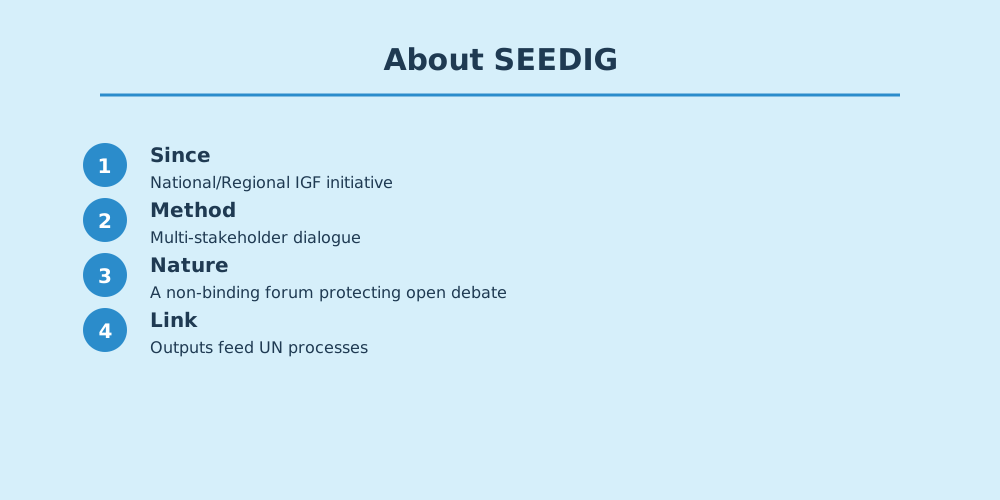
SEEDIG is a National or Regional IGF Initiative (NRI), aligning local internet governance discussion with global IGF principles.
Why It Matters to You
What was discussed here becomes the baseline for national digital policy, platform rules and AI regulation worldwide within a few years. The principles confirmed at the 2015 meeting are the foundation of the "next rules" for the phones, social platforms and AI services you use every day.
Sources & References
- SEEDIG 2015 meeting — SEEDIG(公式) (accessed 2026-07-11)
- Messages from SEEDIG 2015 — SEEDIG(公式) (accessed 2026-07-11)
- South Eastern European Dialogue (SEEDIG) — EuroDIG Wiki (accessed 2026-07-11)
- South Eastern European Dialogue on Internet Governance (SEEDIG) — APC (accessed 2026-07-11)
- South Eastern European Dialogue on Internet Governance — Wikipedia(英語版) (accessed 2026-07-11)
Quotes are translated or condensed from the records listed above. Bracketed numbers [n] refer to the source list.
Related links
- IGF official (NRI list): https://www.intgovforum.org/en/content/national-and-regional-igf-initiatives
- Japan IGF: https://japanigf.jp/
- Yuki Nakazawa's blog: https://nkzw.jp/category/igf/
Revision History
Rev. 1 — published 16 May 2015, 14:00 (Article published)
Rev. 2 — updated 11 July 2026, 02:14 (Fully revised into the in-depth edition: added the 3-line summary, minutes digest, short talk, source list and diagrams (all quotes verified against the listed sources))
— 中澤祐樹

