

The 3-Line Summary
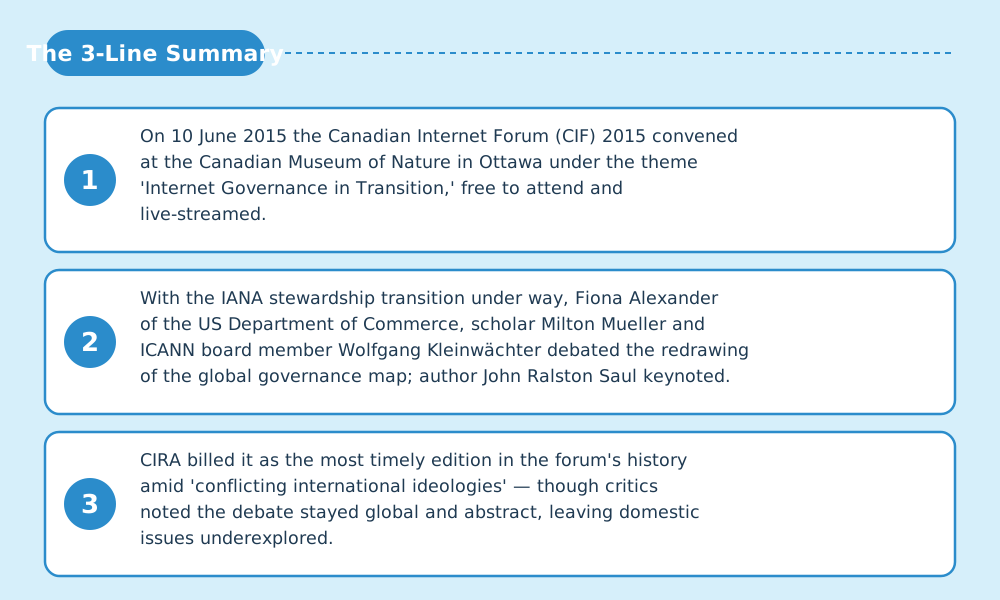
- On 10 June 2015 the Canadian Internet Forum (CIF) 2015 convened at the Canadian Museum of Nature in Ottawa under the theme 'Internet Governance in Transition,' free to attend and live-streamed.
- With the IANA stewardship transition under way, Fiona Alexander of the US Department of Commerce, scholar Milton Mueller and ICANN board member Wolfgang Kleinwächter debated the redrawing of the global governance map; author John Ralston Saul keynoted.
- CIRA billed it as the most timely edition in the forum's history amid 'conflicting international ideologies' — though critics noted the debate stayed global and abstract, leaving domestic issues underexplored.
Welcome — this is the Japan IGF Support Organization. This in-depth report on Canadian Internet Forum (CIF) 2015 draws on official outputs, session records and on-site reporting. In a hurry? The three lines above and the diagrams carry the gist.
Conference at a Glance (from official records)
| Item | Detail |
|---|---|
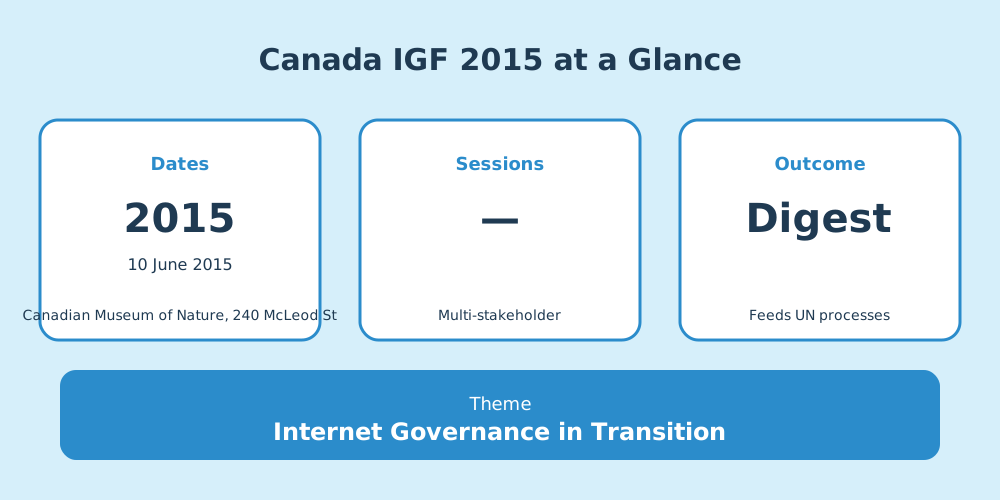
| Official name | Canadian Internet Forum (CIF) 2015 |
| Dates | 10 June 2015 |
| Venue | Canadian Museum of Nature, 240 McLeod St, Ottawa, Ontario, Canada |
| Theme | Internet Governance in Transition |
| Host | CIRA (Canadian Internet Registration Authority) |
(See the source list at the end of this article.)
Discussion Digest — from the Session Records
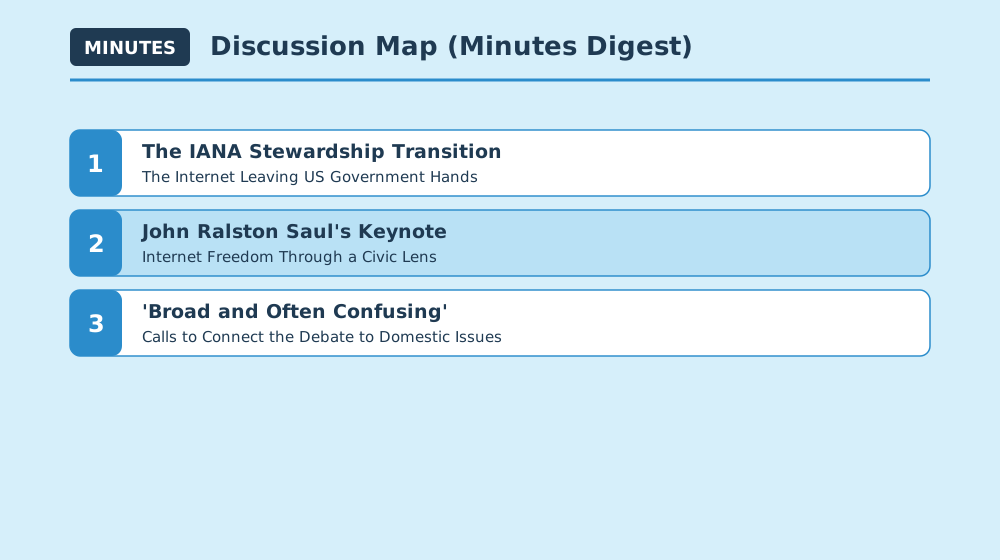
Key exchanges extracted from session records and transcripts.
1. The IANA Stewardship Transition — The Internet Leaving US Government Hands
Sessions: Governance debates at the national event (10 June 2015, 8 a.m.–4 p.m.)
- Speakers included Fiona Alexander of the US Department of Commerce (who oversaw the IANA transition), leading governance scholar Milton Mueller, and ICANN board member Wolfgang Kleinwächter of Aarhus University, with the shift of IANA stewardship to the global multistakeholder community (completed October 2016) at the core [1][2]
- CIRA's announcement declared that 'the convergence of a changing governance landscape and conflicting international ideologies has positioned this year's Canadian Internet Forum as one of the most timely and critical in the event's history' [1][2]
- The framing question: how global governance processes would affect the freedom and openness of Canada's internet [1][2]
2. John Ralston Saul's Keynote — Internet Freedom Through a Civic Lens
Sessions: Keynote and related sessions
- The keynote came from John Ralston Saul, one of Canada's foremost public intellectuals, injecting a civic and democratic perspective into an often technical governance debate [1]
- Michael Karanicolas of the Centre for Law and Democracy spoke on free expression and access to information, with CIRA president and CEO Byron Holland also among the speakers [1]
3. 'Broad and Often Confusing' — Calls to Connect the Debate to Domestic Issues
Sessions: Post-event assessment (GISWatch Canada country report)
- GISWatch's Canada country report concluded the 2015 CIF stayed with 'broad, theoretical' discussions of internet governance and multistakeholderism, light on the country's pressing domestic challenges [3]
- For participants, the meaning of internet governance remained 'broad and often confusing,' with little guidance on Canada's approach nationally or globally [3]
- Connecting the forum to issues like the digital divide facing First Nations, Métis and Inuit communities remained unfinished business [3]
Three-Minute Short Talk — Your Questions Answered
Q. What was the meeting about?
A. Who runs the internet. The US government was in the middle of handing over its oversight of IANA — the net's address book — and the very officials and ICANN board members involved explained the transition in Ottawa.
Q. Did it decide anything?
A. No — its value was opening the transition debate to the public, with US Commerce's Fiona Alexander, scholar Milton Mueller and author John Ralston Saul in one room. Critics still found it abstract and disconnected from domestic issues.
Q. Why should I care?
A. The IANA transition reshaped the foundation every internet user stands on. How a national forum translated that global shift for ordinary citizens is a case study for public engagement anywhere.
What Is Canada IGF? (for first-time readers)
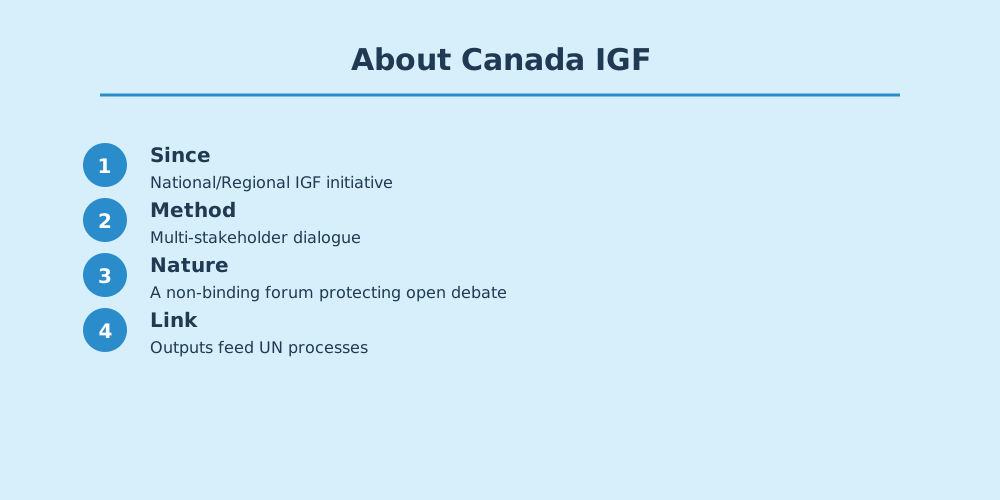
Canada IGF is a National or Regional IGF Initiative (NRI), aligning local internet governance discussion with global IGF principles.
Why It Matters to You
What was discussed here becomes the baseline for national digital policy, platform rules and AI regulation worldwide within a few years. The principles confirmed at the 2015 meeting are the foundation of the "next rules" for the phones, social platforms and AI services you use every day.
Sources & References
- Internet Governance in Transition: Join .CA at the 2015 Canadian Internet Forum (June 2015) — CIRA(CNW/newswire.ca プレスリリース) (accessed 2026-07-11)
- Canadian Internet Forum (CIF) (event record, 10 June 2015) — DiploFoundation (accessed 2026-07-11)
- Canada — country report: Internet governance — APC (accessed 2026-07-11)
- Canada IGF(NRI記録。直接アクセスは403のため検索スニペットで内容確認) — UN IGF Secretariat (accessed 2026-07-11)
Quotes are translated or condensed from the records listed above. Bracketed numbers [n] refer to the source list.
Related links
- IGF official (NRI list): https://www.intgovforum.org/en/content/national-and-regional-igf-initiatives
- Japan IGF: https://japanigf.jp/
- Yuki Nakazawa's blog: https://nkzw.jp/category/igf/
Revision History
Rev. 1 — published 11 July 2015, 10:00 (Article published)
Rev. 2 — updated 16 July 2026, 20:09 (Fully revised into the in-depth edition: added the 3-line summary, minutes digest, short talk, source list and diagrams (all quotes verified against the listed sources))
— 中澤祐樹