


The 3-Line Summary
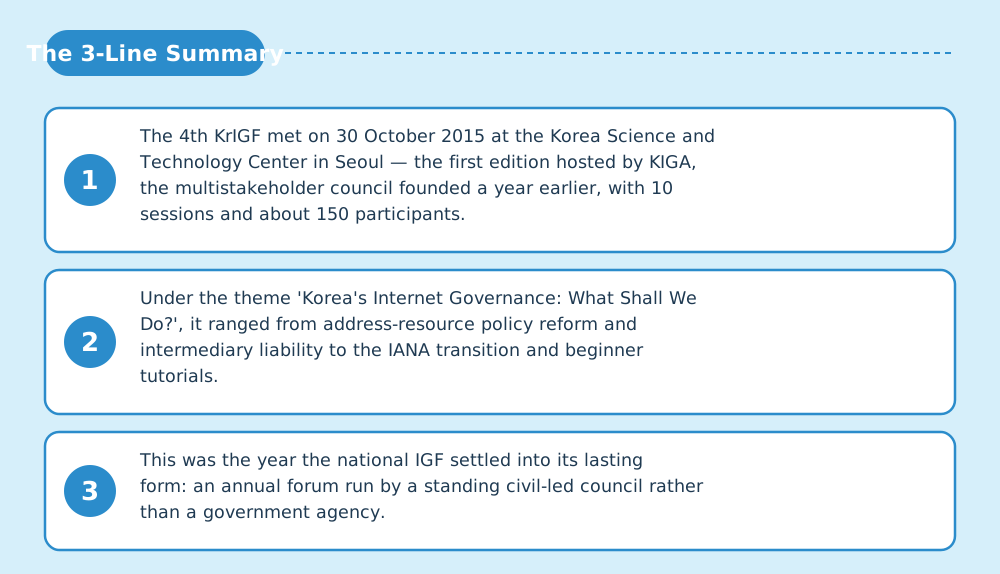
- The 4th KrIGF met on 30 October 2015 at the Korea Science and Technology Center in Seoul — the first edition hosted by KIGA, the multistakeholder council founded a year earlier, with 10 sessions and about 150 participants.
- Under the theme 'Korea's Internet Governance: What Shall We Do?', it ranged from address-resource policy reform and intermediary liability to the IANA transition and beginner tutorials.
- This was the year the national IGF settled into its lasting form: an annual forum run by a standing civil-led council rather than a government agency.
Welcome — this is the Japan IGF Support Organization. This in-depth report on 4th Korea Internet Governance Forum (KrIGF 2015) draws on official outputs, session records and on-site reporting. In a hurry? The three lines above and the diagrams carry the gist.
Conference at a Glance (from official records)
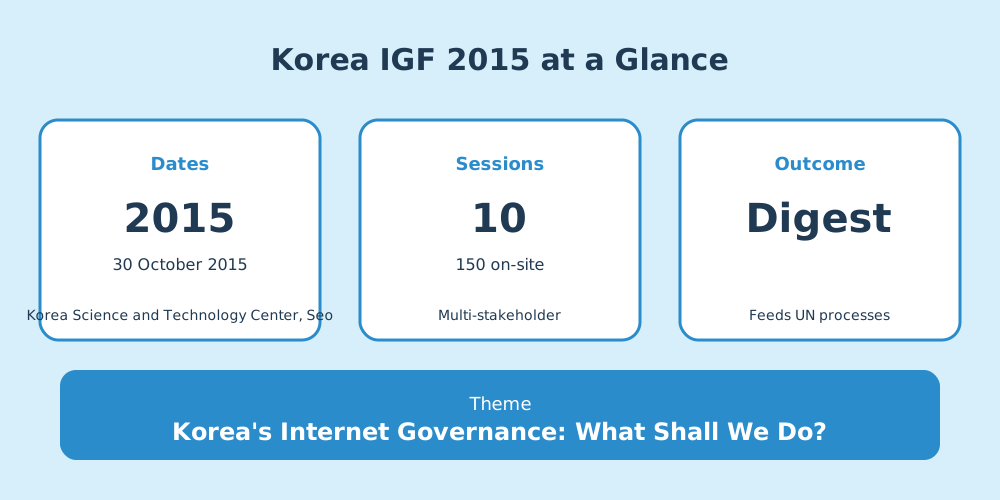
| Item | Detail |
|---|---|
| Official name | 4th Korea Internet Governance Forum (KrIGF 2015) |
| Dates | 30 October 2015 |
| Venue | Korea Science and Technology Center, Seoul |
| Theme | Korea's Internet Governance: What Shall We Do? |
| Participants | 150 |
| Sessions | 10 |
| Host | Hosted by the Korea Internet Governance Alliance (KIGA), co-organised by 19 bodies including KISA and KISDI |
(See the source list at the end of this article.)
Discussion Digest — from the Session Records
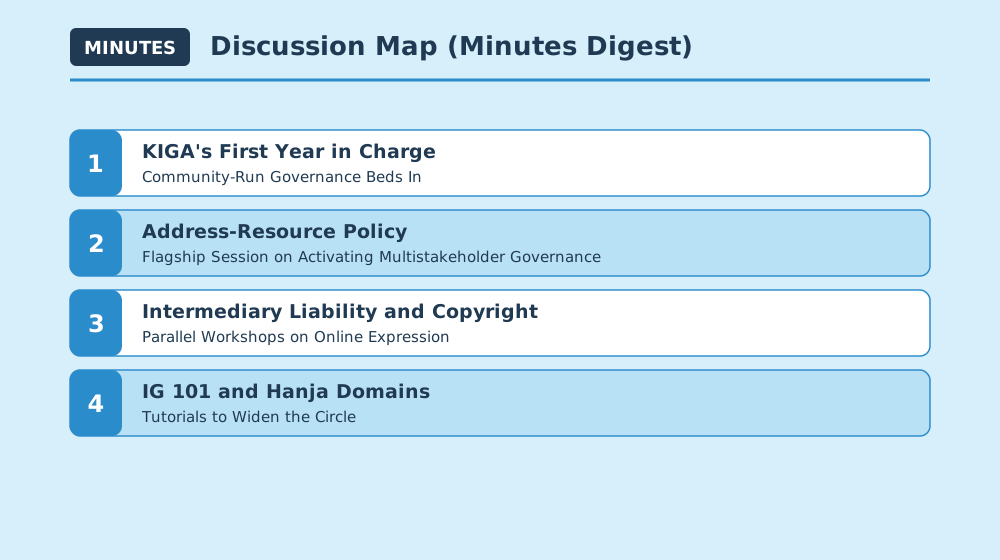
Key exchanges extracted from session records and transcripts.
1. KIGA's First Year in Charge — Community-Run Governance Beds In
Sessions: Multiple sessions
- This was the first KrIGF hosted by KIGA, the multistakeholder council founded in November 2014 — and it has hosted every edition since, as GISWatch notes [1][6][4]
- With 19 co-organising bodies including KISA and KISDI, the forum grew to 10 sessions and roughly 150 participants, its largest yet [1][6][4]
2. Address-Resource Policy — Flagship Session on Activating Multistakeholder Governance
Sessions: Featured session 'Activating multistakeholder internet governance' (13:00–14:20)
- Using Korea's internet address policy as the test case, the session mapped how to convert government-led management of address resources into a multistakeholder arrangement [2][6]
- The thread later grew into KIGA's working group to revise the Internet Address Resources Act, replacing the government-appointed deliberation committee with a bottom-up elected one, as GISWatch records [2][6]
3. Intermediary Liability and Copyright — Parallel Workshops on Online Expression
Sessions: Parallel workshops (14:35–15:35)
- Two parallel workshops tackled intermediary liability — how far platforms must answer for user content — and the governance of copyright [2]
- Both fed into Korea's running controversy over takedowns, blocking and their impact on free expression online [2]
4. IG 101 and Hanja Domains — Tutorials to Widen the Circle
Sessions: Tutorials 'A Look Inside Internet Governance 1 & 2' (09:30–11:30) and workshop 'Do domain names need Chinese characters?'
- The day opened with a two-part primer, 'A Look Inside Internet Governance', built on materials by Prof. Lee Young-eum of Korea National Open University, tracing coordination of the internet from its origins [2][3]
- A workshop on whether domain names need Chinese characters — a live China–Japan–Korea question, led by Kim Kyung-seok of the Korean Generation Panel — and an ICANN policy update on the IANA transition ran alongside [2][3]
Three-Minute Short Talk — Your Questions Answered
Q. What did this meeting decide?
A. Nothing formally — but it locked in Korea's model of a national IGF hosted every year by KIGA, a standing multistakeholder council, instead of a government agency.
Q. What was the highlight?
A. Address-resource reform: serious debate on moving .kr and related policy from ministry control to a body where government, business and civil society sit as equals.
Q. Why should I care?
A. Everyday questions — content takedowns, platform responsibility, copyright — started getting a regular, citizen-accessible venue here.
What Is Korea IGF? (for first-time readers)
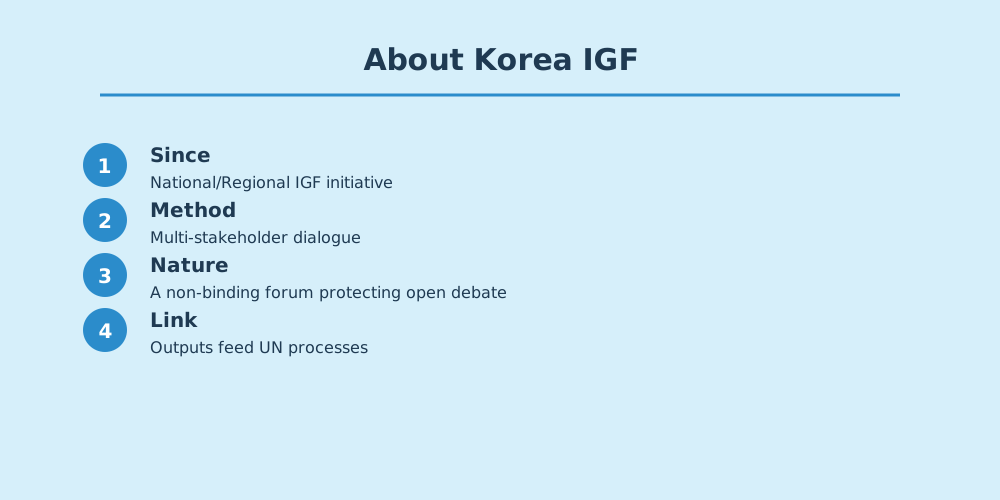
Korea IGF is a National or Regional IGF Initiative (NRI), aligning local internet governance discussion with global IGF principles.
Why It Matters to You
What was discussed here becomes the baseline for national digital policy, platform rules and AI regulation worldwide within a few years. The principles confirmed at the 2015 meeting are the foundation of the "next rules" for the phones, social platforms and AI services you use every day.
Sources & References
- 2015 KrIGF 개요(第4回フォーラム概要) — KrIGF公式サイト(Kr-IGF 한국 인터넷거버넌스포럼) (accessed 2026-07-11)
- 2015 프로그램(第4回フォーラム プログラム) — KrIGF公式サイト(Kr-IGF 한국 인터넷거버넌스포럼) (accessed 2026-07-11)
- 인터넷 거버넌스 들여다보기(第4回KrIGFチュートリアル資料・イ・ヨンウム) — KrIGF公式サイト掲載(韓国放送通信大学) (accessed 2026-07-11)
- 한국 인터넷거버넌스포럼 (KrIGF) 소개・개최 이력(開催履歴表) — KRNIC 한국인터넷정보센터(KISA運営) (accessed 2026-07-11)
- 2025년 제14회 한국 인터넷거버넌스포럼 세미나 정보(歴代テーマ一覧を含む) — 韓国国会図書館(국회도서관) (accessed 2026-07-11)
- Korea, Republic of — Internet governance country report — Global Information Society Watch(APC) (accessed 2026-07-11)
Quotes are translated or condensed from the records listed above. Bracketed numbers [n] refer to the source list.
Related links
- IGF official (NRI list): https://www.intgovforum.org/en/content/national-and-regional-igf-initiatives
- Japan IGF: https://japanigf.jp/
- Yuki Nakazawa's blog: https://nkzw.jp/category/igf/
Revision History
Rev. 1 — published 27 July 2015, 16:00 (Article published)
Rev. 2 — updated 16 July 2026, 20:09 (Fully revised into the in-depth edition: added the 3-line summary, minutes digest, short talk, source list and diagrams (all quotes verified against the listed sources))
— 中澤祐樹

