


The 3-Line Summary
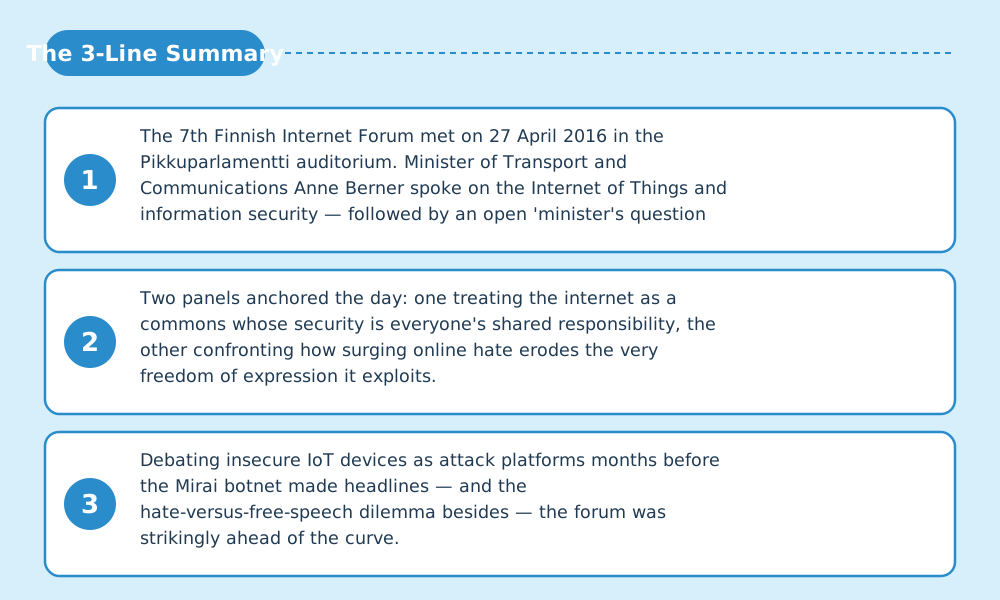
- The 7th Finnish Internet Forum met on 27 April 2016 in the Pikkuparlamentti auditorium. Minister of Transport and Communications Anne Berner spoke on the Internet of Things and information security — followed by an open 'minister's question time'.
- Two panels anchored the day: one treating the internet as a commons whose security is everyone's shared responsibility, the other confronting how surging online hate erodes the very freedom of expression it exploits.
- Debating insecure IoT devices as attack platforms months before the Mirai botnet made headlines — and the hate-versus-free-speech dilemma besides — the forum was strikingly ahead of the curve.
Welcome — this is the Japan IGF Support Organization. This in-depth report on Finnish Internet Forum 2016 (7th edition) draws on official outputs, session records and on-site reporting. In a hurry? The three lines above and the diagrams carry the gist.
Conference at a Glance (from official records)
| Item | Detail |
|---|---|
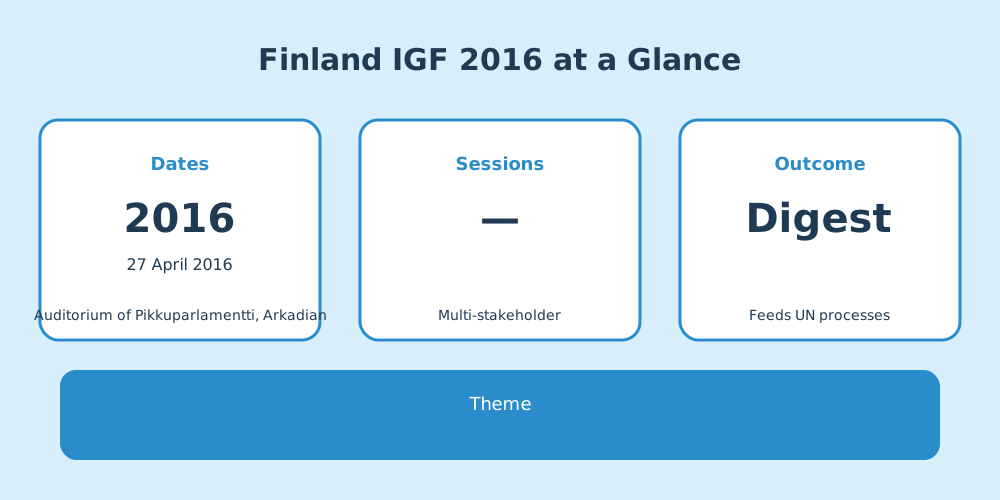
| Official name | Finnish Internet Forum 2016 (7th edition) |
| Dates | 27 April 2016 |
| Venue | Auditorium of Pikkuparlamentti, Arkadiankatu 3, Helsinki |
| Theme | Regional governance themes |
| Opening | Opened by Carl Haglund MP, chair of the Committee for the Future; ministerial address by Minister of Transport and Communications Anne Berner |
(See the source list at the end of this article.)
Discussion Digest — from the Session Records
Key exchanges extracted from session records and transcripts.
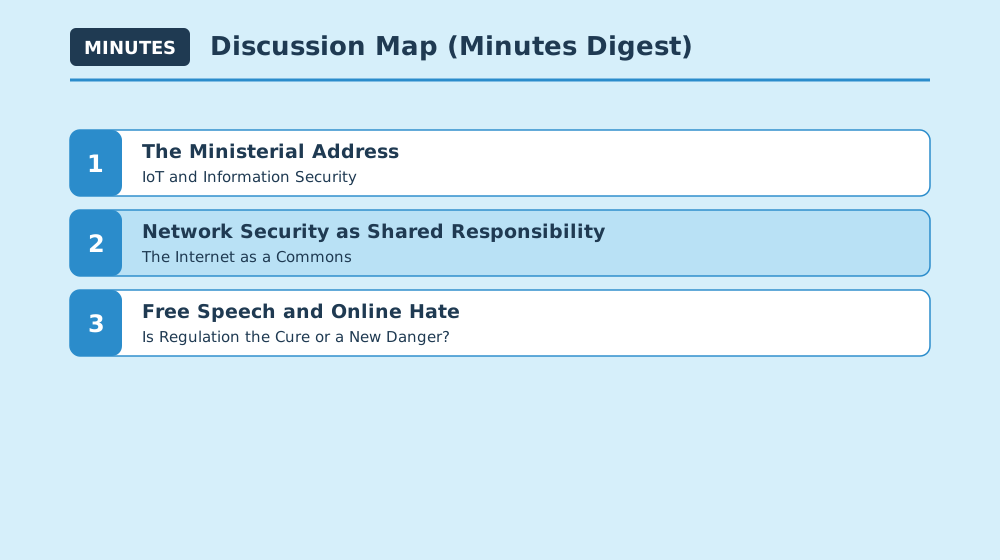
1. The Ministerial Address — IoT and Information Security
Sessions: 'Ministerial address: The Internet of Things and information security' (9:10, Minister Anne Berner) followed by a Q&A with the minister (9:30, moderated by Jorma Mellin, SSH Communications Security)
- The sitting minister addressed IoT security and then took audience questions directly for half an hour — a cabinet member submitting to open Q&A at a national IGF [1]
- Together with the opening by Committee for the Future chair Carl Haglund, both parliament and government engaged at top level [1]
2. Network Security as Shared Responsibility — The Internet as a Commons
Sessions: Panel 'Network Security and Shared Responsibility' (10:00; moderated by Tommi Karttaavi, Internet Society, with TUT's Marko Helenius, FICORA's Kauto Huopio, BaseN CEO Pasi Hurri, the Competition and Consumer Authority's Riikka Rosendahl and VAHTI secretary-general Kimmo Rousku)
- With no owner or central authority able to police abuse, the internet is a commons — so legislators, developers, device makers, operators and even users all share responsibility for its security, the panel argued [1]
- Speakers warned that poorly protected connected devices can be conscripted into DDoS attacks and noted operators' weak incentives to adopt abuse-limiting standards; the consumer authority's presence put 'is the consumer responsible?' squarely on the table [1]
3. Free Speech and Online Hate — Is Regulation the Cure or a New Danger?
Sessions: 'Freedom of Expression and Online Hate' (12:15; opened by MFA legal director Päivi Kaukoranta, moderated by EFFI's Joonas Mäkinen, with media lawyer Jussi Kari, MP Olli-Poika Parviainen, researcher Reeta Pöyhtäri and the Finnish Red Cross's Seppo Kujanpää), followed by 'Proposed Remedies for Curbing Online Hate' (13:45)
- The panel's shared premise was a double danger: online hate silences its targets, while heavy-handed technical fixes could erode the very principles that let the internet grow [1]
- Framing hate as born offline but amplified online, the discussion — with the Red Cross and researchers, against the backdrop of the post-refugee-crisis debate — moved on to concrete remedy proposals [1]
Three-Minute Short Talk — Your Questions Answered
Q. What did this meeting decide?
A. Nothing binding — the seventh edition stood out for its proximity of citizens to power: a sitting minister gave a speech and then took open questions from the floor.
Q. What was the most contentious topic?
A. Online hate: leave it unchecked and victims are silenced; regulate hard and free expression itself shrinks. Lawyers, MPs, researchers and the Red Cross wrestled with the dilemma.
Q. Why should I care?
A. The warning that insecure IoT devices could become attack platforms came true that autumn with the Mirai botnet, and the hate-speech dilemma now confronts every social platform and legislature.
What Is Finland IGF? (for first-time readers)
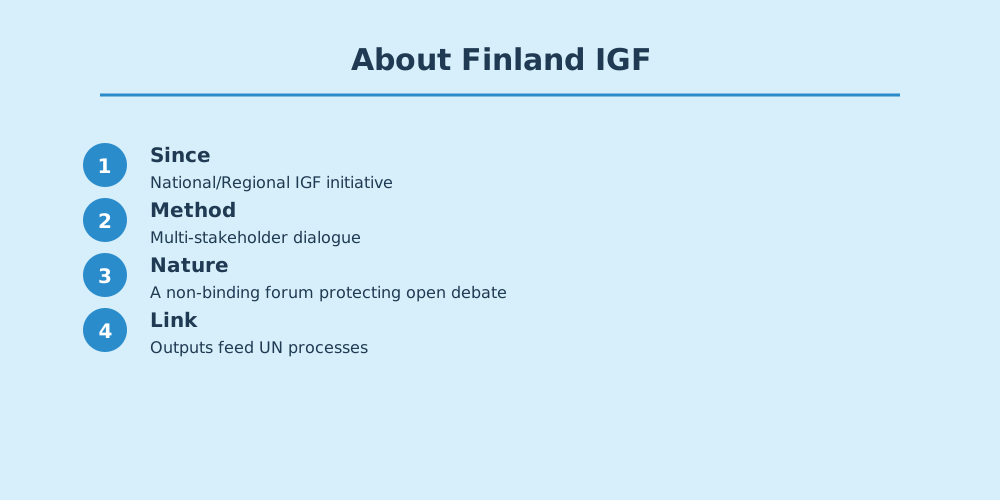
Finland IGF is a National or Regional IGF Initiative (NRI), aligning local internet governance discussion with global IGF principles.
Why It Matters to You
What was discussed here becomes the baseline for national digital policy, platform rules and AI regulation worldwide within a few years. The principles confirmed at the 2016 meeting are the foundation of the "next rules" for the phones, social platforms and AI services you use every day.
Sources & References
- Finnish Internet Forum 27.4.2016(公式アーカイブ・全プログラム) — Finnish Internet Forum(internetforum.fi) (accessed 2026-07-23)
- Aiemmat foorumit(公式過去大会一覧) — Finnish Internet Forum(internetforum.fi) (accessed 2026-07-23)
- Info – Finnish Internet Forum(公式概要・年次開催の記録) — Finnish Internet Forum(internetforum.fi) (accessed 2026-07-23)
- National IGF Initiatives – WEOGグループ詳細(フィンランドNRI記録) — 国連IGF事務局 (UN IGF Secretariat)(Wayback 2025-06-09) (accessed 2026-07-23)
Quotes are translated or condensed from the records listed above. Bracketed numbers [n] refer to the source list.
Related links
- IGF official (NRI list): https://www.intgovforum.org/en/content/national-and-regional-igf-initiatives
- Japan IGF: https://japanigf.jp/
- Yuki Nakazawa's blog: https://nkzw.jp/category/igf/
更新履歴
第1稿投稿 2026年8月7日 21時16分(記事コンテンツアップ)
— 中澤祐樹

